

Delaware lead removal program can’t meet remediation needs for homes where poisoned children live, WHYY News finds
The state spent $4 million to remove hazards at 30 homes. There’s only enough cash left to do work at a tiny fraction of contaminated properties.
Listen 2:51
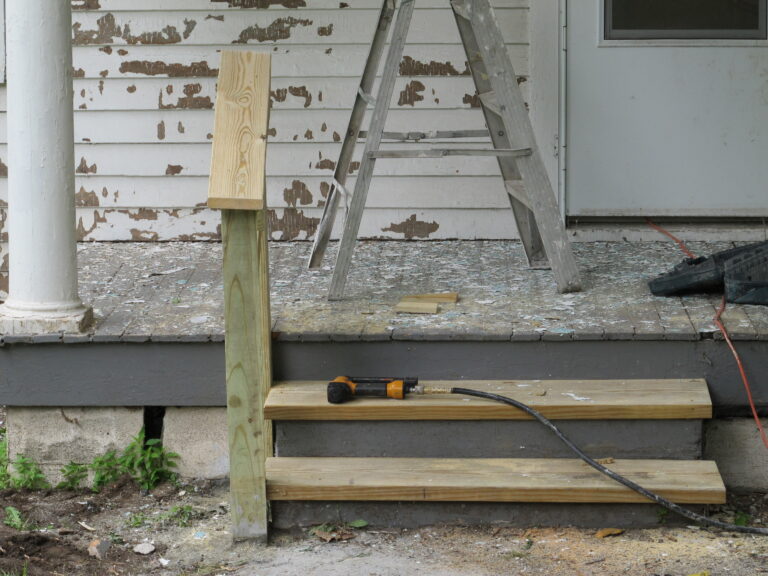
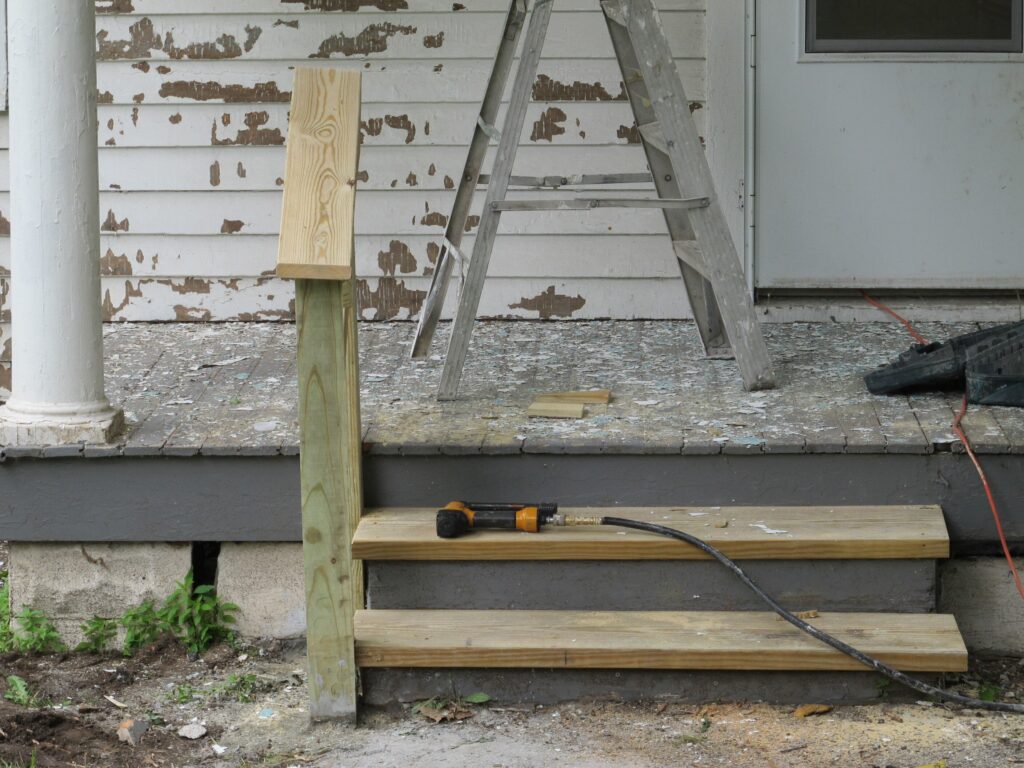
Lead paint from homes built before 1978 is, by far, the leading cause of lead poisoning in children. (U.S. Environmental Protection Agency)
What are journalists missing from the state of Delaware? What would you most like WHYY News to cover? Let us know.
Every year, hundreds of Delaware children are detected with dangerous levels of lead in their blood.
That means the children likely have irreversible brain damage that could plague them with lower IQs, developmental delays and behavior problems well into adulthood.
Delaware lawmakers, public health officials and child advocates are acutely aware of the state’s lead poisoning crisis. To that end, since 2023 authorities have taken legislative steps aimed at removing lead paint — considered by far the primary cause of poisoning — from homes where affected kids live. Nearly $9 million in state and federal funds have been allocated to get the lead out.
A companion bill that state lawmakers passed last year goes further, requiring that starting in 2028, landlords remove or contain lead paint and dust from all homes built before 1978. That’s the year the federal government banned the manufacture of lead-based house paint. About 42% of all Delaware homes were built before 1978, according to U.S. Census figures.
Remediating all contaminated properties is a herculean task, however, considering the fact that there are about 120,000 rental properties in the state.
The bottom line, WHYY News has found, is that while Delaware has created an ambitious program to identify poisoned children and relocate families until their homes are free of lead paint, the pace of remediation and the amount of taxpayer money allocated doesn’t come close to meeting the pressing need.
To date, lead paint has been removed or contained in just 30 homes statewide, at a cost of nearly $4 million, including administrative expenses, state officials said last week in response to inquiries from WHYY News.
Currently, three more pre-1978 homes are being remediated, four are waiting to be abated and another 76 are being evaluated to determine if they have lead paint.
Yet with the cost of each remediation averaging $95,200, according to the Division of Public Health, which runs the program, there’s only enough funding left to fix about 50 more homes.
That’s only a fraction of the homes where poisoned kids already live, state reports show.
In 2023 and 2024 alone, more than 550 kids under age 6 were confirmed to have lead poisoning, according to state reports. Meanwhile, hundreds of children whose initial tests showed elevated levels did not receive the required blood tests to confirm whether they were poisoned, the reports say. Testing results from 2025 have not yet been calculated.
Amy Roe, who has a doctorate in environmental policy and chairs the Delaware Childhood Lead Poisoning Prevention Advisory Committee, said the state needs to ramp up its efforts and increase funding dramatically if politicians and public health officials truly want to solve the crisis.
“This is just a drop in the bucket,” Roe said of the remediation projects completed to date. “There could be thousands of homes or even more that are requiring lead-based paint hazards to be addressed, and we’ve only done 30 through the state program.”

Roe is part of the Action for Delaware’s Children coalition, a group of child advocates that includes leaders of Delaware’s nationally renowned Nemours Children’s Hospital near Wilmington. The group is calling for another $15 million cash infusion to the abatement program.
Gov. Matt Meyer’s proposed budget for fiscal year 2027 includes only $2 million more.
Dr. Jonathan Miller of Nemours, who preceded Roe in chairing the state’s lead poisoning advisory panel and is president of Delaware’s chapter of the American Academy of Pediatrics, said the Delaware situation is dire.
“There’s an urgent need, because the longer we wait, the more children will get poisoned,” Miller told WHYY News. “And so the quicker that we can remediate homes that have lead in it, the less children long term are going to get poisoned.”

Miller said the $2 million that Meyer has proposed “will not even support the remediation” of homes where the state knows children with lead poisoning live, “let alone be enough to start to identify apartments before children have moved in.”
Meyer, whose budget proposal is currently being reviewed by the legislative Joint Finance Committee, would not agree to an interview about the state’s lead paint problem or his approach to ameliorating a crisis that affects the state’s health and education system and its future workforce.
“The Meyer administration looks forward to getting more lead out of more homes in communities across Delaware,” Mila Myles, the governor’s spokesperson, said in a statement.
Nicole Topper, who oversees the lead paint remediation program within the state’s Division of Public Health, pointed out during an interview that the first funding didn’t become available until 2 1/2 years ago.
“So we’ve been building and ramping up the program,” Topper said. “We are in full operations right now, but there takes some time into building up a program from inception. Things are moving and the procurement processes, contracts are all now in place.”

Topper agreed, though, that it’s paramount for the state to address the longstanding and persistent problem of childhood lead poisoning.
“Exposing children to an elevated blood level is something that as a state we should be actively trying to reduce, because we are quite aware of what that would mean in the child’s development,” Topper said.
Beyond mitigation efforts, Topper said it’s critical for authorities to “educate the public and families and even pediatricians and medical field providers that this is still a concern in Delaware. I think a lot of people think it’s a historic issue and not a current issue.”
Related Content
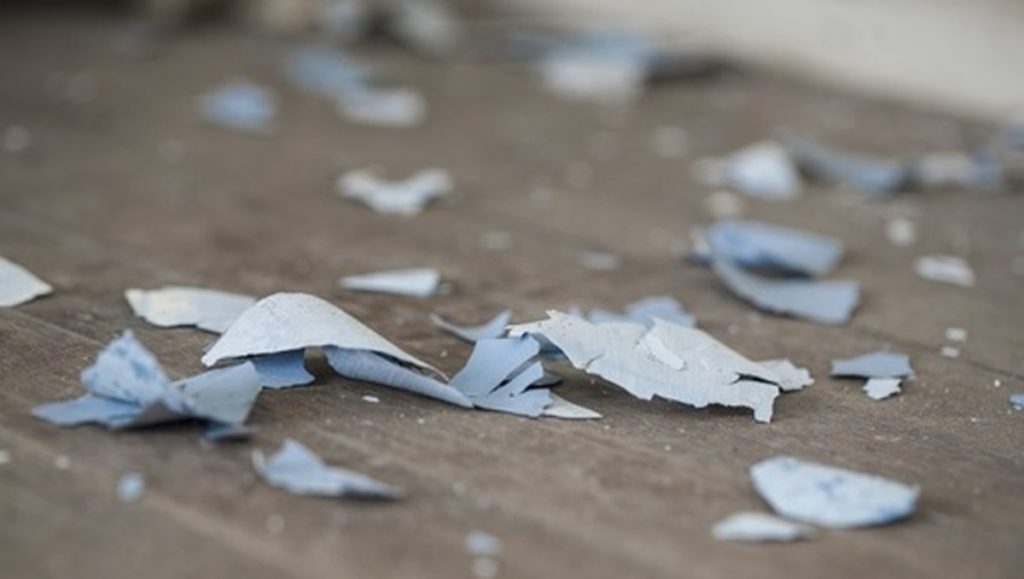
Delaware lawmakers take steps to address rental properties with lead paint
Landlords would be required to certify their properties are lead-free, or safe from the toxin.
1 year ago
Listen 1:16‘Lead does not just degrade into nothingness’
Since 1994, Delaware has required pediatricians to screen children for lead poisoning at 12 months of age. In 2021, the state mandated retesting at 24 months.
The test is a simple skin stick to produce what’s called a capillary sample. If that test shows a level requiring action — defined by the U.S. Centers for Disease Control and Prevention as 3.5 micrograms per deciliter — Delaware requires a followup screen known as a “venous” test, in which blood is drawn. Should the blood sample show what the state considers an elevated level — more than 3.5 micrograms per deciliter — state health officials consider that a confirmation.
Under the 2023 law, a confirmation through the blood test triggers an assessment of the child’s home to check for the presence of lead if it was built before 1978, and then, should lead be found, for its remediation by a contractor.
And if a child is poisoned in a house or apartment built before 1978, lead paint or lead dust is most likely the cause.
In 2023, for example, the state tested 29 homes constructed before the lead paint ban.
“Lead-based paint hazards were found at all 29 properties,’’ according to the state government’s annual Childhood Blood Lead Surveillance in Delaware report, published in March 2025.
That same report declared that lead poisoning is a “preventable occurrence but continues to be a significant environmental hazard for children in Delaware.”
The report also detailed why it’s so urgent to remove the lead paint, chips or dust from homes where children have elevated levels.
“Childhood exposure to lead, through inhalation or ingestion, can cause long-term neurological damage and decreased intelligence that may be associated with learning and behavioral problems,” the report said.
“Even low levels of lead in the body correlate to a lower IQ, reduced attentiveness, and impaired academic achievement. Children with even slightly elevated blood lead levels have a higher risk of developing attention-deficit/hyperactivity disorder. Childhood lead poisoning effects extends across the lifespan, impacting health, higher learning, and the ability to be hired and remain employed.”
Roe said that’s why it’s so important for Delaware to have a strong remediation program. She also emphasized that continued exposure raises the poisoning level for every affected child, exacerbating their health problems.
“This is a critical thing that we need to be doing in this state in a much more aggressive way,” Roe said. “This problem will only continue to pile up until we address it. Lead does not go away on its own. It does not just degrade into nothingness. It will continue to poison children forever until the sources of exposure are properly remediated.“
Roe is also co-chair of Lead-Free Delaware, one of the groups that comprise Action for Delaware’s Children. The other members are the ChristianaCare, Bayhealth and Nemours hospital systems, Black Mothers in Power, the state NAACP, Delaware PTA, Delaware State Education Association, Latin American Community Center, Delaware Community Legal Aid Society, and Children and Families First.
Matt Denn, the state’s former lieutenant governor and attorney general, is the coalition’s vice chair.
A lawyer who has a history of advocating for children in peril, Denn said it’s imperative that the state accelerate its use of the money already appropriated to remove lead from homes where poisoned children live, and to secure far more funding.
“These are children who have already been diagnosed as having elevated blood lead levels and they are living in units that very likely have exposed lead paint because that’s the most common cause of elevated blood lead levels in children,” Denn said. “They’re continuing to live in an environment where the problem is being compounded.”

Denn applauded fellow Democrat Meyer, who took office in January 2025, for proposing $2 million for lead abatement during his first full budget cycle, but said he hopes lawmakers add even more to the budget this year and in ensuing years.
“We’d always like to see more, but we were pleased with the $2 million, given that it was a year when very, very few discretionary initiatives were included in the recommended budget, and a number of actual cuts were made,” Denn said.
Miller, however, is less sanguine about Meyer’s proposed $2 million infusion.
“We really need to do a lot more,’’ Miller said, specifying the importance of not only eliminating lead hazards in homes where children have already been poisoned, but also to proactively decontaminate other pre-1978 homes with lead paint.
“This is remediation that can be done now as a one-time thing, because once you’ve gotten the lead out, the lead is out, and that home is safe going forward,” the pediatrician said. “We just need to identify what homes are left in our state that have old paint and get the lead out.”
Related Content
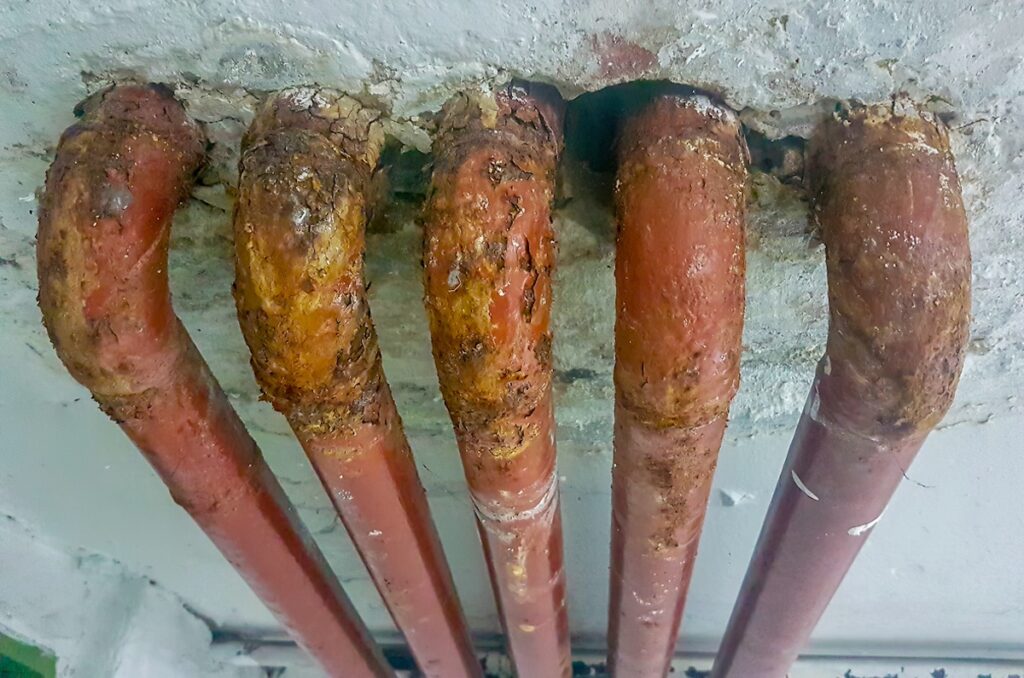
Advocates say the state lacks transparency on school drinking water quality and attempts to remove lead contamination.
1 year ago
Listen 0:56
Get daily updates from WHYY News!
WHYY is your source for fact-based, in-depth journalism and information. As a nonprofit organization, we rely on financial support from readers like you. Please give today.
Part of the series

El estado gastó $4 millones para eliminar los riesgos en 30 viviendas. Solo queda suficiente dinero para realizar trabajos en una pequeñísima fracción de las propiedades.
6 months ago
‘Consequential decision’: PJM electrical grid to decide who pays bill for massive data centers
Delaware and Maryland state lawmakers say ratepayers should not pick up the tab for energy-hungry data centers.
10 months ago
Listen 1:05
Delaware lawmakers take steps to address rental properties with lead paint
Landlords would be required to certify their properties are lead-free, or safe from the toxin.
1 year ago
Listen 1:16