

Passions run high on whether and where to reerect Christopher Columbus statue in Wilmington
City officials took down the statue of the Italian explorer, fearing it would be damaged, during the local and national racial unrest in 2020.
Listen 1:59
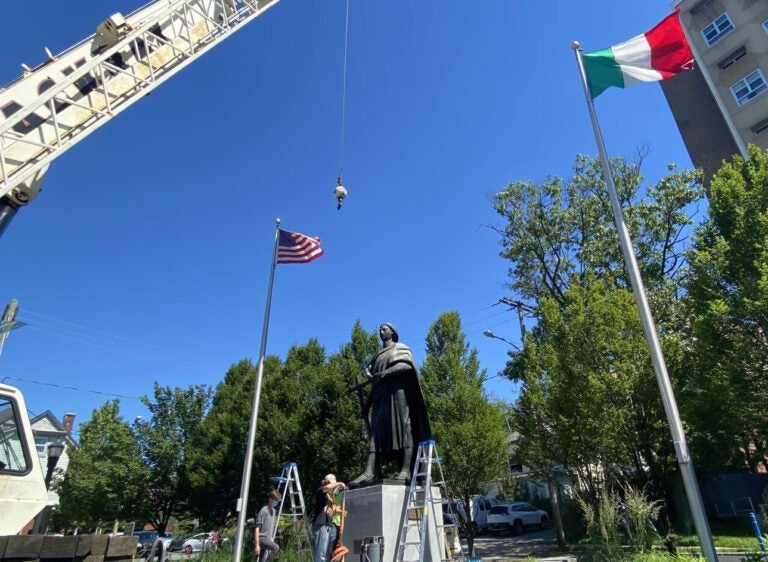
Wilmington officials took down the monument in June 2020, fearing it would be damaged during racial unrest after George Floyd's killing by police in Minneapolis. (City of Wilmington)
What are journalists missing from the state of Delaware? What would you most like WHYY News to cover? Let us know.
A towering granite statue of Christopher Columbus that stood for more than six decades on a prominent route into downtown Wilmington has been housed in a storage facility for nearly six years.
The city took the statue down in June 2020, fearing it would be damaged during the racial reckoning and unrest that roiled Wilmington and other American cities after police in Minneapolis killed George Floyd.
Wilmington wasn’t alone in taking down its monument to Columbus. Similar statues of the 15th-century Italian explorer — who has been hailed in history books for discovering America but in recent years denounced for his role in enslaving, brutalizing and oppressing Indigenous and Black people — were also removed and sometimes damaged across the country in 2020, including in Chicago and Boston.
Officials in Philadelphia encased the city’s statue in a plywood box amid attempts to remove Columbus, but a judge ruled in 2022 that the covering must be removed and the statue could remain in Marconi Plaza.
Some statues have been returned to their former perches. And now, a chorus of Italian Americans in Wilmington wants the same for their beloved statue of Columbus.
The Wilmington advocates have been clamoring to have City Council and Mayor John Carney’s administration approve putting the 12-foot-tall statue back upon its stand on Pennsylvania Avenue — across from the private Catholic school, Ursuline Academy — or have it installed in the city’s Father Tucker Memorial Park a mile away in Wilmington’s Little Italy neighborhood.
But not so fast.
While dozens of supporters spoke in favor of bringing Columbus back to a public space last week during a community meeting in Little Italy, City Councilwoman Shané Darby and some Council allies say the city should not be honoring Columbus by displaying him on public land.
“Go find your private property and go put this man you want to honor” there, Darby said during an interview with WHYY News. “But to ask a majority Black and brown city to then put it on a taxpaying public property and ask us to continue to pay for it is crazy. You would never go to Jewish people and ask them to put up a statue of Hitler. So don’t come to Black Americans and do that.”

Darby said it’s also noteworthy that St. Anthony’s Catholic Church in Little Italy doesn’t want the statue on its property.
“They said they want no parts of this conversation,” Darby said with a chuckle. “They are not interested in a Christopher Columbus statue.”
Related Content
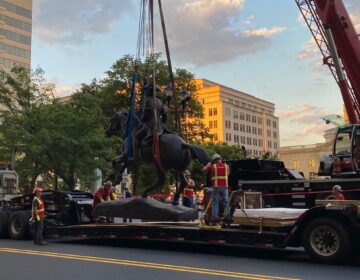
Wilmington’s statues of Columbus and Caesar Rodney coming down — at least for now
Bronze monuments to the two historical giants have stood in Wilmington for decades. But the mayor wants to “have discussions” about whether they should remain.
6 years ago
City Council rejects bid to ban statue from public property
Al Greto, a lawyer representing Italian American groups who want the statue displayed in Wilmington again, said his clients aren’t trying to whitewash Columbus’ misdeeds.
Greto said the Columbus statue is a symbol of their immigrant heritage and pride for Wilmington’s Italian American community, which built much of the city and raised the $40,000 to have the 1,600-pound statue created in the 1950s. The statue’s owner, the nonprofit Columbus Monument Committee, has cleaned and maintained it for decades.
That was the arrangement until March 2020, when then-Mayor Mike Purzycki had it taken down, along with the iconic Caesar Rodney statue on Rodney Square.
Daniel Walker, deputy chief of staff for Carney, who succeeded Purzycki in January 2025, said the city consulted with the statue’s owners before taking it down.
Since then, the city has kept both statues in a storage facility for art exhibits. Protecting Columbus costs the city $104.55 a month, Walker said.
The quest to put Columbus back up comes as city, state and even federal officials are weighing where or if the statue of Rodney, who signed the Declaration of Independence for Delaware but also owned slaves, will be displayed again.
Greto said now is the time to bring Columbus out of storage.
“It’s either put it back where it came from or let’s move on and grow up, put our big boy and big girl pants on, okay?” Greto said of city leaders. “Take a look at the whole thing and come up with an agreed-upon way of satisfying all the concerns of everybody. Either do that where it came from or do that over in Little Italy at Father Tucker Park, or wash your hands of the thing. Just give it to us and we’ll take care of it.“
The opposing views were aired in public during Thursday’s Council meeting, where Darby tried to pass a nonbinding resolution to ban the statue from public property.
Her effort failed, however, by a 6 to 3 vote, with two members voting present and two absent.
Leading the opposition to the resolution was Councilman Chris Johnson, who represents the district that includes Little Italy.
“We should respect all cultures in our community, and support what Italian Americans in our community are voicing, because the figure of Columbus is very important in their history,” Johnson said.
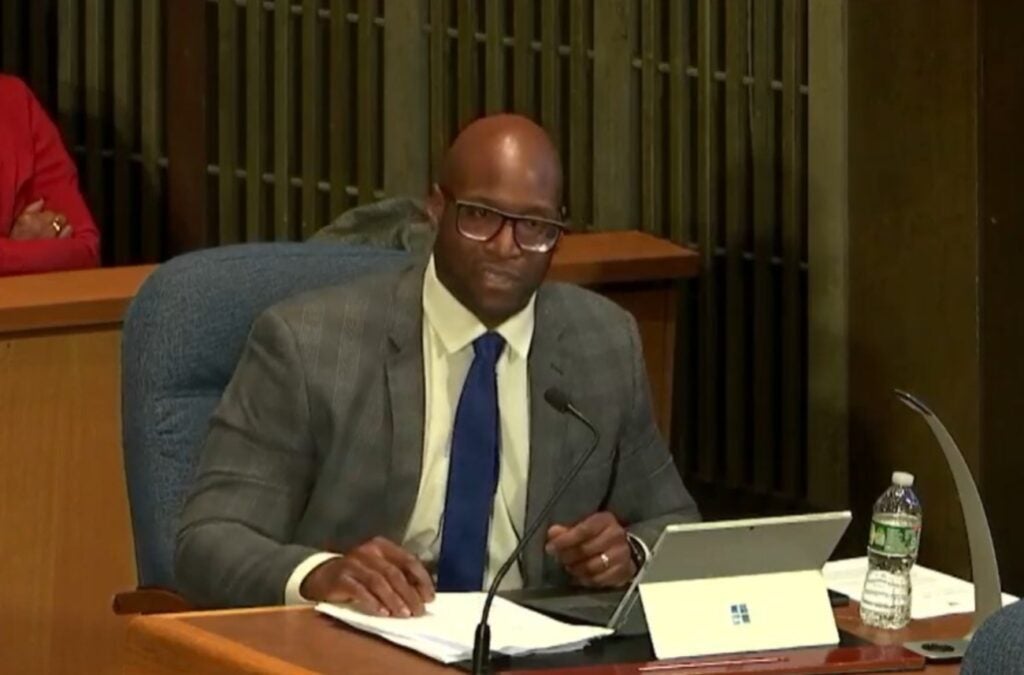
Johnson said Columbus was not alone among major figures of American history in engaging in actions that are excoriated today.
“There’s mixed history on everyone. Washington, Jefferson, Jackson, right?” Johnson said. “This country’s foundation was slavery and not-so-great history, but there’s a lot of rich history, too. So I think that we should respect all history and educate on the past.”
Related Content
Some Delawareans say that Founding Father Caesar Rodney should be remembered as a patriot. Others say his legacy is tarnished as an owner of enslaved people.
4 months ago
Listen 3:33City officials pledge to work toward ‘some sort of resolution’
Despite Council’s vote, the path forward, if any, remains unclear.
Johnson, who is an attorney, said he thinks that since Council rejected Darby’s resolution, the Carney administration should work with Greto’s clients and then decide where to reerect it.
“Just like when they took it down, they can put it back if they wanted to,” Johnson said of the city administration.
Carney aide Walker said the city lawyers are researching the matter, noting that while city code doesn’t require Council to approve statues on public property, the body has done so in the past.
Walker said city officials would be meeting with the parties to figure out the best way to handle the contentious situation.
“We’re going to sit down and have conversations and figure out what the varying stakeholders want, in hopes of developing a path forward and working to some sort of resolution,” Walker said. “But we don’t think we’re going to 100% have agreement on where it ultimately will end up.”
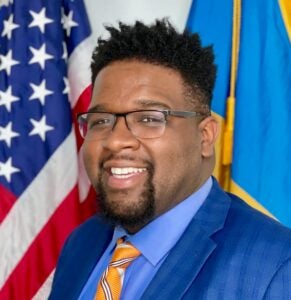
Greto said the group would like the statue back while the city mulls the next steps, and Walker said the city would be happy to accommodate that request.
The bottom line, said Larry Giacchino of the Societa da Vinci, a Wilmington organization for Italian Americans, is that the Columbus statue needs to once again be seen by those who want to view and celebrate it, whether in public space or on private property.
“We don’t want people denied to be able to go see that statue if they want to,” said Giacchino, who doesn’t live in Wilmington but owns auto dealerships near New Castle. “If people don’t like it and don’t like what Columbus stands for, they don’t have to go view it. They don’t have to go see it if it’s going to bother them. But why deny the people that want to and have that connection with their culture and their ancestors?”
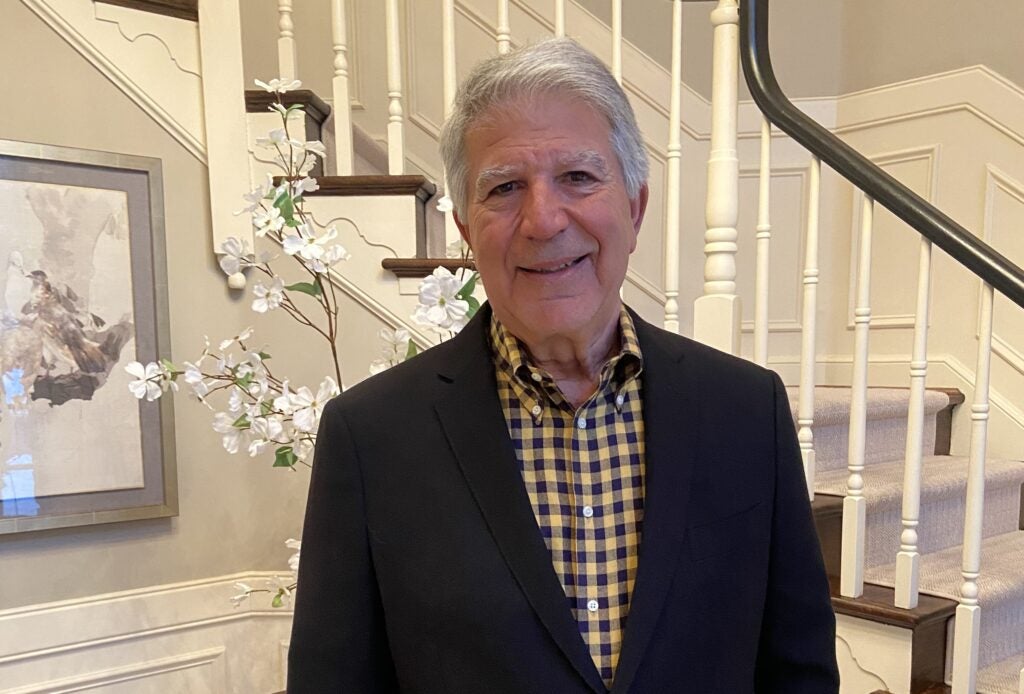
Council President Trippi Congo, who supported Darby’s resolution, said he favors private property only for the statue of Columbus, saying that when he was in school, textbooks ignored the famed explorer’s “treacherous” actions.
“I just don’t think that that’s something that you celebrate on public property,” Congo said during the Council meeting. “We can definitely work with the organization to help you get it on private property, but not public property.”
No matter what the future holds, Johnson said he’s glad a public discussion of the statue’s fate — which Purzycki said would occur but never did before left office 13 months ago — is finally happening.
“This has been great because it has sparked [debate on] an important topic,” Johnson said. “I think it is important we talk about the future of our city and what monuments we have and kind of who we are as a city.”

Never miss a moment with the WHYY Listen App!


WHYY is your source for fact-based, in-depth journalism and information. As a nonprofit organization, we rely on financial support from readers like you. Please give today.
Part of the series
‘It’s all gas, no brakes’: Delaware fully sanctions high school girls wrestling
The number of girls competing has nearly tripled over three seasons. Next year, the sport will have its first official state championships.
5 days ago
Listen 1:43
Casa de Venezuela Delaware está ayudando a las familias a encontrar recursos, reconstruir la confianza y crear un sentido de pertenencia.
2 weeks ago

Casa de Venezuela Delaware is helping families find resources, rebuild trust and create a sense of belonging.
4 weeks ago
Listen 1:26