
How Philly’s Avenue of the Arts will be transformed into a green space
South Broad Street in Center City begins a small step toward a 10-year, $150 million greening project.
Listen 1:05
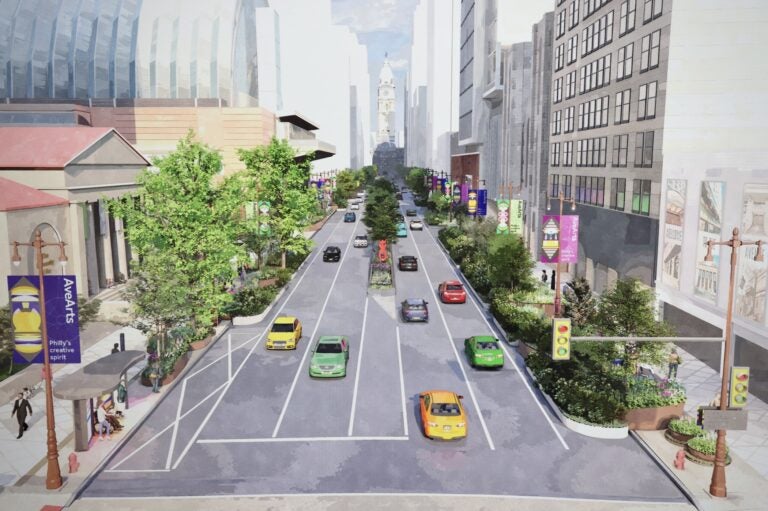
A rendering shows South Broad Street as it will appear after $150 million in improvements. The mile-long stretch from City Hall to Washington Avenue, also known as the Avenue of the Arts, will be completed in 10 years. (OJB Landscape Architecture)
From Philly and the Pa. suburbs to South Jersey and Delaware, what would you like WHYY News to cover? Let us know!
City leaders held a ceremonial groundbreaking on Philadelphia’s South Broad Street on Wednesday to mark the start of construction on improvements to the Avenue of the Arts.
The decade-long project will renovate 10 blocks of the avenue for an estimated $150 million, spending $15 million per block to rebuild the sidewalks as more pedestrian-friendly spaces with trees and shrubs, and room for outdoor dining and art installations.
The project is spearheaded by Carl Dranoff, who has developed four major buildings on the Avenue of the Arts, with a fifth in the works. He calls it “Avenue of the Arts 2.0.”
“When the Avenue of the Arts was initially laid out in 1993, there weren’t such things as outdoor cafés. They weren’t thinking about those things,” he said. “With our perimeter planting along the curb line, we’ll be creating natural barriers between diners and vehicles. It’ll be much more pleasurable.”
-
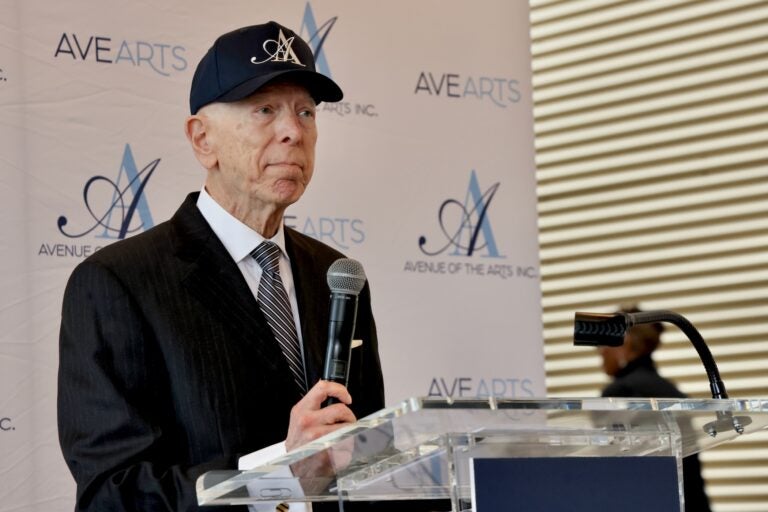
Carl Dranoff, chairman of the board of Avenue of the Arts, Inc., says South Broad Street will rival Paris' famed Champs-Élysées when improvements are completed. (Emma Lee/WHYY) -
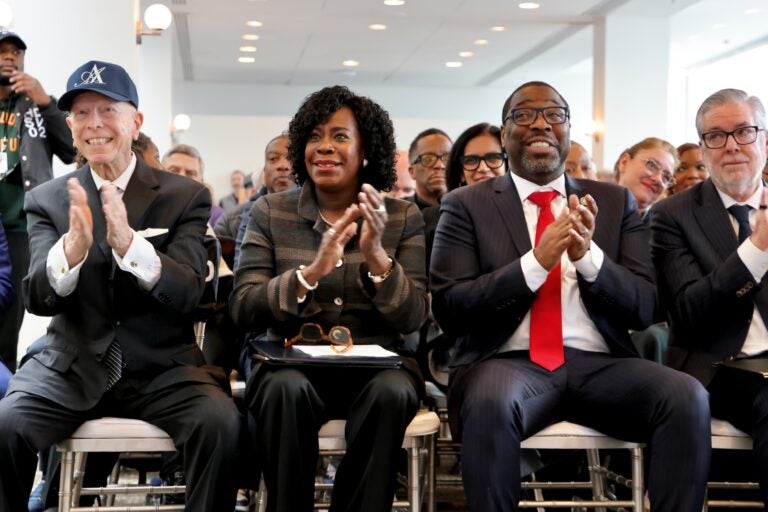
Carl Dranoff (left), chairman of the board of Avenue of the Arts, Inc., applauds a video detailing the improvements to be made to the 1-mile stretch of South Broad Street, along with (from left) Mayor Cherelle Parker, Council President Kenyatta Johnson and Temple University President John Fry. (Emma Lee/WHYY) -
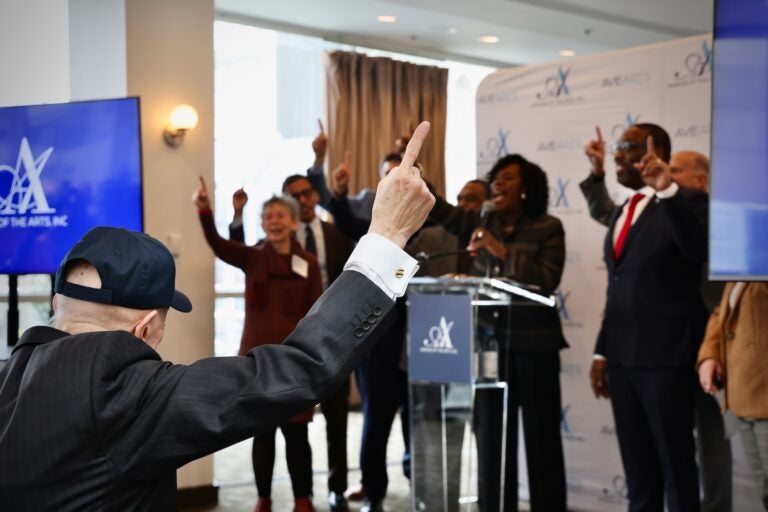
Carl Dranoff, chairman of the board of Avenue of the Arts, Inc., raises a finger to join in Mayor Cherelle Parker's ''One Philly'' chant after breaking ground on a $150 million project to transform South Broad Street. (Emma Lee/WHYY) -
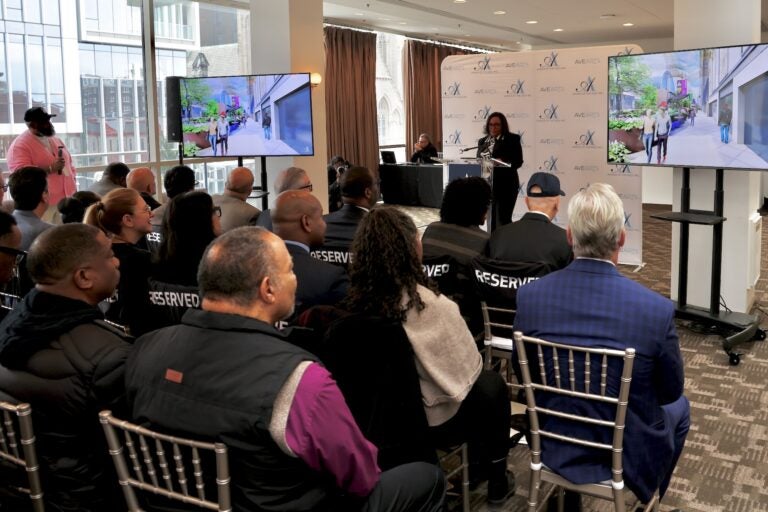
Executive Director of Avenue of the Arts, Inc., Desaree K. Jones (at podium) plays a video detailing the improvements that will be made to a mile-long stretch of South Broad Street from City Hall to Washington Avenue. (Emma Lee/WHYY)
What is ‘Avenue of the Arts 2.0?’
The plan is to beautify the avenue with raised green spaces, including mature trees and shrubs that will act as sound and visual buffers of auto traffic. A curved, serpentine curb will soften the pedestrian experience and carve out spaces for art installations and street performances.
Dranoff envisions it as Philadelphia’s version of the Champs-Élysées in Paris, which is undergoing its own green transformation for an estimated $305 million.
“Paris understood something essential: Beauty, walkability and great design are not luxuries. They are a competitive advantage,” he said. “That belief led to a $300 million reinvestment that is currently transforming the boulevard with wider sidewalks, more trees, more gardens, fewer car lanes, better air quality and stronger climate resilience.”
“Sound familiar?” he said. “The Champs-Élysées is 1.2 miles. Avenue of the Arts is just over a mile. Both projects are 10 years in scope. The parallels are pretty striking.”
Related Content

400 trees and 12 new gardens: Nicetown-Tioga residents celebrate neighborhood greening initiatives
As part of the “Love Where You Live” program, the Pennsylvania Horticultural Society has helped transform 1.2 million square feet of land and plant 400 trees.
1 year ago
Listen 3:11What’s happening now?
The whole 10-block project will be done iteratively, one $15 million block at a time.
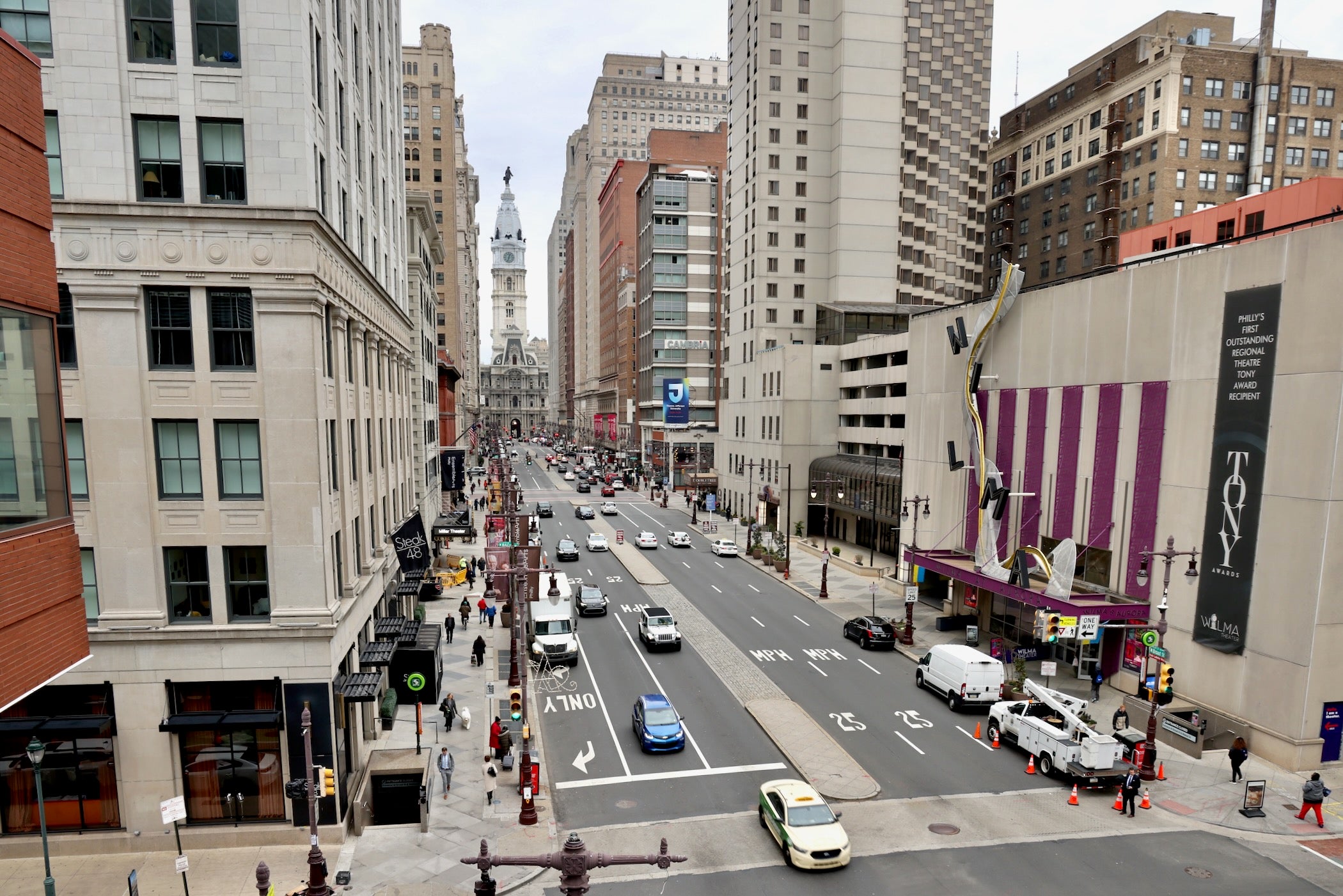
It is starting small. Later this month, work will begin to demolish and rebuild the median strip in front of the Kimmel Center on the 300 block of the avenue.
That work is expected to be completed by this summer, then pause. Work on the surrounding sidewalks is expected to resume in 2027.
“It’s a small but important beginning because it shows everybody what a profound difference it will make to drive or walk down the Avenue of the Arts and see flowering trees and shrubs and green,” Dranoff said. “It’s a proof of concept on what we’re talking about.”
The design plan for each block will be unique depending on their individual requirements. The existing infrastructure gives each block a different set of programming circumstances.
Avenue of the Arts is a deeply complicated corridor, a common ground for many overlapping spheres of influence. It is a state highway and a city street. It is the border of two City Council districts. Two subway systems run underneath. Its sidewalks are stewarded by both the city and private property owners. A web of gas, electrical and water lines criss-cross the avenue.
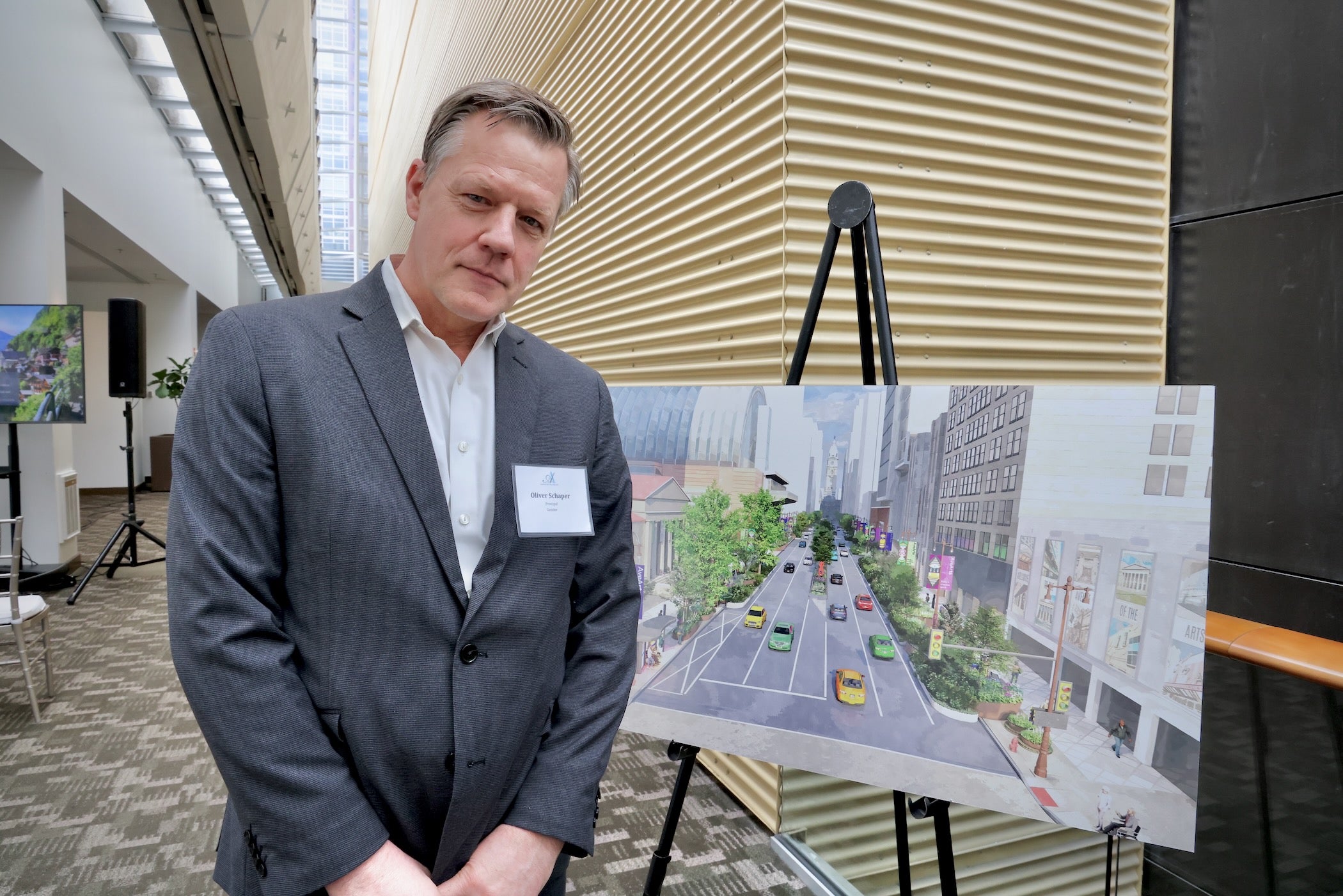
“What you see in the end in the public space doesn’t give justice and testimony to the complications of doing this below-grade work,” said Oliver Schaper, design director at Gensler, the company doing much of the design work for “Avenue of the Arts 2.0.”
Who’s going to pay for it?
The cost of the project has already jumped from a preliminary estimate of $100 million in 2024 to the current estimate of $150 million.
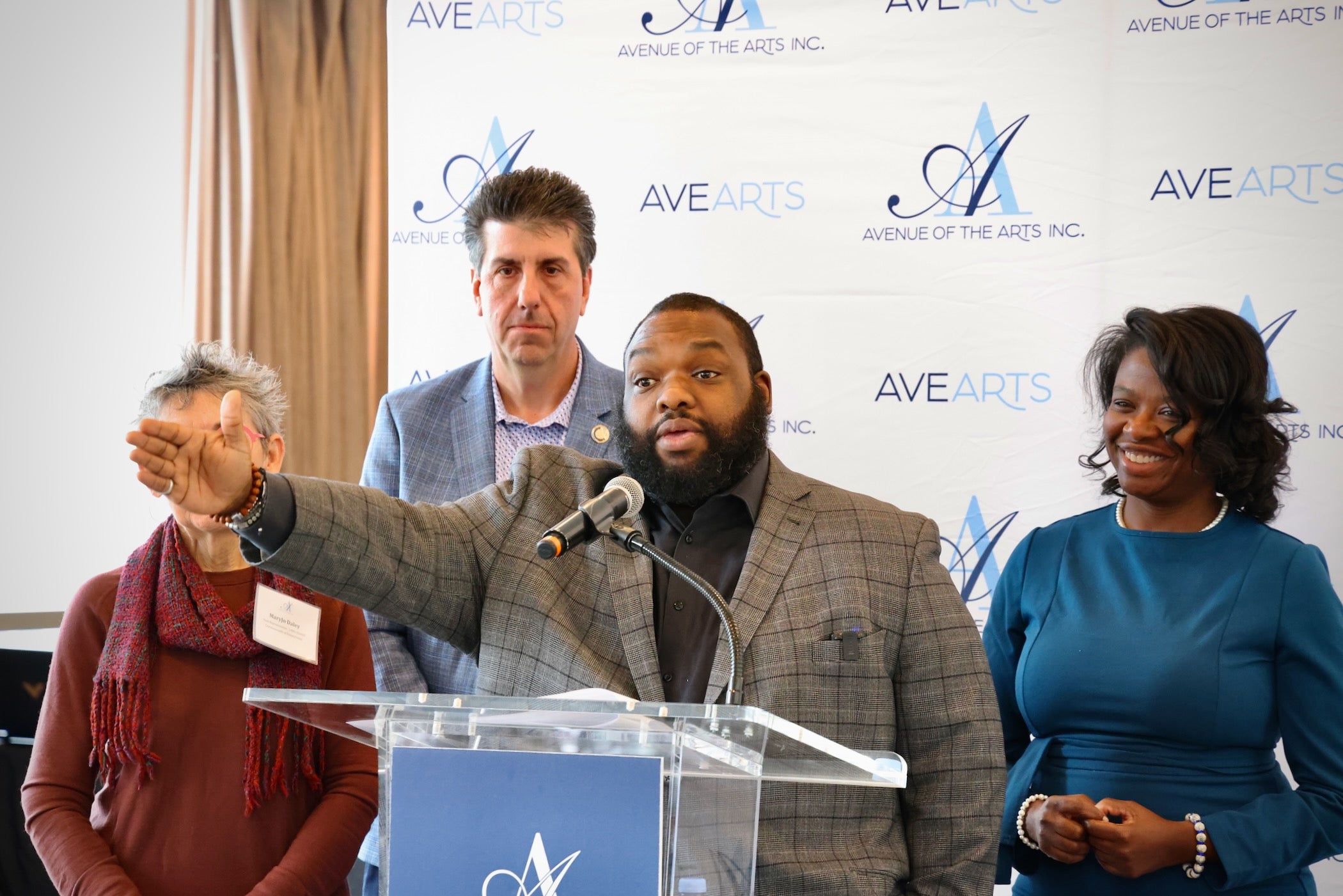
So far, the city of Philadelphia has contributed $3 million. State Rep. Jordan Harris, D-Philadelphia, used the ceremonial groundbreaking Tuesday to announce the commonwealth is chipping in an additional $500,000, bringing the state’s contribution to $1.5 million.
As chair of the state appropriations committee, Harris said an investment in the Avenue of the Arts is an investment for the whole state.
“The southeastern part of Pennsylvania is the economic engine of the commonwealth,” he said. “Sometimes my friends in Harrisburg forget that, but the money that is going out to Carbon and Cameron County, it is generated right here in Southeastern Pennsylvania.”
The project will be fundraising as it progresses. Dranoff commissioned an economic impact report that indicates every dollar spent on the cultural attractions on the Avenue of the Arts triggers an additional $256 in spending.
“It’s a multiplier effect,” he said.
Related Content
Philadelphia expands twice-a-week trash collection
The effort officially expanded to include the neighborhoods of Fishtown and Kensington, among others.
9 months ago
Listen 1:04How will this affect traffic and parking?
“Avenue of the Arts 2.0” is adding more programming to an already dense corridor. The new plantings and spaces for art installations and sidewalk dining will squeeze the street, but not reduce traffic lanes.
“South Broad Street has two lanes in each direction, and then a layover lane,” said Schaper, referring to striped lanes in the shoulder of the road that are often used for impromptu parking and loading. “We’re encroaching into the layover lane.”
With some exceptions — notably the Kimmel Center, which needs space for buses to unload — loading and delivery activity will be redirected to the avenue’s surrounding streets, and street parking will be eliminated to make room for greenery.
Schaper said the avenue does not need to be bigger, but smarter.
“The real impact is to not look at the layover lane as a free-for-all because it’s too valuable of a space in this part of the city to not do something better,” he said. “I think the project demonstrates that you can put it to better use.”

Get daily updates from WHYY News!
WHYY is your source for fact-based, in-depth journalism and information. As a nonprofit organization, we rely on financial support from readers like you. Please give today.

Ground stop delays hundreds of flights at PHL following equipment failure
Officials said an air traffic control backup system also failed after a wire was damaged at a construction site in New Jersey.
14 hours ago

New restrooms and seating with charging ports, along with upgrades to SEPTA platforms and parking garages, are part of the improvement plans.
2 days ago
Philly’s Avenue of the Arts to spend $100 million greenifying South Broad Street
Three decades after South Broad was designated as an arts destination, the Avenue of the Arts will be refreshed to attract more pedestrians.
2 years ago
Listen 1:20