
Why Yiddish is experiencing a grassroots revival in West Philadelphia
A rag-tag group of younger adults has rediscovered the West Germanic language and culture for heritage and politics.
From Philly and the Pa. suburbs to South Jersey and Delaware, what would you like WHYY News to cover? Let us know!
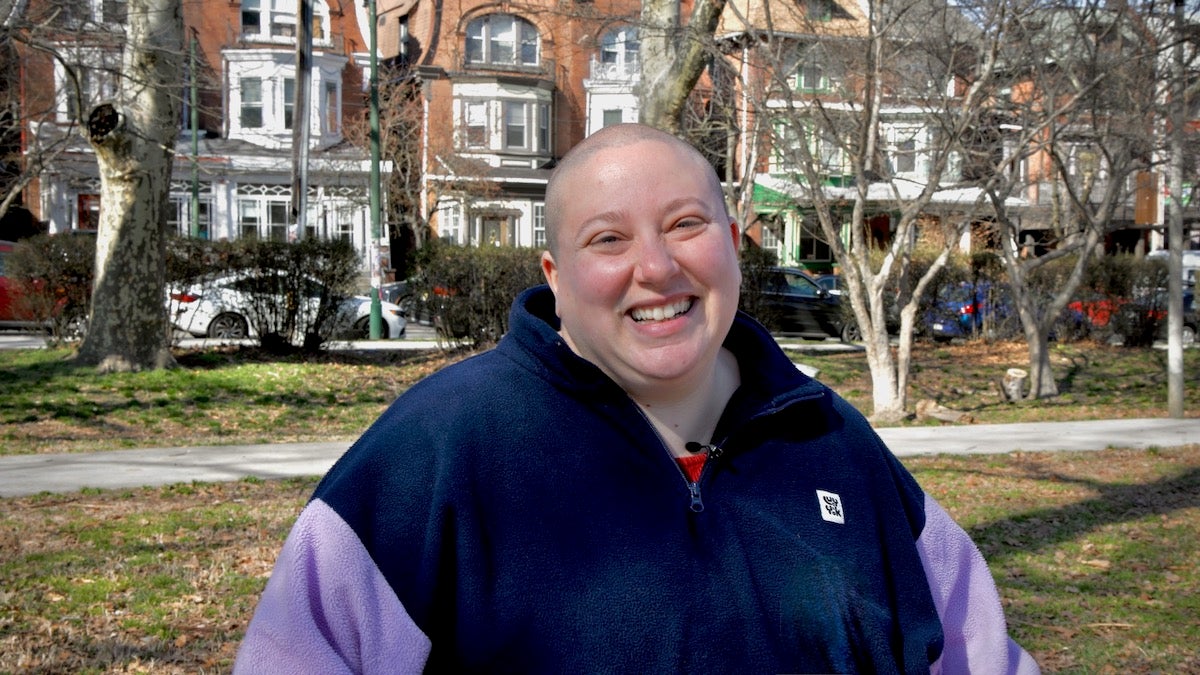
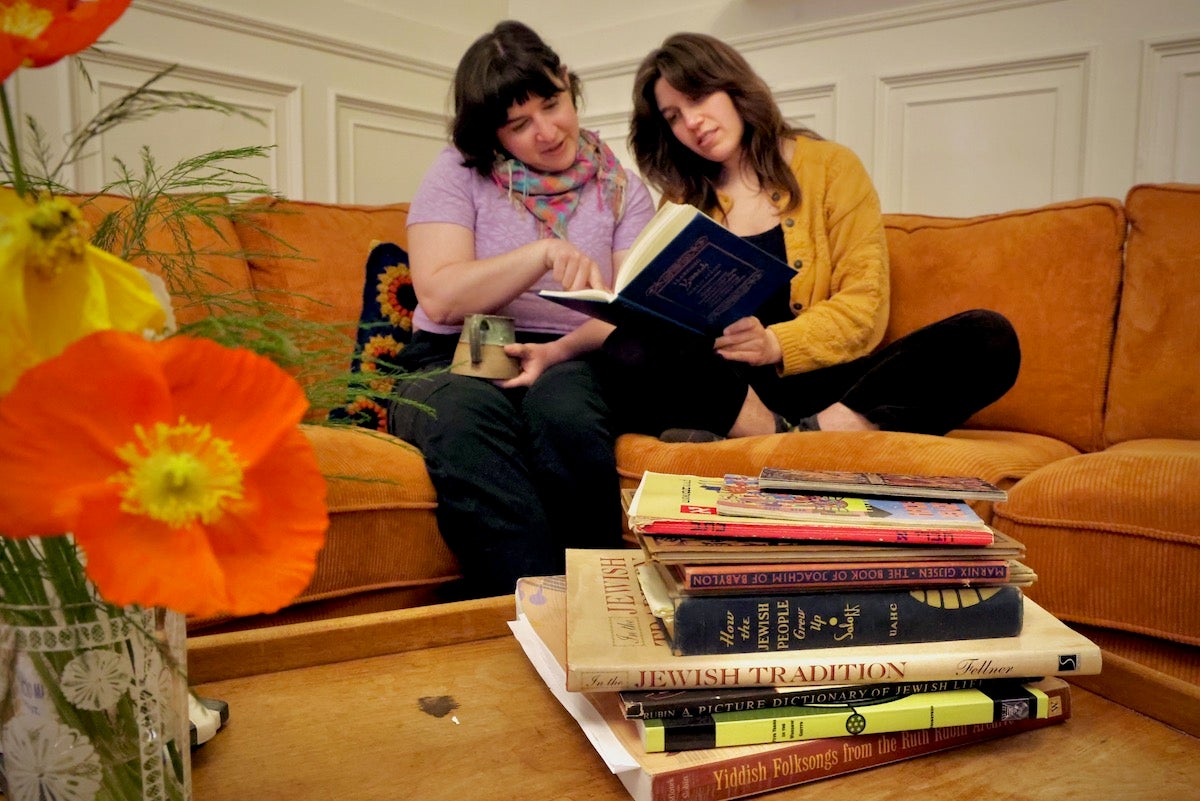
Isy Abraham-Raveson, 33, began learning Yiddish by reading books on insults.
“There’s a lot of creativity about how someone should suffer if they’ve done you wrong,” she said, offering some choice words.
“’May you grow like an onion with your head in the ground. May you be like a chandelier and hang by day and burn by night,” she said. “There’s one that’s, like, ‘May you become a mouse, and a cat eats you and you taste so bad that it spits you up.’”
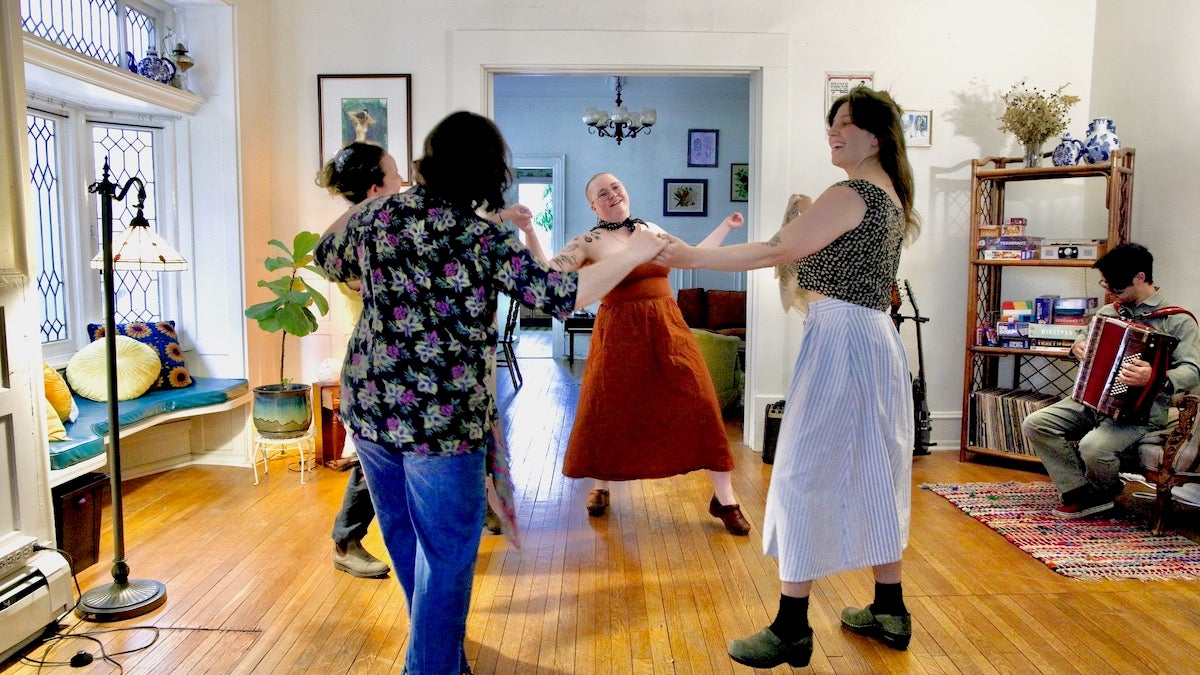
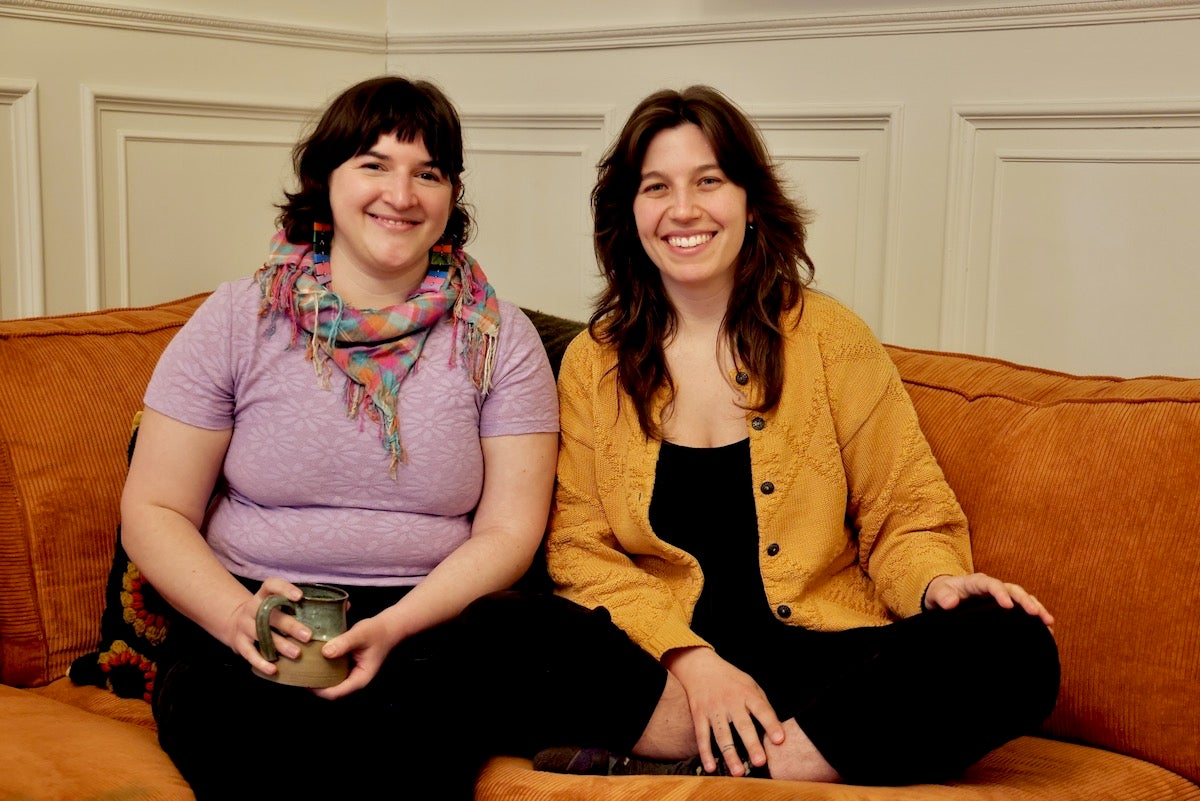
Abraham-Raveson is a co-founder of Philly Yid, a biweekly language group for mostly younger adults, who meet in West Philadelphia’s Clark Park to practice Yiddish. The group is part of a growing trend of younger Philadelphians who are immersing themselves in Yiddish cultural practices, including language, dance, theater and music.
“For my mom, her grandparents spoke Yiddish. I’m the first generation in that family who didn’t get to hear it in the house,” Abraham-Raveson said. “We’re feeling like, ‘Wait, it’s actually gone now. We got to pick it back up.'”
Abraham-Raveson’s interest in the language is driven by a desire to preserve her heritage. Others in the movement say they are pursuing Yiddish because it offers an alternative Jewish heritage divorced from the political and moral baggage of Israel and its military aggression in Gaza.
“I think there’s an element that’s about saying ‘no’ to the actions of these illegal settlements, apartheid and what leading human rights groups internationally and in Israel have described to be a genocide,” said Jack Braunstein, a West Philadelphia musician, whose experimental folk music is rooted in Yiddish concepts. “There’s also an element of saying ‘yes’ to something else. You have to have an alternative.”
Related Content
Salman Rushdie reflects on language, imagination and mortality
Salman Rushdie knows more about death than most of us. Decades ago, he lived in hiding after a death threat was issued by Iran’s Ayatol ...
Air Date: January 16, 2026 12:00 pm
Listen 49:46Klezmer opens the door into the culture
“For a lot of people, the point of entry to Yiddish culture is through music or dance,” said Jeffrey Shandler, author of “Yiddish: Biography of a Language” and professor emeritus of Jewish studies at Rutgers University. “They draw people to want to learn the language.”
West Philadelphia has long had a strong klezmer music scene. The West Philadelphia Orchestra, for example, is a brass band with Balkan and klezmer musical roots celebrating its 20th anniversary this year.
Since 2022, Dan Blacksberg, a trombonist and klezmer musician, has been hosting a monthly klezmer jam night at Upstairs at Abyssinia, a tiny performance space above the Ethiopian restaurant by the same name at 45th and Locust streets.
“It’s open to anybody, but you have to bring something,” Blacksberg said. “Some people have shown up and been like, ‘I just want to jam. I’ll just play along.’ That’s not the deal. The deal is, this is a place for you to try something out.”
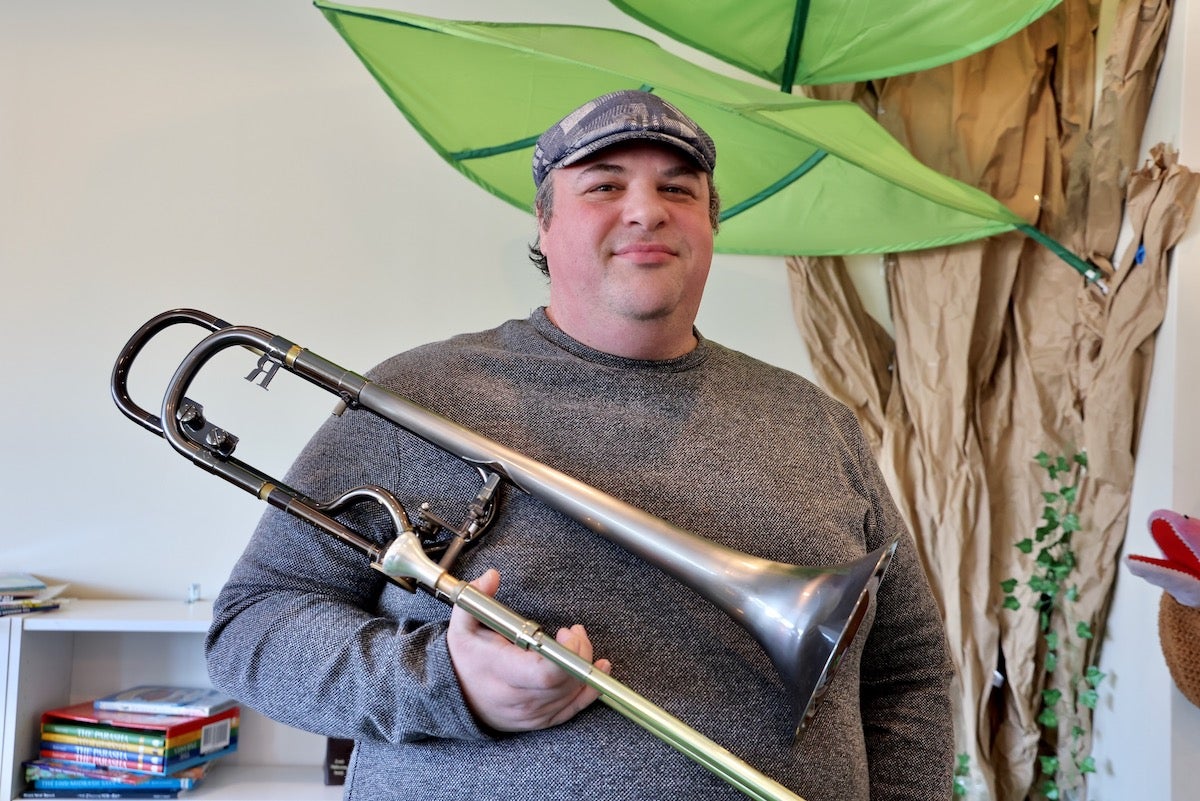
He said the groundswell interest in Yiddish he is witnessing now is unprecedented.
“I remember when I showed up as a 23-year-old fresh from New England Conservatory in 2006 and watching what was happening,” Blacksberg said. “There were mostly people my parents’ age. It didn’t feel like this.”
“People across different parts of Yiddish culture are taking a ton of initiative to get things going,” he said. “Not because we are the experts, not because we have the credentials, but because we just decided it’s time.”
Related Content

Weitzman museum plans an America250 exhibition from an island in the Caribbean
“The First Salute,” opening in April, will tell the story of a tiny, largely Jewish island that played a key role in the Revolutionary War.
5 months ago
Listen 1:12Philly’s scattered Yiddish community is growing roots organically
Philadelphia’s Yiddish community is dispersed. There is a patchwork of hot spots where people have discovered one another over the years.
In 2017, Kol Tzedek, a synagogue in West Philadelphia, asked Blacksberg to form a simcha band, essentially a house band to play at Jewish special events.
“In halakha, Jewish religion, you’re not supposed to have people playing instruments or doing work on certain holidays. So there’s always this tension between music and the rules,” Blacksberg said. “But at a place like Kol Tzedek, joy is the most important thing.”
Neighbors with various levels of musicianship rotate in and out of the simcha band, including Maddie Rabin, 32, a West Philly performing artist and therapist.
“I just joined because I thought it’d be fun,” she said. “I wasn’t that into klezmer.”
The simcha band led Rabin to discover KlezKanada, a Yiddish festival near Montreal, Canada. As with other festivals like Yiddish New York and Yidstock in Massachusetts, several hundred people from around the world typically attend the annual event.
“There was a huge contingency from Philly,” Rabin said.
At KlezKanada she met Miryam Coppersmith, 32, of South Philly. The two decided to create something similar in Philly.
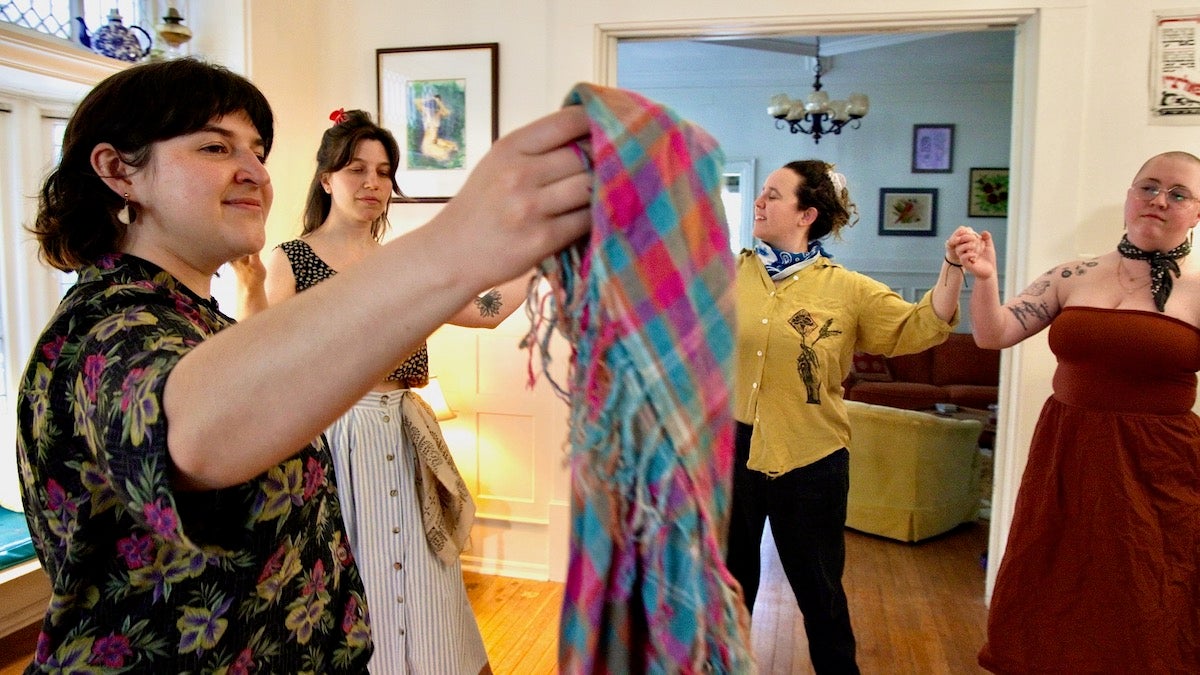
Coppersmith and Rabin founded Shtetl Philly, a mini-Yiddish festival held at Rabin’s house in the spring. Participants determine the programming and suggest topics for talks on Yiddish history and culture while curating dance and music classes.
Studying Yiddish dance has led Rabin to a-ha moments, she said, where her Jewish experience suddenly makes more sense.
“People who speak Yiddish and older Jews will talk with their hands, like this,” Rabin said while fluttering her hands. “Learning Yiddish dance and watching videos of older Jews and remembering my own grandparents talking and acting this way, I’m like, ‘Oh! That’s where the dance comes from!’”
Unlike previous Yiddish revivals that have received institutional support from places such as the Yiddish Book Center in Amherst, Massachusetts, Yugntruf – Youth for Yiddish in New York City and the YIVO Institute for Jewish Research, Philadelphians are picking up the mantle on their own with little organizing structure.
“That’s very typical of the current generation of younger people,” said Shandler of Rutgers University. “They are resistant to institutions and organizations. They want to make something on their own, small-scale, nonhierarchical.”
Related Content
A new Holocaust mural on the Parkway tells a story of displacement in 28 languages
“Lay-lah Lay-lah,” by artist Ella Ponizovsky Bergelson, uses ancient texts to connect the historic atrocity to a range of communities and underscore a shared humanity.
7 months ago
Listen 1:22A cultural revival grounded in place, memory and the meaning of belonging
Shande, the Yiddish word for shame or scandal, is the name of Jack Braunstein’s experimental folk band. The band recently released its first full-length record, “Hereness,” a concept from the Bund movement that advocated Jews build local communities, rather than strive for a Jewish state.
Braunstein said “hereness,” or “doikayt” in Yiddish, was conceived as an anti-Zionist concept.
“That idea is very counter to the idea that we all need to go somewhere to be together, and the only way for us to be safe is to have this fortress mentality,” Braunstein said. “‘Hereness’ speaks back to that and says the way that we as a community can find safety is by working in coalition with all those other communities around us.”
Rabin said Yiddish culture has been all but supplanted in American Judaism by a fixation on Israel.
“I grew up thinking that Israel was my culture and my lineage. That’s how American Jewish institutions teach it, and it’s just not true,” she said. “My family is not from Israel-Palestine. My culture is Eastern European Yiddish.”
The Philly Yiddish community often appears less political and more cultural, a way to connect with a heritage that is in danger of dying out. Coppersmith says the Shtetl Philly events bring together people from different political stances over zhok dancing and rounds of “Bei Mir Bistu Shein.”
“For me, being in a community that has anti-Zionist folks and folks who have ties to Israel but are critical of the community feels really rich,” she said. “As young people, we are demonstrating an active care and love of our culture that tells folks of an older generation, even if they have differing political views, they can’t look at us and say we don’t care about being Jewish.”

Saturdays just got more interesting.
WHYY is your source for fact-based, in-depth journalism and information. As a nonprofit organization, we rely on financial support from readers like you. Please give today.
‘Not Safe’ For Teens opens a haunted house of teenage political anxieties in former Philly church
With “You Are Here,” teenagers carve out their own space in West Philly to express themselves freely.
5 months ago
Listen 2:50
The event goes through the end of December, and tickets are available on select days and time slots.
1 year ago
Listen 1:02
West Philly’s Shakespeare in Clark Park goes indoors for a holiday premiere
The longtime outdoor summer company is expanding into seasonal theater that is neither Shakespeare nor in Clark Park.
1 year ago
Listen 1:03