University of Delaware has restored its anti-racism research website. Now students say academic freedom and trust were undermined
University leaders say removing the anti-racism research for months was a mistake. Students and researchers say it eroded academic freedom and institutional trust.
Listen 2:34
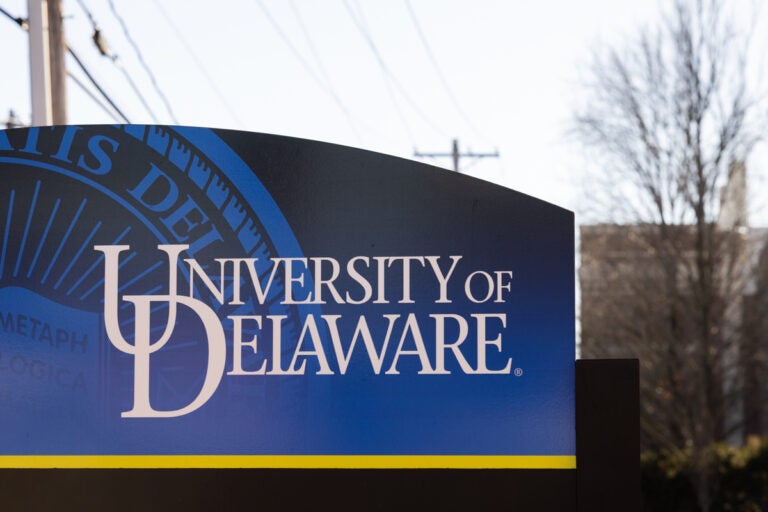
The University of Delaware in Newark, Del. (Kimberly Paynter/WHYY)
What are journalists missing from the state of Delaware? What would you most like WHYY News to cover? Let us know.
The University of Delaware quietly removed years of research and academic materials from its anti-racism initiative website last summer, cutting off access to scholarship examining its historical ties to slavery and systemic racism.
The website, known as UDARI, was created in 2020 as part of a national consortium studying institutional histories of racial injustice. Then, in July 2025, it went offline and stayed that way until February. Students and researchers say the disappearance of the website disrupted academic work, strained community trust, threatened academic freedom and raised concerns about transparency.
Months without access to research
Alex Toth, an undergraduate student majoring in history education and a board member of the Newark Historical Society, said he first noticed the issue while researching the university’s relationship with the surrounding community.
As a Newark, Delaware, native and local historian, Toth said he frequently relied on UDARI’s research.
“At some point in the middle of the summer, I went to look at one of the articles that I look at very often. It’s called, ‘Beyond Its Limits: A Case Study in University Expansion and Gentrification in Newark,’” he said. “I’ve used it in conversation with students and in conversation with other local historians, and I found out pretty quickly that it was gone, along with all the other research done by UDARI, and had been replaced by a pretty generic website.”
As the fall semester approached, Toth waited for an opportunity to raise his concerns directly with university leadership. He brought the issue forward during a Sept. 25 public forum with the UD interim president and senior administrators.
“What I was told at the moment was that UD had just been made aware … that this research had been taken down, that it was a mistake and that they were going to do all that they could to find a different venue to host this research on,” he said.
Despite that assurance, the website remained offline for months.
Prior to the UDARI rollback, the university had also asked diversity, equity and inclusion organizations, such as the Center for Black Culture and Student Diversity and Inclusion office, to remove their posters from campus. That got the attention of the student NAACP chapter at UD.
The chapter president, senior Corey Gordon, was at the same September town hall to fight against the removal of those posters. Gordon said he had also just learned about the website being taken down.
“We were frustrated, but we weren’t surprised. We had already known that these rollbacks were coming. We didn’t know how blatant they would be or how transparent they would be … or that they would go as far as to remove history and remove research and that sort of thing,” he said. “We realized that these aren’t cost-saving measures that the university is taking to protect the students and protect these spaces. They’re actively doing hostile moves against these spaces and against this community on campus.”
Earlier this month, the chapter decided to take their concerns to the state Legislature in Dover to hold the university accountable.
“We decided that we were going to go down there, let them know our side of the story, what actually happened on campus, what has been happening on campus, so that the legislators could be informed when making financial decisions, but also so that the community at large would know what’s going on on campus,” Gordon said.
“There’s been rollbacks like this across the country, and there’s been schools that have shown up in a fight for their students and advocated for their students,” he said. “And there have been universities that have not. And we’re definitely in that latter.”
Related Content
A new study highlights growing concerns as students face rising costs, limited on-campus options and increasing financial strain.
1 year ago
Listen 1:45The removal undermined academic trust
For researchers whose work was taken down, the decision was more than a technical issue — it called into question how their scholarship was valued.
Anisha Gupta, a doctoral student in the university’s preservation studies program, first became involved with UDARI in fall 2021 through a course examining racial inequality in Delaware and the university’s ties to slavery.
“I did a research project looking at land ownership. Particularly, I was looking at New London Road. It’s New London Avenue today. But New London Road was known to be an area where free Black families lived,” she said. “I had a basic question at the beginning of my research, which was: Just who were these Black families? And how did they get there?”
“We’re talking about pre-emancipation. So how did they have the resources to not only be free themselves, but also buy land?” she added.
Her report, “The Antebellum Foundations of New London Road’s Free Black Community,” was part of the UDARI project Legacies of Enslavement and Dispossession at UD. Over the semester, Gupta examined Census records, church archives, land deeds and handwritten historical documents to trace the lives and networks of free Black families in Newark.
She said the work required intensive archival research and collaboration with classmates, professors, librarians and historians. The project also aimed to bridge academic research with community knowledge, strengthening relationships between the university and longtime Newark residents.
Gupta said she learned the website had been taken down months after it happened, when her professor contacted her last October.
“To be totally honest, I was so disappointed, and I was so upset to learn about this. And I guess I was also shocked. I kind of couldn’t believe that the research had been taken down,” she said. “Mistake or not, I was disappointed that the research had been targeted in this way.”
She said she was surprised that neither she nor her professors were part of the process or consulted before the decision was made.
For Gupta, the situation raised broader concerns about transparency and academic independence. She added that the removal also weakened trust between researchers and the institution.
“I think when you do work and research at the university, on the one hand, they have control over the intellectual property from a legal point of view, but there’s also a really clear understanding of academic freedom. And I think that’s what is at stake here,” she said. “This has major repercussions on research on researchers and the community. … Even giving the university the benefit of the doubt about this … I just think it’s an erosion of trust.”
Related Content

‘It’s harming us’: Delaware lawmakers, educators want to scrap SAT mandate for 11th graders
Delaware usually falls near the bottom of national rankings because, unlike most states, almost all high school juniors take the test.
4 weeks ago
University leaders say removal was unintentional
University officials say the removal of the UDARI website was not intended to limit access to scholarship, but was the unintended consequence of a broader effort to restructure the university’s work around diversity, equity and campus engagement.
In an interview with WHYY News, José Riera, vice president for student life and interim chief campus culture and engagement officer, said that while the website was taken offline, much of its contents remained available through other institutional channels, like the library.
“There were kind of ancillary efforts at the university, or efforts that were decentralized at the university. We felt like it was important to pause and take time,” he said, alluding to a broader project the university is working on called “Culture and Engagement” that comes out in about two weeks.
“For a good amount of time, every Friday night, we had new executive orders dropping about shifting expectations for higher education institutions as it relates to work in the diversity, equity and conclusion realm,” he noted.
Riera acknowledged that the process surrounding the website’s removal was flawed, calling it “a mistake” and “sloppy.”
“Would I say that we were out to violate academic freedom or somehow chill?” he said. “No, absolutely not.”
Riera said the university is now holding conversations across departments with faculty and staff to strengthen communication and oversight around digital platforms and research access. He said those efforts are focused on preventing similar mistakes and ensuring academic work remains accessible and protected moving forward.

Get daily updates from WHYY News!
WHYY is your source for fact-based, in-depth journalism and information. As a nonprofit organization, we rely on financial support from readers like you. Please give today.
Part of the series
Part of the series

Delaware lands $1.5M national grant to strengthen career pathways — from middle school to workforce
Rodel secures a $1.5M national grant to expand career pathways, grow dual enrollment and strengthen college and career advising statewide.
1 week ago
Listen 1:29
Los líderes universitarios dicen que eliminar la investigación antirracista durante meses fue un error. Estudiantes e investigadores afirman que esto erosionó la libertad.
2 weeks ago
Philly education summit marks 20 years of Black history in public schools
The two-day gathering emphasized sustaining Black history education throughout the school year and beyond the classroom.
3 weeks ago
Listen 0:48