
What you can do about your rising electric bills in Pennsylvania
The National Consumer Law center said that about a quarter of all U.S. households sacrificed food and medicine to pay for their energy bills in 2024.
Listen 6:08
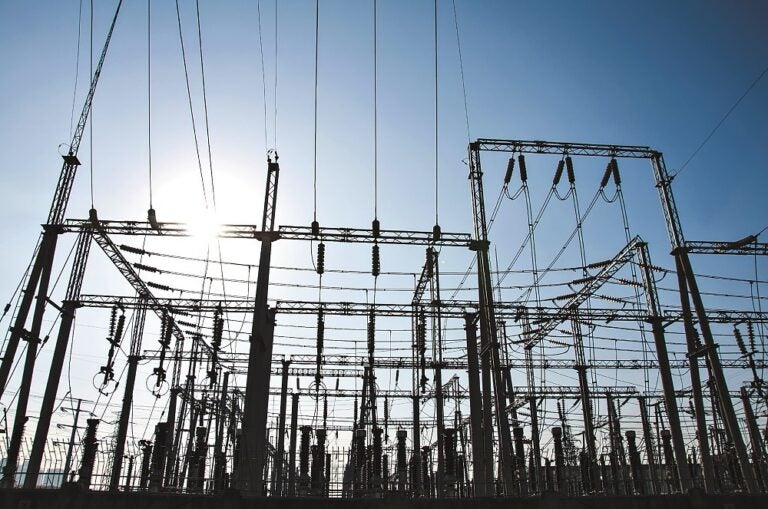
A transformer substation. (Courtesy of U.S. Department of Energy)
This story is part of the WHYY News Climate Desk, bringing you news and solutions for our changing region.
From the Poconos to the Jersey Shore to the mouth of the Delaware Bay, what do you want to know about climate change? What would you like us to cover? Get in touch.
Tuesday, March 31 marks the end of Pennsylvania’s winter moratorium on utility shutoffs, meaning for those behind on their electricity bills, companies could cut off their power starting April 1.
But those facing looming shutoffs aren’t the only ones struggling to pay their energy bills.
A recently released annual survey by the Energy Information Administration shows an uptick in the number of U.S. households struggling to afford energy in 2024. The National Consumer Law Center said the data shows almost a quarter of households sacrificed food and medicine to pay for their energy bills. Two years later, these trends are increasing as rates continue to rise.
“This increase in energy insecurity predates recent spikes in utility prices that will create an even more dire situation for cash-strapped households that are also facing rising inflation and record amounts of credit card and medical debt,” said John Howat, senior energy policy analyst at the National Consumer Law Center.
Several factors have combined to raise electricity costs in Pennsylvania, including the planned increase in hyperscale data centers, demand outpacing supply, rising supply costs and infrastructure expansion that has led to booming profits for investor-owned utilities.
While electricity bills are expected to continue rising, experts say what is needed is policy reform on the state and federal level. Still, it’s worth looking at a few things that could save individual ratepayers a few bucks.
A few quick ways to save on electricity
Most households across the U.S. have switched from incandescent bulbs to LEDs. But if you haven’t, it’s worth doing. According to the Department of Energy, LED bulbs can save the average household $225 a year in electricity costs.
Check the thermostat on your hot water heater. Lowering it from 140° Fahrenheit to 120° could save up to $400 a year, according to the DOE. Taking shorter showers also limits the amount of energy used to heat the water tank.
While most Pennsylvania residents heat their homes with natural gas, about a quarter of the state uses electricity to heat their homes. The DOE recommends a setting of 68 degrees Fahrenheit when you’re awake, and 58-60 degrees while at work or asleep. For air conditioning, the recommendation is 74-76 degrees, while adding a fan can help.
Switching to more energy efficient appliances
Appliances are the largest source of electricity usage, said Simi Hoque, a professor at Drexel’s department of civil, architectural and environmental engineering. The refrigerator is the most energy-hungry of them all, but you can’t turn it off. Hoque said switching to more energy-efficient appliances will save money, but only if the current models have reached the end of their life.
“If your water heater or your washing machine or your dishwasher or refrigerator have reached their end of life, then it would be important to try to make sure that you find an appliance that is an Energy Star- certified appliance,” Hoque said. “You’re not going to be able to recoup the cost of a new appliance if you haven’t reached the end of life of your existing appliance.”
One exception may be an old window unit air conditioner, Hoque said.
“Those things live for a really long time, but they become extremely inefficient over time,” Hoque said. “And so if you have an old window air conditioning unit, even if it’s not at its end of life, it may be worthwhile to look and see if it’s possible to buy a newer window air conditioning unit to install. I would actually buy a small one because generally those are pretty good. If you put a fan to move air around, the air conditioner can work towards reducing the humidity inside the space, and then the fan can just kind of move the dried cooler air around, and that is enough for comfort on a hot day.”
Hoque also encourages signing up for time-of-use pricing, which allows customers with smart meters to pay lower rates if they use appliances like dishwashers and dryers during offpeak hours.
Home energy audit/weatherization
A home energy audit can help pinpoint areas where expensive heat and cooling are escaping from your residence. Weatherizing your home by sealing drafty windows and doors can make a difference. The Environmental Protection Agency estimates that adding insulation to attics and crawl spaces can save up to 17% on heating and cooling costs.
Hoque said one of the most important parts of weatherization is making sure to insulate the top part of the house beneath the roof. And in a rowhome, it’s helpful to have a white- or silver-coated roof.
“This is more about being sure that you’re insulating the most vulnerable part of your building in the summertime to avoid overheating, and that’s the roof,” Hoque said.
Pennsylvania provides free energy audits and weatherization to those who make 200% or less of the federal poverty level. And some utilities offer services that will assess where you could save.
Related Content
Some customers in the Philly area pay as much as 20% of their monthly electric bill to company profits, according to a report. An industry group calls the report misleading.
6 months ago
Listen 1:40Shopping for alternative electricity suppliers
Pennsylvania’s deregulated electricity market means that while utilities have a monopoly on distribution in specific territories, ratepayers can still shop for alternative suppliers. Electric bills are generally split in half between the energy supply costs and the distribution costs of sending it through power lines. Utilities make their profit on distribution, and simply pass on the supply charges.
Choosing default service means going with the same provider for both supply and distribution, for example PECO or PPL Electric Utilities. This is the simplest option and one that consumer advocates recommend because the utilities are required to shop for a good price. The alternative suppliers, however, often have varying rates and cancellation fees.
Still, Lancaster County resident Bruce Blom said he’s been shopping for years through the Public Utility Commission’s PAPowerSwitch and saves about $80 to $100 a year. The process is known as “price to compare” where ratepayers can see the different rates and compare them to their default service provider.
“It’s pretty easy,” Blom said. “I always only look for a fixed rate and ones with no penalty for cancellation. And for anything for three months to a year. For the last two years, your best deals are only three months of a fixed rate.”
The key is to put reminders in your calendar when the fixed rate ends so you can make sure you’re not facing surprise rate hikes, Blom added.
“Frankly, I don’t care if they have some kind of reward,” he said. “Okay, fine, if they want to give me something, fine. But you got to keep checking because rates go up fairly rapidly.”
Blom had high praise for the PAPowerSwitch website, saying it was very user friendly.
“It’s the best thing I can do,” Blom said. “That’s the only control I have other than, of course, my own personal control of usage in my house.”
Going solar
One of the surest ways to prevent having to pay more for electricity each month is getting rooftop solar, but the upfront costs are high and out of reach for many.
“I love, love, love, love, love my solar panels,” said Shoshana Osafky, who lives in Cumberland County, New Jersey and has had rooftop solar since 2014. “I cannot say enough good things about them.”
Osafsky said for years she was paying a monthly bill of about $6.21. But this winter she saw her bills shoot up to more than $500 after the winter storms covered her panels with snow and ice, and work to insulate and install a heat pump meant the doors had to be open.
“We had unprecedented below freezing temperatures for at least three weeks,” she said. “That was crazy. That was not normal. Then whatever snow fell, that wasn’t melting. Like, normally we get snow, a couple of days, it’s gone, you know, and it would slide off the solar panels.”
Related Content
It’s the first time a Pennsylvania utility agreed to shield average ratepayers from data center costs. Data centers will pay $11 million for low-income rate relief.
6 months ago
Listen 1:24Could a heat pump work to lower electricity costs?
It depends.
“Heat pumps are designed to replace natural gas furnaces or fossil fuels directly and how they work is that they use electricity to move air instead of burning something to generate heat,” said Roxana Shafiee, a postdoctoral fellow at Harvard University who studies climate and energy policy. “It depends on where you are in the country because how efficient that heat pump works depends on your climate.”
Shafiee said heat pumps are more efficient in warmer climates. And right now, because natural gas is less expensive than electricity, replacing a natural gas furnace with a heat pump will not necessarily save you money. But if you have baseboard heat, or make use of space heaters, a heat pump could help.
One way to find out if it makes sense to switch is to use this heat pump calculator.
“If you’re using electricity already, especially if you’re in the Northeast, there are huge opportunities for savings,” Shafiee said.
The rising costs of electricity call into question decarbonization goals that are reliant on electrification, she said.
“So many of our plans have baked in the fact that we’re going to switch from fossil fuels to electricity, but if that electricity is expensive, then it’s just not going to happen,” Shafiee said. “It doesn’t matter how much you subsidize the upfront cost of the technology.”
Shafiee added that many of these options aren’t available for renters.
“We can’t expect people to tolerate a doubling of their bills overnight,” Shafiee said. “It’s just not acceptable. So really, what we’re recommending to [state] governments is to think a bit more deeply. Governments will need to understand better why the electricity prices are going up because it’s only going to get worse if we don’t address it.”
Another good tool to use if you’re thinking of long-term payoffs for energy efficiency upgrades is Rewiring America’s Personal Electrification Planner.

Get daily updates from WHYY News!
WHYY is your source for fact-based, in-depth journalism and information. As a nonprofit organization, we rely on financial support from readers like you. Please give today.
Part of the series
Philly residents will pay on average an extra $7 a month for water
The Philadelphia Water Department says bills are going up in part because more people are enrolling in a program that helps lower-income residents.
4 days ago
New financing is available for Philly-area homeowners seeking to install rooftop solar
The federal residential rooftop solar tax credits expire at the end of this year. But Philly-area homeowners have another affordable option through leasing.
9 months ago
Listen 1:11
A tax credit for home insulation, air conditioners and heat pumps ends soon. Here’s what to know
The Energy Efficient Home Improvement Credit saved households in Pa., Del. and N.J. more than $200 million in a recent tax year.
10 months ago
Listen 0:54