
How Philly Fashion Week has expanded access to an industry once reserved for insiders and celebrities
For two decades, the event has become a launchpad for local designers, turning a grassroots experiment into an enduring creative institution.
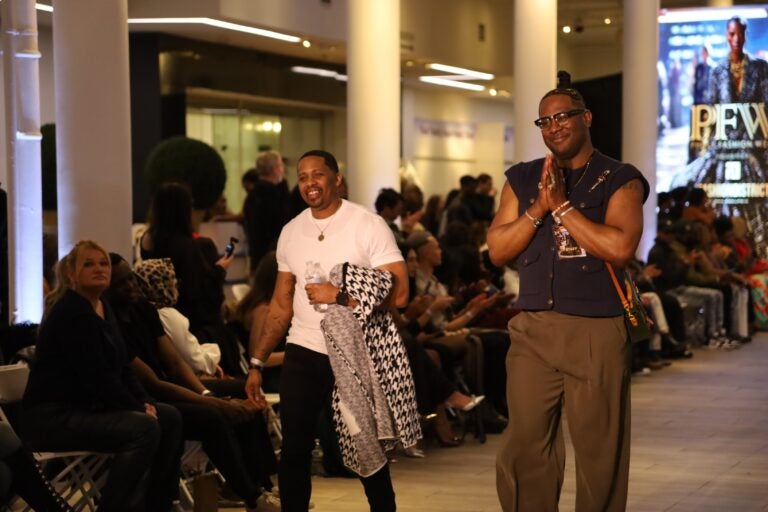
Soku Massimo takes a bow at the culmination of February's Philly Fashion Week. (Rana Rastegari/WHYY)
From Philly and the Pa. suburbs to South Jersey and Delaware, what would you like WHYY News to cover? Let us know!
Philly Fashion Week returned this month with couture shows at the new Vault XXVII space, marking 20 years since the homegrown event set out to make high fashion accessible beyond industry insiders, celebrities and influencers.
February and September are the industry’s most important months, anchoring the global production cycle with fashion weeks across the globe where designers, buyers and media come into alignment. Notoriously exclusive, they have become cemented in the cultural zeitgeist as inaccessible dreams of glamour.
In 2006, two childhood friends, Kevin Parker and Kerry Scott, set out to make fashion more accessible to Philadelphians and put the city on the map with Philly Fashion Week. The endeavor created opportunities for creatives to break into an industry that often keeps its doors firmly shut.
“Philly Fashion Week is more catering to the designers, and there is 100% more [creative freedom] here,” Parker said.
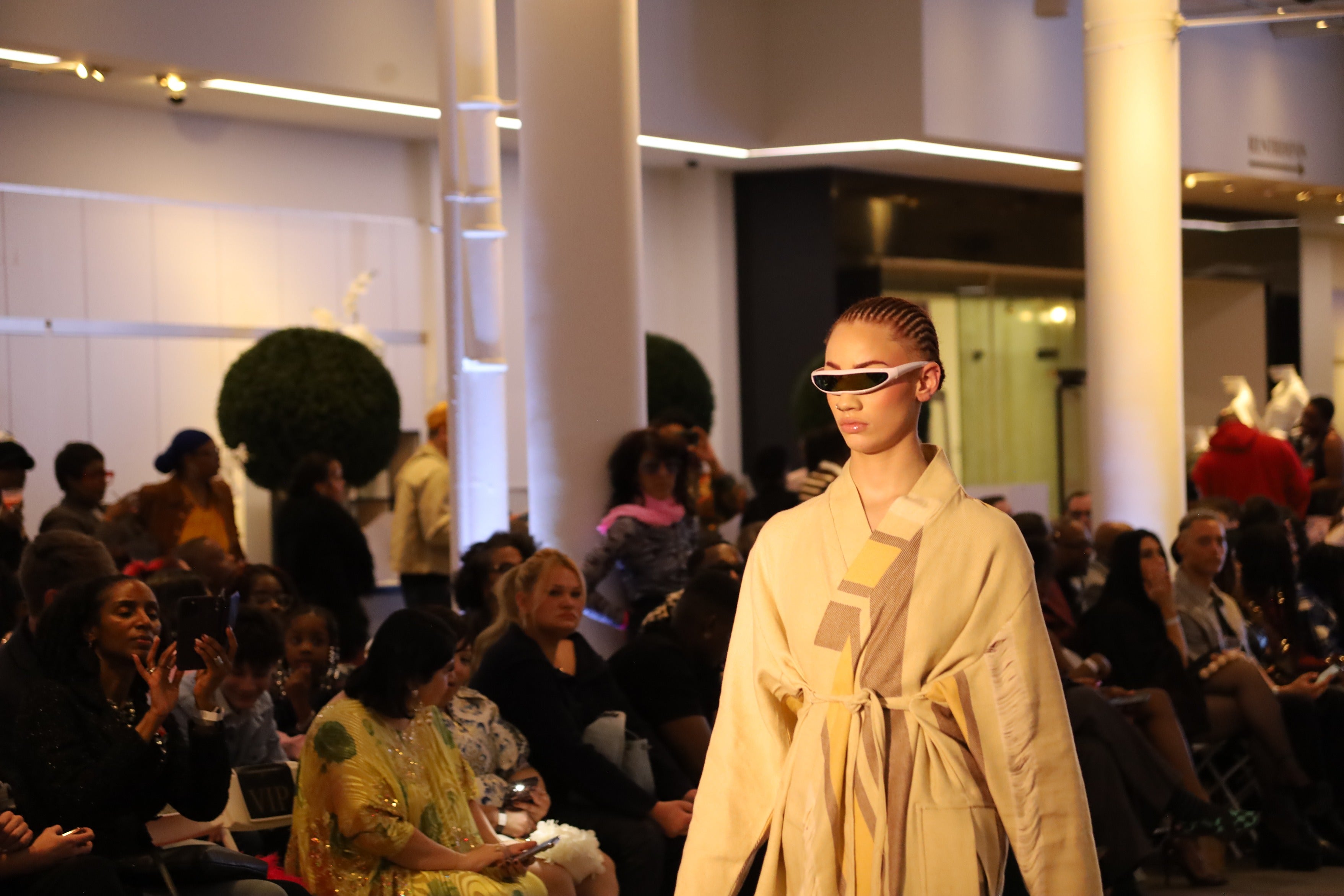
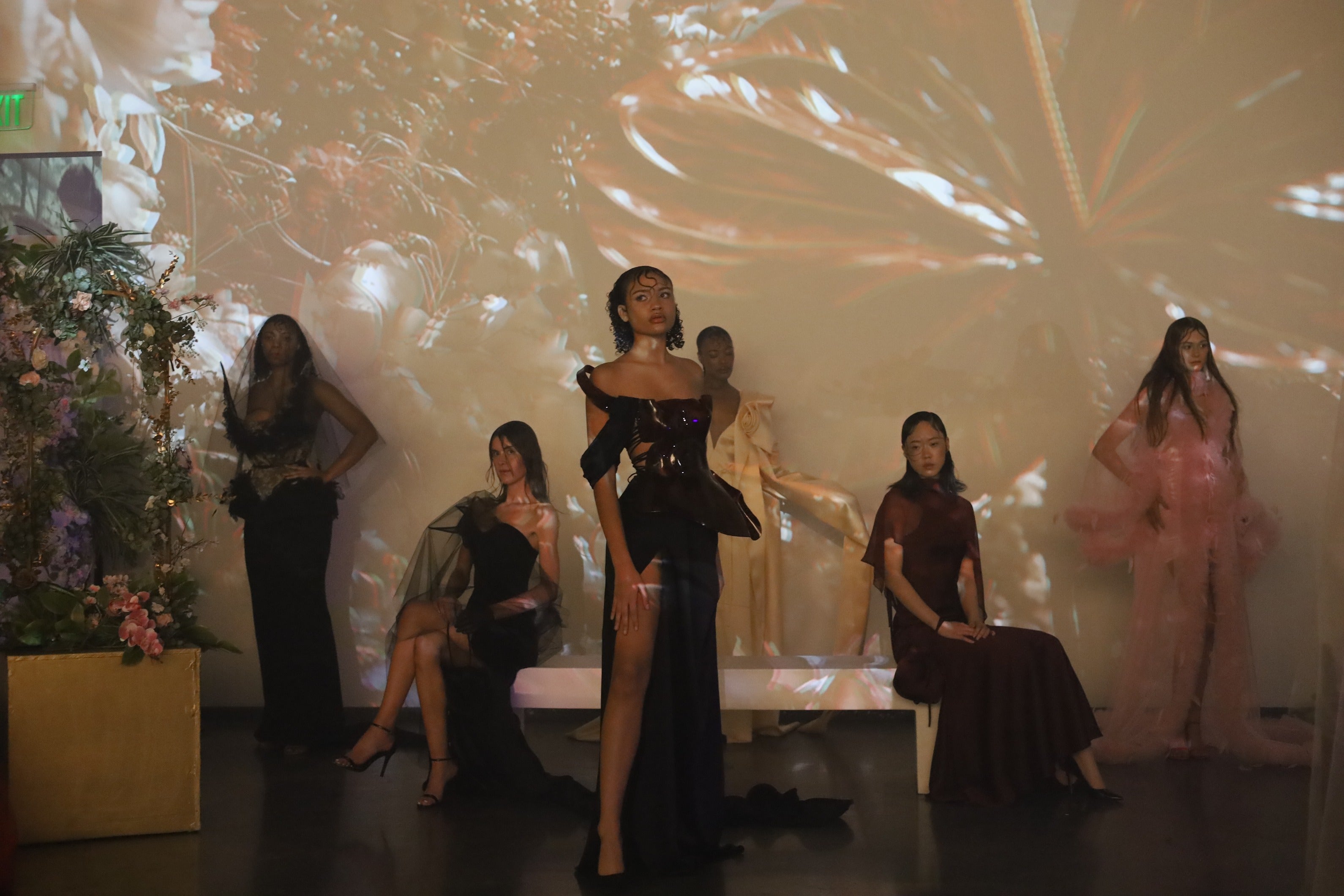
Twenty years later, the event remains a social staple for Philly-based designers, stylists, influencers and fashion lovers. This year, the opening night party and couture shows were held at the new Fashion District space. Four couture collections were displayed on models who walked among guests before taking their places between mannequins, an immersive experience that turned guests into a part of the performance. Each collection had a distinct theme, inspired by literature, film and the designers’ own experiences and identities.
Related Content

Dilys Blum, curator of fashion at the Philadelphia Art Museum for 38 years, dies at 77
Blum’s legacy includes the “Off the Wall” exhibition, a 2019 show about clothes as wearable art in the 1960s and 1970s.
8 months ago
Opening doors for designers
Susie Buttons, the designer behind Buttons, a retro-maximalist womenswear brand inspired by fantasy and fairy tales, has shown her designs all over the world, including New York and London.
“But Philly Fashion Week is the best,” she said. “Everybody involved loves what they do and they are just so helpful and kind.”
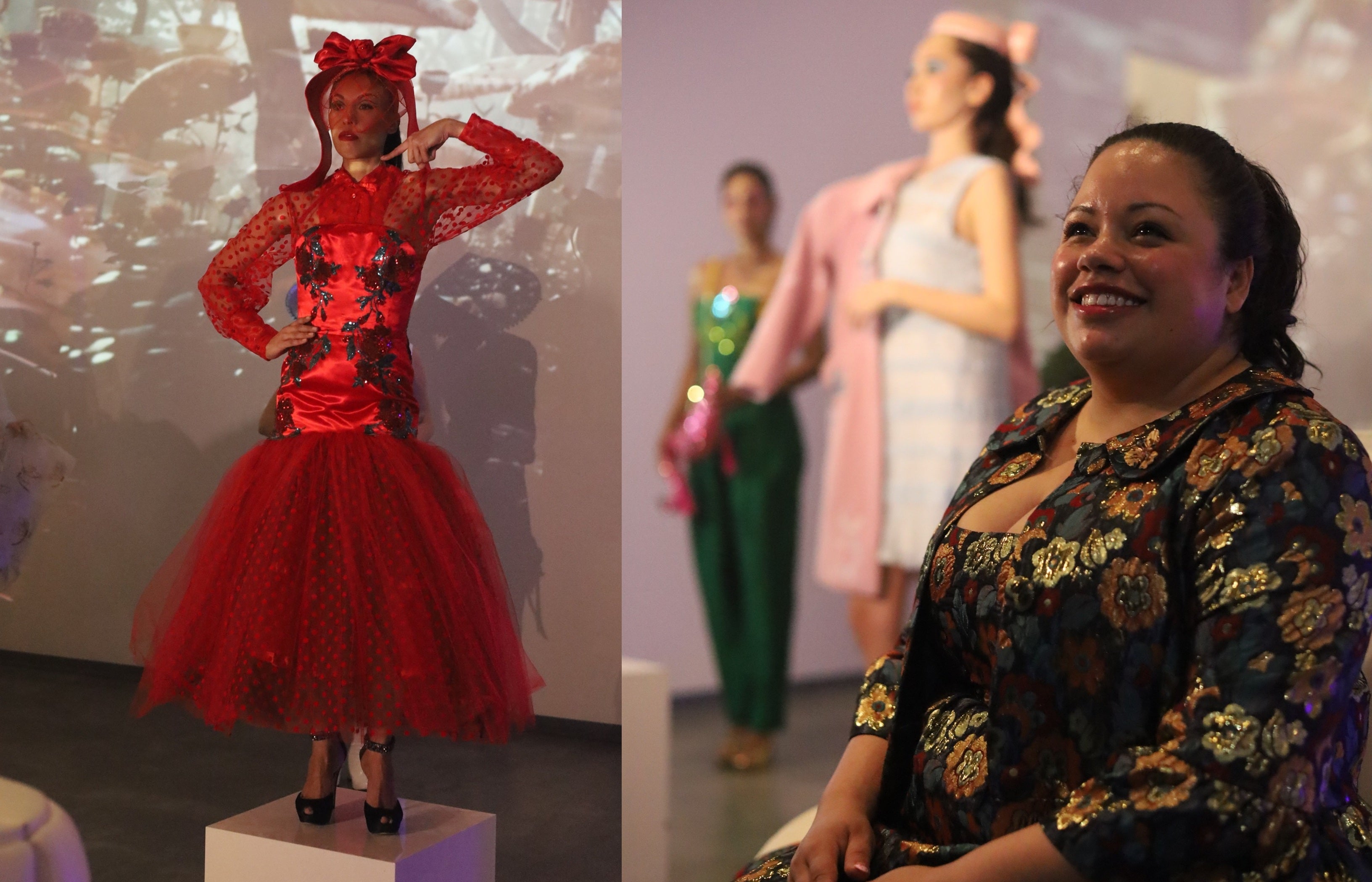
This year, her collection was inspired by “Alice in Wonderland,” with a hint of old Hollywood glamour. As an experienced costume designer and technician, she is used to creating within a set of rules, but designing her own collections to display at Philly Fashion Week offered her more freedom.
“In costume design and production, … you’re confined by a script, time period or what the director wants. This is more whatever I want to do,” she said.
Despite being a relatively small, regional event, Philly Fashion Week has opened doors for designers to showcase their work in New York and London and on “Project Runway.” Designers Kristina Kharlashkina and Prajjé Oscar returned to the runway in Philly to show their new collections, after appearing on the renowned reality competition show’s 19th season. For both of them, Philly Fashion Week represents a different direction for the industry.
“It’s always nice to get out of New York and see different countries or cities or cultures. Philly Fashion Week is a very strong community, and they really support each other,” Kharlashkina said. “In New York, you’re like a fish out of water, and here, I feel a really [deep] connection between people.”
Oscar’s continuous return to Philly Fashion Week is a sensation for many attendees.
“I see the opportunity it gives to the other designers, and I’m glad that I’m able to contribute to that,” Oscar said.
Jennifer Lynn Robinson and Nina Cueva-Castillo, both influencers who attended Philly Fashion Week, have followed Oscar’s career closely. “I was a total fangirl when he was on “Project Runway,” and now I can call him a personal friend,” Lynn Robinson said.
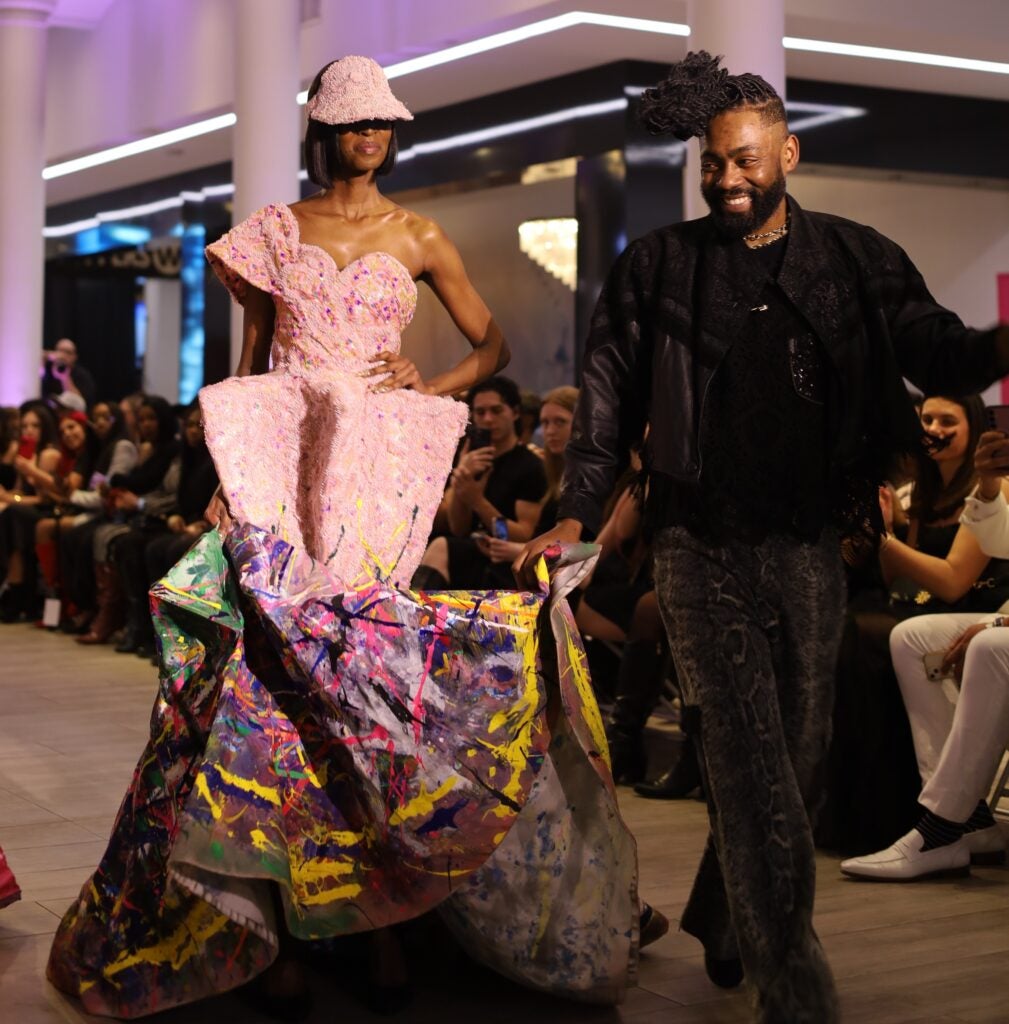
Community support seems to be the foundation for Philly Fashion Week’s 20 years of operation. Scott and Parker have essentially founded a hub for designers, models, stylists and producers to gain access to the often-shielded fashion industry without financial sacrifice. Attendees are able to interact closely with designers, requesting custom pieces and buying their newest collections from Maison, a storefront Scott and Parker launched in the Fashion District. Having access to Maison alleviates the financial burden of purchasing stores and showrooms, especially for emerging designers.
Steve Akins, of Paragon Charisma, handcrafts each of his designs. For many designers, the costs of fabric, studio spaces and mannequins are a severe limitation. But as Akins notes, at Philly Fashion Week, “They give everybody every opportunity. They tell us about every chance for grants, for fashion shows, to get us into stores, to get us on celebrity placements. It’s so rich. It’s so valuable to have them.”
Beyond opening opportunities for designers, Philly Fashion Week is a chance for creatives and artists to get involved in the industry. Taking on interns and volunteers every season, the event offers access to first-hand experience. For J’lyn E. Martin, a stylist and the show’s producer, Philly Fashion Week created a learning environment where he could work his way up the ranks.
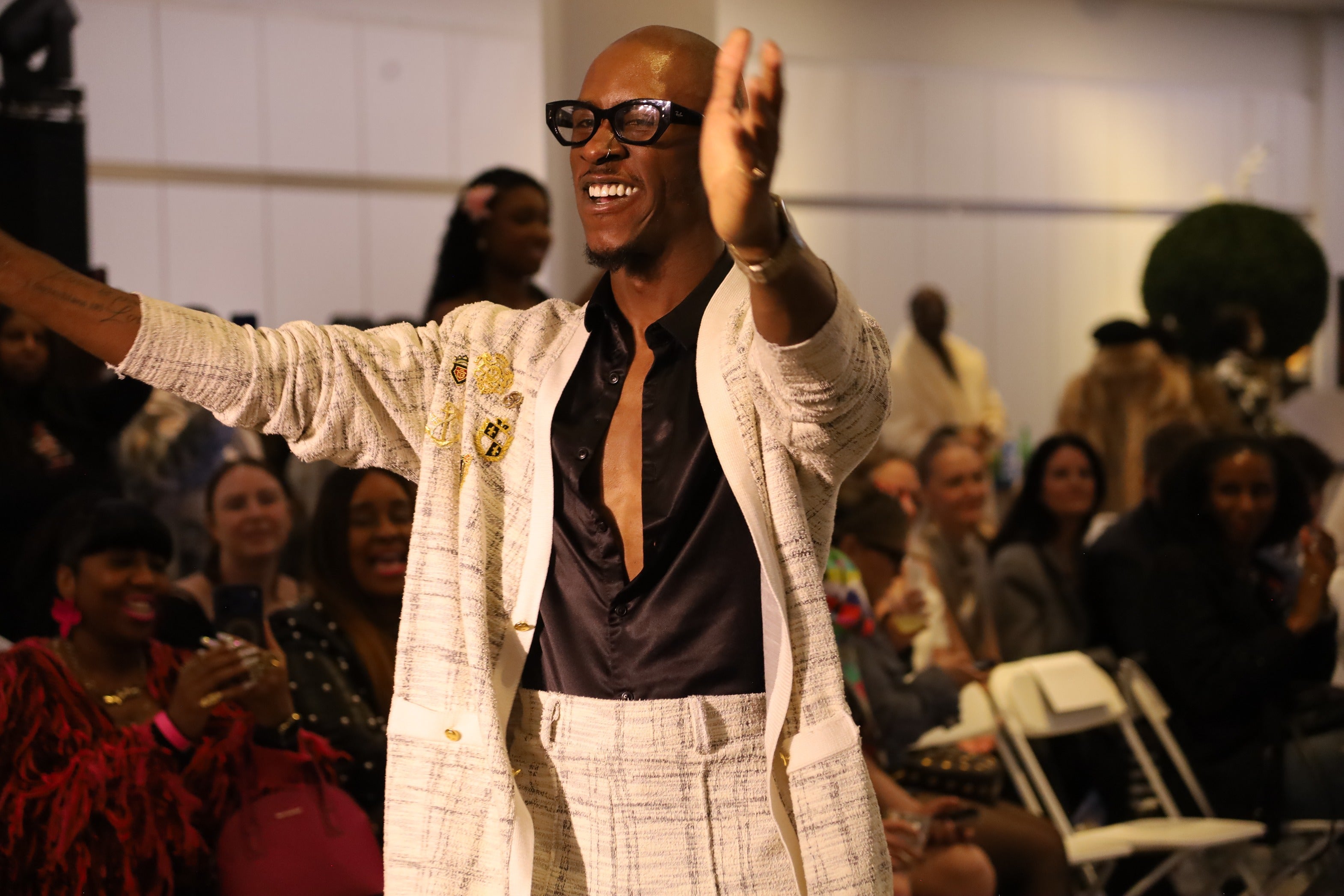
“I started as a volunteer. There was a lot to do and each season, I ended up doing more and more. I was [also able to] put my creative ideas and background into what we’re presenting in Philly,” Martin said. “There are people that want to be stylists or producers and they don’t have a foot in the door. I put my toe in there and they pulled my whole foot, leg and arm in, and now I’m producing the shows.”
Related Content
"Fashion can't just be about designing pretty clothes," said the program director.
8 months ago
Listen 3:25Behind the scenes
Though the event rolls around only twice a year, there is no rest for the minds behind Philly Fashion Week. “It takes me six months [to prepare] for every season. As soon as I [finish] preparing for the last season, I’m preparing for the next season,” Parker said.
Soku Massimo, the audience producer, echoed Parker, saying, “As soon as September ends, we’re talking about February within a week. There’s so many things that go into it, there’s so many people.”
The design process, too, is an ongoing project, with designers consistently building and adding to their collections. As such, they often spend innumerable hours in the studio. “All the pieces are handmade, so I’m in the studio from 3 a.m. to 3 a.m. The closing look [this season] was ostrich leather, which took three and a half months to make. It took four months for the material to come in,” said Stanton Jordan, designer of Somniis.
Keiko Myrtice, a featured designer at Philly Fashion Week, began working on her new collection in September 2025, when she last displayed her designs on the runway. “It never ends. It’s a continuation. This is the best time now, because we get from February to September. So, we’ve got a couple of more months. [But] I’m most definitely thinking about my next collection,” she said.
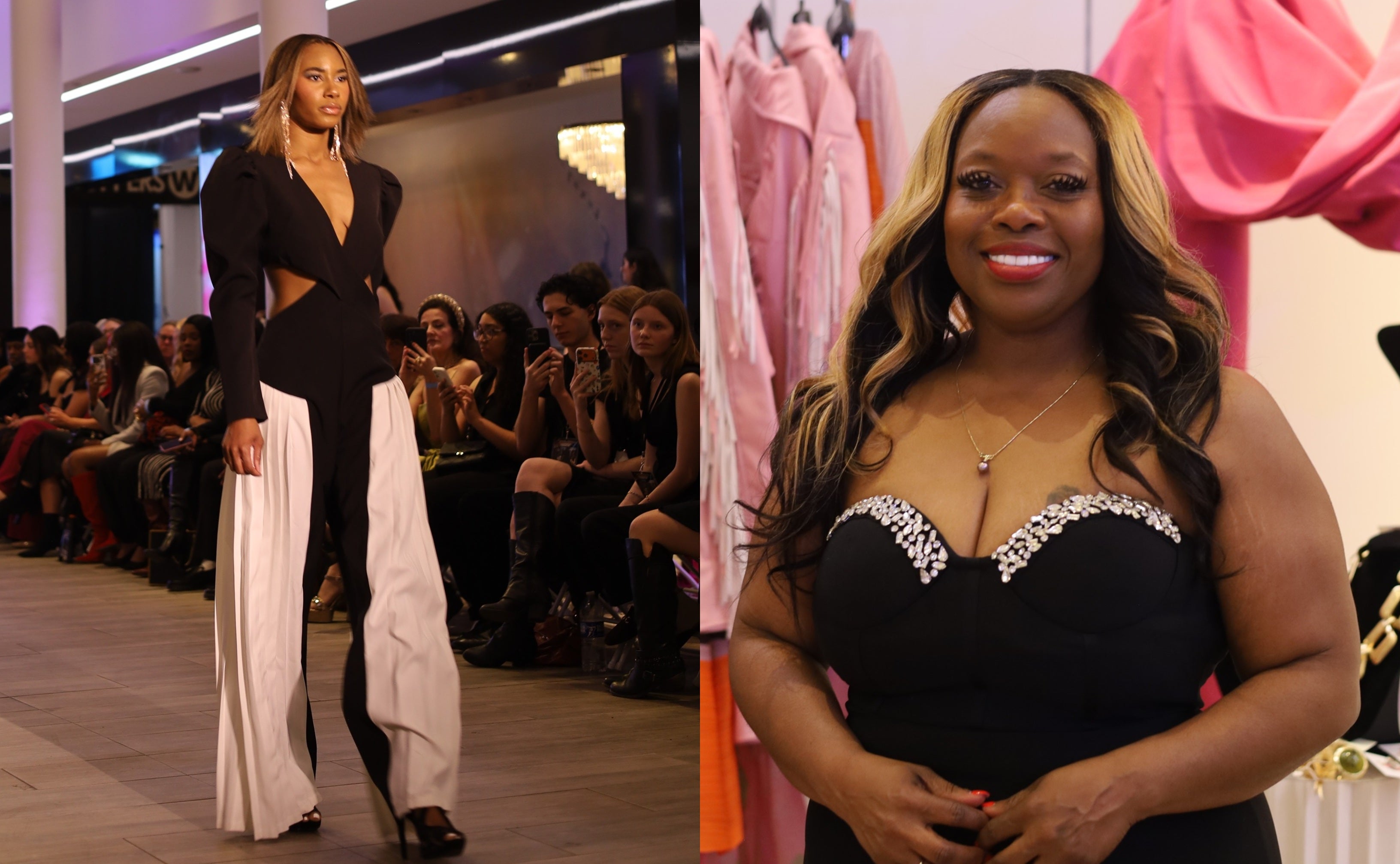
By continuously bringing in new designers, stylists, models and creatives, Parker and Scott have opened the doors of the traditionally barricaded fashion industry. What began as a weekend of outdoor shows at City Hall’s plaza is now a signature event on the Philly social calendar. And even though designers who have displayed their collections at Philly Fashion Week have gone on to do shows around the world, a sense of community brings them back to the City of Brotherly Love every year.

Saturdays just got more interesting.
WHYY is your source for fact-based, in-depth journalism and information. As a nonprofit organization, we rely on financial support from readers like you. Please give today.

Calling all procrastinators: There’s still time to snag Eagles gear and cheer on the Birds in style
Whatever Eagles merch you’re looking for, Philly shops and makers have you covered.
4 years ago
Philly embraces sustainable fashion this Earth Day
Sustainable Fashion Week comes to Philly for the first time. The event highlights local designers and invites all to learn more about sustainability.
4 years ago
Philadelphia Orchestra premieres new music for a 9-year-old’s fashion show
The Fabulous Philadelphians live up to their name as they premiere a new work for a 9-year-old’s fashion show.
5 years ago
Listen 1:56