
Germantown residents are mobilizing against displacement: ‘People power is real’
With a nod to King's vision for America, grassroots organizers aim to empower residents to "fight for their neighborhoods" amid mounting affordability pressures.
Listen 1:17
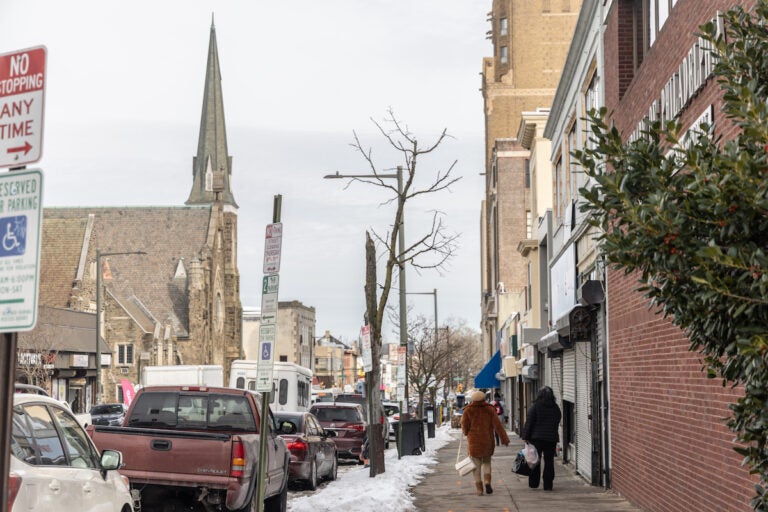
File: Chelten Avenue and Greene Street in the Germantown section of Philadelphia. (Kimberly Paynter/WHYY)
Have a question about Philly’s neighborhoods or the systems that shape them? PlanPhilly reporters want to hear from you! Ask us a question or send us a story idea you think we should cover.
When Andrew Kirkpatrick decided to buy a home in Philadelphia’s Germantown neighborhood, affordability was a big factor.
Homes in nearby places like Mt. Airy were simply too expensive.
But nearly a decade later, Fitzpatrick said his community is changing. Amid a rise in private residential development, the area is becoming increasingly unaffordable, raising concerns about gentrification, displacement and the historic neighborhood’s identity.
“People are getting priced out, and if we were trying to purchase a house here today, we probably couldn’t afford it,” said Kirkpatrick.
It’s why he’s ready to roll up his sleeves and fight for the future of his neighborhood. Through education and grassroots organizing, Kirkpatrick said he believes neighbors can push back and ensure that Germantown remains affordable — for longtime residents and newcomers alike.
Related Content
‘Love thy neighbor’: Invoking King, Philly protesters decry ICE raids and custody deaths
"If King were alive today," said Rev. Gregory Holston, "he'd be right out here with us."
2 months ago
Listen 1:24On Monday, he was joined by dozens of like-minded residents at a workshop hosted by Germantown Residents for Economic Alternatives Together, or GREAT. The goal was to educate and empower residents who want to keep Germantown a mixed-income neighborhood that’s affordable to low-income renters and homeowners.
The median household income in the neighborhood is $45,727, according to the U.S. Census.
Jayson Massey, a member of GREAT’s housing committee, said the progressive nonprofit wants to give neighbors the tools to get involved in neighborhood housing issues big and small.
“We gotta get people off the fence and into the game — that their neighborhoods and their blocks are their responsibility. And they have the right, and really the duty, to fight for them. And we wanna work on how exactly you can go about doing that,” said Massey.
Related Content
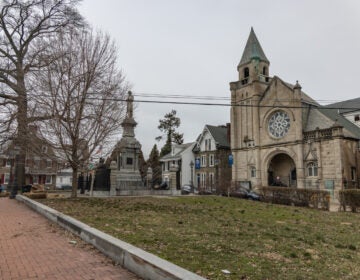
Rise in residential development in Germantown sparks optimism — and caution
For decades, Germantown was not the kind of place developers held ribbon-cutting ceremonies. But that’s changing.
2 years ago
Listen 7:04It’s a goal rooted in Dr. Martin Luther King Jr.’s vision for America, which included a push for the creation of “beloved” communities. The concept is the bedrock of GREAT’s advocacy work, which they use to describe their vision for the neighborhood — a neighborhood built on justice, equality and love that is welcoming and supportive of all.
“We are afraid that will be disturbed or taken away with the development that has been going on,” said Regina Robinson, an organizer with GREAT.
During the workshop, participants learned how to stay in the loop on proposed development projects, the importance of attending zoning meetings, and ways to create more affordable housing in the area.
They also considered how residents could respond as a community to a pair of development scenarios, both based on real-life circumstances, including one rooted in the history of the Germantown YWCA, a large historic building that has remained vacant for two decades.
In small groups, participants discussed potential strategies for influencing City Councilmember Cindy Bass, who represents the district, to consider the neighborhood’s desire for affordable housing, as well as how they would organize residents around the effort.
Traditionally, council members in Philadelphia have considerable sway over what gets developed in their districts.
“Each neighbor is vital,” said Marie-Monique Marthol before the exercise. “People power is real.”

Subscribe to PlanPhilly
WHYY is your source for fact-based, in-depth journalism and information. As a nonprofit organization, we rely on financial support from readers like you. Please give today.
Brought to you by PlanPhilly

PlanPhilly
In-depth, original reporting on housing, transportation, and development.
New Jersey affordable housing plans deadline arrives. Here’s what happens next
Many plans that have been submitted call for redevelopment of vacant malls, office parks and blighted spaces.
1 week ago
‘Love thy neighbor’: Invoking King, Philly protesters decry ICE raids and custody deaths
"If King were alive today," said Rev. Gregory Holston, "he'd be right out here with us."
2 months ago
Listen 1:24
Philly City Council’s big housing push: What changed for renters, homeowners and developers in 2025
The mayor’s housing plan took center stage, but lawmakers also made it easier for certain renters to move and made life easier for affordable housing developers.
3 months ago