

What Philly’s Fourth of July heat wave reveals about climate change
Scientists say rising temperatures and intense storms will become more likely because of human-caused climate change.

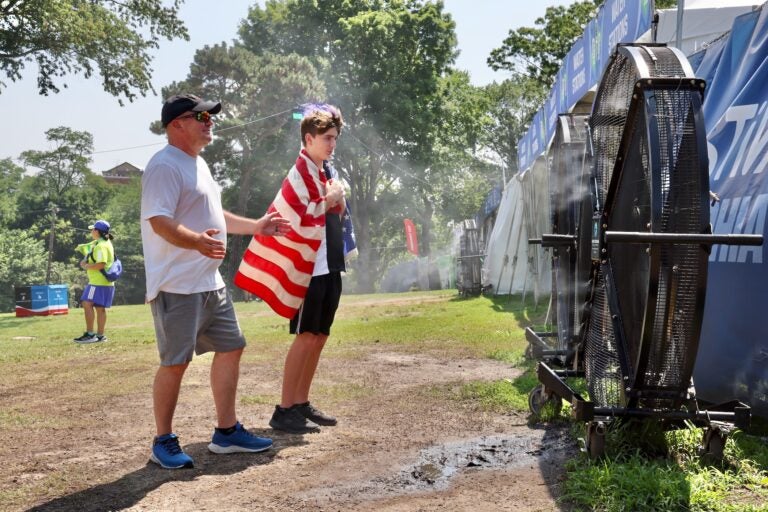
Patrick Ullman of Pottstown and his son, Tanner, 14, cool off in the mist fans at the FIFA Fan Fest at Lemon Hill. (Emma Lee/WHYY)
This story is part of the WHYY News Climate Desk, bringing you news and solutions for our changing region.
From the Poconos to the Jersey Shore to the mouth of the Delaware Bay, what do you want to know about climate change? What would you like us to cover? Get in touch.
As the Philadelphia region commemorated the 250th anniversary of the Declaration of Independence, celebrations were derailed by dangerous temperatures and severe thunderstorms.
The extreme weather led to the cancellation of events like the historic Salute to Independence Parade and delayed fireworks on the Ben Franklin Parkway.
More concerning, the city reported seven heat-related deaths from the first week of July. Nearly 30 heat-related deaths were reported in New Jersey.
Scientists say heat waves like the one experienced in Philadelphia are becoming more common because of climate change, driven by greenhouse gases released by activities like burning fossil fuels.
“For July Fourth in the Philly area, the temperatures that you’re experiencing were four to five times more likely because of climate change. When you factor in the humidity, those conditions were six times more likely because of climate change,” said Kristina Dahl, vice president for science at Climate Central. “Climate change is making heat in our summers hotter, and it’s making it more likely as well.”
Climate trends 250 years later
The dangerous temperatures over the holiday were drastically different than what was recorded 250 years earlier.
Thomas Jefferson kept detailed records of the weather to help manage his plantation, share meteorological information and dispel beliefs about the climate in what eventually became the United States.
“He was trying to combat negative attitudes from Europe about the supposed inferior climate of the new world. So, this is a point of national pride for Jefferson as we’re building out this new nation,” said Bayard Miller, associate director of digital initiatives and technology at the American Philosophical Society.
On July 4, 1776, Jefferson tracked the weather in his diary throughout the day, documenting a high of 76 degrees. When the Declaration was proclaimed outside Independence Hall on July 8, the weather hovered around 80 degrees, said Miller, who is part of an initiative to digitize historical weather records from documents like Jefferson’s diaries.
Related Content
Philadelphia heat-related death toll jumps to 7 fatalities in first week of July
Philly had one of the hottest July Fourth weekends on record as it hosted thousands of visitors for World Cup matches and America’s 250th birthday.
2 months ago
Listen 0:53Climate change is making heat waves and intense rainfall more likely
Comparing daily temperatures alone does not explain climate trends.
“We can have cold days in July, we can have hot days in December. It doesn’t matter. Weather can be highly variable,” said Stephen Strader, a severe weather geographer and professor at Villanova University.
That being said, the likelihood of heat waves has been increasing rapidly because of climate change, Dahl said.
“It’s an American pastime to be outside on the Fourth of July, barbecuing, or at the beach, or outside for fireworks. And we absolutely, if we continue to warm the planet overall by burning fossil fuels, we will see an increase in the number of these extreme heat events, and they will be more severe than they’ve been in the past,” she said. “That presents really major health risks for people who are doing what we consider normal summertime activities outdoors.”
Excessive temperatures not only impact cardiovascular and respiratory health, but heat is also the top weather-related cause of death in the U.S.
Philadelphia’s 250th celebrations were also thwarted by heavy rain, wind and lightning. The storms forced people to evacuate the “One Philly: Unity Concert” on the Parkway and delayed fireworks until around 2:30 a.m.
Stader has researched weather data to determine the likelihood of tornadoes or severe thunderstorms impacting large gatherings from sporting events to festivals.
He found that Fourth of July festivities, the World Cup and the MLB All-Star Game were in the 90th percentile and greater for lightning and tornado exposure in the U.S.
“The scary thing for me, and I think we saw exactly what can happen, and it could have been a lot worse, is that our severe weather season in terms of tornado potential and just thunderstorms, which come with lightning, the peak of our severe season lined up with these events,” Strader said.
He said that understanding the likelihood of extreme weather events can help organizers have a sheltering and early-warning plan.
“Meteorologists are now being hired at NASCAR events and baseball stadiums because they want to make sure that they’re monitoring the weather in real time,” Strader said, adding that event attendants should also prepare themselves for extreme weather.
“It might be time to start thinking about some of these events, having a backup plan indoors for when these problems start arising.”

Get daily updates from WHYY News!
WHYY is your source for fact-based, in-depth journalism and information. As a nonprofit organization, we rely on financial support from readers like you. Please give today.
Part of the series
Philadelphia should do more to help unhoused people during heat waves, advocates say
In an open letter, a coalition of homeless people, advocates and service providers called for a heat response similar to how the city handles cold.
2 days ago
Listen 1:20
Reprieve from wildfire smoke expected to come over the weekend, meteorologists say
Rainfall and a change in wind direction are expected to push the smoky air away from Philadelphia.
1 month ago
Philly pools closed, trash pickup canceled due to very unhealthy air
Wildfire smoke is bringing very unhealthy air pollution to the Philadelphia region. Officials say everyone should avoid optional outdoor activities.
1 month ago
Listen 0:58