

In 2025, 27,229 acres burned during N.J.’s wildfire season. Climate change is making them harder to contain
Humans cause almost all of the state’s wildfires. Climate change is making them worse.

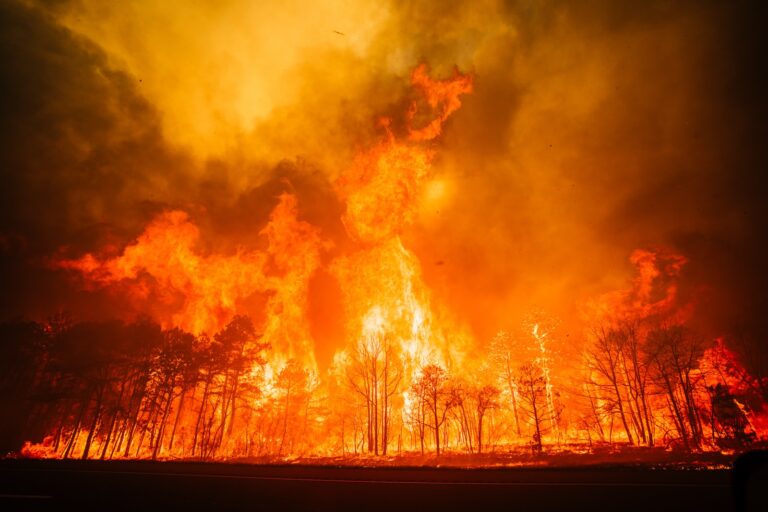
The Jones Road wildfire, which has impacted Ocean and Lacey townships in Ocean County, burns in New Jersey. (Courtesy of New Jersey Department of Environmental Protection)
This story is part of the WHYY News Climate Desk, bringing you news and solutions for our changing region.
From the Poconos to the Jersey Shore to the mouth of the Delaware Bay, what do you want to know about climate change? What would you like us to cover? Get in touch.
Climate change is making New Jersey’s wildfires harder to contain and prolonging its fire season, according to the 2025 Wildfire Report from the New Jersey Forest Fire Service.
Last year’s wildfire season broke records, with 1,322 wildfires burning 27,229 acres, according to the report. That marked a 22% increase in the number of wildfires, while the amount of acreage burned more than doubled, increasing 116% compared to the 20-year average.
“Coming off an extremely busy fall season in 2024, 2025 was a significant fire year in which our crews worked for weeks without a break,” said New Jersey Forest Fire Service Chief Bill Donnelly in a statement. “Our crews across the state remain ready to protect lives and property as New Jersey increasingly sees longer wildfire seasons.”
Only six of the more than 1,300 wildfires in 2025 were caused by lightning. The remaining 99.6%, were caused by humans.
The report says the leading cause was related to vehicles, equipment and utility infrastructure malfunctions, burning a total of 527.25 acres.
“It could be someone mowing their lawn and the leaves underneath their mower catch on fire,” said Brian Gerber Jr., a fire observer with the Forest Fire Service. “It could be someone lighting fireworks in their backyard like on the Fourth of July.,”
Gerber, who works spotting fires at the Medford Fire Tower on the edge of the Wharton State Forest, said he’s seen fires caused by a car backfiring.
“It’ll shoot out hot sparks and five or six fires will be started along a road,” he said. “I have seen train fires. I guess the stack pipe got clogged up and it was just shooting hot embers into the woods.”
Campfires also took a toll on the state’s forests in 2025, with 137 wildfires burning more than 15,000 acres.
The largest incident was the Jones Road wildfire in April, which was caused by an illegal campfire. It burned almost 15,000 acres, caused the evacuation of about 7,000 people in Ocean and Lacey townships, shut down major roadways, and led to power outages impacting about 30,000 residents. It took 20 days to contain.
Related Content
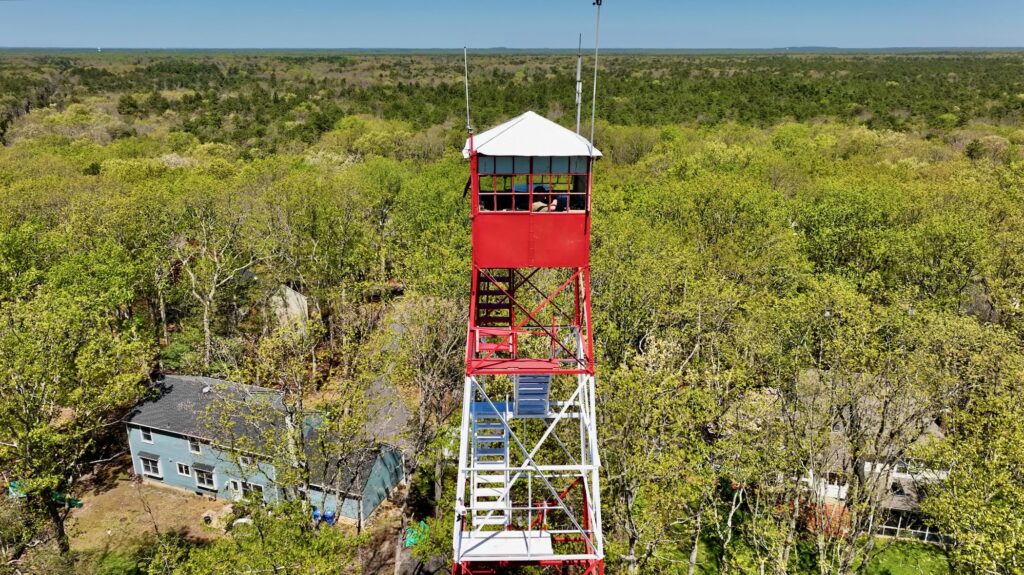
In the AI era, New Jersey relies on humans and a 1911 invention to spot wildfires
Perched 100 feet above the Pine Barrens, a man in a tower uses a century-old system to stop fire in its tracks.
4 months ago
Listen 6:34The impact of climate change on New Jersey’s wildfires
The problem is getting worse because climate change is creating more “fire weather” days — a combination of warm temperatures, low relative humidity, high winds and dry conditions.
The report says those conditions are contributing to larger fires and longer containment efforts.
One Cumberland County blaze, the Danny’s wildfire, burned for 26 days, scorching 1,326 acres.
The report also highlights the change in New Jersey’s wildfire season, which typically peaks in March and April.
“New Jersey is seeing a shift in wildfire risk beyond the traditional spring season,” said Greg McLaughlin, administrator for the New Jersey Department of Environmental Protection’s Forests and Lands, in a statement. “Increasing fire weather conditions throughout the year, aligned with long-term climate trends, are placing greater demands on our crews and reinforcing the need for year-round vigilance and fire safety among New Jersey’s residents and visitors.”
A report by Climate Central shows the annual number of fire weather days has risen by 13 days in North Jersey since 1973, and by eight days in the southern half of the state.
The New Jersey Department of Environmental Protection also released a report in 2020 on the impacts of climate change that found that “wildfire seasons could be lengthened, and the frequency of large fires increased due to the hot, dry periods that will result from increased temperatures.”
The state also conducts annual proscribed burns to lower the risk. The Forest Fire Service has burned 8,815 acres so far in 2026. Wildfire season has also been quieter this year, with 469 wildfires that have burned 545.25 acres as of the end of May.

Get daily updates from WHYY News!
WHYY is your source for fact-based, in-depth journalism and information. As a nonprofit organization, we rely on financial support from readers like you. Please give today.
Part of the series
Gusty winds, dangerous waves, flooding expected along New Jersey, Delaware coast
A powerful nor’easter is expected to push strong winds and high surf along the coast.
4 weeks ago
Listen 1:00
Philadelphia sees one of its warmest summers on record
The city’s average temperature tied for the third warmest on record from June through August.
1 month ago

Philadelphia should do more to help unhoused people during heat waves, advocates say
In an open letter, a coalition of homeless people, advocates and service providers called for a heat response similar to how the city handles cold.
2 months ago
Listen 4:18