
This Philadelphia Museum of Art exhibit shows the business of craft launched in Philly 150 years ago
“Workshop of the World” shows of the Centennial Expo kickstarted the region’s industrial craft legacy.

From Philly and the Pa. suburbs to South Jersey and Delaware, what would you like WHYY News to cover? Let us know!
In 1876, Philadelphia threw a big celebration of American independence by hosting the Centennial Exposition, a world’s fair showcasing the United States’ industrial might.
But when international exhibitors brought their wares to Fairmount Park, the shortcomings of American industry became apparent: Our stuff did not look as good as theirs.
“The tensions between art and industry were exposed by the Centennial,” said David Barquist, curator at the Philadelphia Museum of Art. “Americans had this reaction that American design and manufacturing was inferior to European and Asian, and they wanted to correct that.”
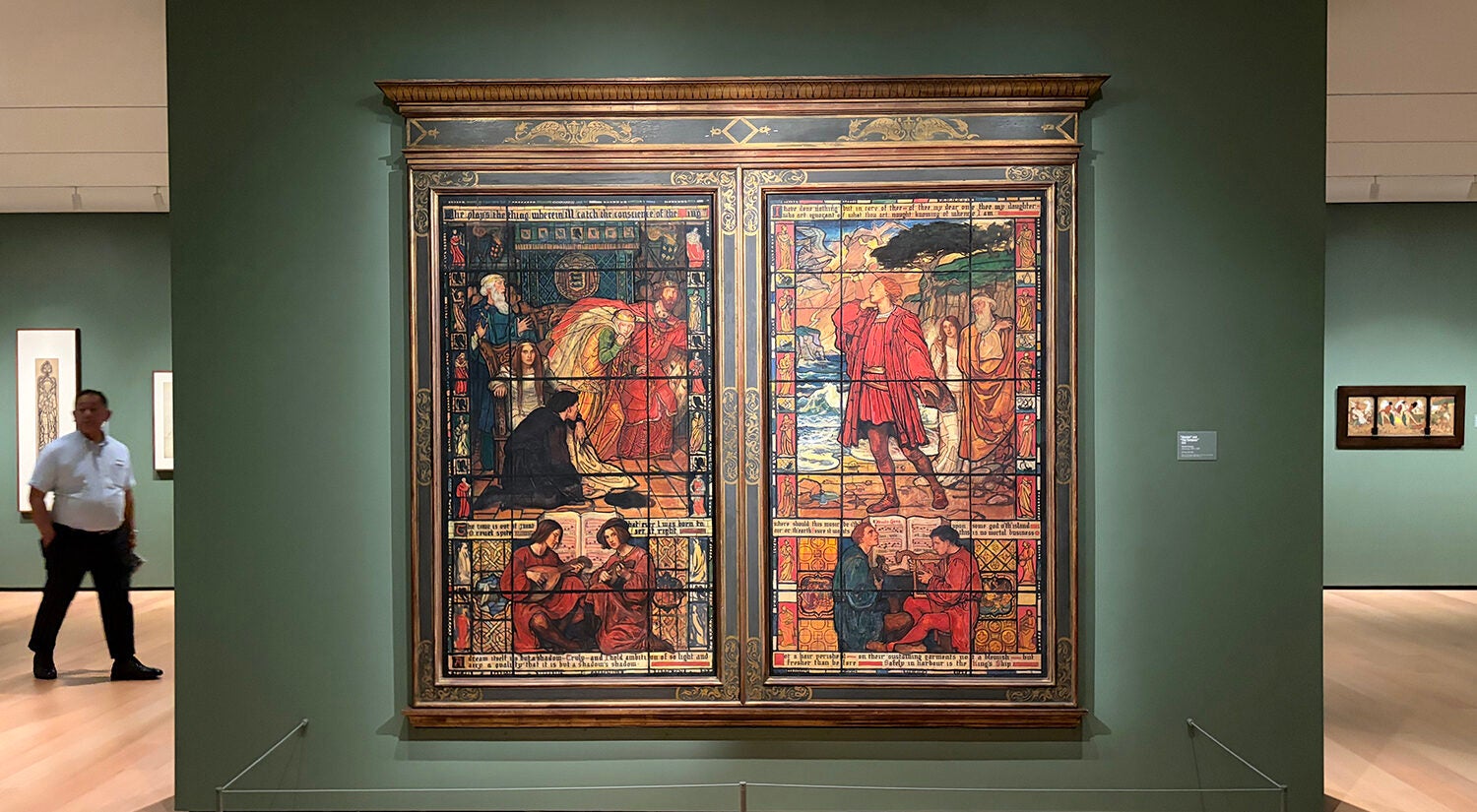
Barquist, along with curator Elisabeth Argo and assistant curator Colin Fanning, assembled “Workshop to the World: Arts & Crafts in Philadelphia,” a large exhibition tracking how the American Arts and Crafts movement of the late 19th and early 20th centuries originated at the Centennial Expo.
The PMA, too, traces its roots to the world fair. It is celebrating its 150th year, having launched at the Expo as the Pennsylvania Museum and School of Industrial Art.
True to its title at the time, the Pennsylvania Museum and School of Industrial Art was oriented around industry. Philadelphia was a major manufacturing city at the time and it needed to produce better designers to make better products.
The museum and school began collecting objects from the Centennial Expo so that students might learn from them, such as Japanese products, which were relatively new to the global marketplace at the time.
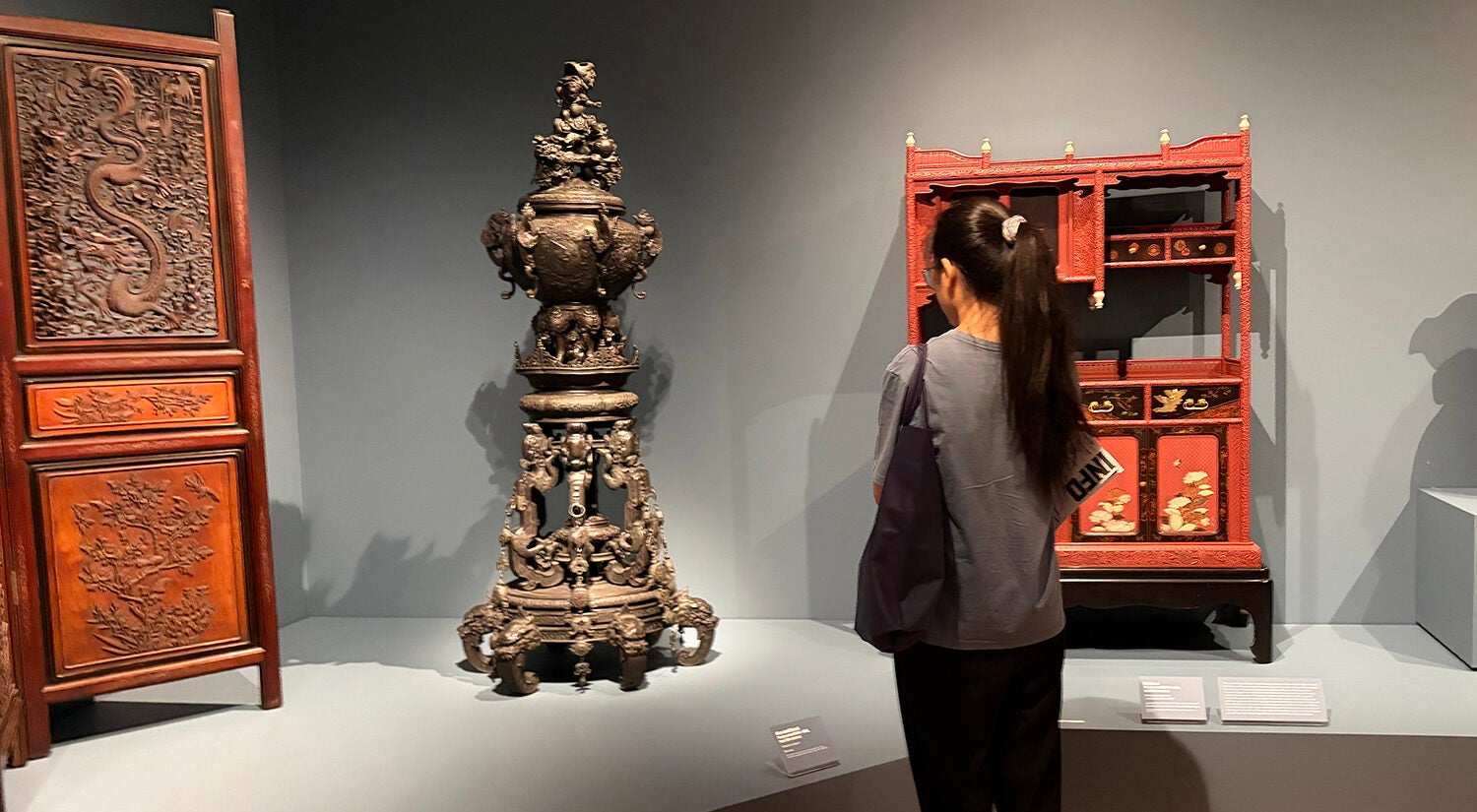
“This was after the Meiji Restoration [of 1868], so Japan is on modernization,” Barquist said. “They’re trying to get up to par with the European and American industrial powers. They wanted to make goods to sell to the West, and they were giving the West what they perceived the West wanted, which was very fastidiously made, detailed, intricate handmade work.”
The foundation for what is now the PMA’s 13,000-piece Asian Arts collection began at the Centennial Expo. Serious debates were stirring about the porous boundaries between art, craft and commercial design.
“The Centennial served as a vector for a broader set of ideas around the reform of design and manufacturing, that integration between art and industry,” Fanning said. “The exhibition takes the Centennial as that starting point but then shows how these other ideas around the role of the handmade and the individual maker played in a broader social picture.”
Related Content
The birth of American fine art: Philly celebrates the nation’s first art museum and school
The Pennsylvania Academy of Fine Arts has been inspiring our country’s creatives since 1805.
1 month ago
Around the time of the exposition, the ideas of the British designer William Morris began spreading around the world. As one of the chief architects of the Arts and Crafts movement, Morris largely rejected large-scale industrial manufacturing and promoted a return to handcraft by individual artisans.
“Workshop of the World” shows how those ideas clashed in Philadelphia, a city literally choking on industry.
“This is a major social push against the alienation of work, this idea that returning to craft and returning to these traditional techniques is a way of bringing autonomy back for workers,” Fanning said. “If you have the choice to live with something handmade by somebody who was in control of their own labor, versus machine-produced schlock — there was an ethical question at the heart of that.”
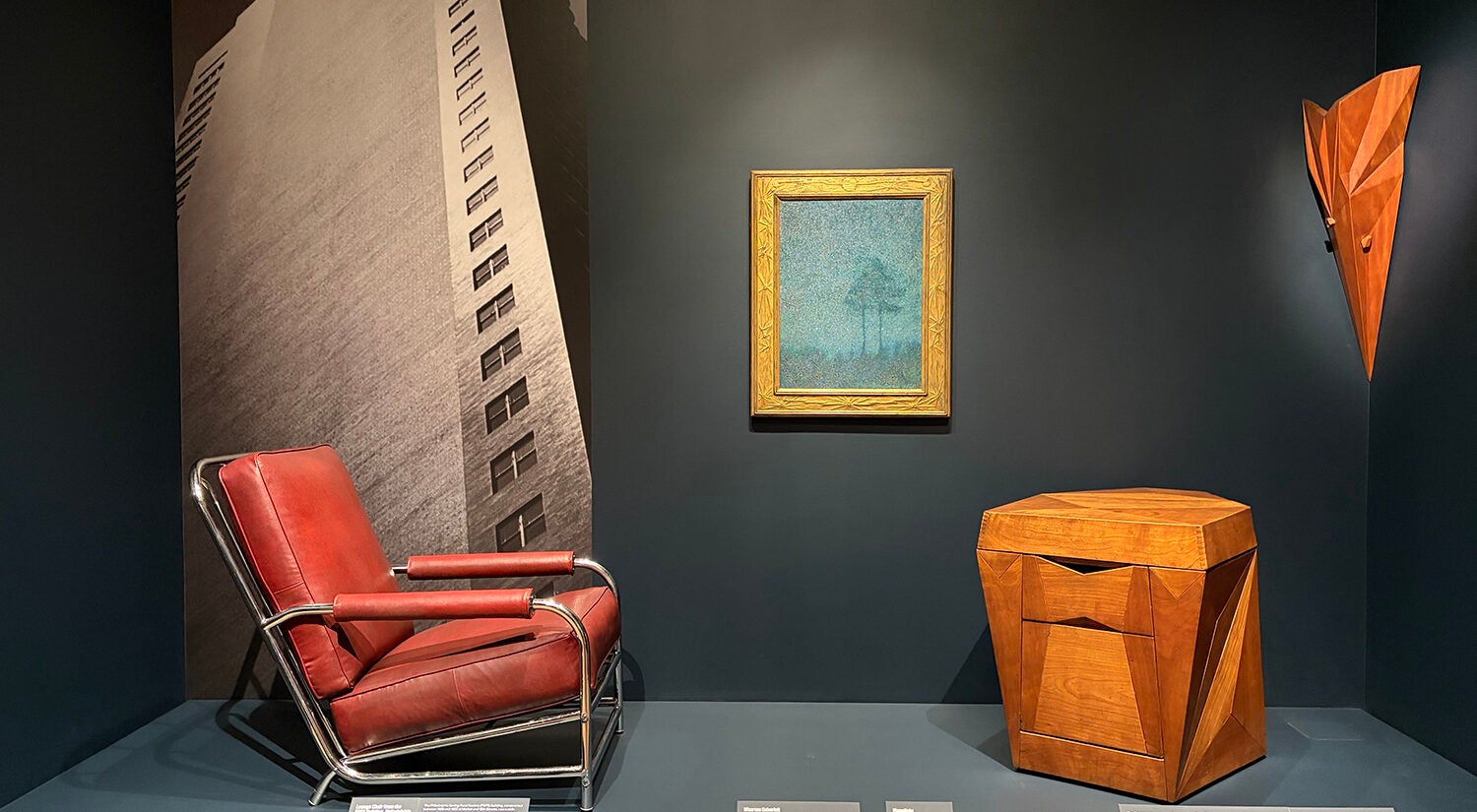
Artisan communities like Arden, Rose Valley and New Hope began to form in the Philadelphia region as bucolic villages where individual craftspeople made and sold handmade wares. Although the communities still exist and celebrate their artisan origins, Barquist points out that their Arts and Crafts economic models were never sustainable.
One section of the exhibition shows how two high-profile Philadelphia artisans, Henry Mercer and Samuel Yellin, worked both sides of the craft versus industry debate.
Mercer, of the Mercer Museum in Doylestown, made tiles in his Moravian Pottery and Tileworks company. Those tiles are still produced today using the original Arts and Crafts molds.
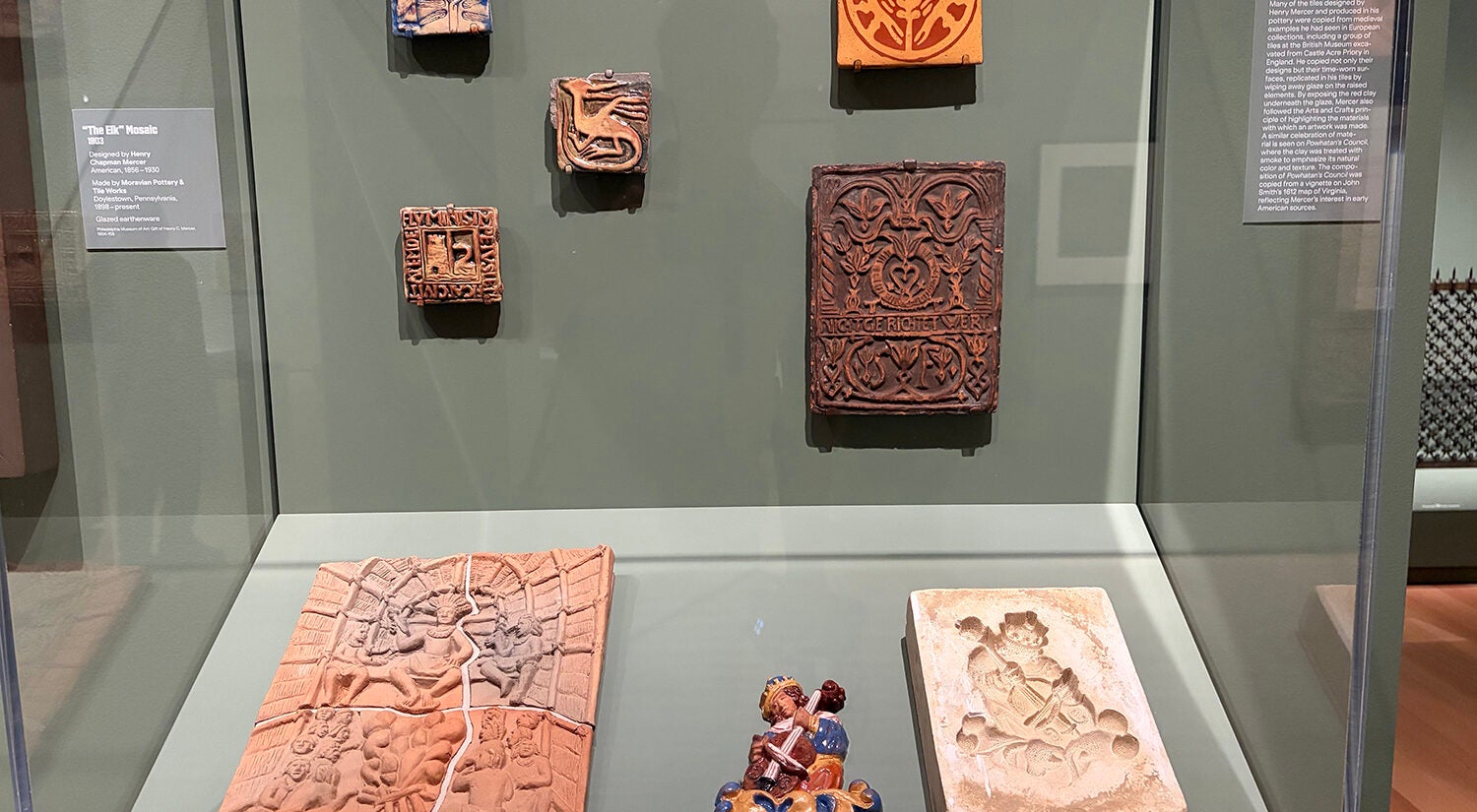
“History has claimed that he’s one of the only really successful Arts and Crafts companies. He never lost money,” Barquist said. “The workers had no autonomy in that workshop. Everything was made in molds. Henry Mercer told them how to glaze it. They just sat there and stamped it out and glazed it and fired it and sold it. The industrial model is there.”
Related Content
“The House, the Oracle and the Table” is a site-specific work evoking the spirituality of a century-old house of Black art.
1 month ago
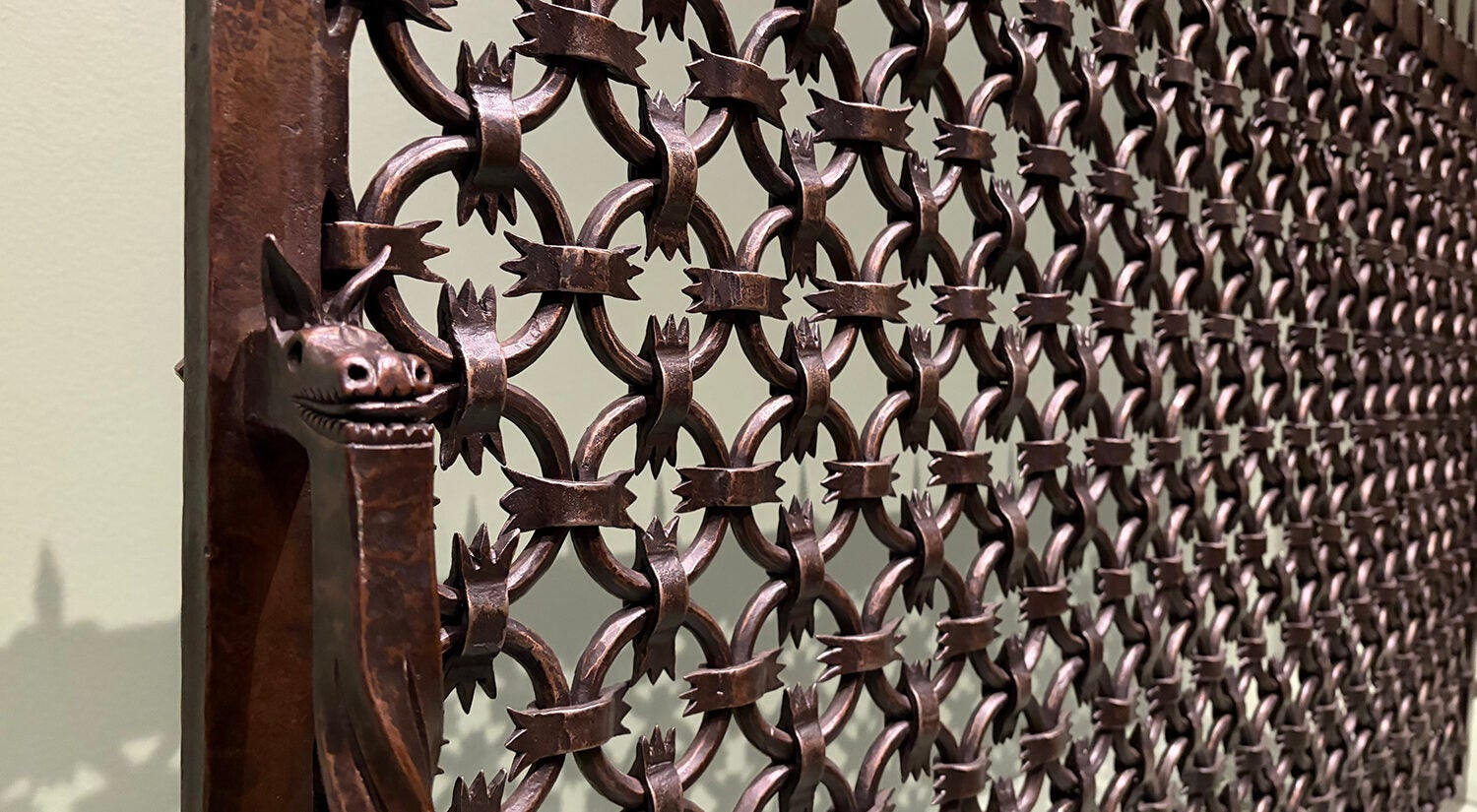
Listen 1:26Likewise, Samuel Yellin was a master craftsman whose wrought ironwork can still be seen in Philadelphia-area churches and institutions. He promoted himself as an artisan while employing up to 250 people in a metalwork factory.
“The ideal that William Morris was putting forward was that you worked either by yourself or in a very small workshop. It was all about finding individual expression and what you were doing, which is obviously not what’s happening in a workshop of 250 people,” Barquist said. “Samuel Yellen publicly says things like, ‘You see my hand in everything that comes out of the shop,’ which is, in a way, true. I’m sure he supervised the design of everything. But did he make everything? No. I mean, he couldn’t have.”
Although much of “Workshop of the World” tracks debates that occurred a century ago, curator Argo says the tension between craft and industrialization has never gone away, particularly with the rise of artificial intelligence.
“We need craft more than ever,” Argo said. “Whenever there’s war or tense times in life, people tend to want to make things. We notice these trends throughout history. You can track it, actually.”
“Now with the advent of A.I. and this idea of, What is really made by a computer, or a thinking mind versus someone actually making it? What is real and what is not?” she said. “These are the tensions of our moment.”
“Workshop of the World” will be on view through Oct. 11.

Never miss a moment with the WHYY Listen App!


WHYY is your source for fact-based, in-depth journalism and information. As a nonprofit organization, we rely on financial support from readers like you. Please give today.
Philadelphia Museum of Art to experiment with pay-what-you-wish tickets on Friday nights
An earlier trial run proved to the museum that paying what you wish can actually generate more ticket revenue than standard pricing.
6 months ago
Listen 1:08
The Philadelphia Museum of Art is 150 years old. Here’s how it has evolved
What started as a showcase of industrial ingenuity at the 1876 Centennial Exposition has shape-shifted many times.
6 months ago
Listen 1:36
Philadelphia Museum of Art’s CFO, chief of staff resign amid months of staffing turmoil
The PMA faces more leadership turnover months after the CEO’s firing and as the museum moves past a disputed rebrand.
7 months ago
Listen 0:54