Delaware Community Foundation invests $650K in Latino-serving organizations, expanding access to bilingual arts initiatives
The Delaware Community Foundation awarded $650,000 to 39 projects supporting Hispanic communities, including the Delaware Art Museum's expanding Spanish-language programming.
Listen 1:25
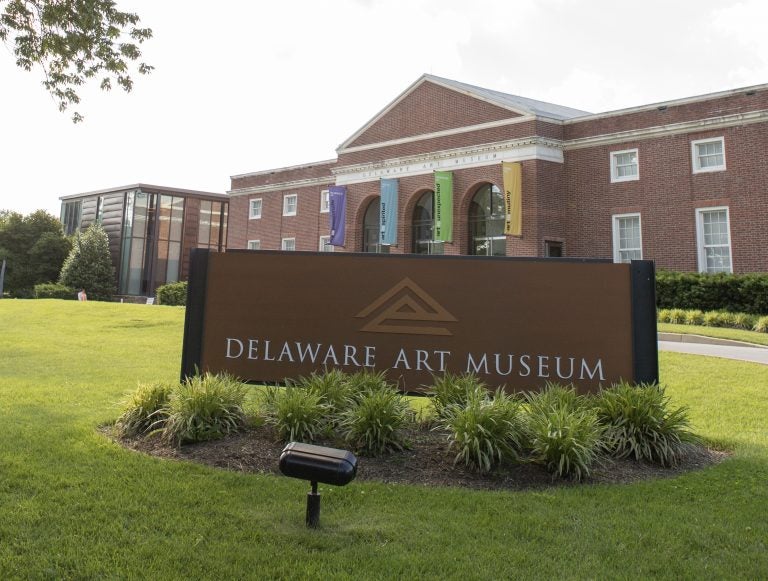
The Delaware Art Museum is located in a leafy section of west Wilmington. (Courtesy of Alessandra Nicole for the Delaware Art Museum)
What are journalists missing from the state of Delaware? What would you most like WHYY News to cover? Let us know.
A major investment from the Delaware Community Foundation is helping more than three dozen organizations expand services for Hispanic communities across the First State, supporting everything from early childhood literacy and workforce development to arts and cultural programming.
Through its Arsht-Cannon Fund, the foundation awarded $650,000 to 39 projects this year — an increase of $80,000 from last year and the largest number of projects funded through the initiative to date.
The grant will support organizations working in education, health, workforce development, advocacy and community collaboration, reflecting the growing needs and diversity of Delaware’s Latino population.
“Usually, we tend to focus on developmental programming, literacy, health-related programming,” said Jennifer Fuqua, director of community partnerships and Hispanic initiatives at the foundation. “And more recently, we’ve also focused more on workforce and economic development as well as advocacy and collaboration across Delaware.”
For more than two decades, the foundation has invested in nonprofit organizations serving Hispanic Delawareans. This year, funding will support long-standing literacy initiatives, multilingual programming and, for the first time, Reach Out and Read, a program that distributes bilingual books to children during routine well-visits from infancy through age 5.
“We have some long-time partners who do community and family literacy programs, community [English as a second language programs] up and down the state, making different types of programming and materials available that are in multiple languages,” Fuqua said. “Those are some things that we did this year.”
She said these grants come at a time when many nonprofits are navigating financial uncertainty as they try to still meet the needs of multilingual families.
Delaware Art Museum to expand bilingual access
Among this year’s recipients is the Delaware Art Museum, which received a $20,000 grant to continue expanding access for Spanish-speaking visitors through bilingual interpretation, cultural programming and new community initiatives.
Executive Director Molly Giordano said the funding allows the museums to continue building on years of intentional outreach.
“The Delaware Museum is really grateful to be a recipient of a few of their grants, including their most recent round of funding, and this is to help us move forward in a phased approach to translating parts of the [children’s] museum, and then a lot of our really popular vibrant cultural programming that we do here,” she said. “We need to translate labels and different texts at the museum. We need to really think long term about how we can serve a Spanish-speaking population better.”
Related Content
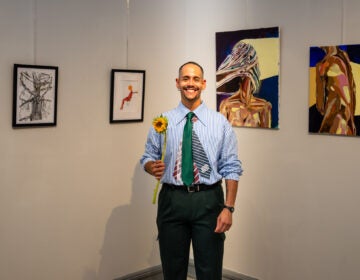
What began as artwork created during different moments of his life, now comes together in ‘Becoming,’ a Delaware exhibit encouraging visitors to explore their own stories.
1 month ago
Listen 1:58The museum has steadily expanded its relationship with Delaware’s Latino community over the past decade through programs like its annual Día de los Muertos celebration, the Hip-Hop Cultural Summit and Indigenous art programming, as well as free community events.
With the grant received, museum officials say they plan on bringing back successful events and new familial programming in September.
“We’re creating a new play in Spanish during Hispanic Heritage Month, and it will be hosted and performed on-site here at the museum. [It’s] something new we’ve never tried before. We’re bringing back something we piloted once or twice before: It’s a living Indigenous fashion show,” Giordano said. “We’re going to bring it back and expand [it] for Spanish-speaking fashion designers. Lastly, we have a drop-in artmaking program for families called ‘Family 2nd Sunday.’”
Those efforts have been years in the making, and according to Giordano, attendance has increased year after year from the Hispanic/Latino community.
“I vividly remember when our programs looked very different. The types of programs we were presenting were very different. I credit the staff, especially my colleague Iz Balleto,” Giordano said. “It’s long, it’s slow, it’s careful work and partnership with core community partners, with organizations, with individuals, and what you see today, the programs that people love and know us for today, have been more than a decade of very hard and intentional work.”
Many of the museum’s signature cultural events remain free for visitors, something Giordano said would be difficult without philanthropic support.
For the fund, the investment is about more than individual grants. She sees it as another step in strengthening opportunities for Delaware’s Hispanic community for generations to come.
“We can look back 20 years and we can see how it did make a difference over time because of the explosion and ingenuity and growth of the entrepreneurial spirit of the growth of emerging leaders and professionals in all different kinds of fields across Delaware,” Fuqua said. “Ultimately, that’s really what it’s all about. That there’s a strong foundation that supports people, that allows them to be the best that they can be and to really live that dream that may have brought them here or their parents or their grandparents [here] because we really have a very diverse Hispanic community.”

Never miss a moment with the WHYY Listen App!


WHYY is your source for fact-based, in-depth journalism and information. As a nonprofit organization, we rely on financial support from readers like you. Please give today.
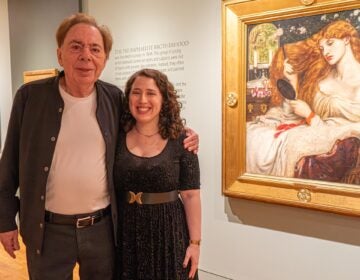
Andrew Lloyd Webber visits the Delaware Art Museum’s Pre-Raphaelite collection
The musical theater composer stopped in Wilmington during the “Phantom of the Opera” revival tour to talk about Victorian-era paintings.
10 months ago
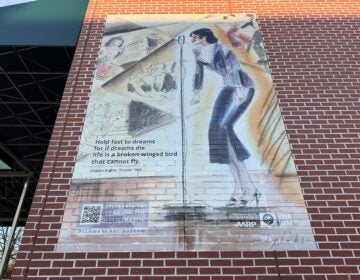
The exhibition hearkens back to the visual style of the early 20th century, with art from magazine covers and album art to cartoons.
2 years ago
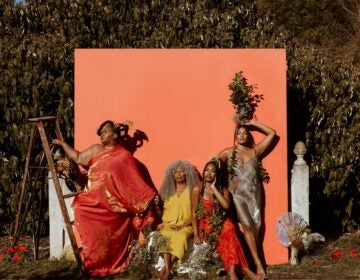
‘Black women in art’: 2 installations at the Delaware Art Museum tackle underrepresentation
“There Is a Woman in Every Color” aims to celebrate womanhood and the contributions of Black women to the world of art.
2 years ago
Listen 1:35