
Philadelphia had its 3rd-warmest spring on record. A hotter-than-normal summer could be coming
Amid a backdrop of steadily rising temperatures, the city's average from March through May tied a record set in 1921.

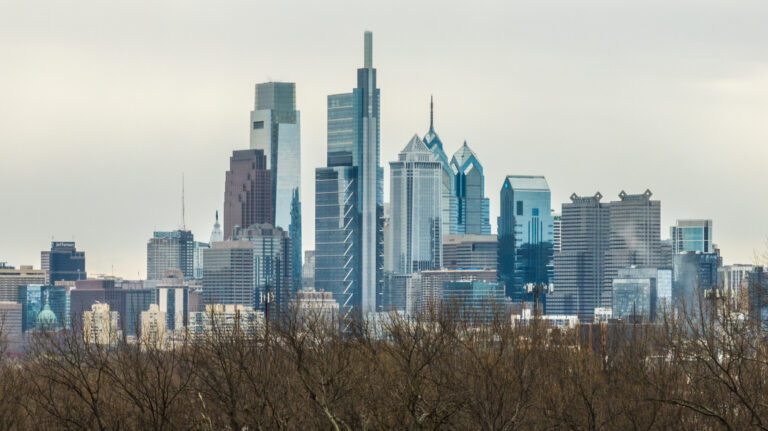
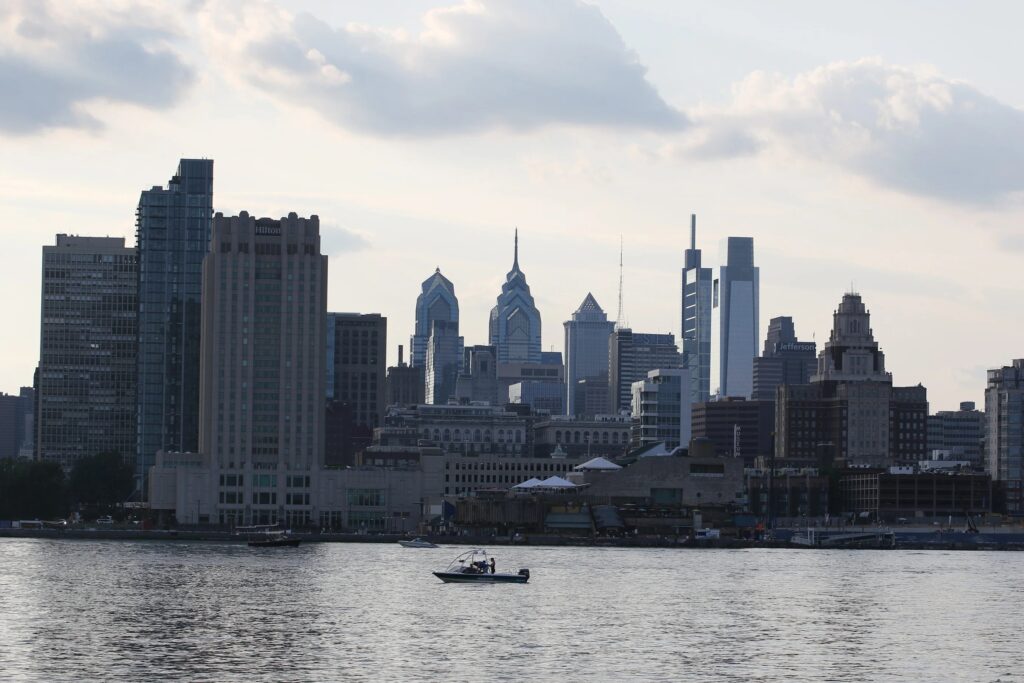
The Philadelphia skyline. (Kimberly Paynter/WHYY)
This story is part of the WHYY News Climate Desk, bringing you news and solutions for our changing region.
From the Poconos to the Jersey Shore to the mouth of the Delaware Bay, what do you want to know about climate change? What would you like us to cover? Get in touch.
Philadelphia just experienced one of its warmest springs, and forecasters say the region can likely expect a hotter-than-normal summer.
The average temperature in Philadelphia from March through May was 57.8 degrees Fahrenheit, matching the spring of 1921 as third-warmest on record, according to a WHYY News analysis of weather data from the National Oceanic and Atmospheric Administration Northeast Regional Climate Center. NOAA says the temperature forecast for the Philadelphia area during June, July and August is “leaning above” normal as well.
“We have slightly better chances for above-normal temperatures,” said Sarah Johnson, a warning coordination meteorologist at the National Weather Service in Mount Holly, New Jersey. “That does not mean that you can’t have some cold periods in between.”
Globally, a strong El Nino on top of long-term planetary warming is predicted to drive heat and extreme weather into next year.
Johnson said it’s impossible to say exactly what role climate change played in the historically warm weather Philadelphia experienced this spring without significant research.
But this spring’s heat occurred amid a backdrop of steadily rising temperatures, said Muhammad Azhar Ehsan, a climate scientist at the Center for Climate Systems Research at Columbia University. Since 1970, Philadelphia’s average spring and summer temperatures have each risen around 3 degrees Fahrenheit, according to research nonprofit Climate Central. This raises the chance of warmer weather, Ehsan said.
“We see more heat and heat extremes due to that background trend, or climate change,” Ehsan said.
Related Content
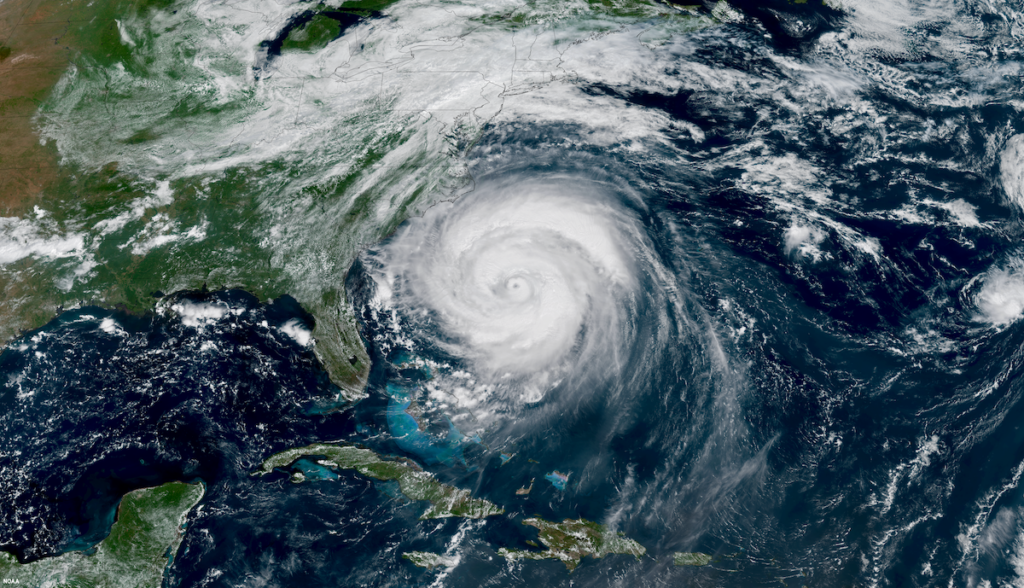
NOAA is rolling out an experimental tool to help emergency planners predict extreme rain events in 60 cities, including Philadelphia and Dover, Delaware.
5 months ago
Listen 1:08Since 2020, Philadelphia has seen five of its 10 warmest years on record, according to NOAA data. 2024 tied with 2012 for the city’s warmest year on record, bumping 2023 down from second warmest to third.
Gabriel Vecchi, a professor in the Department of Geosciences at Princeton University who specializes in climate science and modeling, said this spring’s warmth in the Philadelphia region was influenced by strong, high-pressure air over the Atlantic Ocean that brought tropical air northward into the mid-Atlantic region. Weather variations like this are more likely to push temperatures to records or near-records when the baseline is warmer due to human-caused climate change, he said.
Vecchi compares it to water in a bathtub. When the tub is half empty, it takes a large impact to slosh water over the sides. When the tub is full, a small motion can cause water to spill out.
“It’s this combination between these larger-scale climate drivers and these weather scale events that give you the temperature extremes,” Vecchi said. “What we’ve been seeing is that more, sort of, pedestrian weather events will lead to heat extremes in the recent climate, [rather] than in the past, where you really needed something special to happen in the atmosphere to get a heat extreme.”
El Nino is having little effect on temperature in the mid-Atlantic this spring and summer, Ehsan said. In the past, El Nino has tended to result in below-normal precipitation in the region during the summer, Ehsan said. El Nino often suppresses Atlantic hurricane season activity.
Johnson said NOAA’s forecast for the Philadelphia area is leaning slightly toward above-normal precipitation this summer.
“It is very close to being what we call equal chances of above, below or near normal precipitation,” she said.

Get daily updates from WHYY News!
WHYY is your source for fact-based, in-depth journalism and information. As a nonprofit organization, we rely on financial support from readers like you. Please give today.
Part of the series
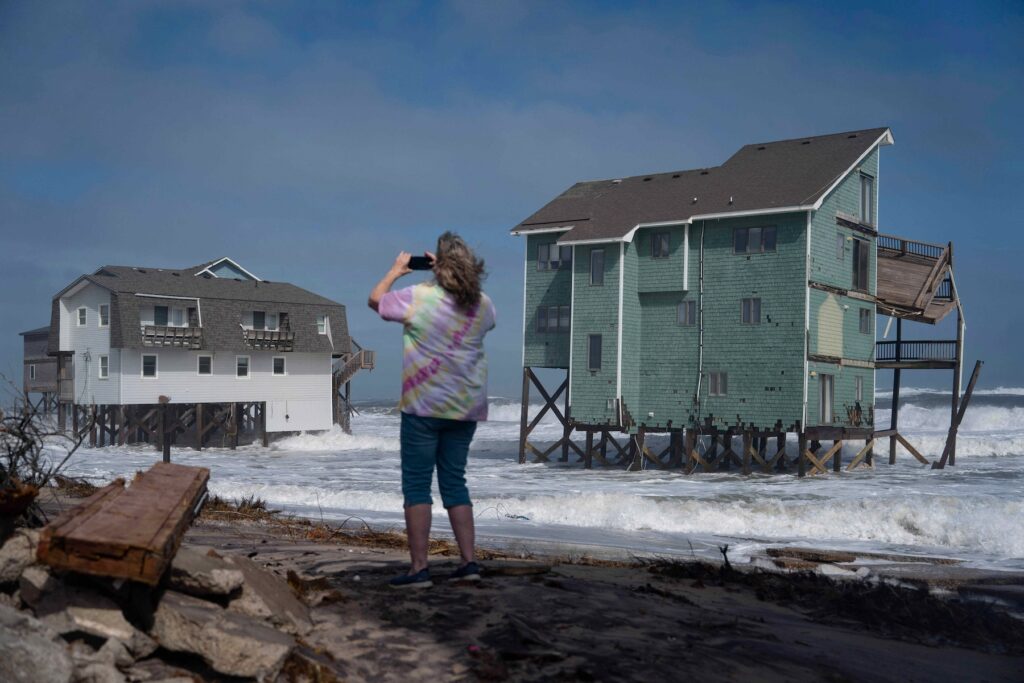
Gusty winds, dangerous waves, flooding expected along New Jersey, Delaware coast
A powerful nor’easter is expected to push strong winds and high surf along the coast.
3 weeks ago
Listen 1:00
Philadelphia sees one of its warmest summers on record
The city’s average temperature tied for the third warmest on record from June through August.
1 month ago
Philadelphia area expected to see a warmer and wetter summer than normal
Thursday is forecast to be Philly’s first day of the season that tops 90 degrees. It comes with a Code Orange air quality alert.
1 year ago