

New Jersey is investing $11 million to restore salt marshes, including Scotch Bonnet Island
Rising seas are drowning New Jersey wetlands. A new round of state climate funding aims to make them more resilient.

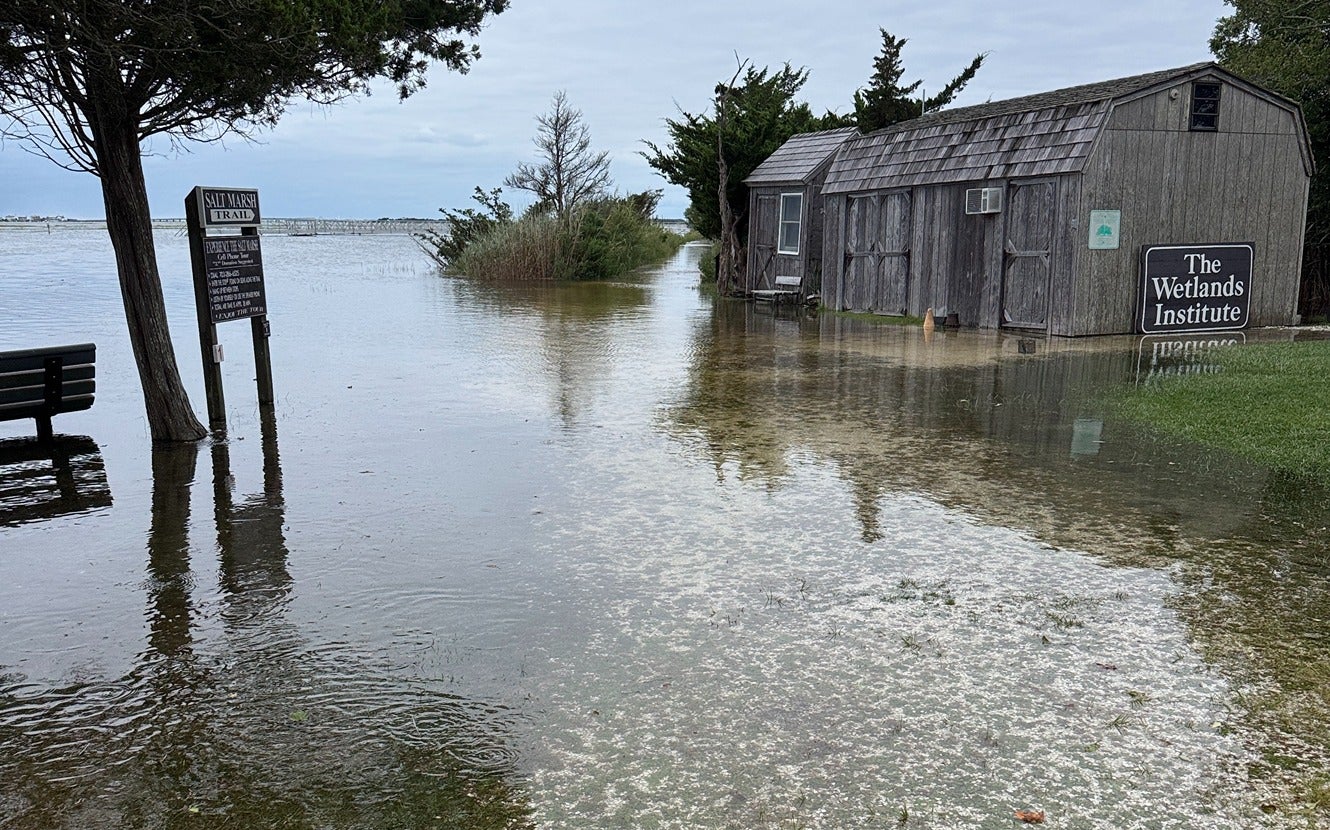
The Wetlands Institute will use the grant to raise the salt marsh trail at Scotch Bonnet Island by about 2–3 feet. (Courtesy of the Wetlands Institute)
This story is part of the WHYY News Climate Desk, bringing you news and solutions for our changing region.
From the Poconos to the Jersey Shore to the mouth of the Delaware Bay, what do you want to know about climate change? What would you like us to cover? Get in touch.
New Jersey is investing nearly $11 million to restore coastal salt marshes, including a major project at Scotch Bonnet Island in Cape May County.
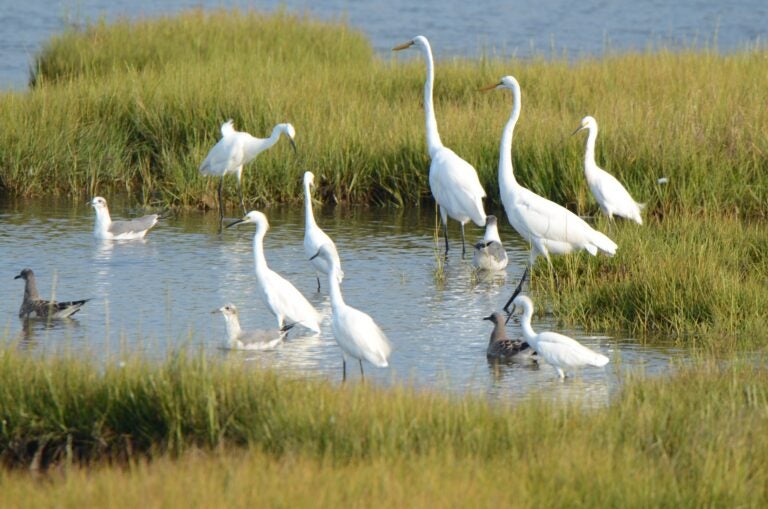
Tidal salt marshes mitigate the effects of incoming waves and reduce flooding in the area, while storing climate-changing carbon. Birds, reptiles and fish also rely on these wetlands to survive and thrive.
But tidal salt marshes are drowning as they face rapidly rising sea level at a rate faster than they can handle. As a result, the marsh grasses are growing more slowly and are being replaced by mudflats.
Since the 1950s, the marshes of Scotch Bonnet Island have lost more than 30% of their surface area to deluge. In the last five years, the salt marsh trail has flooded on average almost 70 times each year.
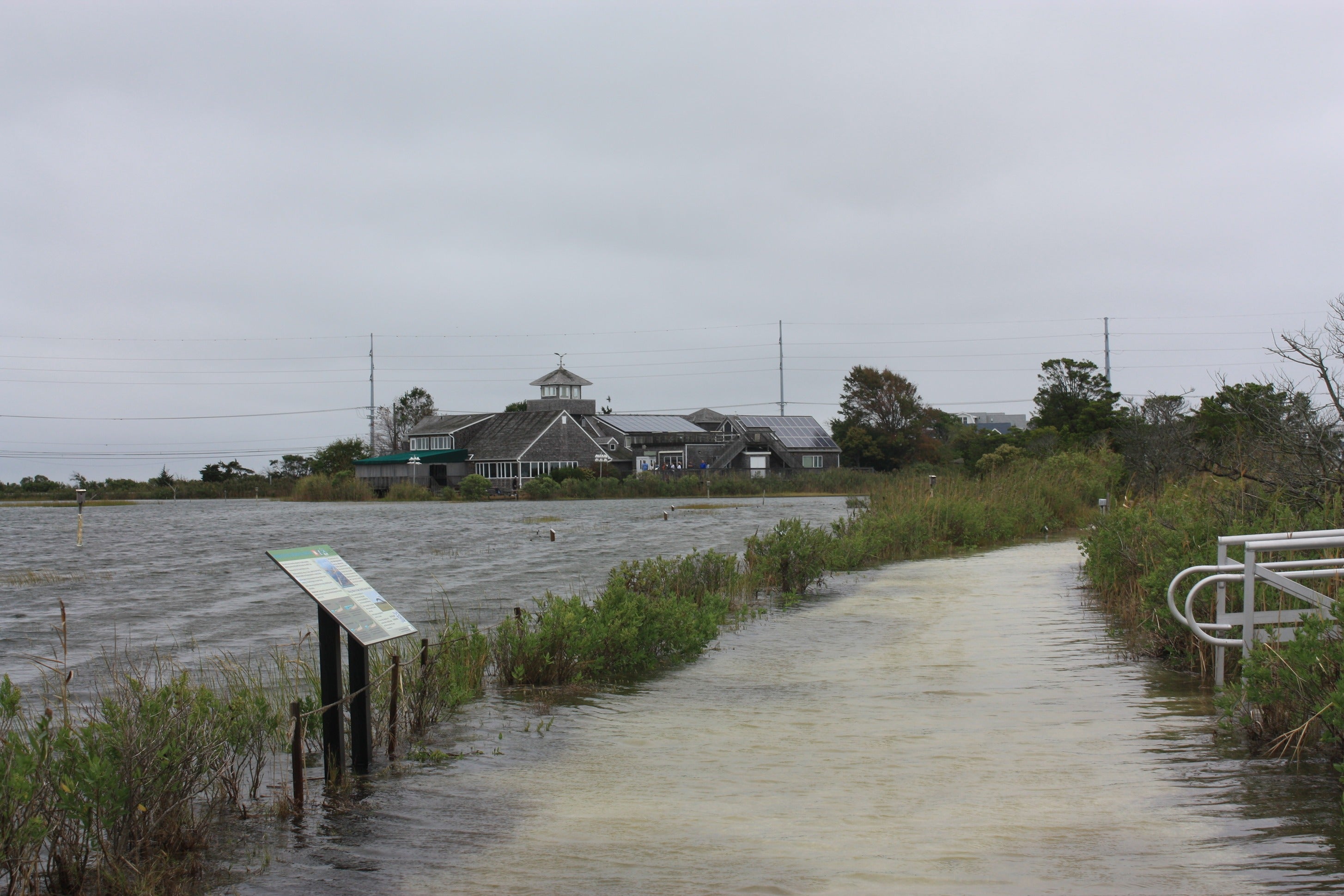
A new $2.7 million state grant will help the Wetlands Institute in Stone Harbor restore tidal wetland vegetation at Scotch Bonnet Island to address the impacts of sea level rise.
“As you increase storm impacts and reduce marshes, it’s a double whammy,” said Lenore Tedesco, executive director of the institute. “Maintaining these nature-based solutions or natural features that are supporting us and helping us is really going to be important.”
Scotch Bonnet Island is one of three sites to receive funding from the New Jersey Department of Environmental Protection totaling almost $11 million.
The grants are part of the state’s Natural Climate Solutions program, which aims to mitigate the effects of greenhouse gas emissions. Gov. Phil Murphy’s administration has dedicated more than $54 million to the program, which is funded through the state’s participation in the Regional Greenhouse Gas Initiative.
The most recent round of funding includes $3 million to help Montclair State University plant 910 trees to sequester carbon and filter air and water pollutants. Another $5 million will help Stafford Township in Ocean County restore 23 acres of tidal salt marsh.
“New Jersey communities are harnessing nature-based solutions to restore and protect the integrity of coastal and forest ecosystems which serve as critical carbon sinks that reduce our greenhouse gas emissions,” DEP Commissioner Shawn LaTourette said in a statement. “These investments also improve natural buffers such as wetlands and urban forests that protect communities and infrastructure from flooding and increasingly more severe storm impacts as a result of our changing climate.”
Related Content

Unique dialect of Delaware Bay seaside sparrow song could serve as an ‘indicator’ for climate change
Seaside sparrows at Cooks Beach have their own “dialect.” Rowan University researchers monitor their songs as a way to track salt marsh health.
8 months ago
Listen 6:06The Wetlands Institute, in partnership with the Borough of Avalon, will use the grant to raise the salt marsh trail at Scotch Bonnet Island by about 2 to 3 feet. The institute will also replant the area with hundreds of native marsh vegetation and restore nesting habitat for diamondback terrapins and coastal birds.
The funding comes as the Environmental Protection Agency proposes changes to the definition of “waters of the United States” that would limit the types of waterways protected under the Clean Water Act.
The change would codify a 2023 U.S. Supreme Court decision that removed federal protections for wetlands that are either seasonal or aren’t connected to streams, lakes, rivers and oceans. Specifically, the revisions establish that protected waterways must be “navigable” or have a continuous water connection, making some types of wetlands vulnerable to development.

In New Jersey, property owners can’t fill, dredge or build on a wetland without a permit. Other states like Delaware have more limited wetland laws.
“Whether it’s water supply, whether it’s for irrigating crops, for people’s drinking water, we don’t have enough, and it’s getting more and more critical. At the same time, during storms we have too much water,” Tedesco said. “Whether it’s salt water or fresh water, wetlands really are the cornerstone to the whole system.”

Get daily updates from WHYY News!
WHYY is your source for fact-based, in-depth journalism and information. As a nonprofit organization, we rely on financial support from readers like you. Please give today.
Part of the series
Watershed
Preserving Our Water: How we use our Delaware Watershed.
The project is funded by The William Penn Foundation.
Part of the series
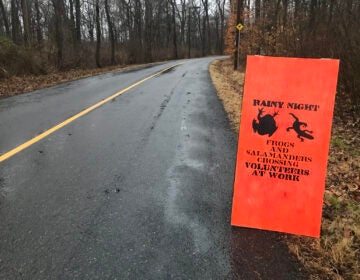
Pa. wants to reduce vehicle collisions with animals using wildlife corridors
Across the U.S. between 1 and 2 million large animals are involved in vehicle collisions each year, according to the Federal Highway Administration.
1 day ago
Listen 1:06
‘Right plant, right place’: Philly Flower Show encourages adapting to climate change
Gardeners learn how to be more sustainable while adapting to climate change during the Philadelphia Flower Show.
4 days ago
Listen 1:04
Trump said data centers should build their own power source, but offers few details
President Trump said in his annual State of the Union address that he made deals with data centers to tamp down electricity costs for consumers. But there are few details.
2 weeks ago
Listen 1:02