
Pa. wants to reduce vehicle collisions with animals using wildlife corridors
Across the U.S. between 1 and 2 million large animals are involved in vehicle collisions each year, according to the Federal Highway Administration.
Listen 1:06
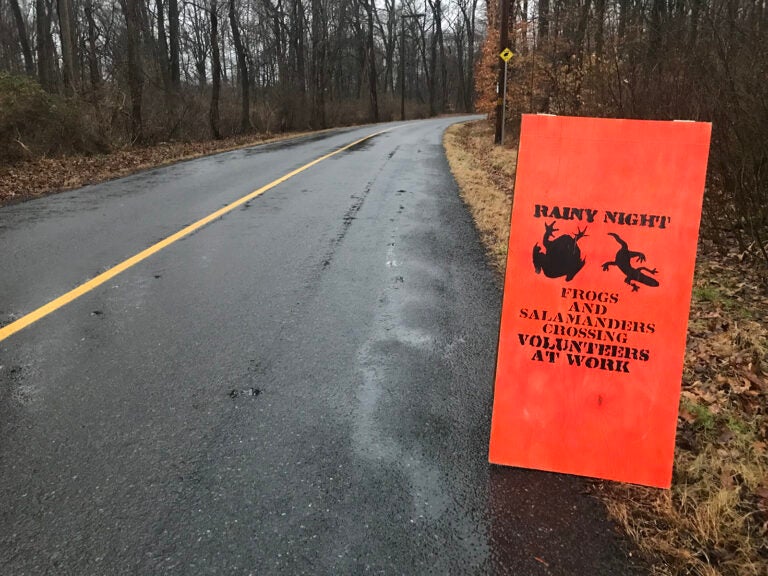
“Wildlife corridors” help animals safely travel across infrastructure. (Courtesy Shannon Fredebaugh-Siller/Heritage Conservancy)
This story is part of the WHYY News Climate Desk, bringing you news and solutions for our changing region.
From the Poconos to the Jersey Shore to the mouth of the Delaware Bay, what do you want to know about climate change? What would you like us to cover? Get in touch.
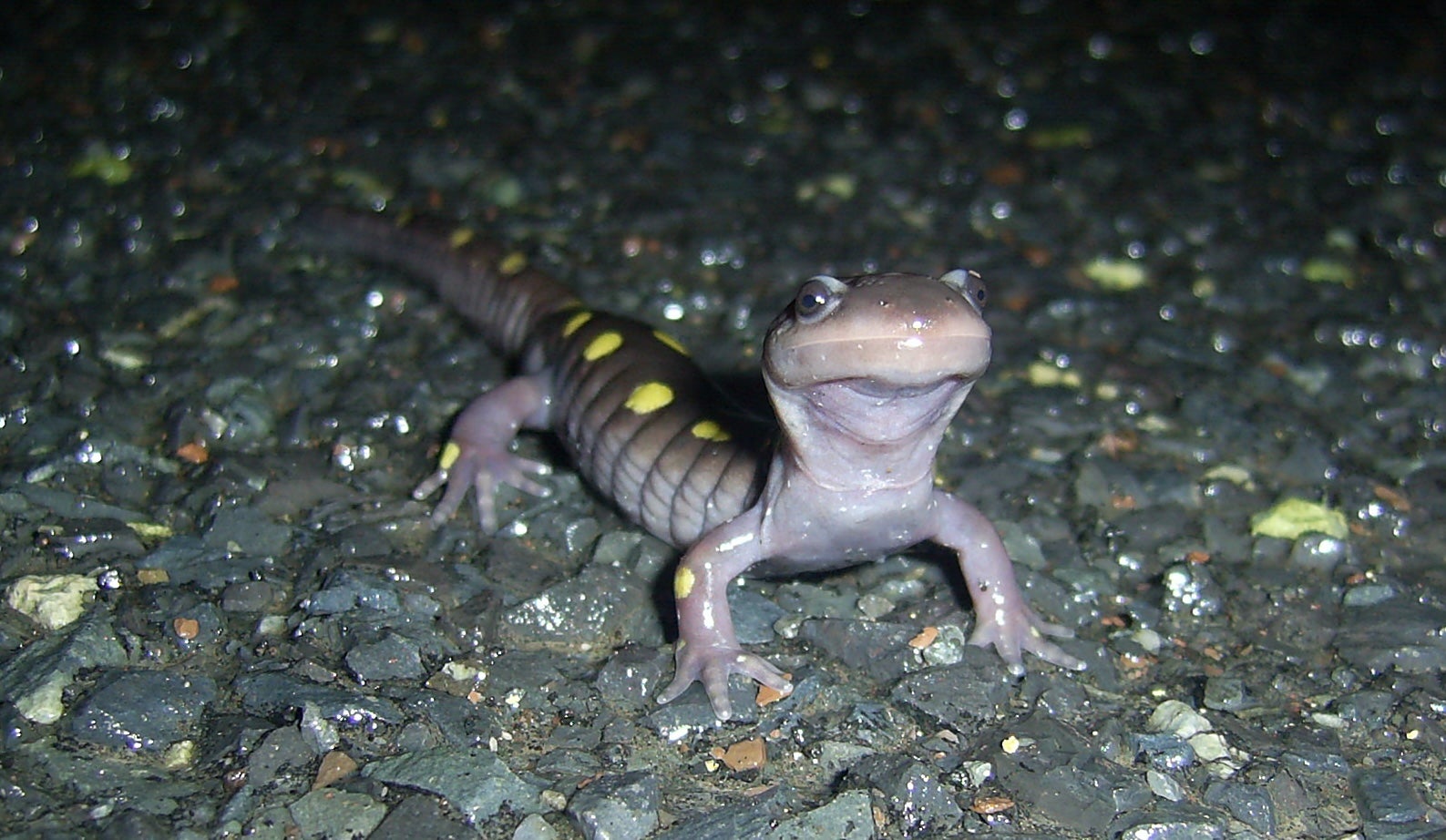
On cold rainy nights, volunteers for the Heritage Conservancy in Bucks County help hundreds of frogs and salamanders cross busy roads to reach their breeding habitat.
Flashlights in hand, the volunteers try to help these cold-blooded amphibians move quickly before the next car rolls around the corner.
Amphibians must travel to vernal pools each spring to breed and grow their populations. However, drivers are often unable to see these small creatures, and researchers estimate that thousands are killed by vehicles each year during these crossings across the country.
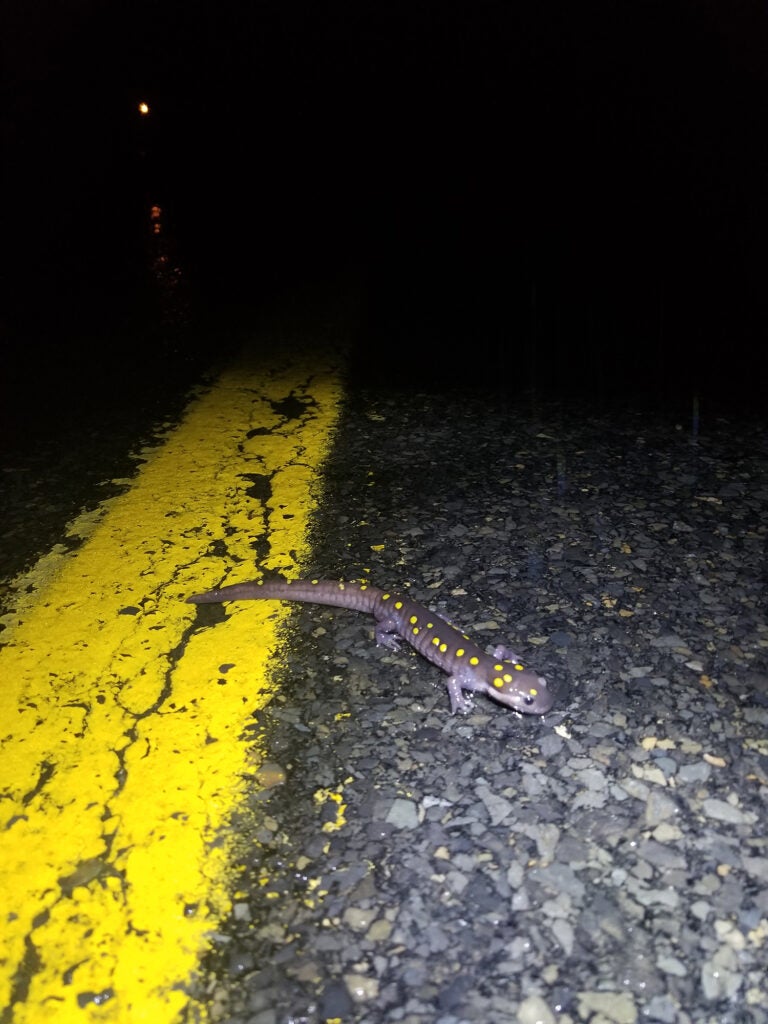
The Heritage Conservancy isn’t able to save all the salamanders and frogs, however.
“Some of these species only live in very small geographic areas now. They’re not going to be able to breed with each other if they’re so isolated,” said Tyler Kovacs, a conservation biologist at the organization. “So, we need to be able to connect these populations together, or there’s no chance of them surviving in the future.”
Wildlife corridors could cut down on vehicle collisions
Pennsylvania’s amphibians and other animals may soon get the help they need. The state’s Department of Conservation and Natural Resources announced last week plans to establish a working group that will be tasked with finding ways to connect habitats that are currently split by roads.
The plan is the result of 2023 legislation that directed the state to evaluate solutions to habitat fragmentation and wildlife-vehicle collisions.
“As the climate changes, all kinds of plants, animals, and biota need pathways to move safely,” DCNR Secretary Cindy Dunn said during a state budget hearing last week.
Related Content
What to do if you find injured, sick or orphaned wildlife in Philadelphia
Here’s how to safely capture an injured animal and where to take it for help.
8 months ago
Listen 0:56Several other states, including New Jersey, have implemented similar programs that involve building tunnels and bridges that safely connect animals and their habits.
“If you drive from Philly to the shore on the Atlantic City Expressway you might not realize that you’re actually going over several wildlife crossings that are under the expressway that help turtles that are in those wetlands, and shorebirds, and amphibians move right under the Atlantic City Expressway,” said Stephanie Wein, a conservation advocate for PennEnvironment.
Animal movement is critical for animals to mate, lay eggs and find food, said Andy Wilson, a professor of ecology at Gettysburg College.
“What you end up with if you’ve got a high road network with a lot of vehicles on it is it just really impedes that movement,” he said. “Some of the animals that try to move, a large proportion of them don’t make it. Increasingly, animals won’t even try because they’re disturbed by road noise.”
This impediment not only threatens population health, but also confines animals within the same gene pool, which can lead to inbreeding and, ultimately, reproductive deformities, Wilson said.
Across the U.S. between 1 and 2 million large animals are involved in vehicle collisions each year, according to the Federal Highway Administration.
The agency reports that these collisions cost the public more than $10 billion annually from lost income, medical costs, property damage and more.
Pennsylvania has some of the most animal collisions in the U.S., according to State Farm, with an estimated 147,000 insurance claims to the company between July 2024 and June 2025.
Future wildlife crossings in Pennsylvania could include overpasses or underpasses that connect deer and bears with forested areas, or below-ground culverts for amphibians and reptiles. Creating wildlife corridors can be as simple as planting native species that attract monarch butterflies during their migration.
The working group will have to consider the potential economic impacts of wildlife corridors — larger projects such as bridges can cost millions of dollars. However, experts say it could save millions in car and health insurance claims.
Wein said Pennsylvania, where hunting and fishing contribute significantly to the state’s economy, could also benefit from greater wildlife projections.
“Anyone who’s ever been worried about hitting a deer at sunset on Pennsylvania’s roads should be excited about more wildlife crossings. If you’ve ever stopped to help a turtle cross a road, then you should care about wildlife corridors,” Wein said. “Whether it’s as a driver, or an angler, or a birder, or a hiker, there’s just so many reasons to be excited about a statewide wildlife corridor plan.”

Get daily updates from WHYY News!
WHYY is your source for fact-based, in-depth journalism and information. As a nonprofit organization, we rely on financial support from readers like you. Please give today.
Part of the series
Red knot populations improve slightly along Delaware Bay, but remain fraction of historic levels
Biologists in New Jersey and Delaware spotted more red knot birds this year, but levels remain significantly lower than before the 2000s.
15 hours ago
Baby sharks grow up in New Jersey’s back bays. Climate change could threaten the nurseries
Three species of shark use New Jersey’s coastal salt marshes as nurseries — the sandbar shark, the smooth dogfish and the sand tiger shark.
2 days ago
Listen 1:19
‘We will not be bullied’: Plymouth Township pushes back against proposed Conshohocken data center
Plymouth Township Council is speaking out after the developer of a proposed data center in Conshohocken challenged its zoning ordinance.
5 days ago
Listen 1:03