
Straight ‘F’s: Philadelphia region’s air quality ranking worsens in annual lung health report
The American Lung Association says the Philly area is among the worst in the country for levels of a pollutant that can cause lung and heart issues.
Listen 1:08
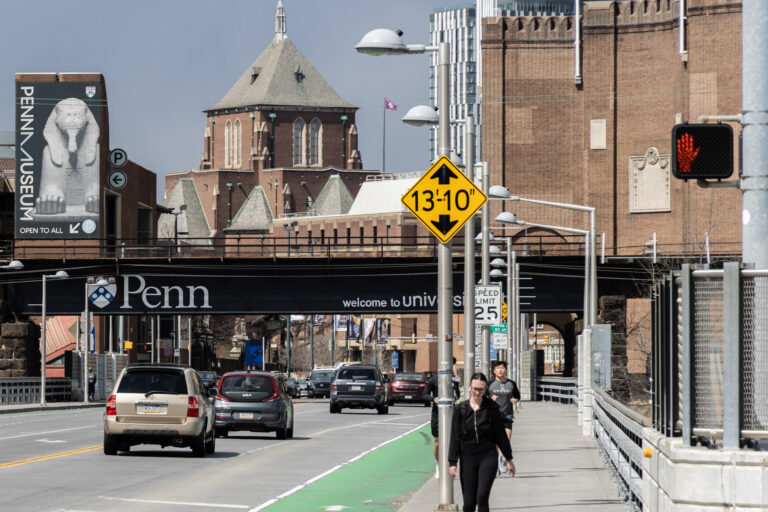
Penn’s campus in Philadelphia. (Kimberly Paynter/WHYY)
This story is part of the WHYY News Climate Desk, bringing you news and solutions for our changing region.
From the Poconos to the Jersey Shore to the mouth of the Delaware Bay, what do you want to know about climate change? What would you like us to cover? Get in touch.
Philadelphians breathe some of the most polluted air in the country, according to a recent report from the American Lung Association.
The nonprofit’s annual State of the Air report ranked the Philadelphia-Reading-Camden statistical area — which covers parts of southeastern Pennsylvania, South Jersey, northern Delaware and northeast Maryland — the country’s 17th worst for average levels of particulate pollution between 2022 and 2024. That is down from 26th worst in last year’s report. Particulate pollution, sometimes called soot, comes from dust, fires, traffic and industry and can cause lung and heart issues.
“The more days that people are exposed to bad air, the more likely they are to experience asthma attacks, to need medication, to go to the hospital, end up in emergency rooms,” said Kevin Stewart, director of environmental health for the American Lung Association. “Sometimes, people even die from air pollution.”
The grim ranking was driven by pollution levels in Philadelphia, which had the dirtiest air out of the counties in the area.
During the three-year span covered by the report, average annual levels of particulate matter in Philadelphia exceeded the Environmental Protection Agency’s health-based standard. Philadelphia’s levels increased compared to last year’s report, putting the city “against the tide,” Stewart said.
“Generally, most of the places in the country did improve,” he said.
Smoke from wildfires in New Jersey and the western U.S. drove Philadelphia’s higher particulate levels in 2024, said Jim Garrow, spokesperson for the city’s Department of Public Health, but in general, Philadelphia’s air quality has improved over the last couple decades.
The American Lung Association also tracked daily spikes in particulate pollution and days in which ozone levels jumped above the EPA’s health-based threshold, and gave Philadelphia failing grades for both measures. Ground-level ozone forms when common pollutants from traffic and industry react, and can irritate airways and exacerbate asthma.
Some cities in South Jersey received better grades. Camden County earned “D”s for its high ozone days and daily spikes in particulate matter, but passed the EPA’s annual standard for particulate pollution. Gloucester County also passed on particulate pollution, but received a failing grade for ozone pollution, reflecting an average of over six unhealthy days per year.
The American Lung Association does not track why changes in air quality occur, but Stewart said worsening levels can reflect new sources of pollution, atmospheric conditions and weather.
Related Content
New network of 76 air monitors throughout Philadelphia provides detailed look at air quality
The network will offer hourly air quality index updates posted to a new website, Breathe Philly.
8 months ago
Listen 0:59How poor air quality affects health
Dr. Jubril Oyeyemi, an internal medicine doctor and founder of the Cherry Hill Free Clinic, said there’s an “abundance of data” proving that poor air quality causes and worsens respiratory conditions. Over time, repeated exposures to air pollution can scar the lungs and lead to lung disease and lung cancer, he said.
“Even beyond that, [it exacerbates chronic] illnesses affecting vital organs beyond the lungs — the heart, the brain,” Oyeyemi said. “My patients suffer from that.”
Poor air quality can trigger acute issues like asthma attacks and heart attacks for people who are sensitive to air pollution, Stewart said.
“Even one bad air day can be one bad air day too many for someone who’s in one of the at-risk groups,” Stewart said.
People at higher risk for health impacts of poor air quality include children and older adults, pregnant people and people with chronic lung or cardiovascular diseases.
“The at-risk groups I talk about aren’t tiny minorities of the population,” Stewart said. “They are large groups of people.”
Researchers have also found that people of color are exposed to disproportionately more particulate pollution than white Americans, and that areas subjected to redlining during the 1930s had worse air quality decades later.
Related Content
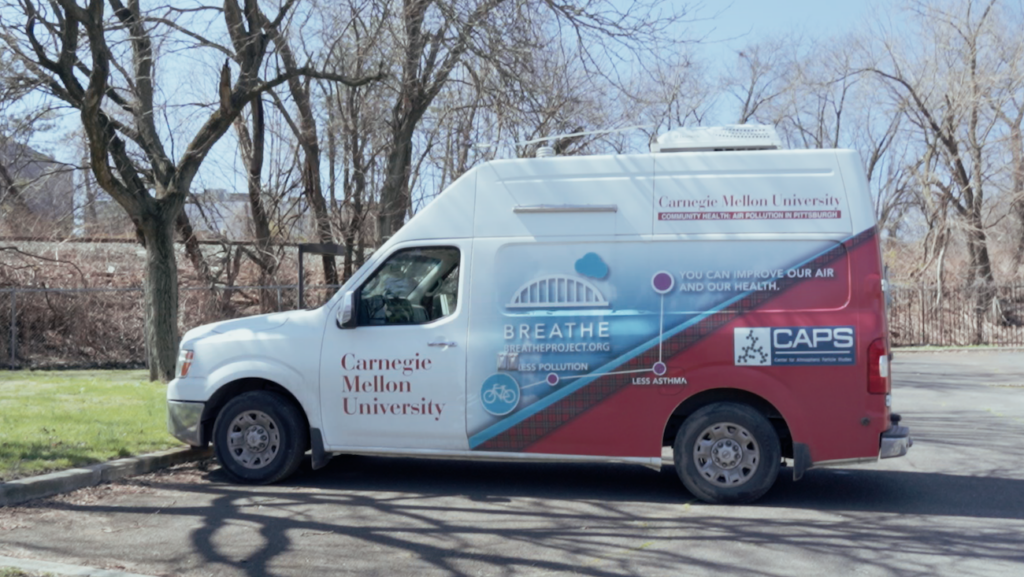
New Jersey air monitoring project measures toxic air pollution data on Camden streets
The mobile air monitoring project aims to identify hot spots of pollution in four overburdened communities in New Jersey, including Camden.
6 months ago
Listen 1:08American Lung Association urges policymakers and planners to tackle air pollution
Common sources of air pollution include cars, diesel trucks, fossil fuel-burning powerplants, other industrial facilities and wildfires.
While the American Lung Association’s recent report covered data through 2024, the organization worries that efforts by President Donald Trump’s administration to roll back air pollution rules for vehicle tailpipes and coal-fired power plants, as well as to boost fossil fuels, could undermine future progress on air quality.
Researchers have warned that the growth of data centers relying on power generated by fossil fuels could increase air pollution. Last week, Pennsylvania announced a deal with the state’s two largest coal-burning power plants to extend their operation by at least four more years past their scheduled 2028 shutdown, citing concerns about electricity supply shortfalls and rising electricity prices.
Stewart said energy conservation, a shift to renewable power and more electric vehicles would help clean up the air. He said local and state governments should encourage electric vehicle use by providing tax subsidies and installing chargers, maintain green spaces and weatherize buildings so that they use less energy.
“Those are things that states can do,” he said.

Get daily updates from WHYY News!
WHYY is your source for fact-based, in-depth journalism and information. As a nonprofit organization, we rely on financial support from readers like you. Please give today.
Part of the series
Hydropower parts manufacturer in Northeast Philadelphia lands federal research partnership
Kingsbury plans to test new materials for hydroelectric power equipment that can support the needs of modern-day grids.
1 day ago
Listen 1:09
EPA announces new plan to clean up arsenic contamination at Vineland chemical site
The Vineland Chemical Company produced arsenic-based herbicides and fungicides for 45 years, causing widespread contamination.
2 days ago
Listen 0:53
PennEnvironment and Drexel University researchers found microplastics in more than 20 waterways across the watershed.
7 days ago
Listen 1:14