

Help wanted: At the Jersey Shore, the summer job rush is on
The seasonal workforce is shifting in some shore towns amid rising housing costs. Even with higher wages, businesses say finding workers remains a challenge.

Morey’s Pier plans to hire about 1,500 employees to staff their sites this summer 2026. (Rebecca Acevedo/WHYY)
From Camden and Cherry Hill to Trenton and the Jersey Shore, what about life in New Jersey do you want WHYY News to cover? Let us know.
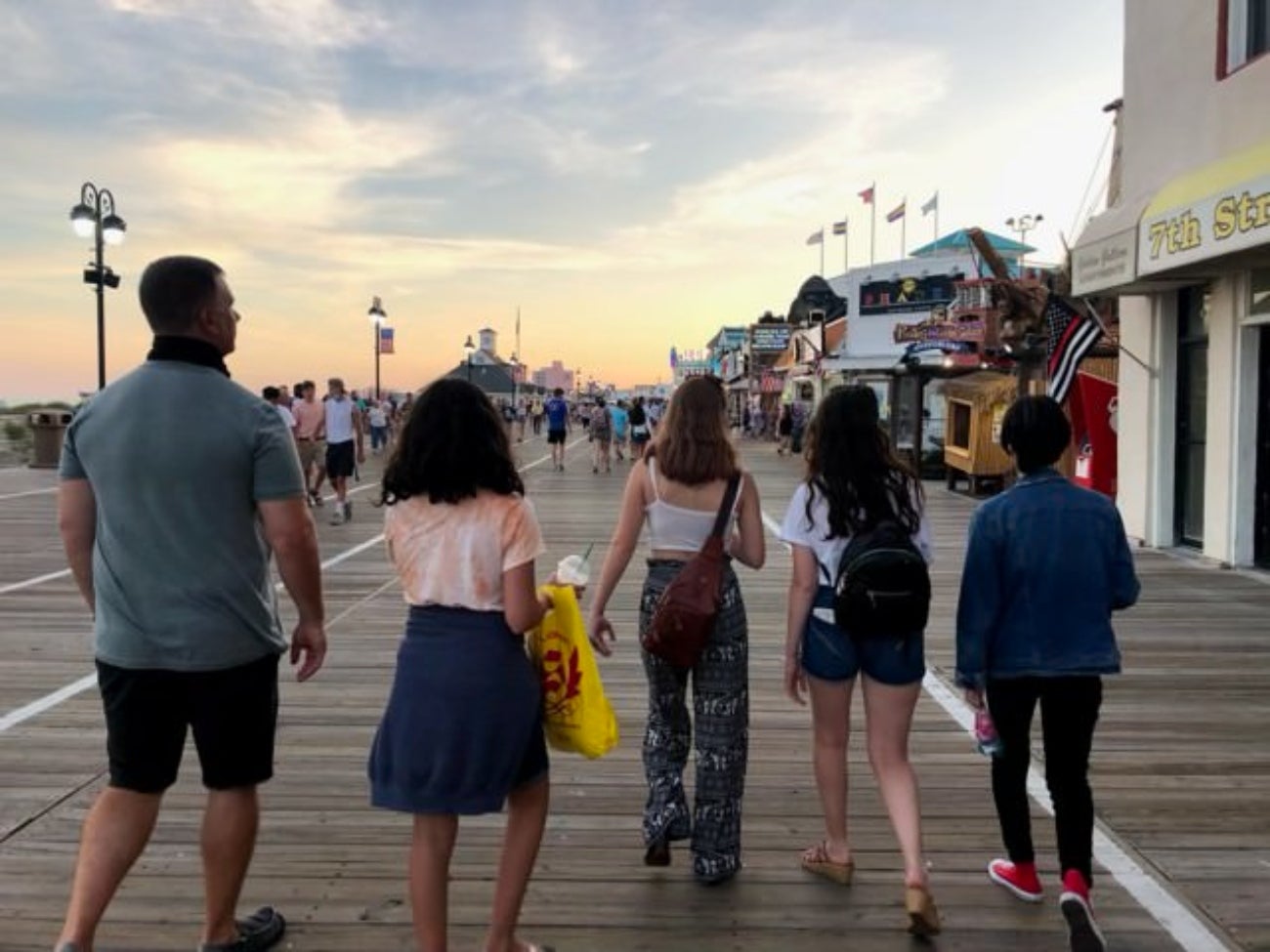
As spring edges toward summer along the Jersey Shore, help wanted signs are beginning to appear in storefront windows and across social media feeds.
Restaurants are staffing up kitchens, amusement parks are training ride operators and boardwalk merchants are interviewing teenagers and college students hoping to spend a summer near the ocean. Across Atlantic and Cape May counties, the annual hiring season is underway. And with it comes a dramatic workforce swing.
Data from the U.S. Bureau of Labor Statistics shows employment in tourism-driven industries climbs sharply as summer approaches. In February 2025, about 6,266 workers were employed in Cape May County’s leisure and hospitality sector. By July, that number jumped to 20,761 workers, peaking at 23,656 employees in August.
The shift illustrates how seasonal the shore economy is.
“Tourism is the backbone of our local economy,” officials with the Cape May County Chamber of Commerce said in a recent tourism report. Altogether, tourism accounts for about 58% of all employment in the county. Visitors drive that demand. In 2024, Cape May County welcomed 12.11 million visitors, generating $8.1 billion in tourism spending, a 5% increase over the previous year, according to the Chamber.
Shore towns are searching for seasonal workers
For many businesses, the hiring process begins months before the summer crowds arrive.
Wes Kazmarck, president of the Ocean City Boardwalk Merchants Association and owner of several boardwalk shops, said spring job fairs have become a key starting point.
“The whole thing starts for us with the Ocean City job fair,” Kazmarck said. “That’s a great starting point for the season. We had a lot of success last year, and a lot of those kids are coming back.”
Dozens of employers are expected to attend as businesses look to fill seasonal positions before the busy Memorial Day weekend kickoff. The upcoming job fair hosted by the Ocean City Regional Chamber of Commerce is scheduled for Saturday, March 21, from 1 p.m. to 3 p.m. at the Ocean City Music Pier. In Stone Harbor, prospective workers can visit participating businesses during a self-guided hiring day on April 11 from 10 a.m. to 4 p.m., with a list of employers available at the welcome center at 212 96th Street.
Kazmarck said his businesses typically hire about 40 to 50 seasonal employees each summer across several boardwalk stores.
Hiring has evolved in recent years. Many employers now rely on social media and online applications rather than walk-in applicants.
“A lot of people hire through social media now,” he said. “We’ll post on Instagram, and people fill out the application that way.”
Even so, the traditional summer workforce remains a mix of teenagers, college students and returning employees who come back year after year.
“We attend nearly every local school job fair,” said Denise Beckson, vice president, chief administrative and external affairs officer at Morey’s Piers, Beachfront Waterparks and Resorts. “We engage in significant virtual hiring, as many college students and summer residents are simply not in the area this time of year.”
“A lot of times it’s kids that are 16 to 18 down here with their families for the summer,” Kazmarck said. “If we get them early, we can keep them through college.”
But that workforce is shifting in some shore towns, where housing costs are limiting who can spend the summer at the beach.
“There are fewer college kids who spend the summer in Avalon or Stone Harbor because there is limited affordable housing,” said Marnie Lengle, coordinator for the Stone Harbor Chamber of Commerce. “We rely on second home owners’ children and grandchildren, or regional high school students, and college kids from Cape May County who come home for the summer. There are younger retirees in their early 60s and 70s who work part-time in the summer, which is extremely helpful. Many can stay after Labor Day, which is really important to our businesses since everyone hopes to extend their seasons into the late fall.”
Related Content
Jersey Shore beaches face uncertainty as federal funding delays threaten tourism, storm protections
Severe erosion is threatening the Jersey Shore's 2026 tourism season. Local leaders are looking to federal aid to restore coastlines before Memorial Day.
2 weeks ago
Tourism drives a regional workforce surge
The jobs that emerge each summer stretch across the entire tourism ecosystem, with businesses hiring everyone from restaurant servers and kitchen staff to hotel housekeepers, retail clerks along the boardwalk, lifeguards on local beaches and ride operators and game attendants at water parks.
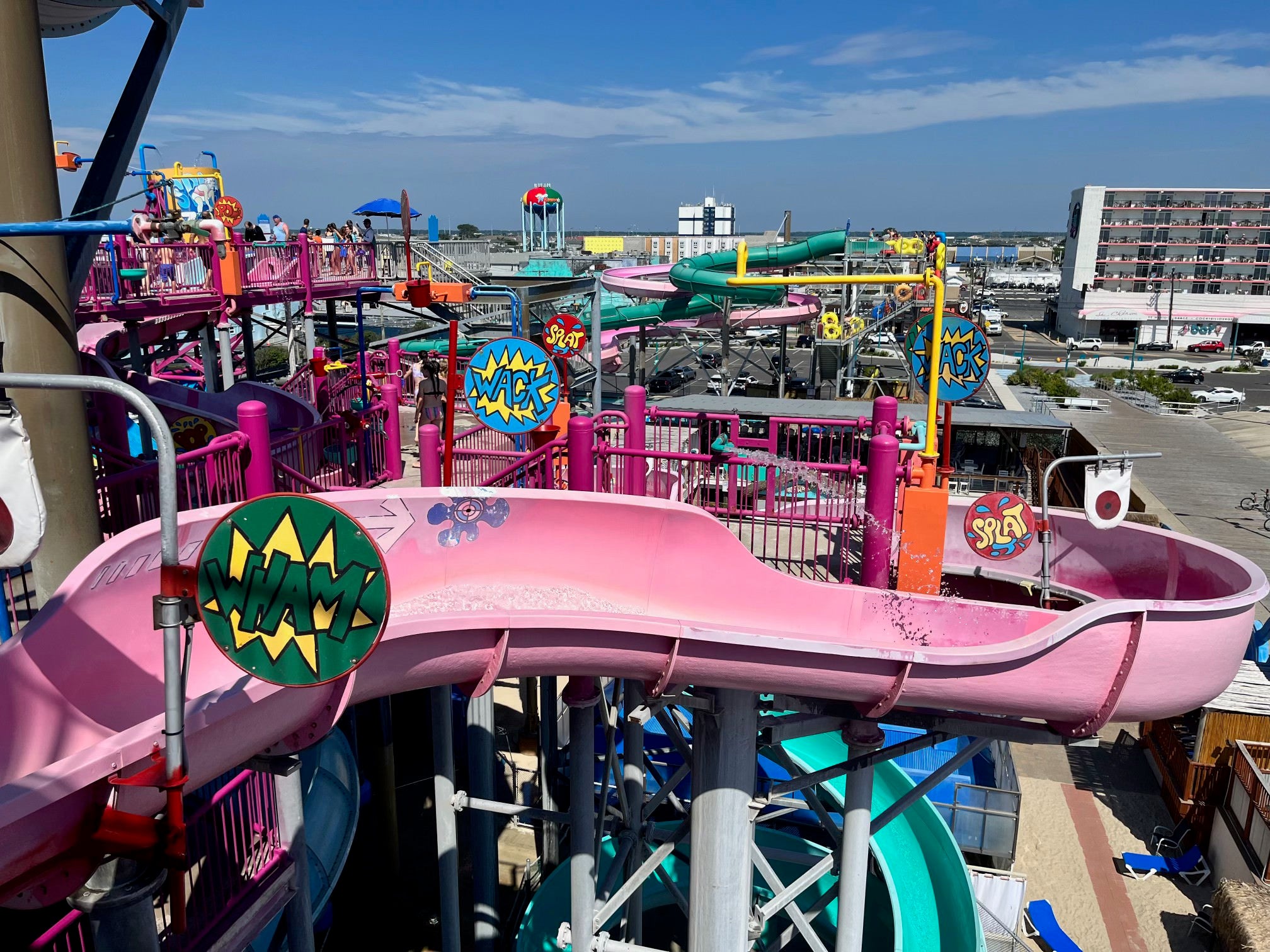
Large attractions often hire hundreds or even thousands of workers to meet demand. At Morey’s Piers in Wildwood, one of the largest seasonal employers in the region, the amusement park typically hires around 1,500 seasonal employees each summer.
In Atlantic County, the leisure and hospitality industry employed 40,566 workers in June 2025, according to data from the U.S. Bureau of Labor Statistics. That represented a 5.32% increase from the previous month, reflecting the early stages of summer hiring across restaurants, beach attractions, hotels and retail businesses.
Related Content

Businesses in Cape May County shore towns said they had to work harder to keep tourism and profits strong.
5 months ago
International students help fill the gap
For many shore employers, international students working under the J-1 Summer Work Travel program remain a key part of the seasonal workforce, especially for waterparks, casinos and large hotel/motel operators.
Students from around the world travel to beach towns each summer to work in restaurants, amusement parks and retail shops while experiencing life in the United States.
According to international exchange organization J1Abroad, roughly 2,800 to 3,000 J-1 visa students typically live and work in Cape May County each summer.
“They’re definitely a big component of what we do,” Kazmarck said. “Traditionally, they’re great workers. They’re here to work.”
Beckson said they hire about 500 J-1 students to supplement their American workforce.
“These students are vitally important to the Jersey Shore. Seasonal tourism communities face a basic workforce math problem: Our population grows dramatically during the summer months, but the number of local workers does not grow at the same pace,” she said.
But some employers say the number of international applicants has declined in recent years.
Some of that shift stems from federal immigration policies introduced during the Trump administration. While the J-1 Summer Work Travel program continued, the broader visa restrictions and policies implemented during the COVID-19 pandemic slowed international participation and created visa processing backlogs.
The U.S. Department of State has expanded vetting requirements for exchange visitors, including a rule requiring applicants to make five years of social media history publicly available for review, a process that has slowed visa approvals at consulates around the world.
A new rule expected this year also replaces the flexible “Duration of Status” with fixed four-year limits, forcing J-1 students into more frequent and costly extension applications, adding another hurdle for students hoping to work along the shore, according to the Presidents’ Alliance on Higher Education and Immigration.
“At Morey’s, we are closely monitoring the visa situation, as we are aware of visa interview delays at certain U.S. embassies that could prove problematic. At this point, it is too early to know whether those delays will impact overall participation this season,” Beckson said.
Still, for many employers the program remains essential.
“Without them, many Jersey Shore destinations would struggle to staff restaurants, hotels, and attractions during peak visitor months, as well as during the shoulder seasons before high schools let out in June and after college students return to campus in August,” Beckson said.
Related Content
New Jersey finalizes higher elevation standards for the shore
The new rules require development in coastal flood zones to be elevated 4 feet higher to account for future sea level rise.
2 months ago
Listen 0:54Higher wages reshape seasonal hiring
Many seasons, jobs that once paid around $9 or $12 an hour now start closer to $16 an hour, reflecting increases in New Jersey’s minimum wage. The Steel Pier is recruiting game attendants, ticket cashiers earning about $15.92 an hour, ride operators and bartenders. Nearby, Ocean Casino Resort has posted seasonal openings for pool attendants earning $16 to $17.50 an hour, along with higher paying roles such as groundskeepers and warehouse attendants.
Public sector hiring is underway as well. The city of Cape May is accepting applications for summer camp counselors, with applications due March 31. Some attractions, including Morey’s Piers, are offering commitment bonuses for workers who stay through Labor Day.
Kazmarck said higher wages have changed expectations on both sides of the hiring process.
“It’s harder to pay a 14-year-old close to $16 an hour,” he said. “You expect more now because the pay is higher than it used to be.”
Even with higher wages, businesses say finding workers remains a yearly challenge.
“Personnel is always tough,” Kazmarck said. “It’s always part of the deal.”
For shore towns, the hiring surge reflects the rhythm of a tourism-driven economy. Businesses spend months preparing for a short but intense season that can define their year.
“It’s very concentrated,” Kazmarck said. “It’s a seasonal resort business. There’s always a sense of urgency.”

Get daily updates from WHYY News!
WHYY is your source for fact-based, in-depth journalism and information. As a nonprofit organization, we rely on financial support from readers like you. Please give today.
Part of the series

New Jersey diaries: From shore towns to small towns
WHYY News is partnering with independent journalists across New Jersey to spotlight the people, communities, cultures and distinctive places that shape the Garden State.

Holiday fraud is on the rise. Do you know the steps to protect yourself?
The holidays are busy and you are distracted, which gives fraudsters more ways to steal your money. Here are ways to protect yourself during the Christmas hustle and bustle.
3 months ago
Listen 0:42
Ocean City’s beach trees grow into a shoreline tradition
Dozens of Christmas trees are rising from the sand, a tradition that began with one tree in 2019 and has grown into a community-wide holiday ritual. Here's where to find them.
3 months ago

Winter wonderland at the shore: Here’s what to do in Cape May this holiday season
Cape May has become one of the Jersey Shore’s busiest winter destinations. Explore the town’s top holiday events.
4 months ago