

Philly’s Chinatown stadium debate echoes through James Ijames’ ‘Good Bones’
The Philly premiere of “Good Bones” at the Arden Theatre is not a retelling of the Chinatown fight, but the playwright took inspiration from it.

From Philly and the Pa. suburbs to South Jersey and Delaware, what would you like WHYY News to cover? Let us know!
In James Ijames’ play “Good Bones,” which premieres in Philadelphia this week at the Arden Theatre, a real estate development company is pushing a plan to raze a portion of an inner-city neighborhood in a large American city to build a stadium and sports complex.
Sound familiar?
“Good Bones” is not actually the story of Philadelphia’s Chinatown and its recent fight over a stadium development plan that ended in 2024 with a head-spinning turnaround. The play is set in a fictionalized city called, simply, Big City. The predominantly Black neighborhood faces challenges with poverty and blight.
However, the script is tied to Chinatown.
“We have worked diligently to revitalize this neglected corner of the city,” said Aisha, played by Taysha Marie Canales, a consultant for the development company. “We’re changing this neighborhood for the better.”
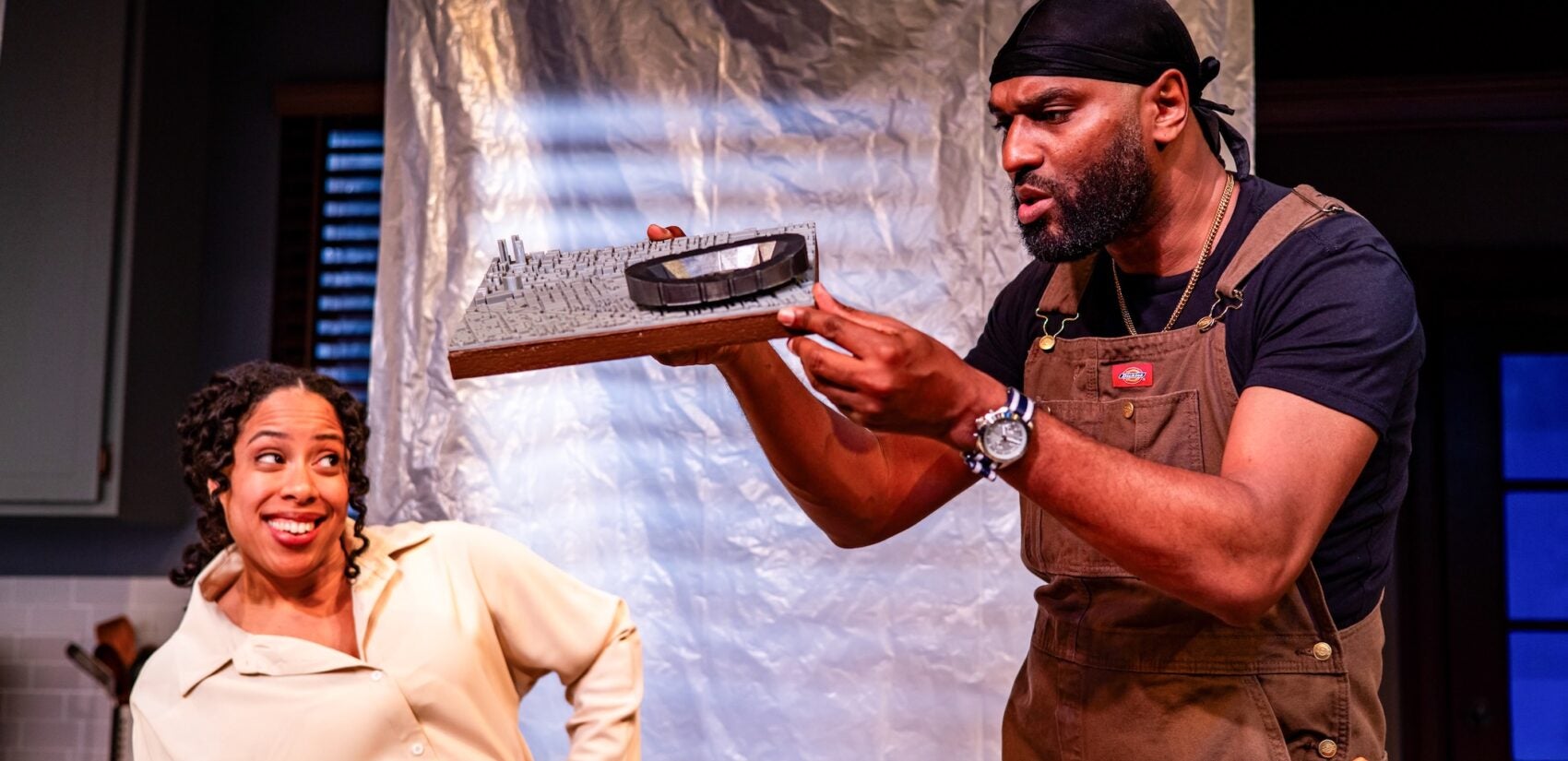
Aisha shows a model of the proposed sports complex to Earl, a contractor renovating her kitchen, played by Walter DeShields. He has a dim view of Aisha’s vision for his neighborhood.
“It’s the Death Star,” he said.
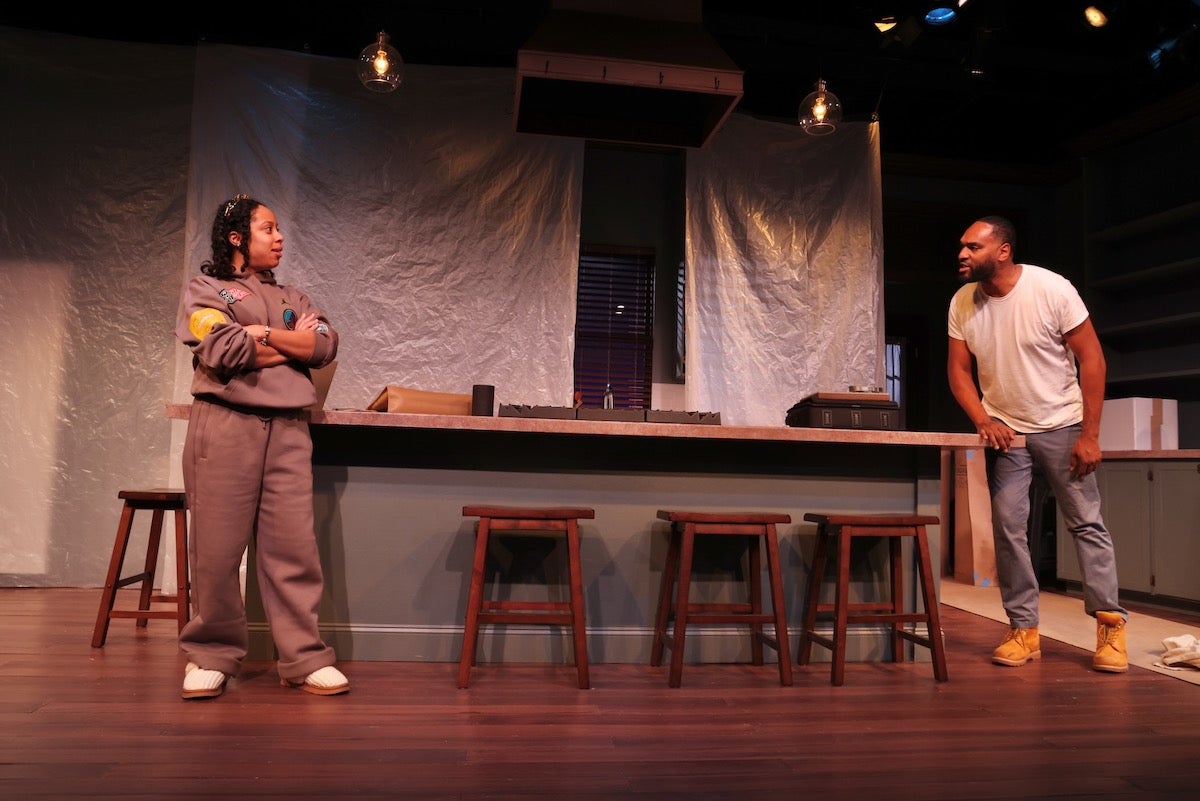
Ijames, who won the Pulitzer Prize in 2022 for “Fat Ham,” wrote “Good Bones” in 2017, well before the Chinatown debate began. But in 2024, he did a major rewrite before its production at The Public Theater in New York City, drawing inspiration from the debate and protests over the Chinatown plan.
“In the original script, it wasn’t a sports complex. It was just a bit of development,” Ijames said. “Because [Chinatown] was happening and I was seeing all the different sides talk about it, it gave me a deeper understanding of how things like this can reshape a city, a community. It was really kind of kismet that it was happening around the same time that I was doing this big revision.”
Ijames said gentrification debates are ripe for theatrical treatment. In “Good Bones,” he makes the fight personal. The character Aisha is originally from the beleaguered neighborhood and hopes a revitalization will erase her bad memories of growing up there. Earl is opposed to changing his neighborhood despite its deeply entrenched problems.
“When you come back to a place that produced you, what is your responsibility to that place?” Ijames said. “I wanted to dig into that. When you move into a community from outside of it, what is your responsibility to the community that’s extant, that’s indigenous to that place?”
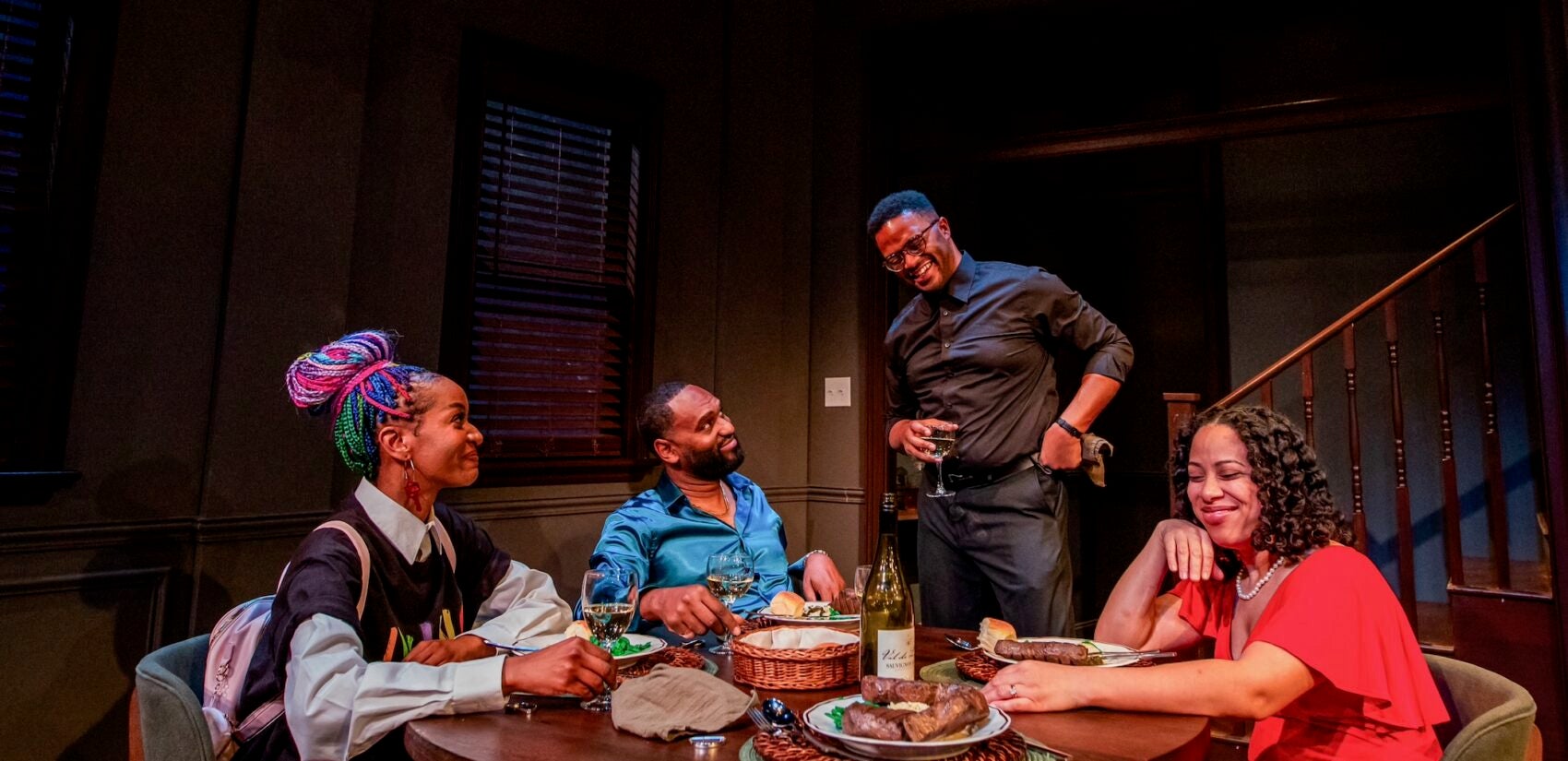
“Good Bones” has argumentative scenes in which characters spar in ways similar to the voices that swirled around the Chinatown stadium plan. But the play goes beyond diametric positions, becoming a more intimate story about how people identify with a place.
“I think the play is a long meditation on belonging,” said director Akeem Davis. “The impact of feeling like you belong, for Earl, has made a dangerous, scarce, oppressed, blighted neighborhood feel like a tribe. The feeling of not belonging anywhere makes Aisha a successful corporate shark.”
“Good Bones” is the first play of the Citywide James Ijames Pass, a trio of winter and spring productions staged by three Philadelphia theaters that banded together to offer ticket buyers a package deal. “The Most Spectacularly Lamentable Trial of Miz Martha Washington” will be staged by the Wilma Theatre March 17 – April 5, and then the Philadelphia Theatre Company will have the world premiere of Ijames’ latest, “Wilderness Generation.”
Related Content

Legislative timeline for new Sixers arena remains up in the air as lawmakers return to session
The team wants to open a new facility by 2031, but it’s unclear when the topic may come up in Philadelphia City Council.
7 months ago
Listen 1:07Philadelphia is Ijames’ adopted city. He moved here in 2003 to go to grad school. It is where he built his career, won a Pulitzer, bought his first house and got married. He moved to New York City in 2025, but still keeps a house in Philly.
“I still love it even though I’m not there all the time,” he said. “To have these three theaters who have meant so much to me as an actor, as a writer, as a director, come together and want to celebrate me as a writer, in a town that has invested so much in me and I feel like I’ve invested so much in it, I’m incredibly moved and incredibly honored by it.”
“Good Bones” opens on Thursday, January 29. The run of the play has already been extended twice, to March 22.
-
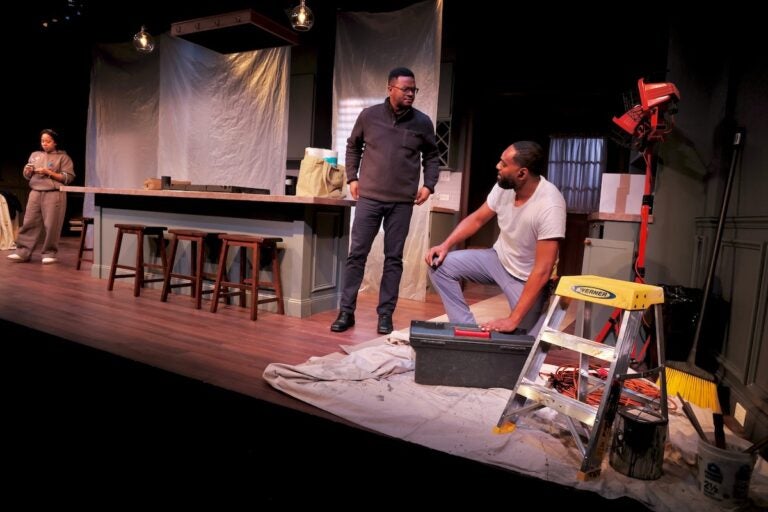
The set for ''Good Bones'' is a construction site, a home remodeling project that echos a larger struggle about the gentrification and neighborhood revitalization. (Emma Lee/WHYY) -

A prop central to the Arden Theatre Company's production of ''Good Bones'' is a model showing an outsized sports stadium dropped on top of a city neighborhood. (Emma Lee/WHYY) -

A prop central to the Arden Theatre Company's production of ''Good Bones'' is a model showing an outsized sports stadium dropped on top of a city neighborhood. (Emma Lee/WHYY) -
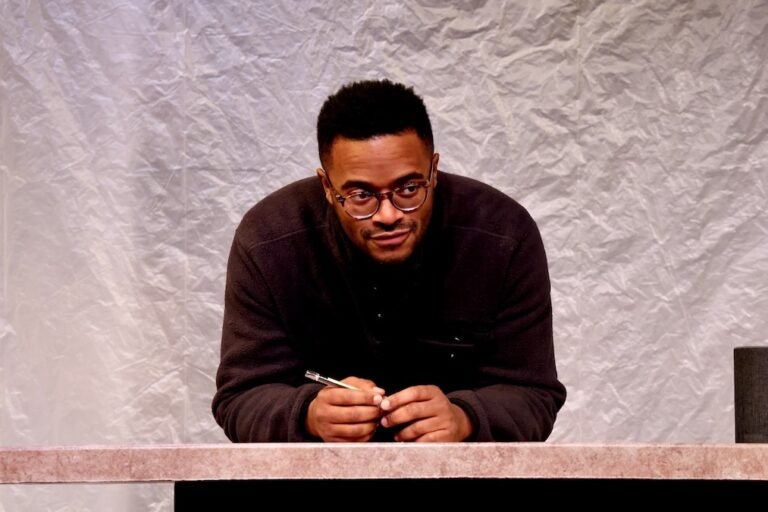
Newton Buchannan portrays Travis in James Ijames ''Good Bones'' at the Arden Theatre. (Emma Lee/WHYY) -
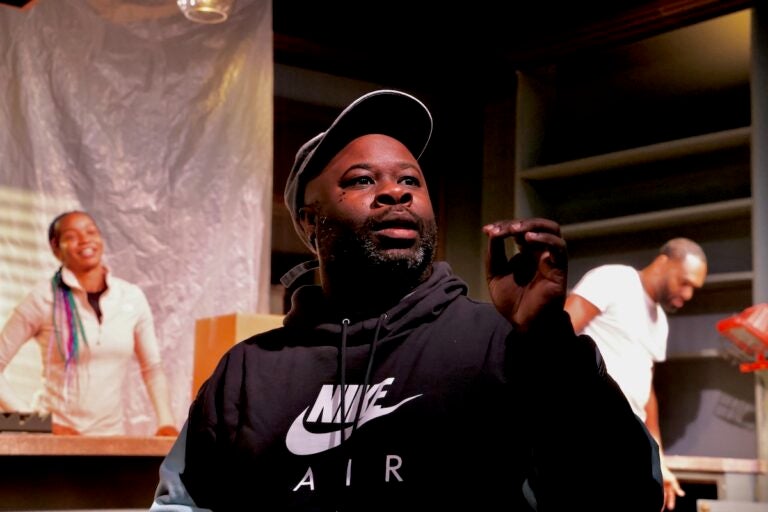
Akeem Davis directs the Arden Theatre Company production of James Ijames' ''Good Bones.'' (Emma Lee/WHYY) -
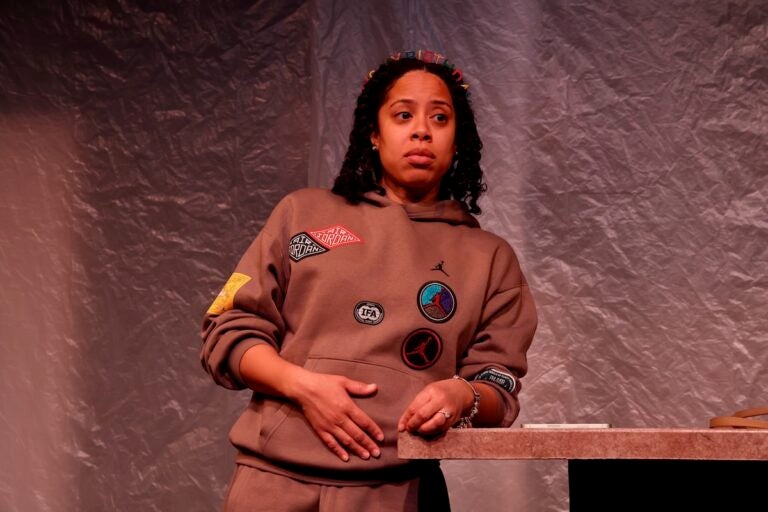
Taysha Marie Canales plays Aisha in James Ijames ''Good Bones'' at the Arden. Aisha returns to her hometown to help developers put a sports stadium in the neighborhood where she grew up. (Emma Lee/WHYY) -
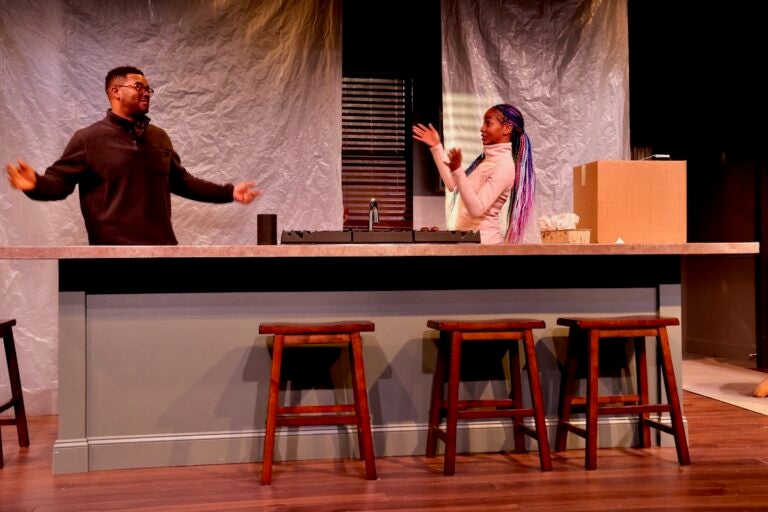
In the premiere of ''Good Bones'' at Arden Theatre, Travis (Newton Buchanan) and Carmen (Kishia Nixon) provide different perspectives on the redevelopment of the neighborhood where Carmen grew up and where Travis is in the process of rennovating an abandoned home. (Emma Lee/WHYY) -
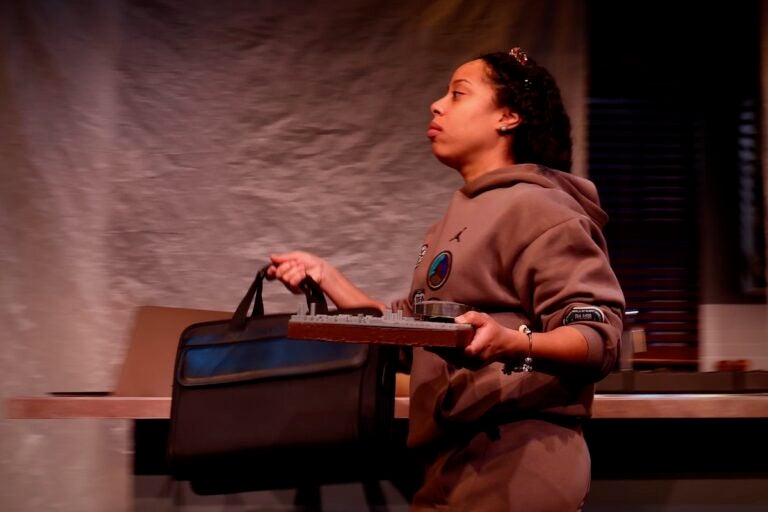
Taysha Marie Canales plays Aisha in James Ijames ''Good Bones'' at the Arden. Aisha returns to her hometown to help developers put a sports stadium in the neighborhood where she grew up. (Emma Lee/WHYY)

Get daily updates from WHYY News!
WHYY is your source for fact-based, in-depth journalism and information. As a nonprofit organization, we rely on financial support from readers like you. Please give today.
Before the rain turned to snow Sunday, thousands packed Philly’s Chinatown for the parade celebrating the Year of the Horse.
1 month ago
Listen 1:10
Protesters gathered outside Philly’s ICE field office after advocates reported the operation.
1 year ago
Listen 1:25
Sixers arena vote delayed again as Philly City Council pushes for $100M community benefits agreement
The Sixers have not yet agreed to proposed amendments to a legislative package containing the approvals the team needs to build the $1.3 billion arena.
1 year ago
Listen 1:26