
Bill would force Delaware lawmakers to disclose free trips to Taiwan, other places
A lawmaker who traveled on a third party’s dime wants to clarify a “weird, gray area” of law but some insist such “gifts” already must be reported.
Listen 1:55

In September, five Delaware state legislators visited the site of the music festival in Israel where Hamas members killed hundreds of concertgoers and took dozens hostage. (Courtesy of Sen. Trey Paradee)
What are journalists missing from the state of Delaware? What would you most like WHYY News to cover? Let us know.
The revelation by WHYY News last month that several Delaware lawmakers have failed to disclose free trips to Taiwan as gifts has led one legislator to propose a bill requiring travel worth more than $500 to be reported to the public.
Delaware law requires that all 62 state lawmakers and about 300 other state officials, including judges, must file an annual financial report. The report must include any gifts worth at least $250, as well as creditors, investments, sources of income and business interests. WHYY News has obtained all the reports filed for 2025.
State law defines a gift as “a payment, subscription, advance, forbearance, rendering or deposit of money, services or anything of value unless consideration of equal or greater value is received.“
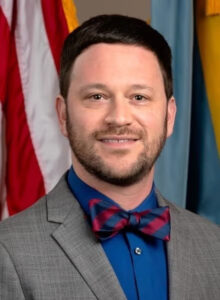
But now state Rep. Jeffrey Spiegelman — who didn’t disclose two previous trips to Taiwan but did report his free 2025 trip to Israel — says he’s trying to clarify the law to eliminate any confusion around what officials must include on the forms filed with the Delaware Public Integrity Commission. Spiegelman said the recent reporting by WHYY News about disclosing the trips spurred him to act.
His bill creates a new category for disclosure: travel expenses of more than $500.
That means “transportation, lodging, entertainment, food and beverage, which in aggregate total in excess of $500 paid for by any person, government, or entity, not including the state of Delaware,” according to the bill’s text.
The weeklong trips to Taiwan, which Spiegelman took in 2019 and 2023 with a handful of legislative colleagues, have been paid for by the Taipei Economic and Cultural Representative Office in the United States. Part of Taiwan’s government, the agency has taken about five Delaware lawmakers a year since around 2010.
None of the state senators or House members have ever disclosed the trips to Taiwan, however, according to financial reports reviewed by WHYY News and interviews with lawmakers.
Some lawmakers suggested that the commission had advised them that the trips didn’t need to be reported, and that colleagues reinforced such guidance, but none could provide a document that said disclosure as a gift wasn’t necessary. Spiegelman and others who have gone to Taiwan, about 8,000 miles from Delaware, said they don’t know how much the trips cost.
The weeklong trip to Israel, where Spiegelman was joined by fellow GOP Rep. Bryan Shupe and three Democrats — Rep. Melania Ross Levin and Sens. Trey Paradee and Darius Brown — cost $6,500 and was paid for by the Consulate General of Israel in New York, according to 2025 financial reports.

After returning home from Israel, Spiegelman said he asked the Public Integrity Commission whether the trip needed to be reported, and was advised that it did.
All five lawmakers have disclosed the trip to Israel, although Shupe didn’t do so until last month, after WHYY News inquired about why he had not.
Commission Chair Ron Chaney said last month that lawmakers must disclose trips “paid for by third parties as gifts on their financial disclosure reports,” in compliance with the financial reporting law. “Legislators with questions about how to report a specific trip, or who believe they were told something different in the past, are encouraged to contact the [Delaware Public Integrity Commission] directly.”
Related Content

Inquiries by WHYY News spurred the Public Integrity Commission to say it wants officials to report all trips paid for by third parties.
5 months ago
Listen 2:43‘Gift makes it sound way too much like a vacation’
Spiegelman, however, said he doesn’t consider the free trips he took to be gifts.
“We were in meetings, we were in discussions. I wasn’t there for vacation,” Spiegelman said. “Gift makes it sound way too much like a vacation, which I think is where the confusion lies.”
The trips to Israel and Taiwan should be categorized separately, he insisted.
“So if a third party pays for it, currently the opinion [of the Public Integrity Commission] is that it should be recorded as a gift,” Spiegelman said. “Under my bill, it will be recorded as travel expenses, which I think clears up a very confusing, weird gray area in the law.”
Other trips taken by state officials, including visits since 2022 by Attorney General Kathy Jennings to resorts in South Africa, Colorado and Arizona that were paid for by the nonprofit Attorney General Alliance, would also have to be disclosed under the proposal.
Spiegelman, who drafted the bill with state Sen. Brian Pettyjohn, said some lawmakers have suggested other changes in the financial disclosure law, so the bill could be modified.
Sen. Trey Paradee, who has gone to Taiwan and like others didn’t disclose the trip, said Spiegelman’s proposal makes sense.
“I like the concept,’’ Paradee said. “Anything that adds more transparency to the system and does away with ambiguity — I think it’s a good thing.”
Related Content
Lobbyists attended and paid for the conferences. Attorney General Kathy Jennings got free flights, hotel rooms, meals, side trips and pampering, but didn’t disclose gifts.
1 year ago
‘Is he saying that his trips in the past had no value?’
Advocates for transparency who had criticized the lack of disclosure about the Taiwan trips and Shupe’s initial failure to report the Israel trip said Spiegelman’s proposal would water down the current law.
They point out that trips already have to be disclosed as “gifts” under the law, and note that the $500 threshold is twice the current one.
Amy Roe, a civic activist from Newark who brought Shupe’s omission to WHYY News’ attention last month, said lawmakers shouldn’t even be allowed to accept expensive trips overseas. But the current law should be strengthened rather than weakened, she said.
“I see this as a very, very serious thing and they should be held to a higher standard if they’re going to make changes,” Roe said. “Here he wants to hold himself to a lower standard.”

Spiegelman said he was willing to negotiate with stakeholders over the threshold. “I’m rather agnostic about the amount,” he said.
Roe, who has asked the commission in writing “to investigate all members of the General Assembly for undisclosed gifts, including all gifts of travel paid for by third parties and foreign governments,” scoffed at Spiegelman’s assertion that the trips were not gifts because the lawmakers did work on their travels.
“I don’t think there is any confusion based on the way that it’s written now. A gift is defined as anything of value,” Roe said. “So, is he saying that his trips in the past had no value, airline tickets have no value, meal vouchers have no value, whatever other things they’re doing, tours of museums or whatever, have no value? As it’s defined now, he has to disclose.”
John Flaherty, a board member at the Delaware Coalition of Open Government, agrees with Roe, and says he favors changing the gift disclosure requirement to include all things of value, not just those worth more than $250.
“I’m hoping we can amend it to have a floor of zero, so anything of value should be reported,” Flaherty said.
“They can call it gifts, they can call it work trips, whatever euphemism they want to use, but it should be disclosed.”
The bottom line, Flaherty said, is that the public has a right to know.
“We have a right to monitor and observe the conduct of our public and elected officials,” Flaherty said. “And the way to do that is for them to report their gifts on their financial disclosure forms.”

Get daily updates from WHYY News!
WHYY is your source for fact-based, in-depth journalism and information. As a nonprofit organization, we rely on financial support from readers like you. Please give today.
Part of the series
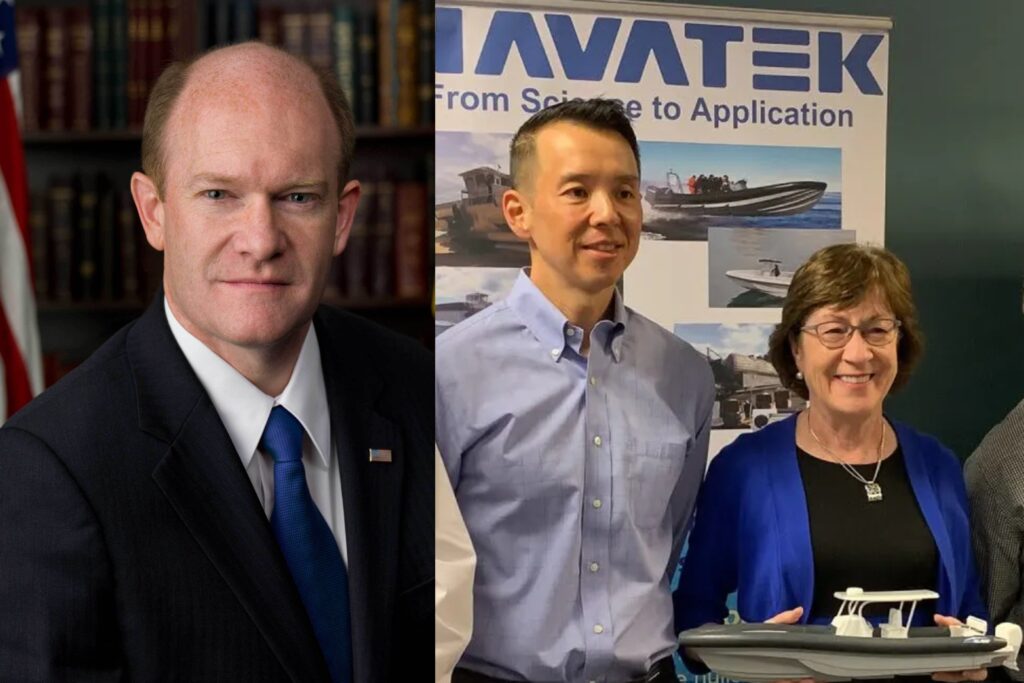
The senator gave the money from Martin Kao and his wife to four Delaware charities after Kao pleaded guilty to several felonies.
2 days ago
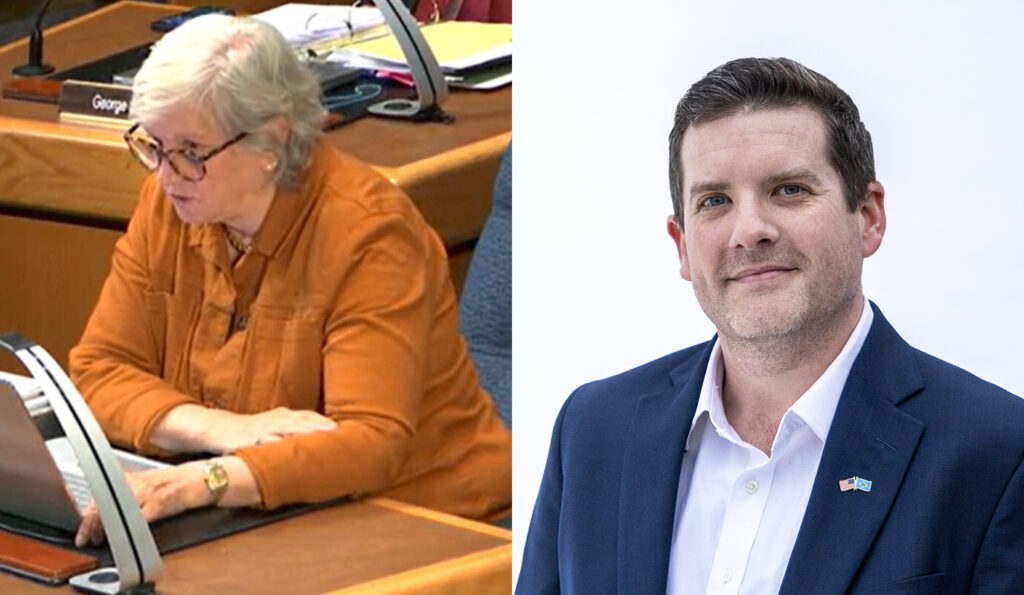
County Councilwoman Dee Durham supports Kyle Grantham’s primary foe but says he’s “twisting our conversation” about potential post.
3 weeks ago
Sus detractores los denuncian como un sistema de vigilancia masiva sin orden judicial, pero 20 cuerpos policiales de todo el estado los utilizan. La ACLU dice: “¡Fuera Flock!”
4 weeks ago