

Federal grant will help refurbish 51 Delaware public transit buses, extending their lifespan
The $14.3 million federal grant comes from the Federal Transit Administration's fiscal year 2026 Bus and Bus Facilities program.

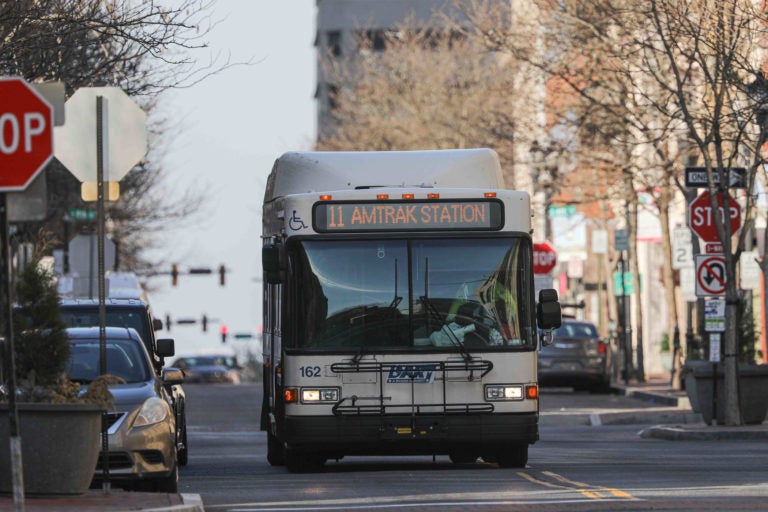
A DART bus travels down Market Street in Wilmington, Del., on a limited schedule on Thursday, March 26, 2020, during the stay-at-home order issued by Delaware Governor John Carney earlier in the week. (Saquan Stimpson for WHYY)
What are journalists missing from the state of Delaware? What would you most like WHYY News to cover? Let us know.
Delaware’s public transit agency will use new federal funding to extend the life of dozens of buses serving riders across the state.
The Delaware Transit Corporation – which operates DART First State – has been awarded a $14.3 million federal grant through the Federal Transit Administration’s fiscal year 2026 Bus and Bus Facilities program. The funding will support a midlife rehabilitation program for 51 buses of the nearly 250 vehicles in DART’s fixed-route fleet.
Transit officials say the program will help the agency keep buses running longer while avoiding the rising costs of purchasing new vehicles.
“The great thing about this grant is[ instead of buying a whole bunch of new buses after their useful life is done with, we can take a lot of those older buses — 51 to be exact — and refurbish them and, in essence, extend their service for another six years,” said Albert Loyola, chief customer experience officer at DART First State.
Like most transit vehicles, buses experience more wear and tear as they age, which can lead to more maintenance issues and service disruptions.
“As it gets older, it needs more repairs. It needs more maintenance. It’s just the overall wear and tear,” Loyola said. “So what this will do is that as our buses get older — when they become somewhat less reliable and may break down on the road — they’ll have to be brought in for fixes, engine problems and all kinds of other issues, brakes, exhaust.”
The rehabilitation program is expected to extend the operational life of 40-foot transit buses from 12 to 18 years and 45-foot coach buses from 15 to 20 years.
Related Content

SEPTA will eliminate 18 bus routes as part of a phased overhaul starting in August, aiming to increase service and improve reliability for riders.
3 days ago
According to Loyola, this approach is far more cost-effective than replacing vehicles outright.
“If we did not have this money, we would have to be replaced by new buses, which are quite expensive,” he noted. “On average, a transit bus will cost us between $500,000 to almost $1 million each. So if you are going to spend $150,000 repairing one of these buses and get another six years out of them, you will be able to save quite a bit of money.”
According to the Delaware Transit Corporation, the program is expected to save about $7.4 million in future costs.
The agency operates a mixed fleet that includes clean diesel and electric buses.
“These funds will be used to fix all of the buses that need to be fixed at any given time,” he said.

Never miss a moment with the WHYY Listen App!


WHYY is your source for fact-based, in-depth journalism and information. As a nonprofit organization, we rely on financial support from readers like you. Please give today.
Philly PHLASH adds 2 new bus stops, helping locals and visitors ‘explore every single attraction’
The bus service stops at 17 popular sites in Philly. SEPTA Key holders, kids 4 and under, and seniors can ride for free.
11 months ago
SEPTA to try out hydrogen fuel cell buses as early as this fall
The 10-bus pilot is part of the agency's efforts to transition to a climate-friendly fleet. But it has attracted criticism from some environmentalists.
1 year ago
Listen 1:04
Businesses like Winterthur Museum have expressed concerns over the planned discontinuation and expansion of routes this fall.
2 years ago