
Delaware officials present updated corporate franchise numbers for the first time in 2 years
Gov. Matt Meyer fired former DEFAC chair Mike Houghton days after WHYY News reported on concerns he had over a lack of data.
Listen 1:19
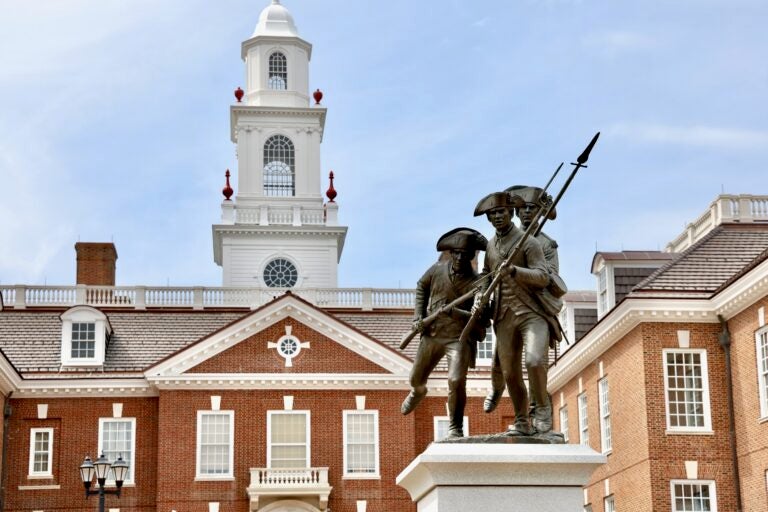
Legislative Hall in Dover, Delaware (Emma Lee/WHYY)
What are journalists missing from the state of Delaware? What would you most like WHYY News to cover? Let us know.
The Delaware Economic and Financial Advisory Council approved budget estimates Monday that give state lawmakers nearly $200 million more to spend in fiscal year 2027.
That amount is an upward revision from March’s meeting. State Sen. Trey Paradee, D-Dover and legislative head budget writer, started to immediately dampen expectations that the Joint Finance Committee would add a bunch of additional spending to the state’s budget.
“Obviously, we had a lot of additional revenue show up this year,” said Paradee, who also sits on DEFAC. “All that revenue is not necessarily sustainable, and we just have to be very careful not to build a lot of recurring expenditures into the budget. That being said, I think we have the opportunity to do some critical one-time investments.”
Senate Minority Leader Brian Pettyjohn, R-Georgetown, said he agreed with taking a measured approach to spending this year, despite the windfall.
“I don’t want us to start to grow the budget for when we do have that downturn and have some of those out years where revenues are going to be low,” he said. “It’s encouraging, but I don’t think we’re necessarily out of the woods.”
Related Content
Delaware Gov. Meyer touts incorporation growth, but hasn’t released tax revenue data
Delaware Gov. Matt Meyer has touted a rise in business entities forming in the state, but he has not released key numbers on the growth.
5 months ago
Listen 1:07Meyer officials give first corporate franchise revenue update in 2 years
But the public reveal of updated corporate franchise numbers stole the show for the second meeting in a row. The Delaware Department of State had not supplied the public with new numbers since May 2024.
The lack of data on corporate franchise tax revenue at March’s DEFAC meeting alarmed some current and former members, including Mike Houghton, a former chairman. Days after WHYY News’ exclusive reporting on Houghton’s questions, Gov. Matt Meyer fired him from DEFAC. That led some lawmakers to express concern that asking tough questions of the Meyer administration could lead to political consequences.
The corporate franchise tax accounts for nearly a third of Delaware’s budget and is the state’s second-largest revenue source, after personal income tax. It’s an annual fee that businesses pay to incorporate in the state. Large corporations are where the state really makes its money.
The tax is calculated using either a shares or assets method, with a maximum of $200,000, unless the company is a large corporate filer, in which case the fee rises to $250,000 a year. The payments are due by March 1.
Limited liability corporations, general partnerships and limited partnerships pay a flat $300 fee by June 1.
Related Content
Mike Houghton was a former Delaware Economic and Financial Advisory Council chairman and longtime member before being fired Wednesday.
5 months ago
Department of State boasts about boost in new, total business entities
Delaware Secretary of State Charuni Patibanda-Sanchez highlighted new business entities rising by about 15% and the total number of entities increasing by 6% in calendar year 2025, compared with the previous year.
The Meyer administration has touted the number of business entities formed in Delaware rising by 100,000 in 2025. According to data provided at Monday’s council meeting, the state has largely added new LLCs and limited partnerships over the past calendar year. LLCs and LPs increased by over 130,000, while an additional 24,000 corporations formed in Delaware.
According to the state department, corporate franchise revenue is $9 million higher than in March, and it rose 1% compared with fiscal 2025 actual collections. DEFAC is projecting a $24 million increase in revenue from limited liability companies since March, an increase of 10% over fiscal 2025.
Corporate franchise tax revenue for fiscal year 2026 is projected at $2.1 billion. Similar to March, officials gave no growth projection for fiscal years 2027 and 2028.
Related Content
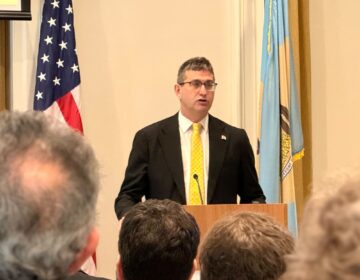
Meyer’s recommended budget would "modernize" business formation fees and raise cigarette taxes to add state revenue.
7 months ago
Debate continues over lack of March franchise data
During a presentation on the corporate franchise, Patibanda-Sanchez reiterated the administration’s position that the lack of revenue data provided in March was consistent with the past three years and chided those for sharing “conjecture, misinformation and exaggeration.”
“The impact those types of statements have can ripple far beyond this room, and at a time when, in reality, we have turned a corner and are proving to the world that Delaware is rowing in one direction,” she said. “It is critical that when we speak about the franchise, Delaware speaks in one informed voice.”
However, some long-time former members of DEFAC have called the dearth of information on corporate franchise tax revenue “unusual” and have pointed to 2022 as an example where some revenue data was presented at the March meeting.
Former Secretary of Finance Rick Geisenberger appeared to push back on Patibanda-Sanchez’s assertions. Although he said he was cutting his public comments short in light of corrections made to the state’s incorporation forecast.
“The need for these adjustments were apparent to many longtime DEFAC observers as early as December and certainly in March based upon publicly available data,” he said.
Geisenberger also voiced concerns over corporate franchise tax collections being a lagging indicator.
“It is totally unprecedented to have back-to-back essentially flat revenue growth when domestic equity markets are as strong as they’ve been the past two years,” he said. “I’m glad this body is asking probing and perhaps even uncomfortable questions and that the secretary is studying the drivers.”
Delaware lawmakers are currently pushing legislation to codify DEFAC into law. State Sen. Paradee said Giesenberger’s comments about the independence of DEFAC were “on point.”
“This is not supposed to be a rubber stamp for the Meyer administration or any other administration, and I think that anyone who is a member of this committee should be able to come here and be able to speak freely without fear that they’re going to be terminated the next day because they somehow offended the governor or the secretary of state,” he said.
The bipartisan legislation putting DEFAC into the state code passed both chambers and is headed to Meyer’s desk.

Get daily updates from WHYY News!
WHYY is your source for fact-based, in-depth journalism and information. As a nonprofit organization, we rely on financial support from readers like you. Please give today.
Part of the series
The zoning changes adopted back in December allowed for dense cottage communities to be built in town.
24 hours ago
Listen 1:07
Supporters say it will allow voters to pick their representative, instead of elected officials picking their voters.
5 days ago
Listen 2:17
House Speaker Melissa Minor-Brown said she has not had a single conversation with Meyer about his creation of a state surgeon general.
6 days ago
Listen 0:57