

Trump budget proposal threatens Philly’s effort to increase supply of deeply affordable units
Amid an affordable housing crisis, the Philadelphia Housing Authority is spending billions to expand its portfolio of subsidized units.
Listen 1:11
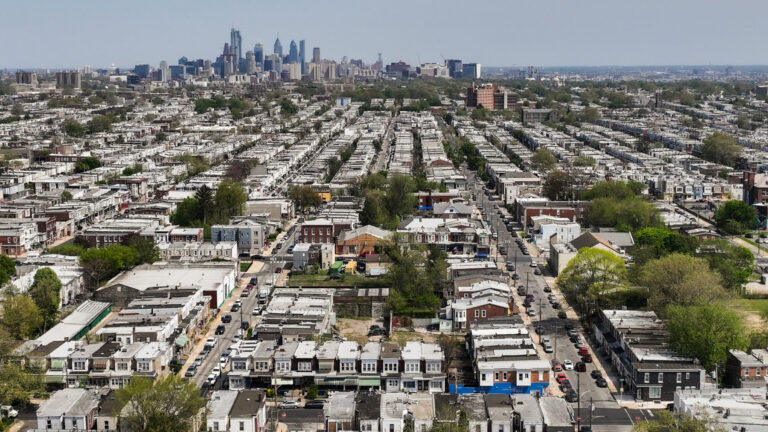
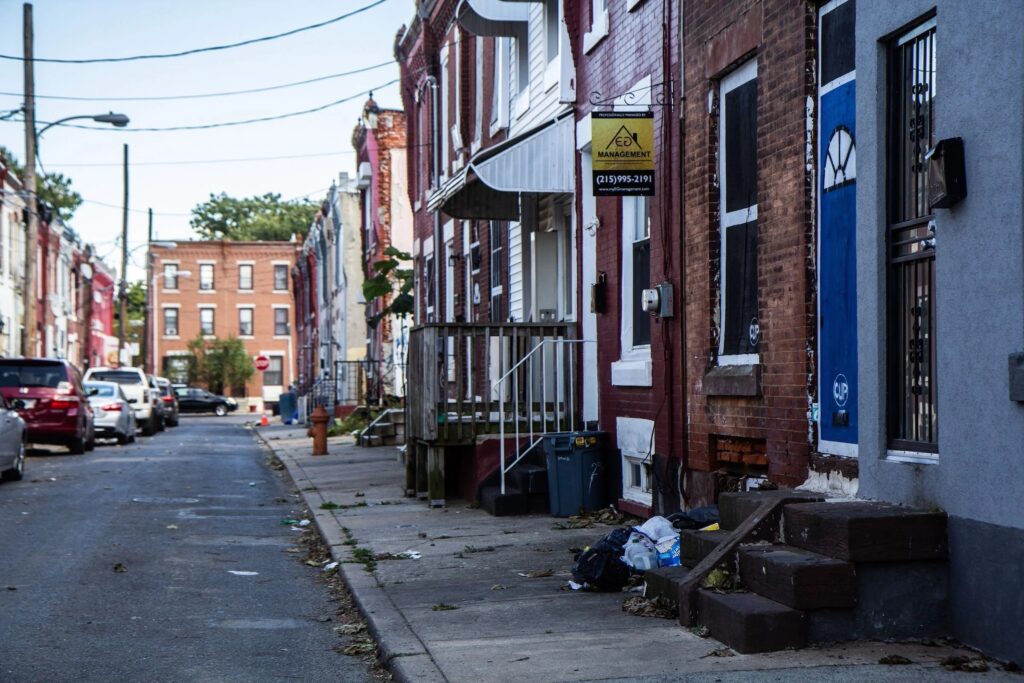
Homes in West Philadelphia. (Kimberly Paynter/WHYY)
Have a question about Philly’s neighborhoods or the systems that shape them? PlanPhilly reporters want to hear from you! Ask us a question or send us a story idea you think we should cover.
The Philadelphia Housing Authority may have to scale back its effort to add thousands of deeply affordable rentals to its portfolio.
That’s because the Trump administration wants to cap the country’s inventory of public housing units as part of the president’s “focus on limiting federal spending,” according to a memo released last month.
The budget proposal seeks to reset each housing authority’s “Faircloth limit,” the legal ceiling on how many public housing units an agency can operate with federal support.
Housing authorities would have until Oct. 1, 2027 to add units up to their current Faircloth limits before the new cap takes effect — if there’s a gap.
The request comes at a time when the demand for subsidized housing continues to outpace supply. The authority currently has roughly 40,000 individuals on its various waiting lists. It fears the administration’s proposal will hurt its ability to reduce that total amid an ongoing affordable housing crisis.
“That is very, very concerning,” PHA President Kelvin Jeremiah said.
Up against the clock
Currently, PHA can have roughly 21,000 subsidized rentals in its portfolio, a total set by Congress nearly 30 years ago. That means the federal government, through the U.S. Department of Housing and Urban Development is required to provide funding for that many units.
Prior to Jeremiah’s time at PHA, the agency lost around 7,000 units as it replaced high rises with lower-density buildings. Under the authority’s Opening Doors initiative, he is working to replace those homes.
The goal is to build 3,000 new units, and acquire 4,000 more on the private market to convert to public housing.
Launched in 2024, Opening Doors will also see PHA overhaul its stock of conventional public housing, the majority of which is more than 70 years old.
The initiative is expected to take a total of eight years to complete, making it extremely unlikely that the authority would be anywhere close to its current Faircloth limit before the Trump administration’s deadline took effect.
“I don’t believe we can get to that number by October,” Jeremiah said. “That’s a high, high order that I think is impractical.”
Related Content
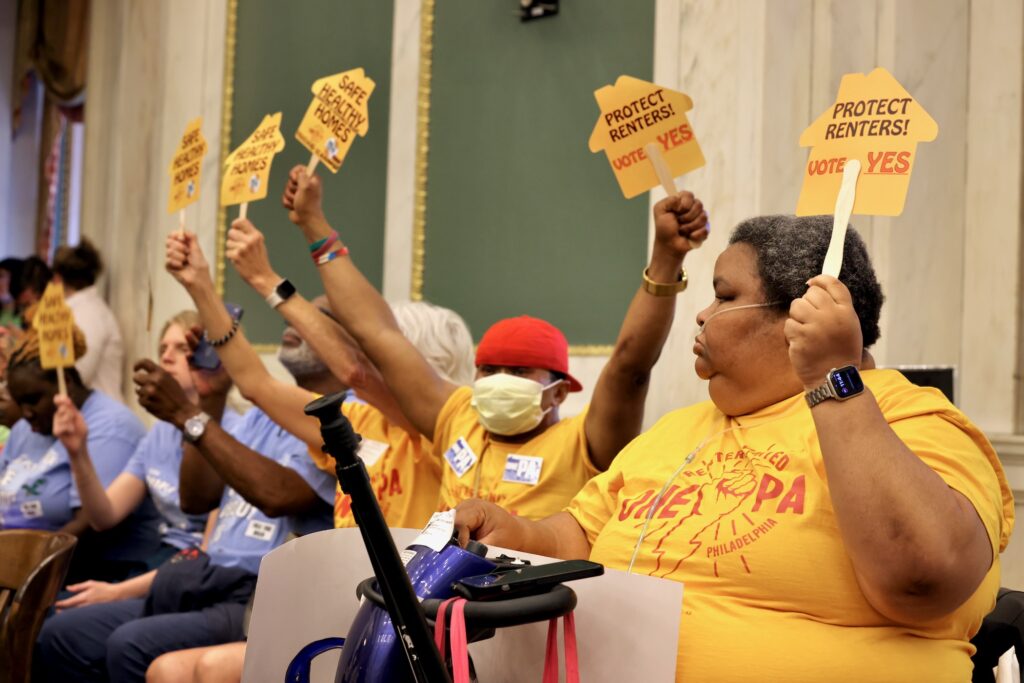
The bill is part of a broader effort to increase the capacity of the Fair Housing Commission, which is responsible for policing a variety of renter protections.
4 months ago
Listen 1:05‘Cautiously optimistic’
To date, PHA has spent more than $330 million acquiring more than 1,700 units of private-sector housing. That includes the 360 units it plans to restore at Brith Sholom House in Wynnefield Heights, 381 units at Greene Manor Apartments in Mount Airy and the 153 units that belonged to Germantown Settlement before it went bankrupt.
Combined with other projects, the authority is nearly halfway through its goal of preserving, redeveloping, building or acquiring more than 20,000 units, according to an online dashboard.
It will be up to Congress to decide whether PHA, and other housing authorities, will have the opportunity to add units to their portfolios past next year’s proposed deadline.
For now, Jeremiah is hopeful that he will. An appropriations bill in the U.S. House of Representatives, which contains funding for transportation, housing and urban development, currently does not contain language setting new Faircloth limits.
It’s unclear if the Senate version will follow suit. And it could be months before the measure is sent to President Donald Trump’s desk for his signature.
The federal government’s new fiscal year starts Oct. 1.
“I am cautiously optimistic,” Jeremiah said. “I think it does require all of us who are interested in the issue of housing affordability, and affordability more broadly, to advocate that we do not reduce the opportunities to expand affordable housing.”
If the cap is imposed, Jeremiah said PHA may be able to use nonfederal funding sources to develop more affordable units on its own, a move that would effectively make the authority a private landlord.
PHA currently receives 93% of its funding from HUD, which has recently translated to around $600 million a year. Jeremiah said that money would be off-limits, but the remaining 7% could technically be used to help subsidize units that are rented with tenant-based housing vouchers. At a mixed-income property, the agency could use revenue generated from market-rate units to help subsidize the affordable units.
Neither the city nor the state contributes operating or capital funding to PHA.
“There are still tools that might be available to us. It’s concerning, though, because we rely on the federal government to help subsidize PHA’s work,” Jeremiah said.
Subscribe to PlanPhilly
WHYY is your source for fact-based, in-depth journalism and information. As a nonprofit organization, we rely on financial support from readers like you. Please give today.
Brought to you by PlanPhilly
PlanPhilly
In-depth, original reporting on housing, transportation, and development.
Philly could lose nearly 8,000 affordable rentals over the next decade. Here’s why
Amid a housing shortage, researchers say it’s unclear how many of these units will be preserved as affordable rentals. About 43,000 could vanish statewide.
2 weeks ago
Listen 0:59
The total is more than half of the plan’s 30,000-unit goal. The milestone comes as the administration prepares to submit its first report on the plan.
3 weeks ago
Listen 1:02
Laurel plans Meadow View community to expand affordable housing access in Sussex County, Delaware
Delaware needs an estimated 24,400 additional homes by 2030 to keep up with projected demand, according to a state report.
4 weeks ago
Listen 1:06