
A fight over vacant Philly lots is exposing tensions in Mayor Parker’s housing plan
The Turn the Key program promised affordable homeownership. Critics say many residents are priced out, raising the question: Who is "affordable housing" for?
Listen 5:13
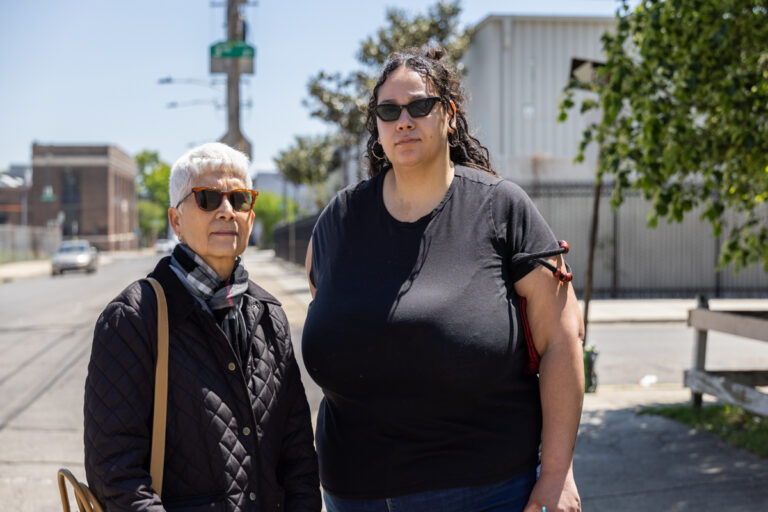
Nilda Pimentel, president of the Norris Square Action Network (left), and Talia Giles, director of the Philly Liberation Center (right), at Third Street and Susquehanna Avenue in Philadelphia (Kimberly Paynter/WHYY)
Have a question about Philly’s neighborhoods or the systems that shape them? PlanPhilly reporters want to hear from you! Ask us a question or send us a story idea you think we should cover.
On North Third Street, not far from Norris Square Park, sits a long-vacant lot that neighbors want to see put to productive use. And they’re raising questions about whether a popular homeownership initiative is the right tool for the job.
Ideally, they say, the city-owned parcel would be used for a mixed-use development with an independent retailer on the ground level — perhaps a pharmacy or another business providing a basic service — and affordable apartments for families above.
In this North Philadelphia community, scarce housing and limited retail options force many low-income families to share living space with other households and shop outside the neighborhood.
“This is an example of a block that needs to be revitalized,” said Nilda Pimentel, who chairs the Norris Square Community Action Network. “We need to generate foot traffic here.”
-
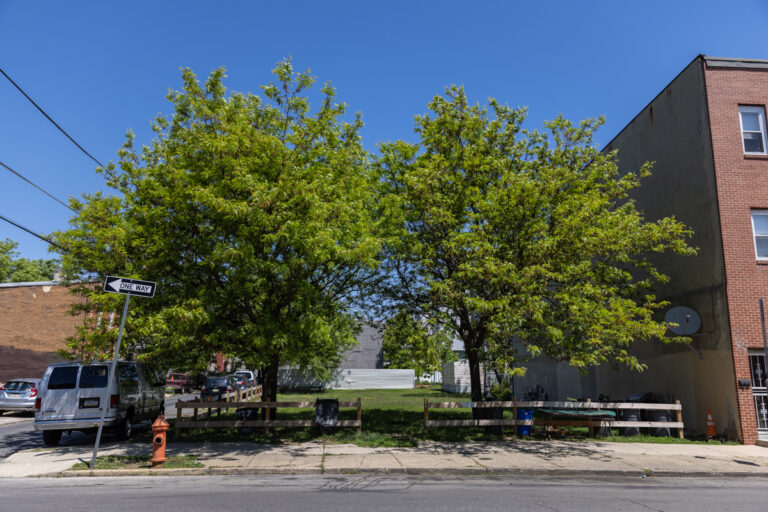
A vacant, city-owned lot in Philadelphia’s Norris Square neighborhood (Kimberly Paynter/WHYY) -
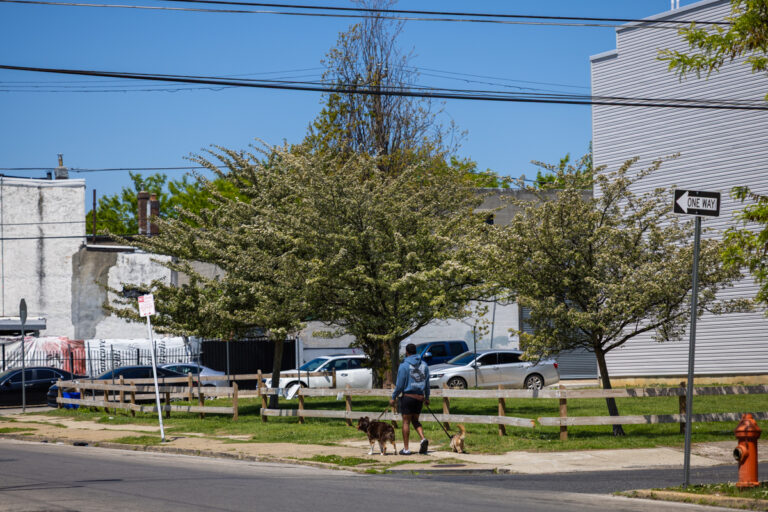
A vacant, city-owned lot in Philadelphia’s Norris Square neighborhood (Kimberly Paynter/WHYY) -
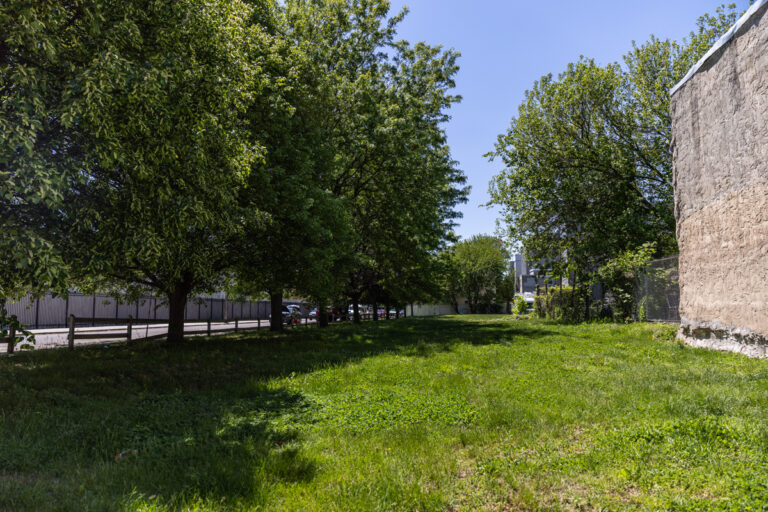
A vacant, city-owned lot in Philadelphia’s Norris Square neighborhood (Kimberly Paynter/WHYY)
The land remains in limbo, however, after neighbors rejected a proposal to bring single-family homes to this and several other lots through the city’s Turn the Key program. They were joined by City Councilmember Quetcy Lozada, who is using her office to block Civetta Property Group, the city’s largest developer of Turn the Key homes, from moving forward with the project.
The project is now part of a broader political debate over how public land should be redeveloped under Mayor Cherelle Parker’s signature housing program — a debate rooted in affordability and the economics of some of the city’s poorest neighborhoods.
“When I hear [Lozada] push back, I hear her saying … Turn the Key is not the product for every single neighborhood in the city of Philadelphia, and council members should be able to say that without being labeled as anti-housing,” said Councilmember Jamie Gauthier, who chairs the body’s housing committee.
Related Content

Philly is unlocking $400M for housing. Here’s what that means for renters and homeowners
Mayor Parker's H.O.M.E. plan is entering a critical new phase. Advocates hope it helps the city's most vulnerable residents.
6 months ago
Listen 6:00Leveraging vacant land for homeownership
While she was running for office, Parker campaigned on a proposal to use vacant city land to help expand Philadelphia’s housing supply. That goal is now a sizable part of the Housing Opportunities Made Easy initiative, her administration’s plan to build and preserve 30,000 homes.
Backed by $800 million in bonds, the multipronged effort will see money flow to dozens of programs. Turn the Key, a popular homeownership initiative, has so far emerged as the plan’s primary vehicle for transforming public lots into affordable housing, including the ones in Norris Square. And Parker has vowed to put the program “on steroids.”
The goal of Turn the Key is to mint new homeowners in neighborhoods where property values are on the rise, with hopes of stabilizing those communities so people aren’t displaced. To date, 415 units have been sold under the program. Another 200 are under construction, and 1,048 more units have been approved.
“Renters face a constant risk of rent increase, which can eventually make staying in their neighborhood unaffordable. Homeownership changes that equation,” Civetta’s cofounder Brennan Tomasetti said.
To keep costs low, the Philadelphia Land Bank effectively gives away lots to private developers who then build new homes priced for working-class families interested in becoming first-time owners, including municipal employees. Through Turn the Key, these buyers can obtain up to $75,000 in mortgage buydown assistance, which is often paired with funding from Philly First Home to further bring down the sale price — and the monthly mortgage payment. That program provides grants of up to $10,000 for first-time homebuyers.
Before those subsidies, the homes start at around $280,000. Turn the Key buyers typically pay around $1,400 a month for a three-bedroom house, which is considerably less than the median rent for a similar apartment.
Critics say that price point still excludes low-income residents in City Council districts with the most vacant city land — primarily the 3rd District in West Philadelphia and the 5th and 7th districts in North Philadelphia. These are areas where Turn the Key projects are more likely to land — and have. Gauthier, for example, has approved 100 homes through the program.
“They’re kind of just like, ‘Oh, we’re just going to throw this blanket over the entire city and just expect it to work.’ And then it feels like they almost act surprised when it doesn’t work,” said Talia Giles, who sits on the steering committee for the Norris Square Community Action Network.
Currently, the average income for Turn the Key households is about $54,000, according to the land bank.
In the 7th District, 90% of renters earned less than $35,000 as of 2024, according to the Philadelphia Coalition for Affordable Communities.
It was 91% in the 3rd District and 83% in the 5th District.
Lawmakers echoed the sentiment during a budget hearing last week with the city’s Department of Planning and Development. The discussion began with Lozada, but several of her colleagues chimed in to raise similar affordability concerns with Turn the Key, a program they have all supported.
They also raised the prospect of the city offering $100,000 in mortgage assistance to Turn the Key buyers instead of the current maximum of $75,000.
Jefferey Young Jr., who represents the 5th District, told the administration that more residents could participate in the program if they had more help purchasing these homes.
“You won’t get so much pushback from the community when we’re trying to put these products out there,” Young said.
Related Content
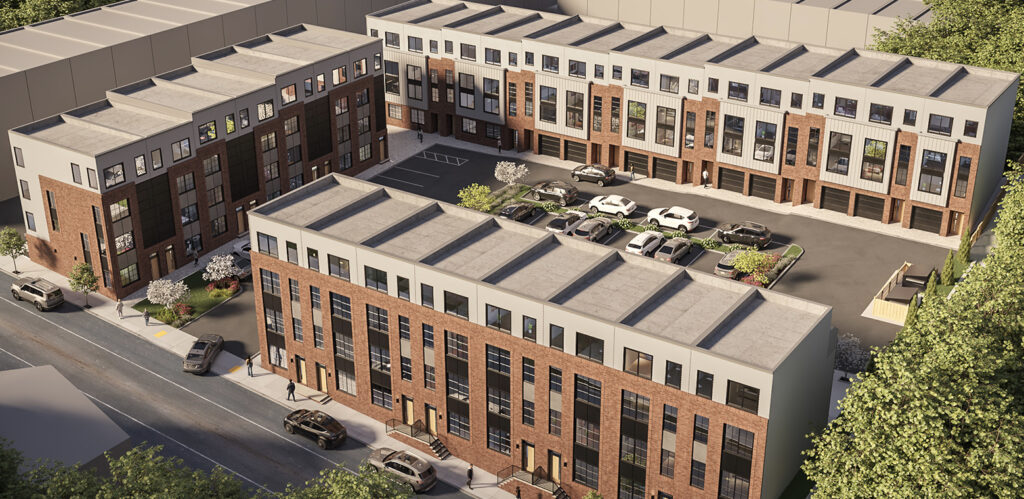
New apartments are planned for Germantown parcel with history of illegal dumping
The project from Liberty Bell Management calls for a mix of townhomes and duplexes. Construction could start sometime in 2027.
5 months ago
Hurdles with Turn the Key
The administration says it’s not that simple.
Angela Brooks, the city’s chief housing and urban development officer, said increasing the mortgage assistance would make fewer Turn the Key homes available. The program’s budget is based on the $75,000 cap, she said.
A higher mortgage subsidy also wouldn’t necessarily allow more low-income renters to qualify for the program, because every buyer still needs to secure a traditional mortgage loan, Brooks said. And lenders have their own criteria that applicants must meet, meaning everyone who wants to be a homeowner has the financials to achieve that goal.
“At the end of the day, we want to make sure we are not adding to other programs like our foreclosure prevention programs,” Brooks said. “We want to make sure people are really getting in a situation that makes the most sense for them.”
More broadly, Turn the Key projects require fewer public subsidies than other affordable housing products, making them faster to build.
Additionally, the administration argues these homes are currently the best option for the city lots available for redevelopment, because most of the lots are sized to fit rowhomes.
Jessie Lawrence, who directs the Department of Planning and Development, said the city’s public inventory doesn’t include many assemblages, which are large single parcels comprising several smaller lots that were acquired and combined.
“We’re levering infill opportunities because that is the predominance of our inventory. But I agree with you, it should not limit and it will not limit where we look at how we consider housing going forward,” said Lawrence during last week’s hearing.
He said it will be easier to diversify the types of housing built on city land now that the Land Bank has reclaimed its priority bid status. That means the agency doesn’t have to compete with other buyers when tax-delinquent properties come up for auction at sheriff sales, the only mechanism the agency has for adding to its inventory.
Brooks added that the administration is in the process of shaping its vacant-land strategy.
“That’s where we will get a better idea of how we should be using our public land and having a real strategy,” Brooks said. “We will be having individual meetings with each district council member, certainly starting with the ones that have the most vacant land.”
In the meantime, Council President Kenyatta Johnson advised the administration to collaborate closely with his colleagues, particularly Lozada and Young, whose districts are adjacent.
For now, district council members must introduce, and the full Council must pass, legislation to complete the land disposition process so construction can start on any Turn the Key home.
“I know [Parker] has a goal to rehab and produce 30,000 units. It’s really imperative that there’s a good relationship between those district members in order for our mayor to be successful as she rounds out her term,” Johnson said during the hearing.
“And we would like her to be successful.”
Subscribe to PlanPhilly
WHYY is your source for fact-based, in-depth journalism and information. As a nonprofit organization, we rely on financial support from readers like you. Please give today.
Brought to you by PlanPhilly
PlanPhilly
In-depth, original reporting on housing, transportation, and development.
The total is more than half of the plan’s 30,000-unit goal. The milestone comes as the administration prepares to submit its first report on the plan.
5 days ago
Listen 1:02
SEPTA unveils wishlist for improvements and upgrades, but no sign of funding to make it happen
SEPTA’s blueprint for “best-in-class” service includes new vehicles and shorter wait times, but it all hinges on consistent funding, which doesn’t exist yet.
6 days ago
Listen 1:16
Five Council members oppose a proposed contract with Reworld, as the Parker administration says its plan will save taxpayers millions.
2 weeks ago
Listen 1:04