

As school closures loom, a former Philadelphia principal offers a warning
Former Strawberry Mansion principal Linda Cliatt-Wayman says the district poorly handled past closures and is now repeating the same mistakes.
Listen 1:27
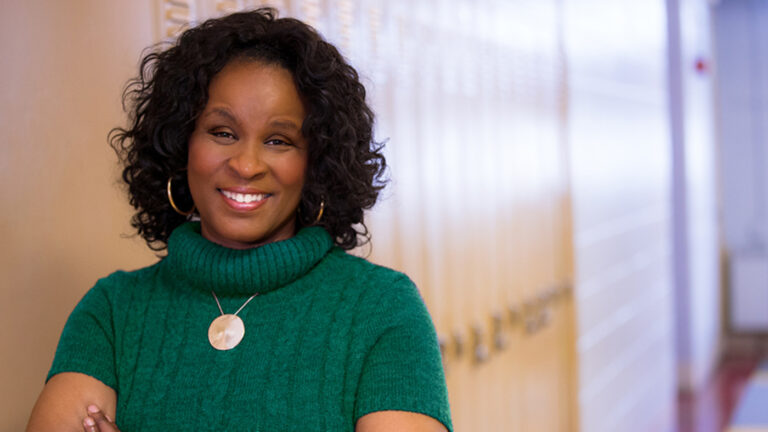
Linda Cliatt-Wayman gained national attention in 2013 for leading a turnaround at Strawberry Mansion High School, which struggled with frequent fights, poor attendance and low test scores. (Courtesy Linda Cliatt-Wayman)
From Philly and the Pa. suburbs to South Jersey and Delaware, what would you like WHYY News to cover? Let us know!
North Philadelphia native Linda Cliatt-Wayman had a decadeslong career in the School District of Philadelphia and was credited with a remarkable turnaround of Strawberry Mansion High School, where she served as principal from 2012 to 2017.
And as the district prepares for the closing of 17 schools, she’s offering a cautionary tale.
At Mansion, Cliatt-Wayman inherited a slate of challenges, including poor attendance, low test scores and frequent violent incidents. School safety officers regularly broke up fights — some of which led to students being arrested — and the federal government classified it as “persistently dangerous.” At times, Cliatt-Wayman faced threats to her own life.
She dedicated herself to caring for students and staff with a “no excuses” mentality. Her efforts attracted nationwide attention, especially after a May 2013 “Nightline” special hosted by Diane Sawyer, which gave an intimate glimpse into the struggling school and challenges of students’ home lives.
However, Cliatt-Wayman said a major reason why her school was so troubled was barely acknowledged was that it had just experienced a merger that, while well-intentioned, brought together an “explosive mix” of students.
The Philadelphia district closed about 10% of its traditional public schools in 2012-2013, and Thomas FitzSimons High School and E. Washington Rhodes High School merged into Strawberry Mansion just as Cliatt-Wayman took the helm.
Though FitzSimons and Strawberry Mansion were only blocks apart, their students had longstanding conflicts, some gang-related and violent.
Despite warnings that the merger could prove dangerous, the decision went ahead, with some district leaders touting the opportunity to collaboratively resolve neighborhood problems.
That round of closures had strong ripple effects, Cliatt-Wayman said, and she believes the problems Strawberry Mansion already faced became worse following the merger.
Many students simply left. She expected to have 1,000 but ended up with only about 360, and attempts to bring them back were mostly unsuccessful.
“We tried to find those kids. We could not find the kids,” she said.
Now, years after that turmoil, Cliatt-Wayman said the district seemingly hasn’t learned from the experience.
In a statement, a school spokesperson said the district recognizes “the impact and lessons learned from the 2012-2013 school closures, and we are committed to ensuring the current process is distinct and significantly more collaborative.”
The statement reiterated the district’s commitment to “white glove, red carpet treatment” for schools affected by closures and mergers. But Cliatt-Wayman said she doesn’t believe such attention is happening.
She said she watched livestreamed board meetings and was disheartened to see board members engaged in side conversations or on their phones. The closure decision was made before the public had a chance to have its say, Cliatt-Wayman said.
She believes the district’s lack of engagement has made a difficult situation much worse. The multiple protests and distraught testimony in favor of saving the 17 schools seem to fall on deaf ears, she said.
Cliatt-Wayman said the board must acknowledge the community’s unhappiness.
“Respond at the board meetings. Give people adequate answers to their questions so they won’t be so angry,” she said. “They’re angry because they never really answer the questions.”
As the closure plan moves forward, Cliatt-Wayman said she’s also wondering who will track the fallout.
“Now, once [students] get into those schools next September, who’s still going to be here? Who’s going to go in there and see the effects of their decision?” she said.
Related Content
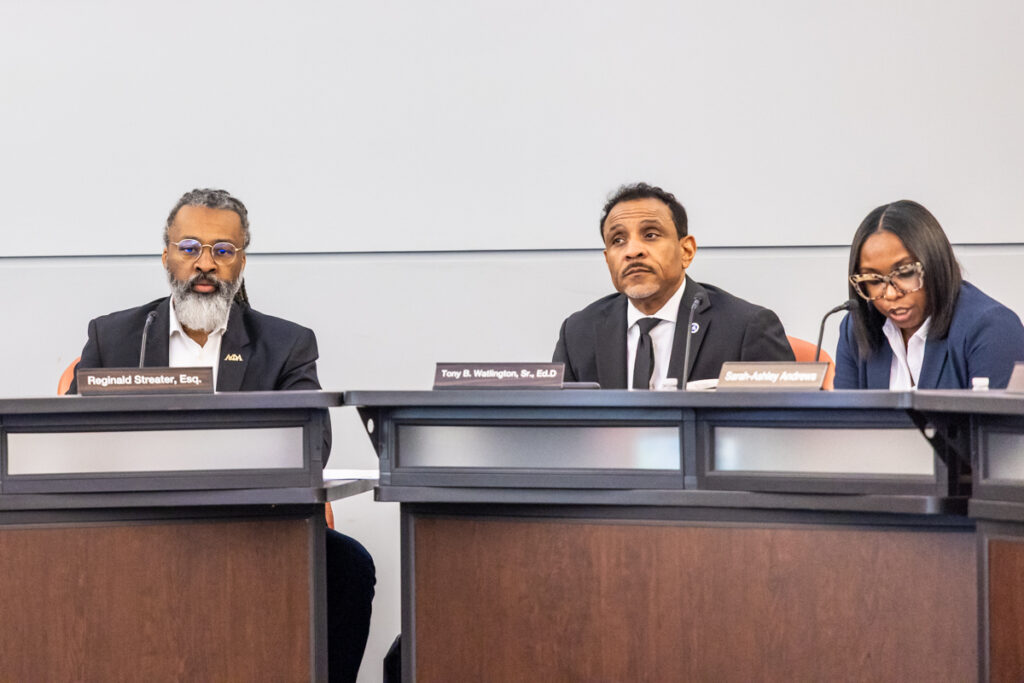
17 Philadelphia schools are set to close in 2027. Here’s what to know
Philadelphia's school board voted to pass the district’s facilities plan last Thursday, despite protests from city officials and residents.
7 months ago
‘So where’s the support?’
Before joining Strawberry Mansion, Cliatt-Wayman was a teacher, principal and then assistant superintendent overseeing more than 50 schools. She had not planned on being a principal again, but agreed to lead Strawberry Mansion after the district could not find someone else. She became the school’s fifth principal in as many years.
Cliatt-Wayman believed her students simply lacked love, support and the belief that their lives could be better. The “Nightline” special showed her walking the halls and repeating her daily motto over the intercom: “If no one told you they loved you today, remember I do, and always will.”
After a year, the school’s test scores improved by 107% in literature and 171% in Algebra, and the number of dangerous incidents reduced by half.
The “Nightline” special brought nationwide support to Strawberry Mansion, including monetary donations and a visit from the hip-hop artist Drake, who greeted students and pledged to build a recording studio at the school.
But since those days, Cliatt-Wayman said she’s grown increasingly frustrated about how little has changed.
She said she was handed a triple-merged school with no support and that the same is happening districtwide today.
Those impacted by coming closures and mergers are still unclear on details that can make or break a program, she said, such as which principals will lead the merged schools and what additional resources they will receive, if any.
“So where is the support?” Cliatt-Wayman said. “Are you going to put extra counselors in the schools? Are the board members going to go in there and actually see the effects of what they’ve done? Because nobody came to me. Nobody came to see me and the effects that I went through.”
She said after her long career, she’s disappointed to see history repeating.
“They’re not changing, and for 33 years, I thought that I was actually going to live to see the day that the Philadelphia School District got better,” Cliatt-Wayman said. “And every time you turn around, they get to vote for the same thing all over again. It is so, so disheartening.”
Related Content
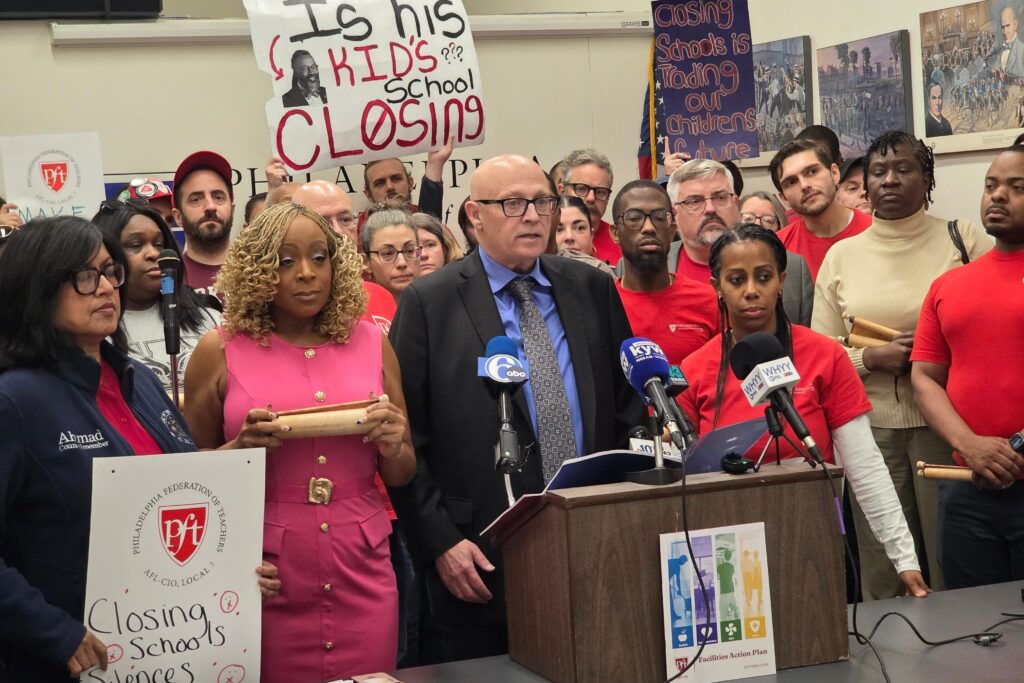
Philadelphia teachers union releases plan to save 17 schools
The Philadelphia Federation of Teachers is calling on Mayor Cherelle Parker to intervene to stop the closures and begin overdue maintenance.
2 weeks ago
Listen 0:57Educating outside of the system
Challenges to public education, including declining population and underfunding, are happening everywhere, and Cliatt-Wayman said American schools seem hopelessly stuck in the past.
Since retiring from the district, she’s worked from outside the system to uplift staff and young people.
Cliatt-Wayman runs the nonprofit Currently Trending, which teaches teens resilience, leadership and integrity — traits to survive whatever happens around them.
“‘So learn these skills so that you could persevere and overcome all of the decisions that you have no say-so in,’” she said she tells her students.
The lack of support and resources for public education also takes a toll on staff. Cliatt-Wayman said her speaking engagements around the country often turn into pep talks encouraging teachers and principals to stay in the profession.
It’s no easy task when many kids today are experiencing trauma, and teachers are often left to sink or swim, she said.
“You cannot go in that classroom, especially urban education where a lot of people are quitting, without adequate support and without adequate preparation. It’s just impossible,” Cliatt-Wayman said.
Her experience has given her a grim view of Philadelphia’s public schools’ future. She predicted that more students will leave, as they did in the last closures, adding that many of her Currently Trending students say they want to attend online schools.
Now that the closure plan is happening, Cliatt-Wayman said the only hope is in truly learning from it.
She believes district leaders should track schools, staff and individual students as the changes play out next fall.
“I want them to go in there and see the effects of what they’ve done,” Cliatt-Wayman said. “The teachers are going to have their stories, the administrators, but the effects on the kids is what people don’t see.”

Get daily updates from WHYY News!
WHYY is your source for fact-based, in-depth journalism and information. As a nonprofit organization, we rely on financial support from readers like you. Please give today.
Part of the series

Philadelphia families find joy in community cooking classes
Each month, Vetri Community Partnership pairs with the School District of Philadelphia for free family experiences.
17 hours ago
25th annual Fishtown Spelling Bee draws hundreds
The educational event has become a beloved tradition in Philadelphia over a quarter century.
1 week ago
Listen 0:54
20 Philadelphia schools could close next year. Here’s what you need to know
The district is weighing closures in light of under-enrollment, outdated facilities and budget constraints.
10 months ago