
17 Philadelphia schools are set to close in 2027. Here’s what to know
Philadelphia's school board voted to pass the district’s facilities plan last Thursday, despite protests from city officials and residents.
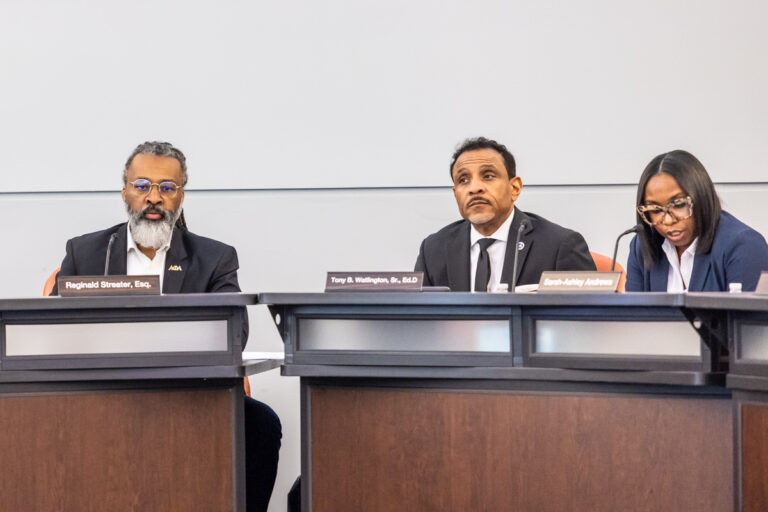
Philadelphia school board president Reginald Streater (left), Superintendent Tony Watlington (center) and school board vice president Sarah-Ashley Andrews (right) at the April 30, 2026 board meeting ahead of a vote to close 17 city schools. (Kimberly Paynter/WHYY)
From Philly and the Pa. suburbs to South Jersey and Delaware, what would you like WHYY News to cover? Let us know!
The Philadelphia Board of Education voted to pass the school district’s contentious facilities plan last week, setting up 17 school closures across the city starting in the 2027-2028 academic year.
Despite protests and threats from City Council members and residents, the board passed the plan, 6-3.
The final version of the facilities plan will cost $3 billion — funded by a combination of district resources and philanthropy — and modernize 169 campuses, up from the original proposal of 159.
Related Content
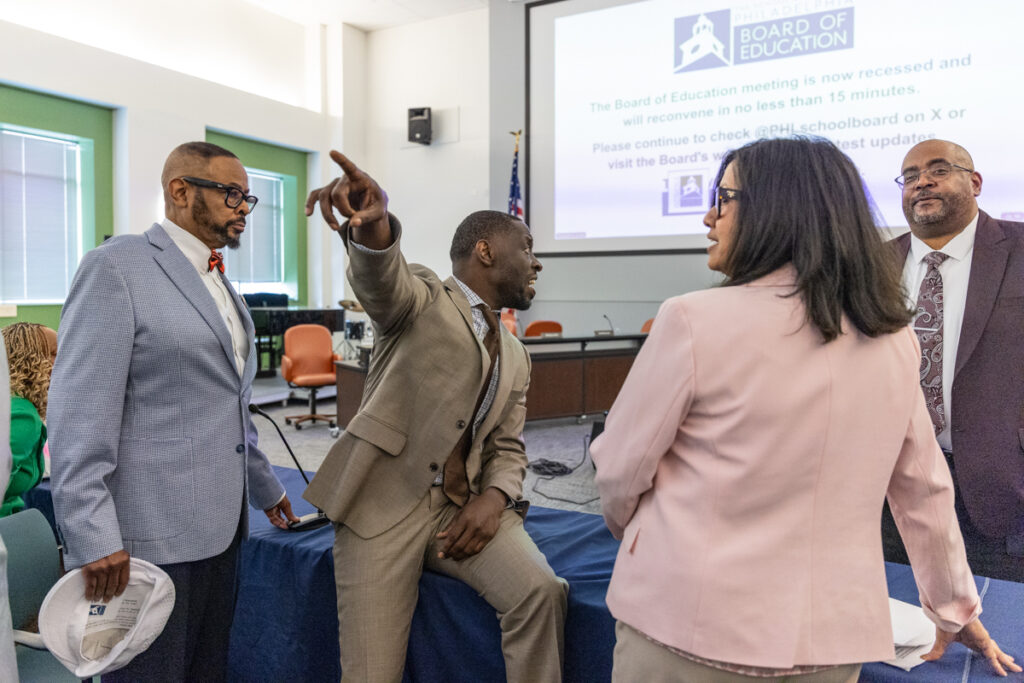
Philadelphia school board approves facility plan, district to close 17 schools
The facilities plan had gone through multiple revisions after backlash from the community.
6 months ago
Listen 1:22Attempts to slow Philly’s last school-closure cycle
The last time the city saw major school closures was more than a decade ago. In 2012 and 2013, Philadelphia closed 30 schools.
In an attempt to curb the proposed 23 campus shutdowns in 2013, City Council passed a resolution supporting a moratorium on potential closures.
Despite attempts to stop these closures from officials and residents, the School Reform Commission, a state-run body that oversaw Philadelphia schools from 2001 to 2018, went forward with the decision.
A 2019 study from the University of Pennsylvania found that following these closures, displaced students received more suspensions and were absent more compared to their peers.
Related Content
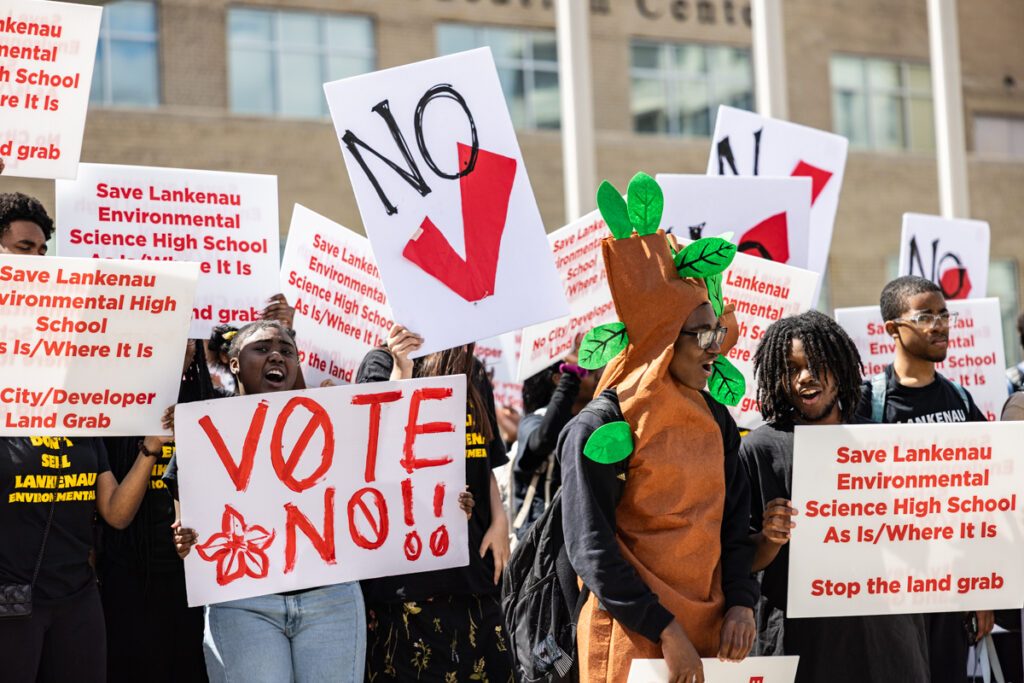
‘Devastated’: Lankenau slated for closure after tense Philadelphia school board vote
A sophomore at Lankenau said she’d rather graduate early or take a GED test than transfer to a different school for her senior year.
6 months ago
Listen 1:10City Council pushback
Councilmember Isaiah Thomas, chair of the city’s education committee, spoke ahead of the April 30 meeting, warning that if the board passed the facilities plan, there would be consequences.
“Understand what your vote will come with,” Thomas said that day. “We will do everything in our legal power to put us in a position to sue you based on this decision and other issues that we know exist.”
While City Council has no direct power over the school board, other than direct legal action, there are ways council members can influence the fate of Philadelphia schools.
Councilmember Jamie Gauthier introduced rezoning legislation in late March, aiming to recategorize four schools set for closure in her West Philadelphia district for “civic use,” not “multifamily housing use.” This change, according to Gauthier, will disincentivize developers who want to buy the land post-closures and make the district think twice about closing the schools altogether.
Another council member, Jeffery Young Jr., had similar ideas. He is working on legislation to rezone schools in his North Philadelphia district for civic, educational or medical use, which would force potential developers to endure a zoning variance process.
Throughout the facilities-planning process, council members have been active participants in speaking out against the closures, often doing so directly at board meetings and putting public pressure on district officials.
In February, City Council President Kenyatta Johnson threatened to hold up city funding to the district in order to stop school closures.
Related Content
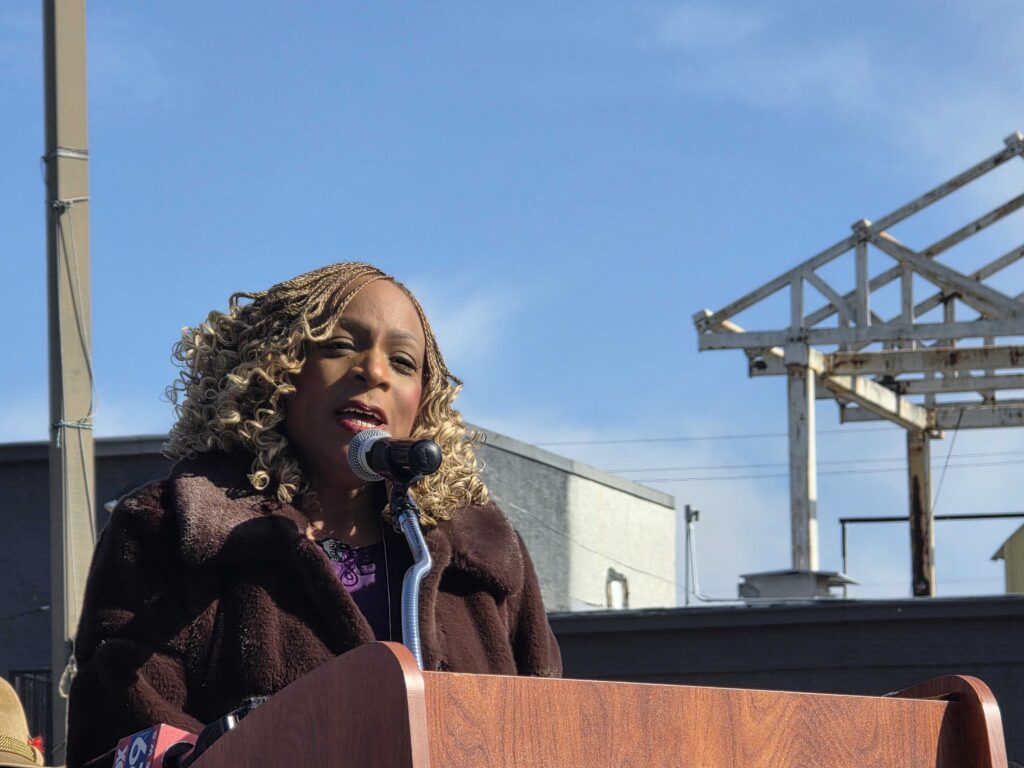
Jamie Gauthier wants to rezone schools to limit redevelopment of school buildings, arguing their land value is driving decisions instead of students’ needs.
7 months ago
Listen 0:53Heavily affected neighborhoods
Of the 17 schools slated to shut down, 12 are located in North Philadelphia and Kensington. The other five are in West Philadelphia.
Advocates have raised concerns that the plan will disproportionally affect Black students. In the original plan, 68% of the student population of the schools set to close are Black, compared to 40% for the rest of the schools in the district, according to data from The Philadelphia Inquirer.
The following schools are set to close, starting in the 2027-2028 school year:
Pre-K–8 schools:
- Robert Morris Elementary
- Samuel Pennypacker School
- John Welsh Elementary School
- Laura W. Waring School
- Overbrook Elementary School
- Rudolph Blankenburg School
- Fitler Academics Plus
Middle schools:
- General Louis Wagner Middle School
- Stetson Middle School
- Warren G. Harding Middle School
- William T. Tilden Middle School
- Academy for the Middle Years, or AMY, at Northwest
High schools
- Lankenau High School
- Paul Robeson High School
- Parkway Northwest High School
- Parkway West High School
- Penn Treaty High School
Related Content
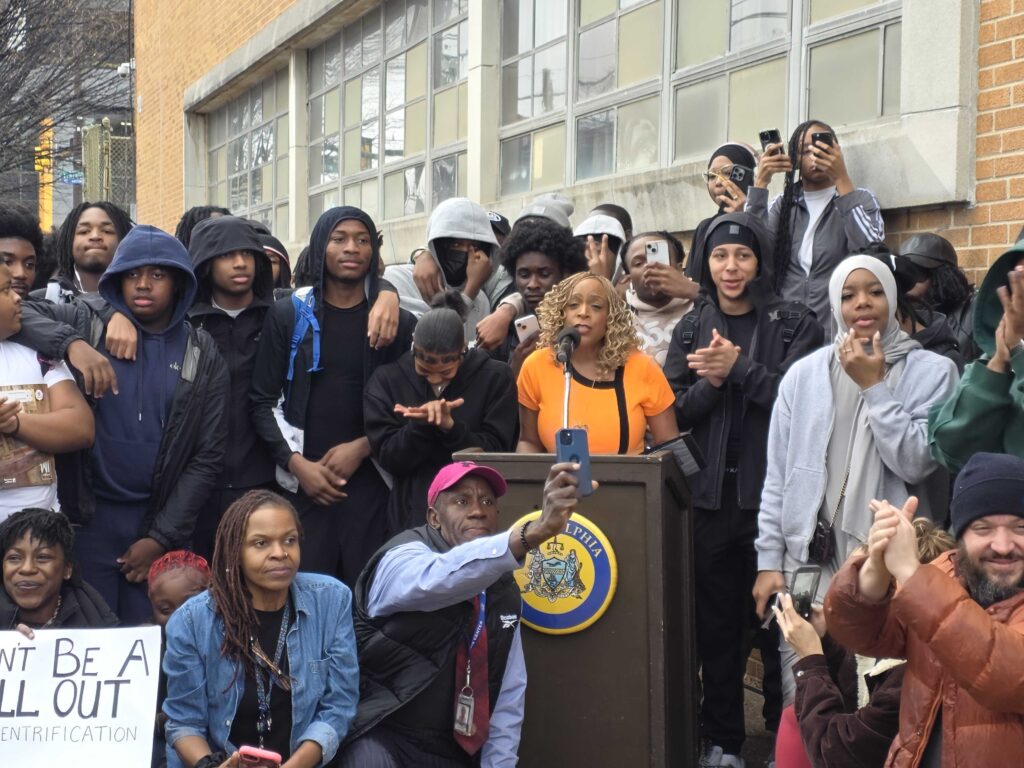
Students and advocates call for expansion, not elimination, of 5 West Philly schools
A West Philadelphia rally called for the consolidation of five schools set to be closed under the school district's plan.
7 months ago
What happens now
The implementation of the facilities plan will begin right away. Some schools on the closure list, like Rudolph Blankenburg and Robert Morris, will close following the 2027-2028 academic year, with students being assigned to other schools for the following year.
Other locations, like John B. Stetson Middle School, will begin a phasing-out process, losing one grade per year. At the same time, the students’ new school — Lewis Elkin Elementary School and William Cramp Elementary School — will begin to add one grade each year.
The district’s Office of Diverse Learners is planning ahead for a “smooth continuity of special education programming, services, and record-keeping” for any schools that are receiving students from others closing. New buildings are also set to receive physical upgrades, if needed, to accommodate students with learning disabilities.
Throughout the upcoming process, the district said it is “committed to ongoing engagement with students, families, staff, and community members.”
While critics have condemned the board for not listening to community desires, the district argues that it has done its due diligence with community feedback.
Throughout the facilities-planning process, there have been 90 public listening sessions, 35 data-verification sessions with principals, two districtwide surveys that received more than 13,000 responses, and two town halls discussing the facilities plan.
Superintendent Tony Watlington said in a statement that the decision to close schools is “not easy,” but that it’s an informed one committed to improving city schools.
“This is not just a facilities plan — it is an academic strategy,” Watlington said. “When we improve the environments where students learn, we improve what they can achieve. Students have pride in their schools. This plan is about giving every child in Philadelphia the opportunity to succeed.”
Subscribe to PlanPhilly
WHYY is your source for fact-based, in-depth journalism and information. As a nonprofit organization, we rely on financial support from readers like you. Please give today.
Part of the series
In 2025, international student enrollment declined for the first time in years, leading to an estimated $50 million loss for Pennsylvania.
2 weeks ago
Listen 1:50
Parents sue Central Bucks School District, allege ‘concerted cover-up’ of abuse
A former school board member and his wife say that their 10-year-old son endured “horrific abuses” at the hands of instructors in an autistic support classroom.
2 weeks ago
Pennsylvania Gov. Shapiro signs legislation guaranteeing 30 minutes of recess to elementary students
The governor signed a bill Wednesday that was approved by the state legislature as part of the 2026-27 budget.
1 month ago