

Why Philly’s public housing costs an average of $315,000 per unit
PHA’s $6.3 billion plan would remake its aging housing portfolio. Its per-unit estimate, which rivals the value of many Philadelphia homes, doesn’t tell the full story.
Listen 1:59
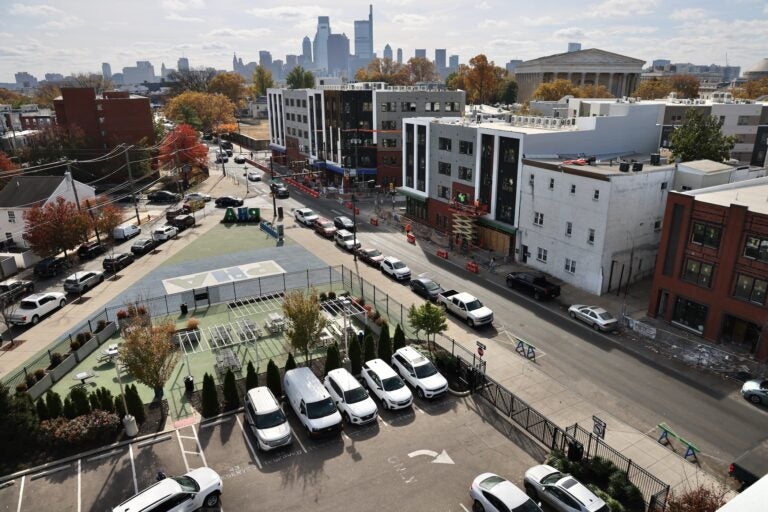
Philadelphiia Housing Authority headquarters occupies a triangle of land at Ridge Avenue and 20th Street adjacent to the Sharswood neighborhood. (Emma Lee/WHYY)
Have a question about Philly’s neighborhoods or the systems that shape them? PlanPhilly reporters want to hear from you! Ask us a question or send us a story idea you think we should cover.
In Philadelphia, the country’s second-poorest big city, the demand for deeply affordable rental housing is a constant.
To better meet that need, the Philadelphia Housing Authority launched an ambitious — and costly — plan to remake and expand its vast real estate portfolio. Over eight years, the agency estimates it will spend $6.3 billion to preserve, redevelop, build or acquire roughly 20,000 subsidized units.
That translates to an average unit cost of about $315,000 — more than the market value of many Philadelphia homes.
Why so much?
The answer is complex. It’s largely rooted in strict regulations for public housing authorities and the cost of construction in Philadelphia, one of the most expensive places to build in the country.
Limited federal funding and the age of PHA’s housing stock are also considerable factors.
“If I was doing this as a profitable business, where I want to make money, that business would fail,” PHA President Kelvin Jeremiah said.
Here’s what else to know:
Related Content
Trump budget proposal threatens Philly’s effort to increase supply of deeply affordable units
Amid an affordable housing crisis, the Philadelphia Housing Authority is spending billions to expand its portfolio of subsidized units.
2 months ago
Listen 1:11Labor is expensive
There’s a lot that goes into creating public housing, but there are certain factors that really set the table when it comes to cost.
Unlike a private developer, PHA is barred from negotiating labor costs because it uses federal funding to complete its projects. Instead, the agency is bound by federal regulations that require workers be paid, at minimum, the “prevailing wage” for the area. Those rates are handed down by the U.S. Department of Housing and Urban Development, and they are generally higher than what a developer would pay on the free market, according to PHA.
That means labor often accounts for roughly 70% of the total construction cost on a PHA project, Jeremiah said. By contrast, private developers typically spend no more than 40% on labor.
“I have said over and over again, ‘I want the same authority that a private developer has to negotiate contract rates, to negotiate for labor — in the same way we, for example, negotiate for materials,’” Jeremiah said.
In Philadelphia, the “prevailing wage” is effectively equivalent to union labor rates. That’s part of the reason why PHA relies so heavily on the city’s building trades to rehabilitate existing housing and build new rentals.
Practically speaking, it would take an act of Congress to change the labor requirements for PHA or any other housing authority.
Related Content
A fight over vacant Philly lots is exposing tensions in Mayor Parker’s housing plan
The Turn the Key program promised affordable homeownership. Critics say many residents are priced out, raising the question: Who is "affordable housing" for?
3 months ago
Listen 5:13Approvals for public housing don’t come quickly
Another critical component is time.
If everything goes smoothly, it takes about two years for PHA to get the approvals needed to move from proposal to construction. However, that timeline has often stretched to three years or more.
During that period, construction costs can easily rise, taking the project’s bottom line along for the ride. This is in the country’s fifth-most expensive city to build, according to a report released last year by professional services firm Turner & Townsend.
“You have essentially New York construction costs with Alabama rents,” Jeremiah said.
Before construction can start, PHA must typically secure a series of approvals, particularly at the local level. That often involves meeting with registered community organizations, presenting the project to the city’s Civic Design Review committee, and going before the Zoning Board of Adjustment.
HUD must also sign off on the work and has its own requirements that must be met before that can happen, including various environmental reviews.
All of it can delay construction and significantly increase the cost of a particular project. For example, building materials can often become more expensive over the course of two or three years.
This is a big reason why PHA welcomed Mayor Cherelle Parker recently declaring a public safety emergency for Bartram Village in Southwest Philadelphia. The decision, announced last month, enabled the agency to quickly secure the approvals that were delaying construction.
In addition to approvals, lining up all the funding necessary to make a project a reality also takes time. Because PHA projects don’t typically generate sufficient revenue to cover operating and capital needs, the agency must rely on a combination of funding streams to operate, build, preserve and redevelop units.
Each of them comes with its own requirements and deadlines, which add soft costs to a project’s price tag. Those costs are fairly steady from project to project, Jeremiah said, but the process can cause delays that can open the door to higher construction costs.
At Westpark Apartments in University City, for example, construction was expected to start in early 2024. But it took PHA another two years to finalize critical elements of the project’s financing, primarily low-income tax credits from the state.
High interest rates, including on construction loans, as well as fallout from tariffs the Trump administration imposed on building materials, also postponed the roughly $500 million project.
Related Content
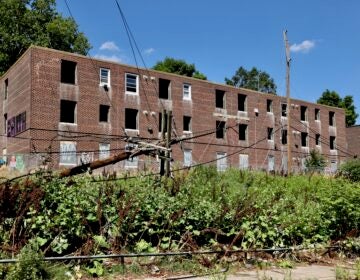
A $425M revamp: Bartram Village in Southwest Philly will be replaced with 500+ affordable rentals
An emergency declaration cleared the way for the site’s 44 aging, vacant homes to be demolished.
1 month ago
Listen 0:56Deferred maintenance can mean higher preservation costs
The Westpark project will bring nearly 1,000 units to a 12-acre site near 46th and Market streets.
In the coming years, PHA will erect a new mid-rise apartment building for older adults 55 and older, put up dozens of townhome-style units and gut and rehab the site’s three high-rise towers.
For PHA, preserving existing buildings is typically cheaper than building new ones. But those costs can rise substantially depending on the age of the property and how long it’s been since it was upgraded.
This is where rents and limited federal funding come into play.
Unlike a market-rate developer, the majority of PHA projects — both conventional public housing and developments backed by Low-Income Housing Tax Credits — do not turn a profit. That’s because the agency cannot charge tenants what it wants. Generally speaking, residents pay 30% of their monthly income in rent, and federal subsidies help cover the remaining cost.
The average monthly payment across PHA’s portfolio is about $365.
“It’s never enough to cover the capital needs of an existing structure,” Jeremiah said.
The housing authority receives some funding each year from HUD for capital investments, but that total isn’t enough to keep pace with its preservation demands.
Under the agency’s plan, called Opening Doors, PHA expects to spend $3.8 billion to modernize and redevelop roughly 13,000 units of conventional public housing, the majority of which are more than 70 years old.
The authority plans to spend another $2.5 billion to build or acquire 7,000 units, which were lost through redevelopment between 1999 and 2010.
To finance the initiative, PHA plans to use existing authority funding while also seeking a combination of public and private sources. The list includes LIHTC and CHOICE Neighborhood grants, as well as tax-exempt bonds and private mortgage financing.
In the interim, the housing authority must triage when it comes to making needed repairs and upgrades. That means there’s always a considerable amount of deferred maintenance, which can lead to higher construction costs when PHA secures the funding to revamp a property or site.
“The worse a building’s condition, the higher the rehab costs,” Jeremiah said.
The same can hold true for properties that PHA acquires and renovates.
In 2024, a Philadelphia judge cleared the way for the authority to buy Brith Sholom, a 360-unit apartment tower for older adults in Wynnefield Heights.
The ruling ended years of turmoil at the property, including impending threats of displacement over unpaid utility bills. Tenants also contended with years of building code violations.
Initially, PHA thought it could overhaul the 12-story building for well under $50 million. But upon closer inspection, the total quickly ballooned because of how dilapidated the property had become as a result of its previous owner’s negligence over decades.
The estimated cost to renovate Brith Sholom is now just over $100 million because it turned out the property needed to be gut-rehabbed.
That added more than $100,000 to the cost of each unit.

Subscribe to PlanPhilly
WHYY is your source for fact-based, in-depth journalism and information. As a nonprofit organization, we rely on financial support from readers like you. Please give today.
Brought to you by PlanPhilly

PlanPhilly
In-depth, original reporting on housing, transportation, and development.
North10 is helping contractors and households pay to dispose of waste legally, diverting thousands of pounds of trash from illegal dumpsites.
1 day ago
Listen 0:59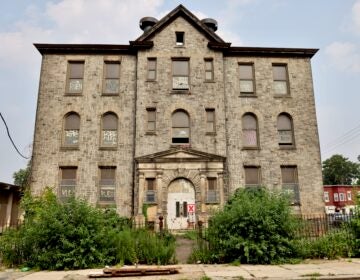
A vacant 126-year-old school in Strawberry Mansion will become senior housing
The $34 million project will repurpose the historic property through a partnership with the Philadelphia Housing Authority.
2 weeks ago
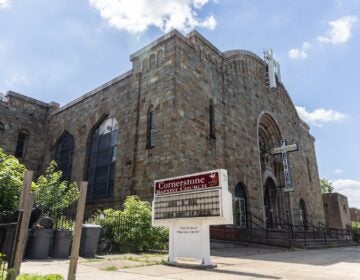
A vacant church in Philadelphia’s Strawberry Mansion will become workforce housing
The $10 million project will reuse Cornerstone Baptist Church on North 33rd Street. The property has sat vacant for more than five years.
3 weeks ago
Listen 0:45