

New laws will take effect in Pa. in 2026. Here’s what you need to know
A hair discrimination ban, supplemental breast cancer screenings and park ranger body cameras are among the changes that will take place.

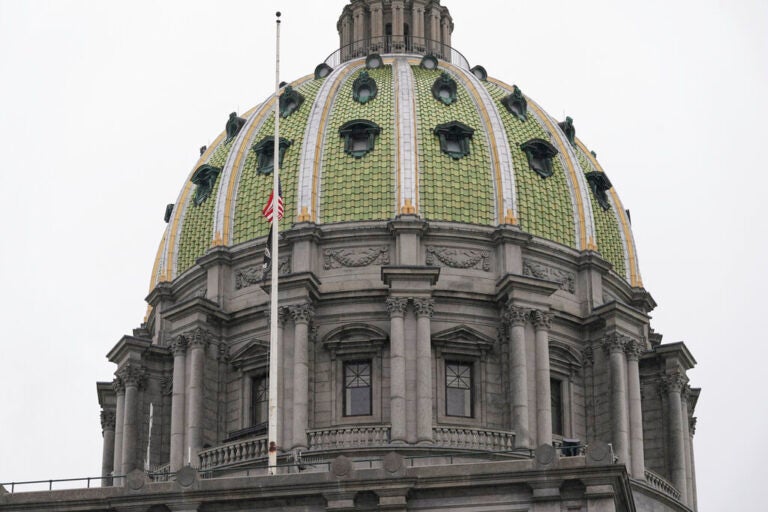
FILE - Shown is the Pennsylvania Capitol in Harrisburg, Pa., Tuesday, Feb. 21, 2023. (AP Photo/Matt Rourke)
From Delco to Chesco and Montco to Bucks, what about life in Philly’s suburbs do you want WHYY News to cover? Let us know!
Pennsylvania lawmakers approved 65 pieces of legislation in 2025, making it one of the least productive sessions in decades.
Because neither political party holds a trifecta in Harrisburg, it can be difficult for bills to survive both chambers — and a trip to Gov. Josh Shapiro’s desk. That does not mean it is impossible.
Most of the legislation enacted this year is already in effect. However, a handful of laws will take effect in 2026.
Wearing headphones while riding a motorcycle
House Bill 646 amends the Vehicle Code of the Pennsylvania Consolidated Statutes to allow motorcycle operators to wear headphones or helmets with built-in headphones while riding. State Rep. Zachary Mako, R-183, first introduced the bill on Feb. 20.
Pennsylvania generally prohibits the use of hearing impairment devices while driving, with the exception of hearing aids and headphone devices used in conjunction with a cell phone that are only connected through one ear.
“I believe this law should be updated to better reflect the times, with the advent of wireless headsets, earbuds/earphones and Bluetooth communication/speakers built into helmets that a majority of riders use and should not be penalized for,” Mako wrote in his sponsorship memo.
The state House voted 193-10 to advance the bill to the state Senate. The Senate voted 47-3 to move the legislation to the governor’s desk. Shapiro signed the bill into law on Nov. 6. The law takes effect Jan. 5.
Alerting school employees and parents about weapons incidents
Senate Bill 246 amends the Public School Code of 1949 to require school entities to notify all guardians, parents and employees of any incident involving a weapon brought onto school grounds. Notification must be made within 24 hours.
Prior to the passage of the bill, Pennsylvania schools were not required to alert employees and parents about weapon incidents on campus. Districts were only mandated to report such issues to the state Department of Education.
State Sens. Jarrett Coleman, R-Bucks and Lehigh counties, and Christine Tartaglione, D-Northeast Philadelphia, introduced the bill Feb. 13 alongside five of their colleagues.
“Our goal is to … ensure that parents, guardians and school employees are informed in a timely manner of any incidents with the potential to affect their children and the safety of the school,” the lawmakers said in their sponsorship memo.
The Senate voted 45-4 on May 13 to advance the bill to the lower chamber. The House voted 202-1 to send the bill to Shapiro. He signed the legislation into law on Nov. 6. The law takes effect Jan. 5.
Related Content

Inside the legislative effort to expel cellphones from Pennsylvania’s K-12 schools
A bill that would ban cellphone use from "bell to bell" was advanced out of committee Tuesday to a full vote before the state Senate.
1 week ago
Listen 5:57Breast cancer screening extension
Senate Bill 88 amends the Insurance Company Law of 1921 to give patients the ability to receive supplemental breast cancer screenings and exams without cost-sharing if they are at average or higher risk of breast cancer.
“By removing cost sharing, we can ensure patients can get screened, abnormalities are identified earlier, and any necessary follow-up diagnostic tests take place,” state Sens. Frank Farry, R-Bucks County, and Kim Ward, R-Westmoreland County, wrote in their sponsorship memo. “In short, our proposal will ensure that state law bolsters and supports every method to detect breast cancer in its earliest stages and allows patients to obtain critical follow-up care without a significant financial burden.”
Lawmakers first introduced the bill on June 6. The Senate unanimously advanced the bill to the House on June 24. The lower chamber voted 196-7 to send the legislation to the governor. Shapiro signed the bill into law on Nov. 24. The legislation takes effect on Jan. 23.
Park ranger body cameras
Senate Bill 520 amends the Pennsylvania Consolidated Statutes to authorize officers and park rangers with the Pennsylvania Fish and Boat Commission, Game Commission and Department of Conservation and Natural Resources to wear body cameras.
“Body worn cameras are an invaluable tool for modern law enforcement,” state Sen. Lisa Baker, R-20, wrote in the sponsorship memo. “They provide an accurate and unbiased account of officer engagement, protecting the integrity of citizens and officers alike. In this case, the importance is amplified as law enforcement from these agencies work independently and in remote areas, oftentimes in locations that have poor radio and cellphone coverage, and frequently encounter individuals who are themselves armed.”
The law is not a mandate, however. The decision to require the cameras will be left up to the agencies.
Baker and eight of her colleagues first introduced the bill on March 26. The Senate unanimously passed the bill down to the lower chamber on June 26. The House unanimously advanced the bill to the governor’s desk on Nov. 19. Shapiro signed Senate Bill 520 into law on Nov. 24. The legislation takes effect Jan. 23.
CROWN Act hair protections
House Bill 439, also known as the CROWN Act, amends the Pennsylvania Human Relations Act to outlaw discrimination based on an individual’s hair texture, type or style.
CROWN stands for Creating a Respectful and Open World for Natural Hair. Nearly 30 states have adopted similar legislation to prohibit such discrimination.
In her sponsorship memo, state Rep. La’Tasha Mayes, D-Pittsburgh, said discrimination laws are not keeping pace with a changing social environment.
“Locs, braids, twists, coils, Bantu knots, cornrows, Afros, wicks, and extensions are typically associated with Black Americans,” Mayes said. “Historically, these hair styles have created a problem for many human resources managers, educators and coaches, who want employees, students, or participants to follow established policies and maintain a uniform ‘neat’ appearance regardless of culture or ethnicity. We can no longer standby while individuals are being targeted, harassed, and denied access to opportunities based on their hair type, hair texture or hairstyle.”
Mayes and a number of her colleagues first introduced the bill in the House on Jan. 30. The House passed the bill 194-8 on March 17. The Senate voted 44-3 to advance the bill to Shapiro’s desk. He signed the legislation into law on Nov. 25. The law takes effect Jan. 24.

Get daily updates from WHYY News!
WHYY is your source for fact-based, in-depth journalism and information. As a nonprofit organization, we rely on financial support from readers like you. Please give today.

Chester County certifies election results in tense meeting amid poll book controversy
Apologies were met with frustration from angry residents, who called for resignations from the county’s top officials.
3 weeks ago
Listen 1:05
Pennsylvania budget impasse halts millions in state funding to Chester County
Stalled budget negotiations have upended SEPTA operations and are beginning to impact crucial services in Chester County.
4 months ago
Listen 0:55
Harris and Trump hold campaign events in Pennsylvania
On Monday, the vice president spoke in Erie while the former president held a town hall in Oaks. The two have made nearly 50 stops in the state this campaign season.
1 year ago