Pennsylvania parents, families call for statewide grief support services for overdose and drug-related losses
Advocates point to a Philadelphia program as a model for statewide grief support services that could be funded with opioid settlement funds.
Listen 1:24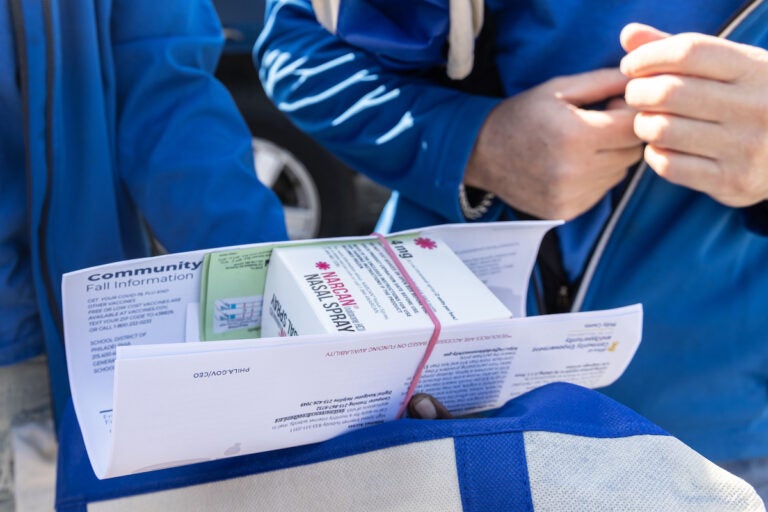
FILE: An opioid crisis resource kit containing Narcan, fentanyl test strips and information on how to get addiction treatment and more harm reduction resources. (Kimberly Paynter/WHYY)
From Philly and the Pa. suburbs to South Jersey and Delaware, what would you like WHYY News to cover? Let us know!
Nothing could take away the immeasurable pain Susan Ousterman felt when she lost her son, Tyler Cordeiro, in 2020.
He suffered a drug overdose not far from his family’s home in Bucks County and was taken to a nearby hospital in Philadelphia, where he was pronounced dead.
The location of Tyler’s death later proved to be important, because Philadelphia residents and those whose loved ones died in the city are eligible for Philly HEALs, a free grief support and counseling program specifically designed for people experiencing drug-related losses. It proved to be a lifesaver for the grieving mother.
“They were incredible,” Ousterman said. “They absolutely changed the trajectory of my healing journey.”
Now, she and other parents, family members and people who advocate for addiction services want to ensure that all Pennsylvanians who suffer this kind of loss can access similar grief support.
They are urging state agencies to use settlement money won in national lawsuits against opioid manufacturers and distributors to create a statewide support system and financial assistance for people who need it.
“It impacts the whole family,” Ousterman said. “It’s very intricate. And we need this more.”
Related Content

New addiction recovery programs and family support services coming to Sussex County
Pennsylvania nonprofit Be a Part of the Conversation is launching recovery programs and parent partnership services in southern Delaware for families affected by addiction.
2 months ago
Listen 1:11Bereavement support in Philadelphia after loss
Advocates point to Philadelphia’s program as a model that could be adopted at a statewide level.
Philly HEALs first launched in 2019 after social workers and behavioral health providers recognized a growing need for counseling and support among families and friends in the wake of losing a loved one to substance use.
It was one of the earliest known specialized programs in the country that was completely funded by the city to offer services for free, which eliminates any barriers related to health insurance.
The program offers virtual and in-person peer support groups, some of which are tailored to specific circumstances or activities: parents who’ve lost a child, siblings, a writing group, a movement group, partner loss and a men’s group.
Philly HEALs also provides free one-on-one grief counseling with licensed therapists for at least 10 sessions, and short-term services for children and teens ages 4 to 19.
About 90% of program participants are identified by Philly HEAL’s through next-of-kin information that comes from the city’s Medical Examiner’s Office, which confirms drug-related deaths.
Others find the program through online searches or word of mouth, said Rachel Essy, program manager and licensed marriage and family therapist. Her team is working on ways to reach more people who could benefit from services beyond next of kin.
“Like maybe their next of kin is their mom, but they have siblings who are very impacted by the loss, or best friends or partners,” she said. “And we don’t have their information, so we can’t reach out to them. That’s a barrier we’re trying to figure out how to break down.”
Since launching, Philly HEALs has served more than 4,000 people with bereavement support, according to city officials. It has become a resource for people who feel like they can’t grieve properly in other spaces where they may feel judged, stigmatized or lonely in their experience.
“Just having a place where there’s no judgment, they don’t have to feel like they’re burdening somebody with their grief, and just have it recognized that you are grieving,” Essy said. “This is a place to share about your loved one. I don’t want to hear all the bad things about your loved one, I also want to hear the good things. I love to hear about the good things and what their loved one was like. Just sharing stories, I think, is really great, too.”
Related Content
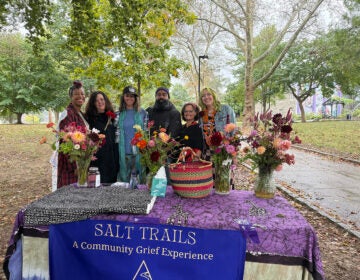
The Philly-based organization combines ancient rituals, storytelling, art and healing practices to help others explore and move through grief.
7 months ago
Using opioid settlement funds to support families
The support Ousterman found through Philly HEALs after losing her son was validating not only for her grief, but other complex emotions she felt as a parent who had watched a child battle a substance use disorder for years, she said.
It was a time filled with a relentless amount of fear, anguish and despair for her son.
“When you’re living with an adult child in chaotic use, it’s really no different than being shot at in a war. Your nervous system is totally dysregulated. You’re living on edge constantly,” she said.
But many of those feelings dissipated after his death, only to be replaced by other types of deep pain, and a small bit of relief, Ousterman said — the kind that perhaps only another parent who has also lost a child to substance use can fully understand.
“There is that relief. And it absolutely doesn’t compare to the pain we feel, of course,” she said. “But it’s nice to be able to say that to someone, like, ‘Yeah, I don’t miss not sleeping because I’m waiting for the phone to ring,’”
Ousterman coordinates some virtual peer grief support groups through her nonprofit, the Vilomah Foundation, with the help of a mini grant from Bucks County and local opioid settlement funds.
But it’s not enough to serve everyone in the county who needs these services, she said. Bucks County had previously proposed establishing a larger network of grief support groups with up to $150,000 of opioid settlement money, but the project didn’t move forward, a county spokesperson told WHYY News. A smaller amount of money has been allocated toward grief support services in the community.
That’s why Ousterman and others said they are urging state leaders to create a statewide program not only to coordinate grief support services, but to also provide respite care opportunities for grieving loved ones. They also want financial assistance for people facing significant funeral costs or those who are now raising children and grandchildren left behind by the death of a parent.
“That’s what we hope to do in Pennsylvania, is be connected to medical examiner’s offices, funeral homes, so we can reach people right when it happens,” Ousterman said. “If people don’t have that support, you can’t authentically grieve.”

Get daily updates from WHYY News!
WHYY is your source for fact-based, in-depth journalism and information. As a nonprofit organization, we rely on financial support from readers like you. Please give today.
How are states spending their opioid settlement cash? Look yours up in this database
From addiction treatment to toy robot ambulances, here's how state and local governments used billions in opioid settlement funds in 2022 and 2023.
1 year ago
About 86% of county jails now offer methadone or buprenorphine, medications that are effective in treating opioid use disorder.
1 year ago
Listen 1:38