New Jersey Gov. Mikie Sherrill orders NJ Transit to improve the rider experience. What can realistically happen, and when?
A railroad passengers group says the executive order does not get to the root of the problems causing delays and cancellations.
Listen 1:14
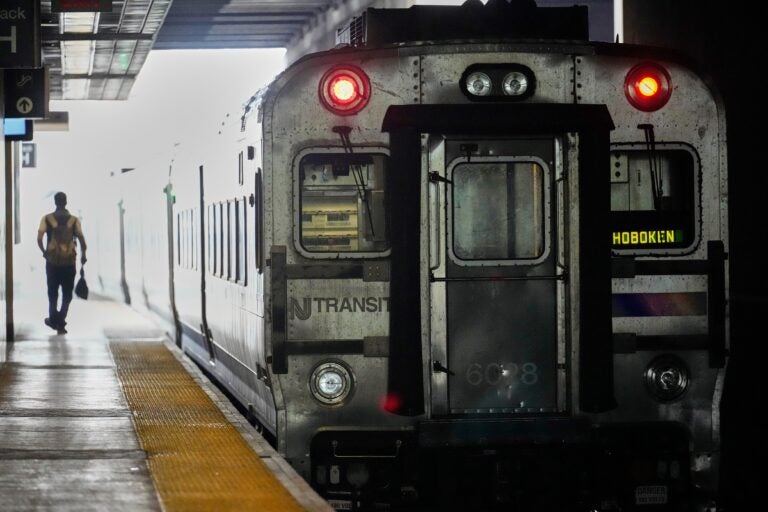
An NJ Transit train leaves the Secaucus Junction station in Secaucus, N.J., Wednesday, May 14, 2025. (AP Photo/Seth Wenig)
From Camden and Cherry Hill to Trenton and the Jersey Shore, what about life in New Jersey do you want WHYY News to cover? Let us know.
NJ Transit has until early May to deliver a plan to improve the rider experience under an executive order Gov. Mikie Sherrill signed on March 23. And the agency has until June 22 to show results.
The order mandates cleaner stations and bus stops, greater accessibility to NJ Transit-owned properties, and improved public safety. The order also directs the agency to improve the digital experience for riders “with focus on the usability and reliability of real-time tracking features on the NJT website and mobile app.”
From January to February of this year, data from the New Jersey Transit Police Department shows that the total number of crimes committed systemwide increased about 13%.
While data from 2025 has not been finalized yet, crime statistics from 2022 to 2024 show a gradual decline in overall reported major crimes on buses and trains, and in train stations.
New Jerseyans deserve a clean, safe and accessible system that is reliable, Sherrill said during a press conference in Secaucus.
“We are listening to riders, holding ourselves accountable and making the improvements necessary to ensure that rail and bus transit work better for everyone who uses it,” she said.
A troubled history
Commuters have complained for years about late buses and trains, rude NJ Transit employees and poor communication.
Seven years ago, former Gov. Phil Murphy said he would fix NJ Transit even “if it kills me.”
Kevin Corbett, who was the CEO and president of NJ Transit when Murphy made that promise, said a lot of progress has been made, but more needs to be done. Now a senior fellow of transportation studies at the Rutgers School of Engineering, Corbett said Sherrill’s military background puts her in a good position to raise the standard for the average NJ Transit commuter.
He said her order lays out a vision and starts a process, while proposing improvements that commuters would notice by the summer.
“You can certainly get more police presence, more ambassadors on platforms, cleanliness and public safety. That’s just giving more resources so they can have more people … to do that sort of work,” Corbett said.
Related Content
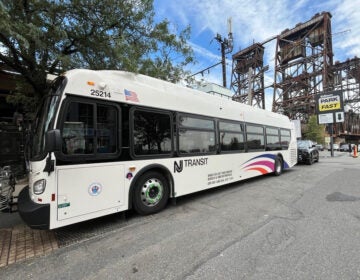
NJ Transit is spending billions of dollars on a new fleet of buses. Here’s what to know
Critics say the service is unreliable and that communication is poor.
7 months ago
Listen 1:10What’s causing the problems?
Joe Versaggi, president of the New Jersey Association of Railroad Passengers, said he is “totally disgusted” by NJ Transit and does not believe the governor’s executive order will really improve the agency because it does not get to the root causes of its problems.
“I think she needs to look at the productivity in the Meadowlands maintenance facility. Their trains are breaking down four times as often as Long Island Railroad’s and Metro North’s,” Versaggi said.
He said blaming delays on the age of the rail fleet is an excuse that doesn’t hold water.
“The oldest cars are very few in number, and they are limited in use,” he said. “Most of their trains are hauled by newer locomotives built within the last 15 years. They are not old, and they are also breaking down too often.”
Many NJ Transit delays are caused by crews not showing up, Versaggi said.
Related Content
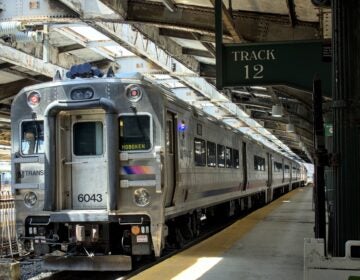
NJ Transit looks to improve services ahead of fare hike and major events
The transit system is working with Amtrak to ensure trains run smoothly. NJ Transit is also adding new train cars and buses to improve rider experience.
11 months ago
Listen 2:07Sending a signal
Micah Rasmussen, director of the Rebovich Institute for New Jersey Politics at Rider University, said that by issuing an executive order to make NJ Transit safer by the summer, and allocating additional funding in her proposed state budget, the governor is signaling that she is serious.
“These are things they can effectively do now to improve the rider experience while they tackle those longer-term issues that are going to require a much more substantial investment,” he said.
Even if NJ Transit adds more police officers and works to enhance cleanliness and communication, many travelers will still complain about service interruptions, Rasmussen said.
“A lot of it has to do with the on-time rate of the trains and the buses,” he said.
Related Content
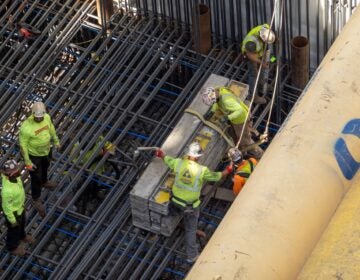
Work resumes on the Hudson River rail tunnel project, but NJ Transit delays continue
A thousand workers are expected to be back on the job after a federal judge ordered the Trump administration to unfreeze billions of dollars to fund construction.
2 months ago
No quick fix
Corbett said improving the communication system will take longer than a few months, but it is important to begin the process.
“Customers can deal, riders can deal with headaches if they know what’s going on,” he said. “It’s when they don’t know what’s going on that gets them agitated.”
Corbett said greater accessibility at some stations for people with disabilities is also important, but those improvements may take a year or longer.
Rasmussen said even minor improvements are important because they will be seen as steps in the right direction.
“Every little bit helps. And if this is the low-hanging fruit that she can tackle first, then it makes sense for her to take those steps first,” he said. “Get people a little happier while she tackles the longer range problems.”
He said Murphy’s promise to fix NJ Transit was unclear.
“That’s a very general promise,” he said. “That is one that riders can take to mean whatever they want it to mean. What Gov. Sherrill is doing is different. It is a specific promise with a deadline.”
Versaggi said NJ Transit has the highest mass transit fares in the nation, which will continue to rise 3% a year automatically. In addition, he said the cost of parking at many stations has risen by 40% to 70%, while service has been cut since 2008, which is troubling.
He said the Department of Transportation’s oversight of NJ Transit is a conflict of interest.
“NJT, I think, has a structural flaw in that it answers to the Department of Transportation. NJT should be a separate, independent public transit agency,” he said. “DOT is in business for highways and to maintain gas tax and toll revenues. That’s completely different from the priorities of NJ Transit.”
Versaggi said the result of the ongoing NJ Transit reliability problem is that people are late to work, and frequently miss flights and appointments, which is extremely frustrating.
“It totally messes up your life,” he said.

Never miss a moment with the WHYY Listen App!


WHYY is your source for fact-based, in-depth journalism and information. As a nonprofit organization, we rely on financial support from readers like you. Please give today.
N.J. gateway tunnel: Here’s what to know after Trump terminates project funding
The $16 billion project, which connects trains running from New Jersey to New York, has been called the most important infrastructure project in the nation.
3 months ago
Listen 1:01
Garden State residents spend more than 30% of their income on housing. The newly elected governor wants to make the state more affordable.
3 months ago
Listen 1:06
N.J. Gov. Phil Murphy announces expanded transportation options for South Jersey
The initiatives include adding more electric buses in Camden, establishing a shuttle service between Vineland and Atlantic City and more micro-transit in rural areas.
8 months ago
Listen 0:53