

New Jersey lawmakers move bills to address online safety for children
Legislation is being fast-tracked to better protect children’s online privacy and force black box social media warnings to be posted on platforms.
Listen 1:03
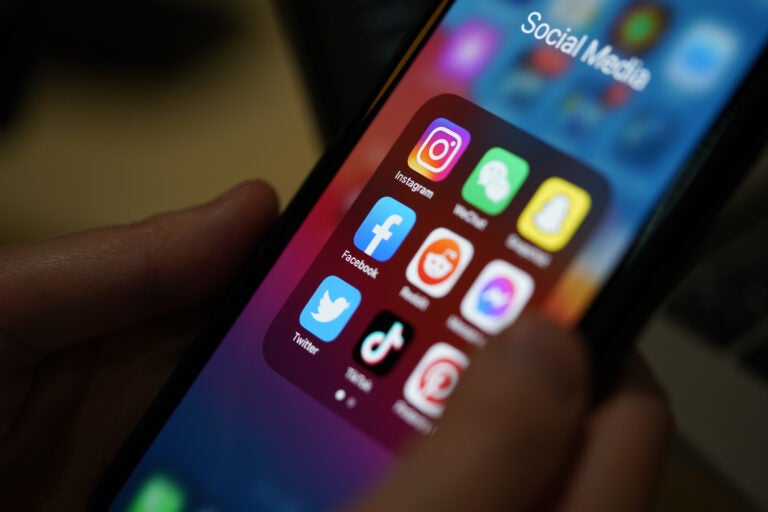
File - A phone with social media apps (iStock/P. Kijsanayothin)
From Camden and Cherry Hill to Trenton and the Jersey Shore, what about life in New Jersey do you want WHYY News to cover? Let us know.
New Jersey lawmakers are fast-tracking legislation to address the youth mental health crisis by strengthening online protections for children. The Assembly Science, Innovation and Technology committee approved the three-bill package Thursday afternoon.
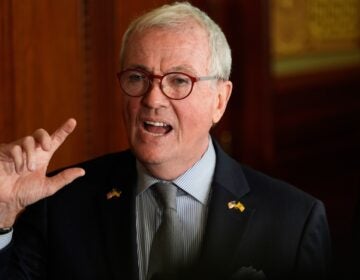
South Jersey Assemblywoman Andrea Katz, D-Chesterfield, the bills’ chief sponsor, said online safeguards have not kept pace with the risks children face when they use the internet. She said as a mother of three teenagers, she has seen firsthand how algorithm-driven platforms shape young minds.
“Online content can shape confidence, self-worth and behavior,” she said. “Parents should not have to compete with billion-dollar algorithms engineered to hold their children’s attention indefinitely.”
Related Content

Should tech giants be held accountable for the teen mental health crisis? And what could regulation look like in practice?
Air Date: February 10, 2026 1:00 pm
Listen 51:13What are the 3 measures?
One of the bills would require certain social media platforms to display a black box warning, similar to those displayed on cigarette boxes, when users log in. It would also require the platform to include a disclaimer about the potential negative mental health impacts of using social media. Violators of these provisions could face a penalty of up to $250,000.
Another measure, the New Jersey Kids Code Act, would require service providers to safeguard the personal information of minors and protect their privacy. The bill also amends some provisions of current law concerning data privacy, including changing the definitions of “personal data” and “sensitive data.” Violators would be penalized under the New Jersey Consumer Fraud Act, punishable by significant financial penalties.
Julie Scelfo, the founder and executive director of Mothers Against Media Addiction and a mother of three, said the New Jersey Kids Code Act will also limit the design of social media algorithms.
“Right now, social media companies use features that are similar to the type of neuro-conditioning that you see in a slot machine, it keeps you coming back,” she said. “This bill would prevent the worst parts of this design from being used when it’s a child on the platform.”
She said the measure will make privacy settings for minors the most stringent by default.
“Right now they say there are parental controls,” she said. “I’m pretty smart, I have a master’s degree, and I tried for two decades to figure out all the parent controls and I can’t do it.”

A third bill calls for establishing a social media research center at a four-year public college that would investigate social media use and its impact, particularly on children and adolescents.
Erin Popolo, of South Brunswick, showed up at the committee hearing Thursday to advocate for the proposed measures. Popolo said her 17-year-old daughter Emily died by suicide after being cyberbullied five years ago.
“Our children are being dehumanized behind screens, we need them to come back to being with people, be able to communicate and connect with others,” she said. “These bills are going to address a lot of what is concerning.”
Related Content
New Jersey is the latest state to ban cellphones during the school day in grades K-12
Gov. Phil Murphy signed legislation on Thursday requiring bans on non-academic use of internet-connected devices during the school day.
2 months ago
A reason for concern
Maurice Elias, a psychology professor at Rutgers University and director of Rutgers Social-Emotional Learning lab, said there has been an uptick in youth anxiety and depression since the pandemic. He said the problem is being caused by rising uncertainty about what’s happening in the world.
“It’s not a surprise that kids are feeling pessimistic, unsure about their future, it’s not a surprise that they could even be depressed because they don’t see positive times ahead of them,” he said.
Related Content

Finding Focus in the Age of Distraction
Why “touching grass” is actually good advice when it comes to taking a break and restoring focus.
Air Date: October 10, 2025
Listen 50:33Will the legislation really make any difference?
Elias emphasized that social media is “not a God-given right, it’s not something that kids have to have.”
“There is a reason for concern and I think it’s better to take preemptive, prevention action than waiting for the problem to continue to accumulate,” he said.
American Association of Pediatrics guidelines advise parents to restrict their children’s screen time and social media usage, but families find it challenging to adhere to the directive.
“Part of the problem is that the parents are as involved in the issue as their kids,” he said. “It’s not easy for parents to put down their phones, reduce their screen time.”
Elias said the bills won’t resolve the crisis, but this is a step in the right direction.
“And for a subset of kids who are particularly susceptible to social media influence, it will make a very big difference for them,” he said.
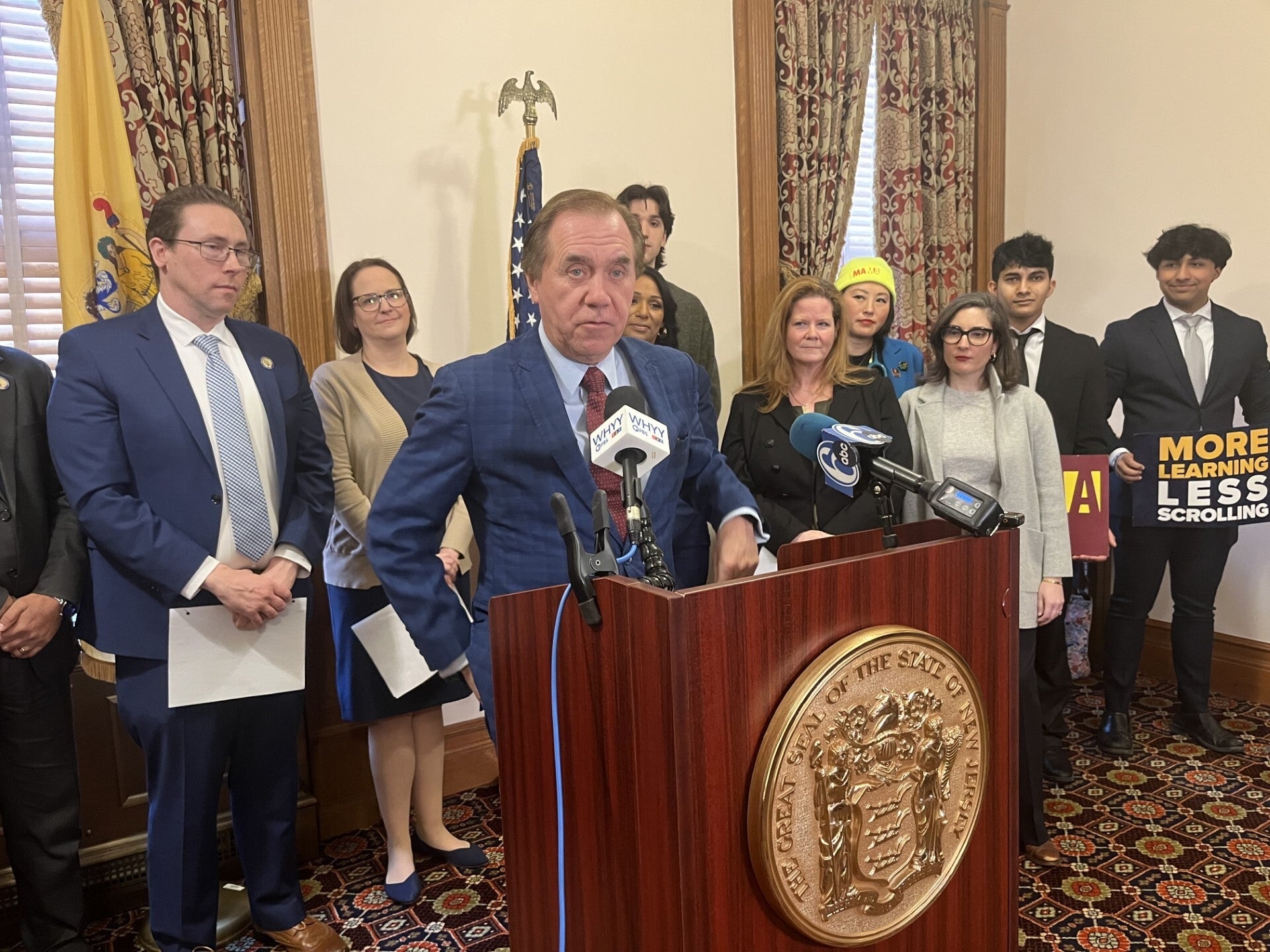
Assembly Speaker Craig Coughlin said social media is interwoven into the lives of many young people, and there is nothing more important than keeping them safe.
“The sooner we can get legislation in place that helps and protects young people, the better off we’re all going to be,” he said.
Gov. Mikie Sherrill signed an executive order designed to protect kids online on her first day in office. The order directs all state agencies that deal with children to prioritize their mental health outcomes.

Get daily updates from WHYY News!
WHYY is your source for fact-based, in-depth journalism and information. As a nonprofit organization, we rely on financial support from readers like you. Please give today.
N.J. Gov. Sherrill wants to freeze rate hikes. Here’s what that means for your electricity bills
New Jersey customers’ electric bills increased by as much as 20% last summer. They could rise again this year.
1 month ago
Listen 1:04
Outgoing New Jersey Gov. Phil Murphy declines to codify Immigrant Trust Directive
The directive, established in 2018, survived legal challenges. Murphy feared codifying it would not have the same chances in court.
2 months ago
Listen 1:06