

Outgoing New Jersey Gov. Phil Murphy declines to codify Immigrant Trust Directive
The directive, established in 2018, survived legal challenges. Murphy feared codifying it would not have the same chances in court.
Listen 1:06
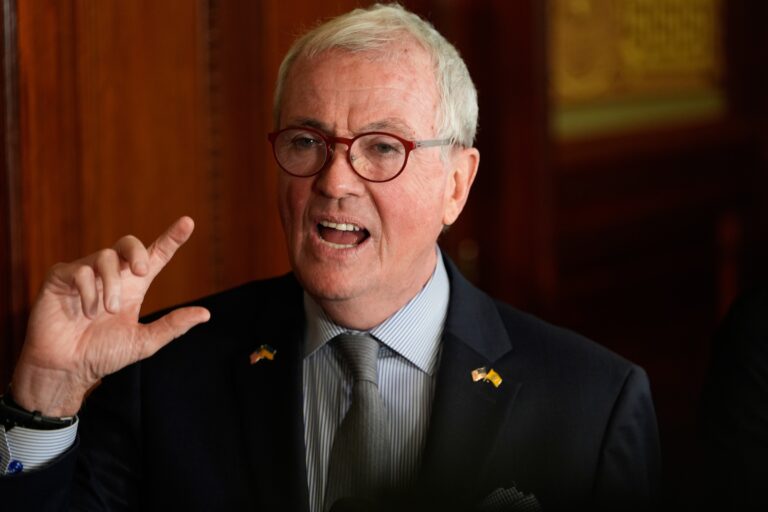
FILE - New Jersey Governor Phil Murphy talks to reporters in Trenton, N.J., Nov. 5, 2025. (AP Photo/Seth Wenig, File)
From Camden and Cherry Hill to Trenton and the Jersey Shore, what about life in New Jersey do you want WHYY News to cover? Let us know.
In one of his last acts as New Jersey’s governor, Phil Murphy on Monday signed one of three bills designed to protect immigrants from federal immigration raids. Murphy declined to sign two other measures, including one that would codify the Immigrant Trust Directive, first implemented by then-Attorney General Gurbir Grewal in 2018.
Murphy declines to codify Immigrant Trust Directive and sign Privacy Protection Act
Murphy said he was concerned that codifying the Immigrant Trust Directive would open up the Garden State to a new court challenge that would go before judges who may not render the same decision as when Grewal’s original directive survived court challenges.
Among the provisions that the Murphy administration found problematic was the removal of an exception to the directive’s limits on cooperation with federal immigration authorities. As it stands now, the directive allows for cooperation when there is notification of an individual’s upcoming release from custody and the continued detention of someone in a county jail or state prison when they are subject to a final order of removal.
“Renewed litigation would also put our time-tested Immigrant Trust Directive at risk, endangering hundreds of thousands of immigrants in New Jersey in one fell swoop,” he said in a statement. “Re-opening the door to judiciary scrutiny of our State’s immigration policies, combined with the Trump Administration’s increasingly targeted actions against states and cities, is a recipe for disaster for our immigrant brothers and sisters and puts them in greater danger.”
Murphy said his administration found “a drafting oversight” on the Privacy Protection Act that “could create significant complications when it comes to advancing our shared goal of protecting New Jersey’s immigrant communities.”
“I deeply wish there was sufficient time left to correct this issue, but it is not possible due to the expiration of the legislative session,” he said in a statement. Murphy is leaving the Legislature with recommended amendments to the bill, hoping that the measures would be reintroduced in the new session.
Murphy did not veto the two bills outright. He declined to sign them into law, allowing them to expire because they were passed within the last 10 days of the legislative session, known as a “pocket veto.”
Related Content

Advocacy groups offer guidance on your rights for documenting, interacting with ICE
Fears of an intensified crackdown in Philadelphia have sparked increased interest about how to interact with immigration enforcement agents and document ICE activity.
8 months ago
Immigrant advocates say they are disappointed
Murphy declining not to sign the two bills has been widely condemned by immigrants rights groups across the state.
ICE Out of New Jersey called it a betrayal of trust between the immigrant community and public institutions.
The New Jersey Alliance for Immigrant Justice said in a statement Tuesday that Murphy “walked away from his promise to protect immigrant families across the state.”
“He does so amid an intensification of immigration enforcement and detention in New Jersey,” the group said.
There have been reports of ICE raids taking place in Atlantic City and Camden within the last month.
“At a moment that demanded courage, Gov. Murphy chose caution,” said Viri Martinez, deputy director of strategy at the New Jersey Alliance for Immigrant Justice.
She added that “fear of the Trump administration” is the only way to describe why Murphy declined to sign the legislation.
“This decision reflects how Trump’s authoritarian playbook has seeped into our state, paralyzing decisive leadership and allowing fear, rather than values, to dictate who is protected and who is left behind,” Martinez said.
Asma Elhuni, an organizer with Resistencia en Acción, said Murphy chose inaction “when our most vulnerable communities needed decisive action.”
“That choice will define his legacy and cast a lasting shadow over his time in office,” she said.
Lauren Herman, legal director of Make the Road New Jersey, said she thinks Murphy’s words “speak for themselves.”
“I think our response would be our communities are already under attack from the Trump administration,” she said. “It isn’t a time to act out of fear.”
Amol Sinha, executive director of the American Civil Liberties Union of New Jersey, said the pocket vetoes have left New Jersey “without critical protections at a moment when ICE is brutalizing our communities.”
“These bills were legally sound, politically viable, and commonsense policy,” he said, in a statement. “We call on Gov.-elect Sherrill, her administration and the Legislature to establish data privacy protections and ensure state and local resources are not commandeered for federal immigration enforcement.”
Murphy signs Safe Communities Act
The governor said the state was reaffirming “our longstanding commitment to ensuring the people of New Jersey — particularly our immigrant families — are safe, secure, and supported in navigating their daily lives easily and confidently.”
“Public spaces such as houses of worship, schools, hospitals, and courthouses are places of trust that should welcome and safeguard every member of society,” he said in a statement. “Whether you’re praying in a church, studying in school, receiving medical care at a hospital, or seeking legal relief, no one should live in fear or uncertainty or be deterred from seeking essential services due to their immigration status.”
The Safe Communities Act, which takes effect immediately, requires the attorney general to propose policies on how to interact with Immigration and Customs Enforcement officers when they visit sensitive locations such as schools, hospitals and places of worship.
The law also requires certain government departments and agencies to adopt the policies within 180 days of being issued. Policies must be equal to the attorney general’s model or provide greater protections.

Show your support for local public media
WHYY is your source for fact-based, in-depth journalism and information. As a nonprofit organization, we rely on financial support from readers like you. Please give today.

A New Jersey legislator introduced a bill to ban lawmakers from using cellphones at the Statehouse
Assemblyman Brian Bergen says the measure is needed to stop lawmakers from playing games and gambling on their phones during voting sessions.
2 weeks ago
Listen 1:09
Lindenwold council reverses ‘one camera at a time’ policy for meetings after resident sues
Alfosno Penna filed suit in July against Lindenwold Borough Council over the policy approved in January.
1 month ago
Listen 0:59
Agreement reached in New Jersey state budget ahead of July 1 deadline, Democrats announce
The $60.7 billion spending plan includes more money for the Stay NJ property tax relief program than the governor originally requested.
3 months ago