
New Jersey ratepayers will catch a break on electricity prices starting in June
Electricity bills jumped by as much as 20% for New Jersey households last year. This June, some customers’ bills will fall slightly.
Listen 1:15
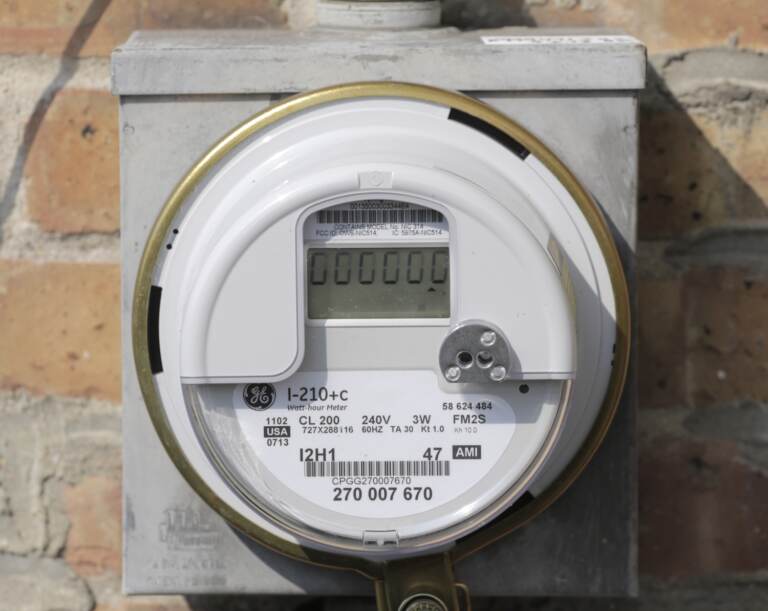
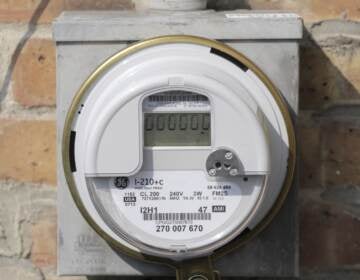
A utility meter is seen in a file photo. (AP Photo/M. Spencer Green)
From Philly and the Pa. suburbs to South Jersey and Delaware, what would you like WHYY News to cover? Let us know!
Electricity prices paid by New Jersey households will stay relatively stable starting this summer, with rates falling slightly for the majority of customers in the state.
That’s the result of a wholesale electricity supply auction that New Jersey’s Board of Public Utilities voted to certify Thursday. The results impact electricity supply rates customers will pay for the year beginning in June.
Last year’s February auction drove up electricity bills by as much as 20%.
“This was a major source of pain last year,” said Brian Lipman, who directs the state’s Division of Rate Counsel. “This is good news for ratepayers. The pain is still there, but at least we’re not increasing it.”
Each year in February, the BPU has to approve changes in supply charges that kick in each June, but they are driven by market forces and influenced by auctions run by the region’s grid operator, PJM Interconnection.
This June, typical residential customers of PSE&G and Rockland using 650 kilowatt-hours of electricity per month will see their monthly bills drop by $3.23 and $1.17 respectively, according to the BPU.
Customers of Atlantic City Electric and JCP&L could see their bills rise by $0.22 and $2.23, respectively — but Gov. Mikie Sherrill has ordered the board to zero-out these increases with credits on customers’ bills by July 1.
Related Content
N.J. Gov. Sherrill wants to freeze rate hikes. Here’s what that means for your electricity bills
New Jersey customers’ electric bills increased by as much as 20% last summer. They could rise again this year.
2 months ago
Listen 1:04New Jersey’s electricity rates will be stable this year due to price cap
Last year’s spike was driven by an increase in capacity costs on the regional grid, said BPU President Christine Guhl-Sadovy. These costs, determined by auctions held by grid operator PJM Interconnection, reflect payments to power plants and large users to ensure enough power will be available to meet peak demand on the hottest and coldest days in future years.
These costs have shot up recently, largely due to projections of skyrocketing demand from data centers.
Guhl-Sadovy credited Thursday’s relatively stable results to a price cap or “collar” on capacity costs negotiated by Pennsylvania Gov. Josh Shapiro.
“That collar is really what has helped to keep these prices stable, or relatively stable,” she said. “That was a good thing for customers.”
Winning auction prices for all four utilities increased slightly compared to last year’s results, according to the board. But these increases mean different bill impacts for customers of each utility based on different customer profiles and load, board officials said.
The prices customers will pay in June reflect not only electricity supply procured during this month’s auction, but also during auctions held in 2024 and 2025. Each year, results of the auction held three years prior drop out of this equation. Lipman said the 2023 auction, no longer factored into customers’ supply rates starting this June, was held when natural gas prices were higher, driving higher costs to produce electricity.
Guhl-Sadovy declined to offer details about the bill credits mandated by Gov. Sherrill, saying they still need to be approved by the board. Guhl-Sadovy said the board is “working to ensure that we are effectuating the governor’s executive order as quickly as possible.”

Get daily updates from WHYY News!
WHYY is your source for fact-based, in-depth journalism and information. As a nonprofit organization, we rely on financial support from readers like you. Please give today.
It’s the first time a Pennsylvania utility agreed to shield average ratepayers from data center costs. Data centers will pay $11 million for low-income rate relief.
4 days ago
Listen 1:24
Electricity bills are going up in the Philly region. Who’s in charge of the grid, anyway?
A little-known organization called PJM Interconnection directs the flow of electricity. Here’s how its actions can impact your bills.
7 months ago
PECO is offering $500 grants to help customers pay off overdue bills
The program is geared toward customers with incomes too high to qualify for some existing energy assistance programs.
8 months ago
Listen 1:00