

3 years into Mayor Parker’s term, her administration has created and preserved more than 16,000 homes
The total is more than half of the plan’s 30,000-unit goal. The milestone comes as the administration prepares to submit its first report on the plan.
Listen 1:02
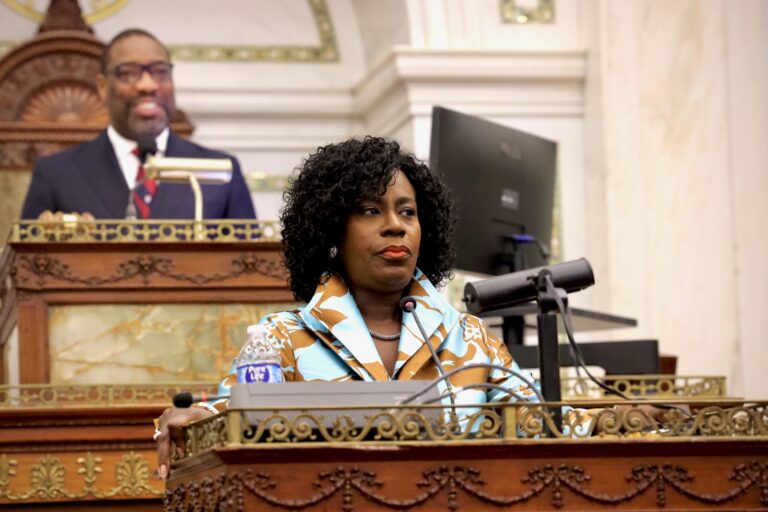
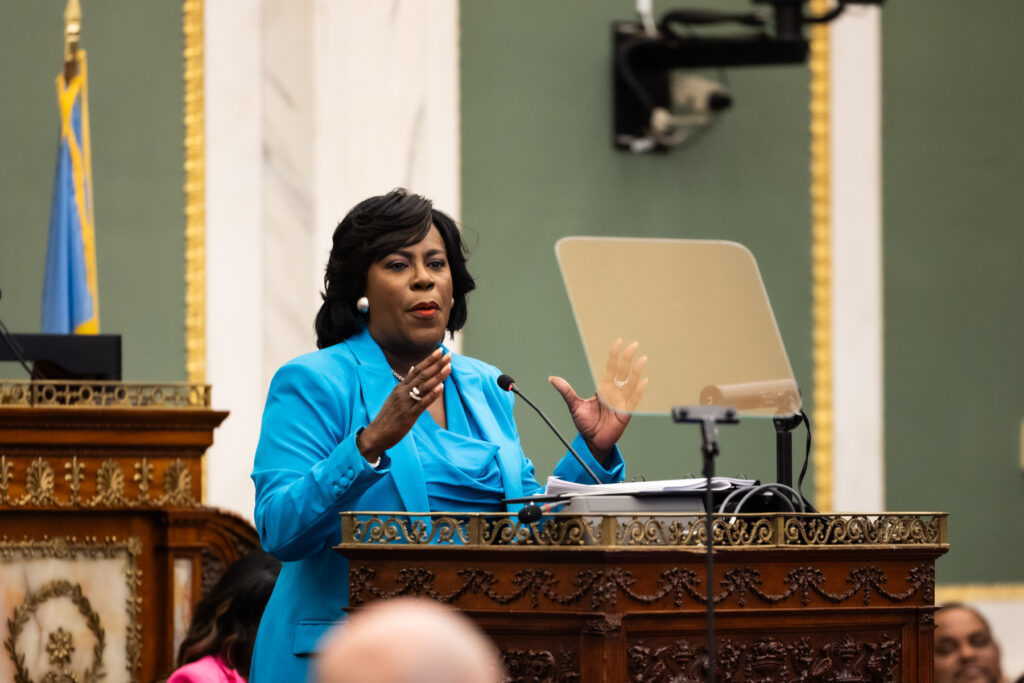
Philadelphia Mayor Cherelle Parker delivers her budget address to City Council on March 12, 2026. (Emma Lee/WHYY)
Have a question about Philly’s neighborhoods or the systems that shape them? PlanPhilly reporters want to hear from you! Ask us a question or send us a story idea you think we should cover.
Mayor Cherelle Parker’s administration is halfway to its goal of building and repairing 30,000 homes in Philadelphia, according to a city dashboard.
The milestone comes three years into Parker’s term, and just months after her administration released $400 million in bonds for the first phase of the multifaceted plan, known as the Housing Opportunities Made Easy, or H.O.M.E., initiative.
The $2 billion effort is part of Parker’s broader push to help residents become self-sufficient.
“A path to self-sufficiency means we give you access to every tool and every economic opportunity possible to ensure that the only thing you need the government for is to make sure that you’re paying your taxes,” Parker said Wednesday during a press briefing on the initiative.
Related Content
Philadelphia developers are seeking more building permits for new rentals. Here’s why
The uptick is raising questions about Philadelphia's broader identity as a city of homeowners.
2 weeks ago
Listen 1:10What H.O.M.E. has accomplished
To date, more than 16,000 homes have been preserved or built under H.O.M.E. The majority of that total — more than 70% — is tied to the plan’s preservation programs, with a sizable chunk of the investment rooted in home improvement completed through the city’s Basic Systems Repair Program.
The popular initiative provides free home repairs to low-income homeowners who meet its income guidelines. Participants can correct electrical, plumbing and heating issues, as well as roofing and some structural damage.
The rest of the homes — 4,670 — are new apartments and houses built since Jan. 1, 2024. That includes more than 400 homes built through Turn the Key, a homeownership initiative launched before H.O.M.E. that leverages vacant city land to help first-time buyers purchase houses in neighborhoods where property values are on the rise.
“All these numbers, all these investments, they’re super critical,” said Jessie Lawrence, director of the city’s Department of Planning and Development. “But the true measure of success for H.O.M.E. is how it changes lives, block by block, family by family.”
Broadly speaking, funding is available to renters and homeowners within a range of household income levels, but each of the 30 programs that are part of H.O.M.E. has its own eligibility requirements.
Collectively, those programs serve households earning up to 120% of the area median income, or $143,300 a year for a family of four. The wide range reflects Parker’s overarching vision for tackling the city’s housing crisis, which centers on a comprehensive strategy that minimizes class contempt.
To date, more than 80% of the plan’s preservation dollars have gone to households earning up to 50% of AMI, according to the city. That translates to $61,350 for a family of four.
During the same period, more than 70% of the plan’s production dollars have gone to households earning up to 120% of AMI.
Related Content
Philly tenant unions have quadrupled since the pandemic — and their political power is growing
From new protections and lawsuits to collective bargaining, organized renters are testing new ways to hold landlords accountable.
1 month ago
Listen 6:15What’s in store for H.O.M.E.
The data is largely tied to investments in existing city programs now under the H.O.M.E. umbrella. New programs under the plan are starting to come online or have yet to formally launch. That list includes One Philly Mortgage, a program aimed at providing reduced down payments and low-interest loans, as well as the Curbside Appeal Program and Facade Improvement Program.
“We’ve got a long ways to go,” said Angela Brooks, the city’s chief housing and urban development officer.
City Council passed the first annual budget for H.O.M.E. in December. The resolution calls for roughly $277 million in spending for more than two dozen programs for renters and homeowners.
The updated measure was considered a major win for progressives. It includes increased funding for affordable housing preservation and production, the Basic Systems Repair Program, and an effort to help tenants facing eviction and homelessness.
The Parker administration strongly opposed those changes, meant to prioritize Philadelphia’s lowest-income residents. The mayor and her administration actively lobbied lawmakers in hopes of changing the outcome. And Parker took her message on the road, spending hours one Sunday pushing her vision for H.O.M.E. at nearly a dozen churches in the city.
On Wednesday, neither the mayor nor her administration touched on any of that history, instead focusing on the present as it prepares to submit to Council its first quarterly report on the plan. The document will include a breakdown of the programmatic investments made under H.O.M.E. To date, the administration has spent around a third of the initiative’s first-year budget.
“Stuff is moving, but sometimes we’re reimbursing versus paying on the front end,” Brooks said.
Going forward, the administration will look to Council to pass additional legislation intended to increase the city’s housing supply.
For example, lawmakers are expected to consider legislation for a new property tax abatement program aimed at incentivizing developers to convert large, underutilized properties into housing. The program, authorized by state law, would exempt projects from paying property taxes for up to 20 years.
The administration is also moving forward with an effort to bring up to five modular home factories to Philadelphia to help with the production of new houses. The current budget includes $10 million for the initiative, including dollars for site preparation, utilities and infrastructure improvements.
Both efforts are far from being fully baked.
“We want to go forward as soon as we can, we just have to be careful on the timing of it,” said John Mondlak, chief of staff with the Department of Planning and Development.

Get daily updates from WHYY News!
WHYY is your source for fact-based, in-depth journalism and information. As a nonprofit organization, we rely on financial support from readers like you. Please give today.
Brought to you by PlanPhilly
PlanPhilly
In-depth, original reporting on housing, transportation, and development.
Part of the series
The measure is expected to pass during a second and final vote scheduled for Council's final regular meeting of the year.
10 months ago
Listen 1:09
Since the start, the Parker administration has said the H.O.M.E. initiative is for everyone. Advocates say the most vulnerable need to be prioritized.
11 months ago
Listen 1:07
Who will benefit from Philly’s $2 billion housing plan? Not the most vulnerable, advocates say
Critics argue that Mayor Parker’s H.O.M.E. initiative doesn’t focus enough on the city’s lowest-income renters and homeowners, including older adults.
11 months ago