
Philadelphia City Hall art gallery remembers a federal act that put artists to work in the 1970s
The federal CETA program employed tens of thousands of artists with a 1973 jobs-training law. Its impact has been largely overlooked.
Listen 2:10
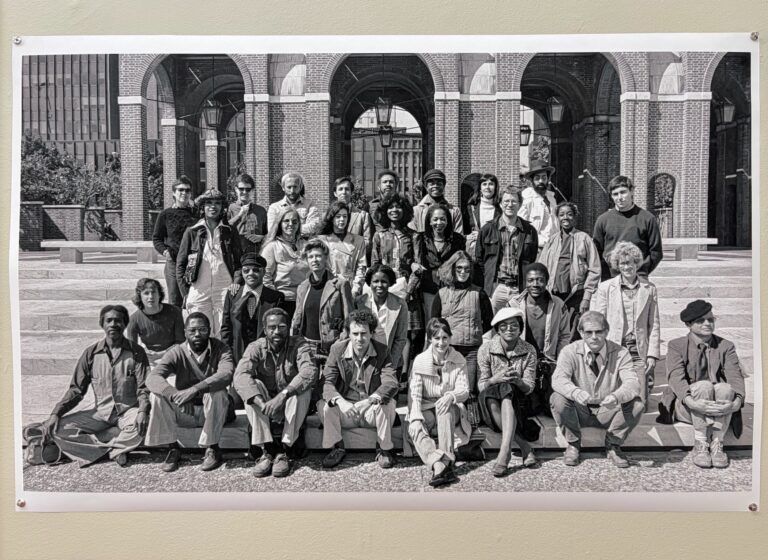
A photo shows artists employed in the Visual Arts in Public Service (VAPS) program of Philadelphia's Brandywine Workshop. The Workshop employed dozens of artists with CETA funds for two years. Most of the artists pictured could not be identified by the curators of ''A Federal Job in the Arts.'' (Peter Crimmins/WHYY)
From Philly and the Pa. suburbs to South Jersey and Delaware, what would you like WHYY News to cover? Let us know!
As the nation celebrates Labor Day and the unofficial end of summer, an exhibit in Philadelphia City Hall traces a largely forgotten federal labor act that once funded the work of tens of thousands of artists and academics in the 1970s.
“A Federal Job in the Arts: CETA and Philadelphia in the 1970s” highlights the local impact of the Comprehensive Employment and Training Act. The 1973 law signed by President Richard Nixon issued about $200 million dollars per year, about $1 billion adjusted for inflation, for nine years to states and local governments to run job programs for low-income people who were chronically unemployed.
CETA was not originally designed to fund artists, but artists found a way in. Of the 5 million people who received training or employment through CETA, about 30,000 were artists.
“A lot of people I knew had jobs through the CETA program, some who were artists and some who were carpenters or laid bricks or did electrical work,” said Jane Golden, founding director of Mural Arts Philadelphia whose early murals in Los Angeles were paid for with CETA funds. “The fact that it walked both paths of aspiration and pragmatism — that’s such a good mix because then it’s a wide tent. Everybody gets an opportunity.”
-
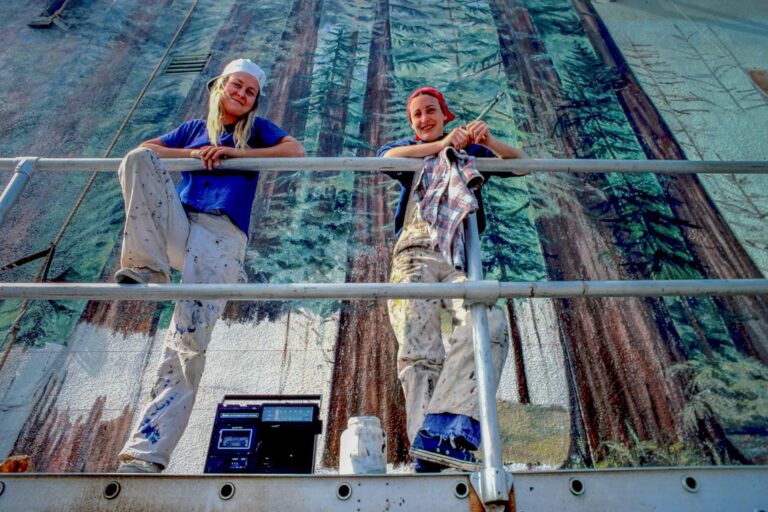
Jane Golden (right), founding director of Mural Arts Philadelphia, is pictured in 1978 working on the mural ''Muir Woods'' with an unidentified assistant in Santa Monica. (Courtesy of Blaise Tobia) -
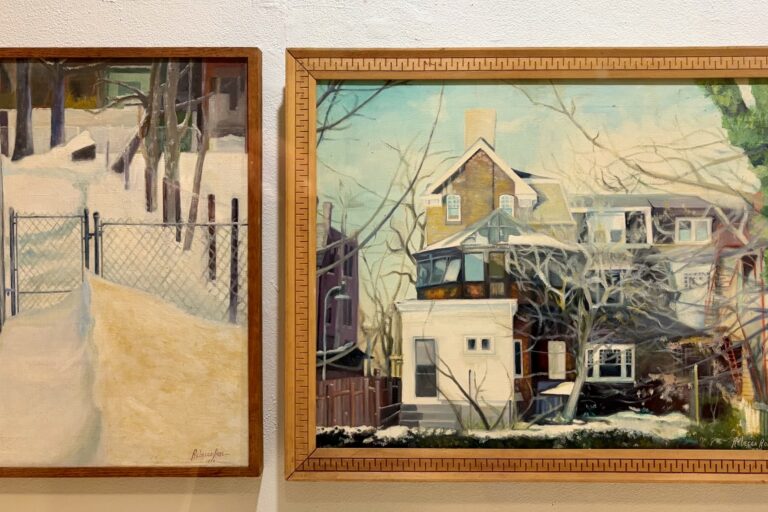
''Powelton Village #1'' and ''Powelton Village #2,'' both painted in 1978 by Rebecca Rose Metzger, are on view in ''A Federal Job in the Arts'' at Philadelphia City Hall. Metzger painted the pictures while employed by CETA funding. (Peter Crimmins/WHYY) -
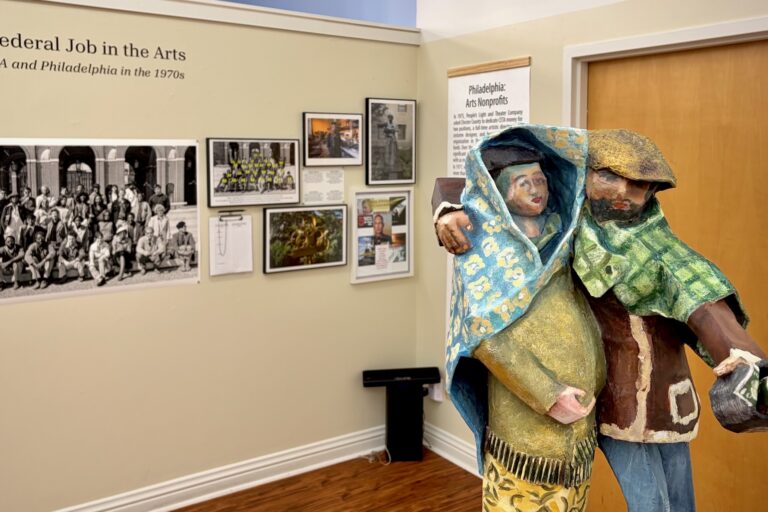
''A Federal Job in the Arts," on exhibit in the office of Creative Philadelphia in City Hall, looks back at the Comprehensive Employment and Training Act (CETA) of 1973. In the forefront is ''The Immigrants'' (1996), a sculpture by Simone Spicer, a CETA-funded artist in Massachusetts who later relocated to Philadelphia. (Peter Crimmins/WHYY) -
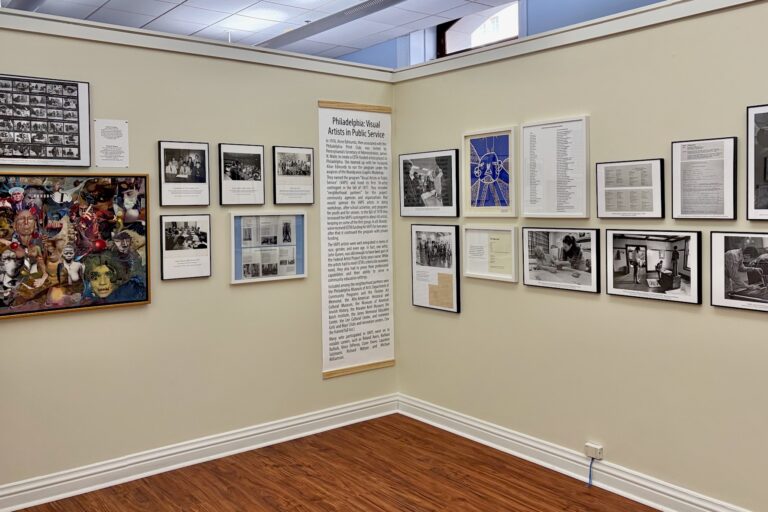
''A Federal Job in the Arts'' is on view in the office of Creative Philadelphia in City Hall. The exhibition looks at the local impact of the 1970s federal Comprehensive Employment and Training Act. (Peter Crimmins/WHYY)
A temp agency for artists
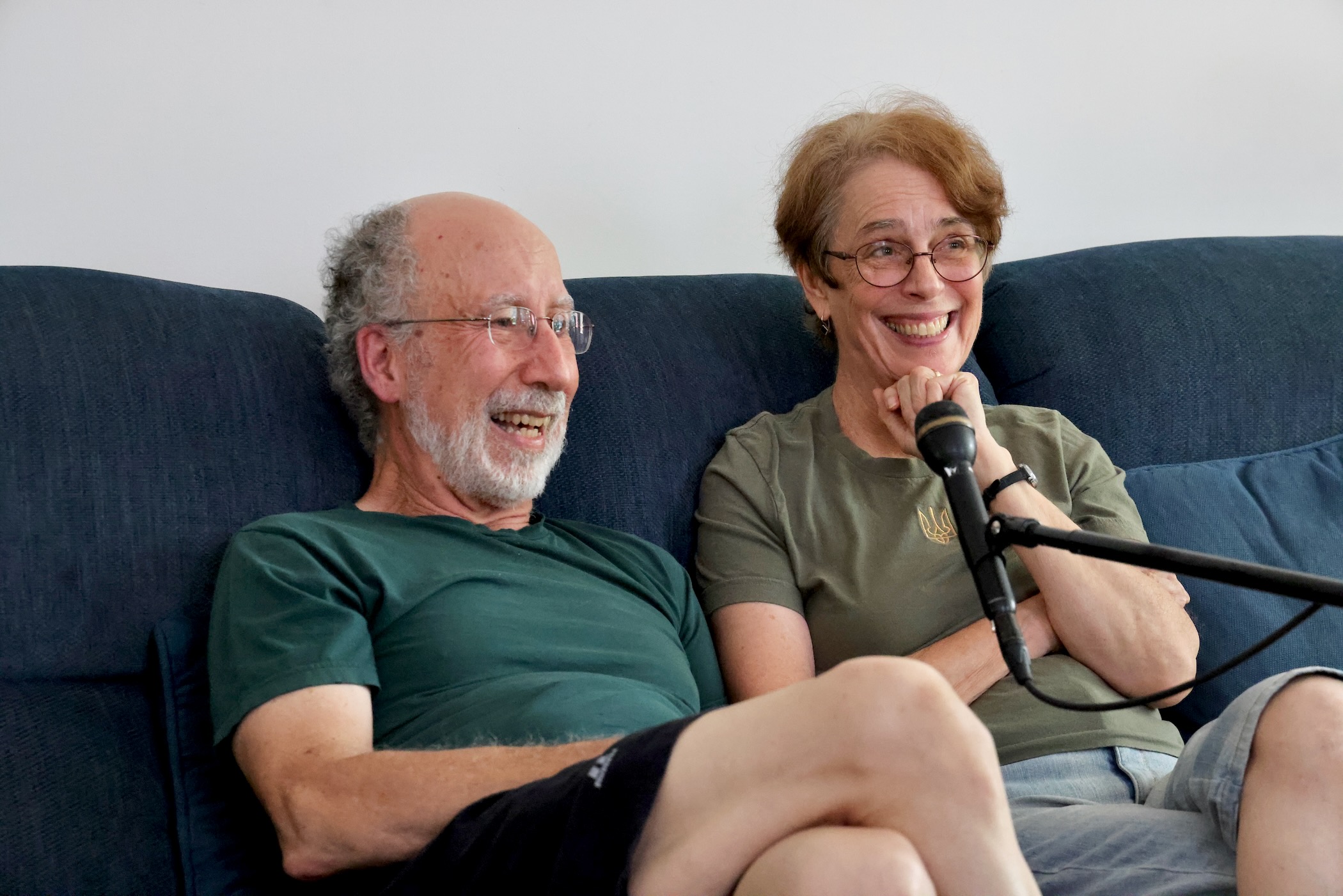
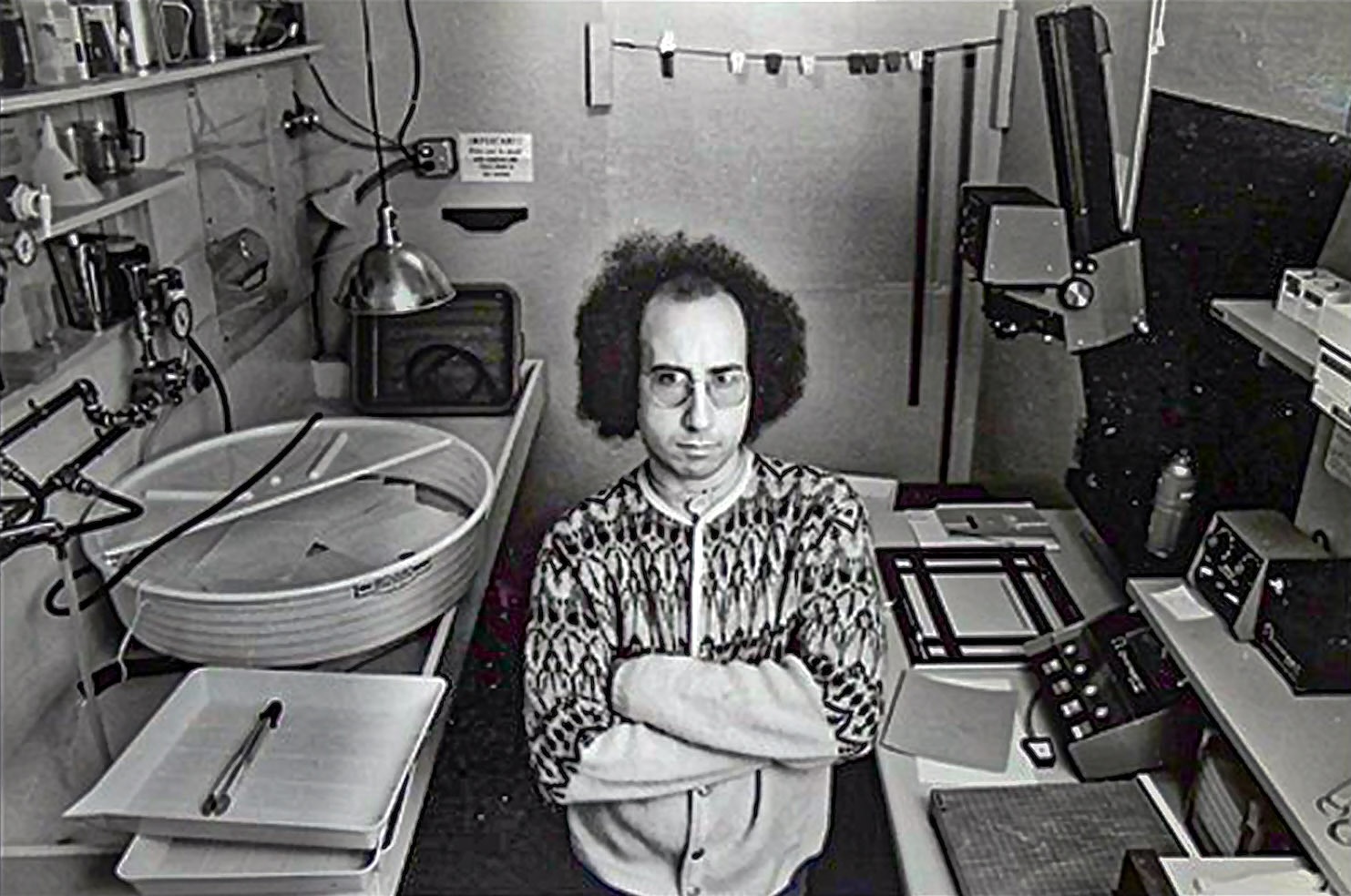
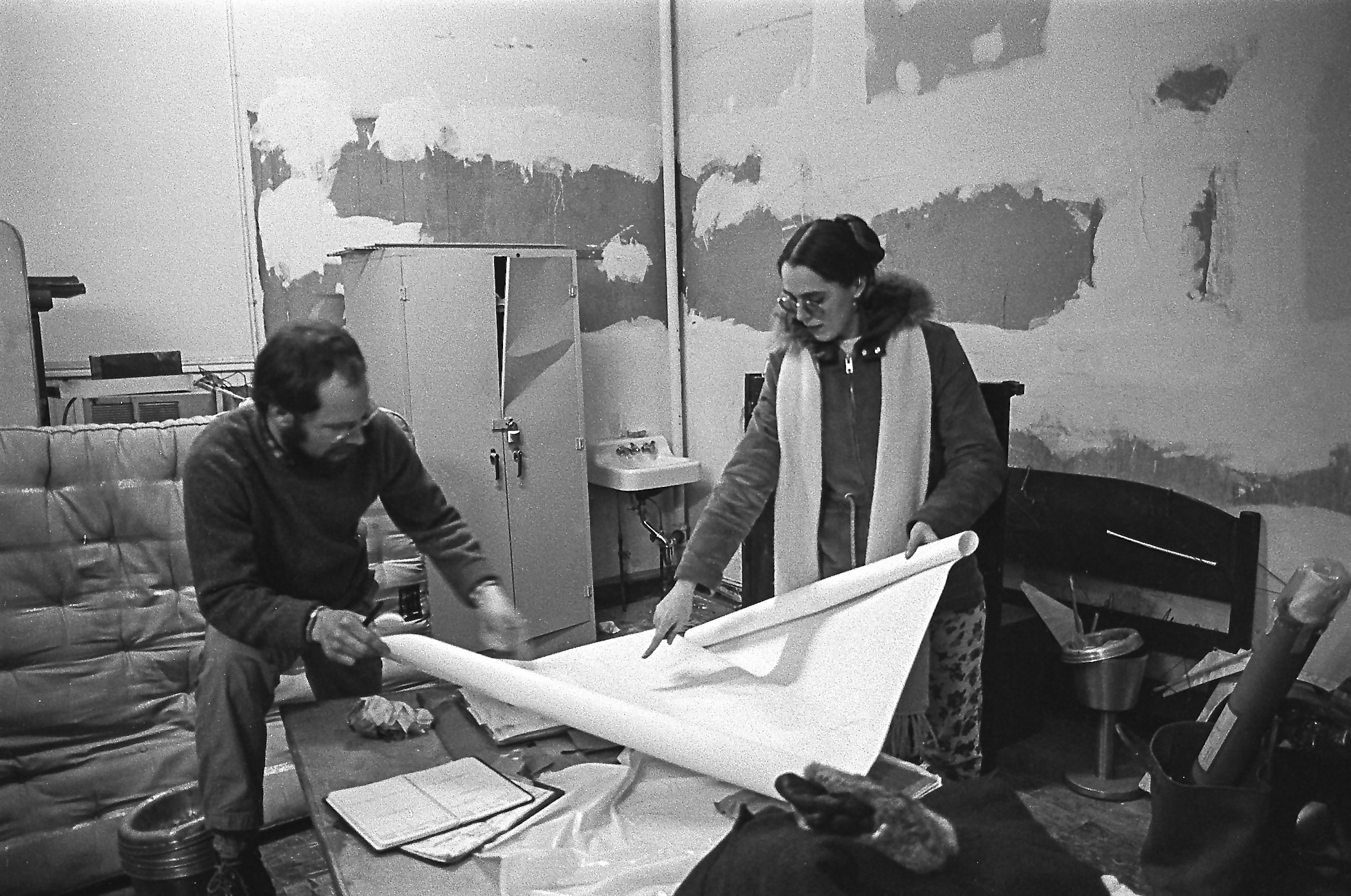
The exhibit was created by Philadelphia artists Blaise Tobia and Virginia Maksymowicz. In the 1970s, the married couple was living in New York City, employed as artists with CETA via the city’s Cultural Council Foundation.
“It was almost like working for a secretarial temp agency,” Maksymowicz said. “Somebody would request from the Cultural Council Foundation an artist. ‘Hey, our community center wants to do a ceramic mural,’ or, ‘Hey, we need someone to work with kids on an after-school project.’”
She said CETA was not a project grant or an artist fellowship, but a job.
“We got two weeks vacation, we got health insurance, and when the job ended, they taught us how to apply for unemployment insurance,” Maksymowicz said. “Artists don’t understand sometimes: They might have a one-year teaching job some place. The job ends and they don’t apply for unemployment insurance. We were taught by CETA that that money’s being taken out of your paycheck. You’re eligible. There is a different mindset when something is a job. You know what’s owed to you.”
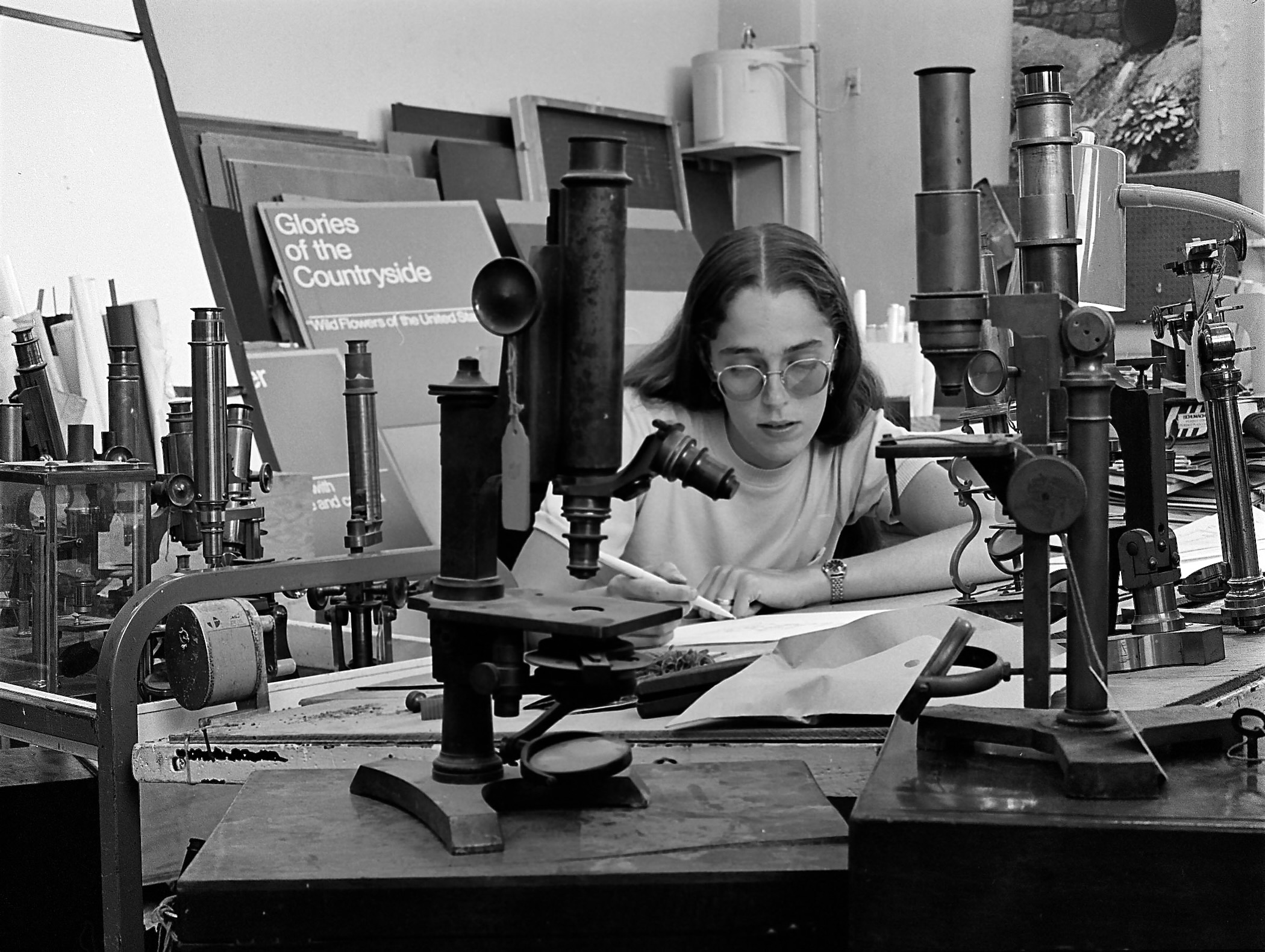
Maksymowicz and Tobia are coordinators of the CETA Arts Legacy Project, having spent the last 15 years hunting in archives and libraries to piece together where CETA money went, who benefitted and what came of it. Maksymowicz said no comprehensive documentation has ever been made of CETA.
“As young artists in New York and the CETA program, we knew what was going on in New York, but we had no idea what was going on all across the country,” she said. “Bit by bit we started tracking down people.”
“A Federal Job in the Arts” is one of three similar exhibitions running back-to-back in three cities. The Delaware Art Museum recently closed “Citizen Artist,” which focused on CETA and its 1930s predecessor — the Works Progress Administration of the New Deal.
Also running is “ART/WORK: The Practice and Politics of CETA and the Arts” at the James Gallery of the CUNY Graduate Center in New York City.
Unlike the WPA, which funded the creation of murals, photographs, graphics and writings, CETA did not target the creation of artwork. Rather, it generated employment.
“The American public was very familiar with the art projects of the New Deal,” Tobia said. “CETA didn’t do anything like that, which is one of the reasons it’s a whole lot less well-known.”
Related Content
Philadelphia Cultural Fund releases record-high arts and culture grants
The Cultural Fund is in the midst of a strategic planning process to find a more equitable funding model.
3 months ago
Listen 1:22CETA’s lasting impact on the Philadelphia region
Hundreds of artists were employed in Philadelphia, and several regional arts organizations were established through CETA funding. People’s Light and Theatre in Malvern paid its first artistic director and 15 other positions with CETA funds during a five-year period. The Brandywine Workshop and Archives created a Visual Artists in Public Service (VAPS) program that employed 58 positions over two years. Joan Myers Brown at PHILADANCO was able to pay her dancers for the first time through CETA.
The Philadelphia Museum of Art hired 38 people with CETA funds, according to the exhibition, including security and administrative positions. When the program ended, the museum director complained to the Institute of Museum and Library Services that the loss of CETA funds would force the museum to curtail its hours.
In 1977, the Painted Bride was a fledgling avant-garde arts venue on South Street founded by six artists who had been pooling their resources to keep it afloat for eight years. With CETA funds, it was able to hire a staff of six for the first time.
“The first thing I noticed was people left at 6 p.m.,” said founding director Gerry Givnish in an oral history interview recorded by Maksymowicz. “We used to hang out. That was our life, so 6 p.m. or 8 p.m., who cared? So I was surprised when people walked out the door after their shift was over. I adjusted to that.”
Givnish said having a paid staff made the Painted Bride a more professional organization.
“It gave us credibility in the eyes of funders,” he said. “Right after CETA stopped, we got William Penn [Foundation] money, which we had never got, and Pew [Center for Arts and Heritage] money, which we had never got. William Penn and Pew were the biggest funders of the arts. That’s how it started.”
In the 1970s, Bruce Katsiff headed the arts department at Bucks County Community College. He saw an opportunity to leverage CETA funding for a community Artmobile, a tractor trailer outfitted as a gallery and education space that could be trucked around the county.
“The National Endowment for the Arts had a project called Artrain where they literally took a train car, converted it into an art experience thing and they would drop it off in communities out west and in the Midwest,” he said. “I got this crazy idea: Why don’t we try to do an Artmobile?”
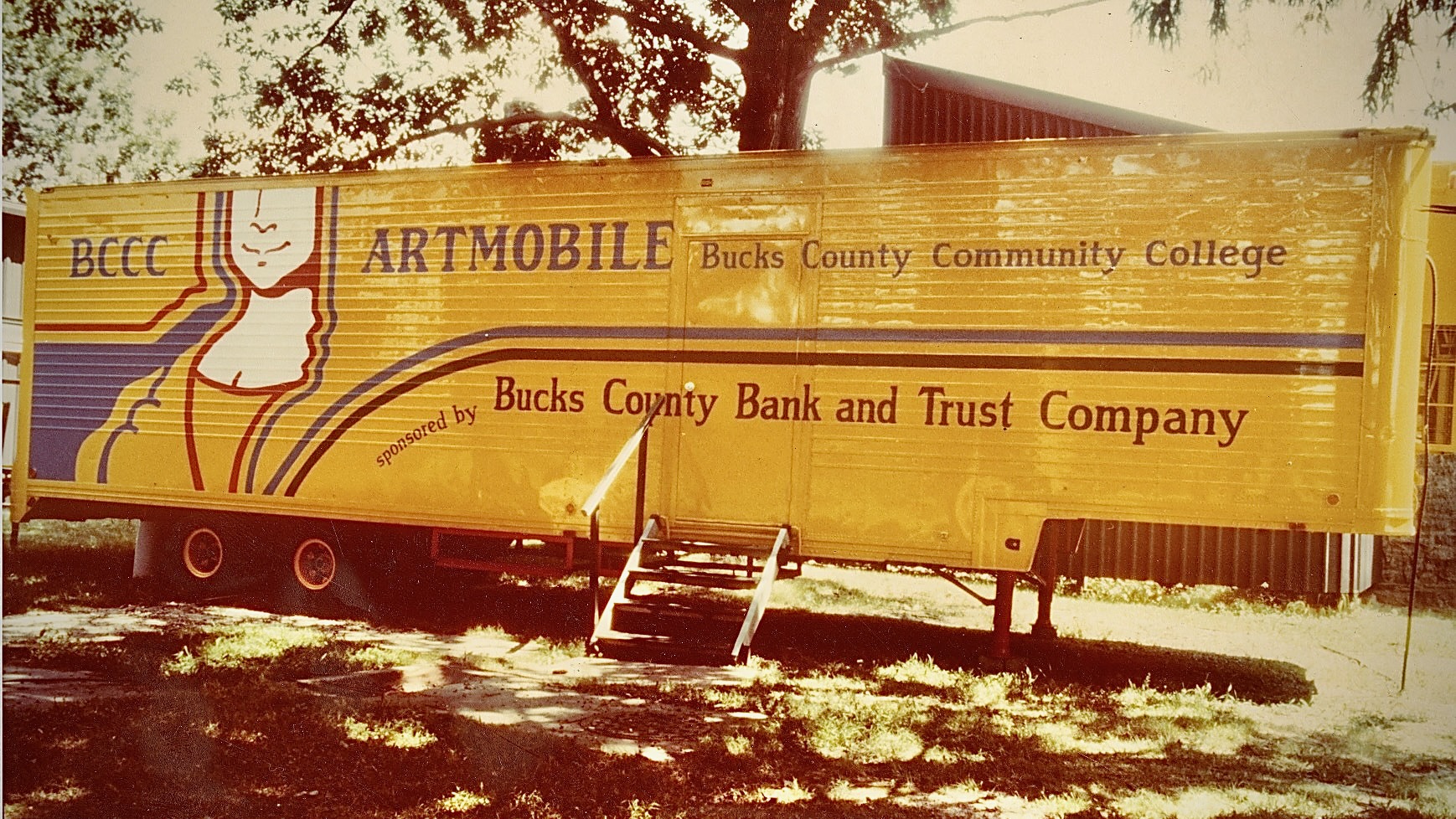
Katsiff said the creation of the Artmobile was mostly funded by the Grundy Foundation, and CETA money paid for its staff. The Artmobile ran for 45 years, ceasing during the COVID-19 pandemic, and has yet to be revived.
“Close to 1 million kids went through that thing,” Katsiff said. “We would go to schools and stay at the school for a week or two.”
Related Content
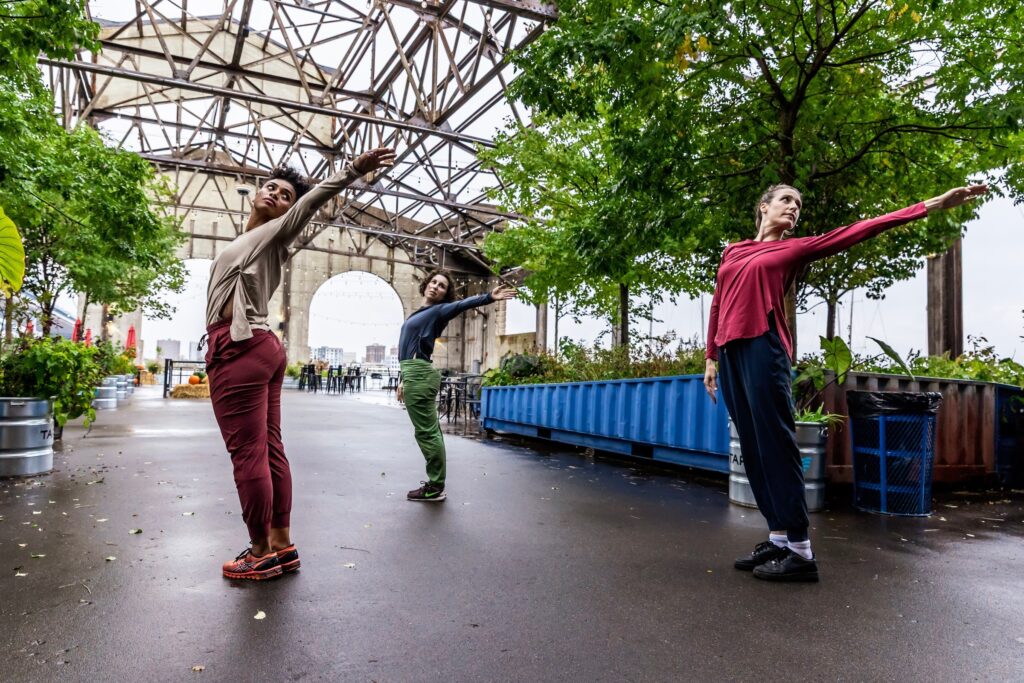
Pennsylvania restores arts funding for small arts organizations
Pennsylvania Creative Industries voted to alter the previously approved overhaul of its funding process.
5 months ago
Listen 1:41WHYY’s resident humanist
WHYY also benefited from CETA. Then called WUHY, the radio station had just launched “Fresh Air” as a local afternoon talk show produced and hosted by Terry Gross and Danny Miller, an intern who later became executive producer.
“Our budget at the time was approximately zero,” Gross recalled.
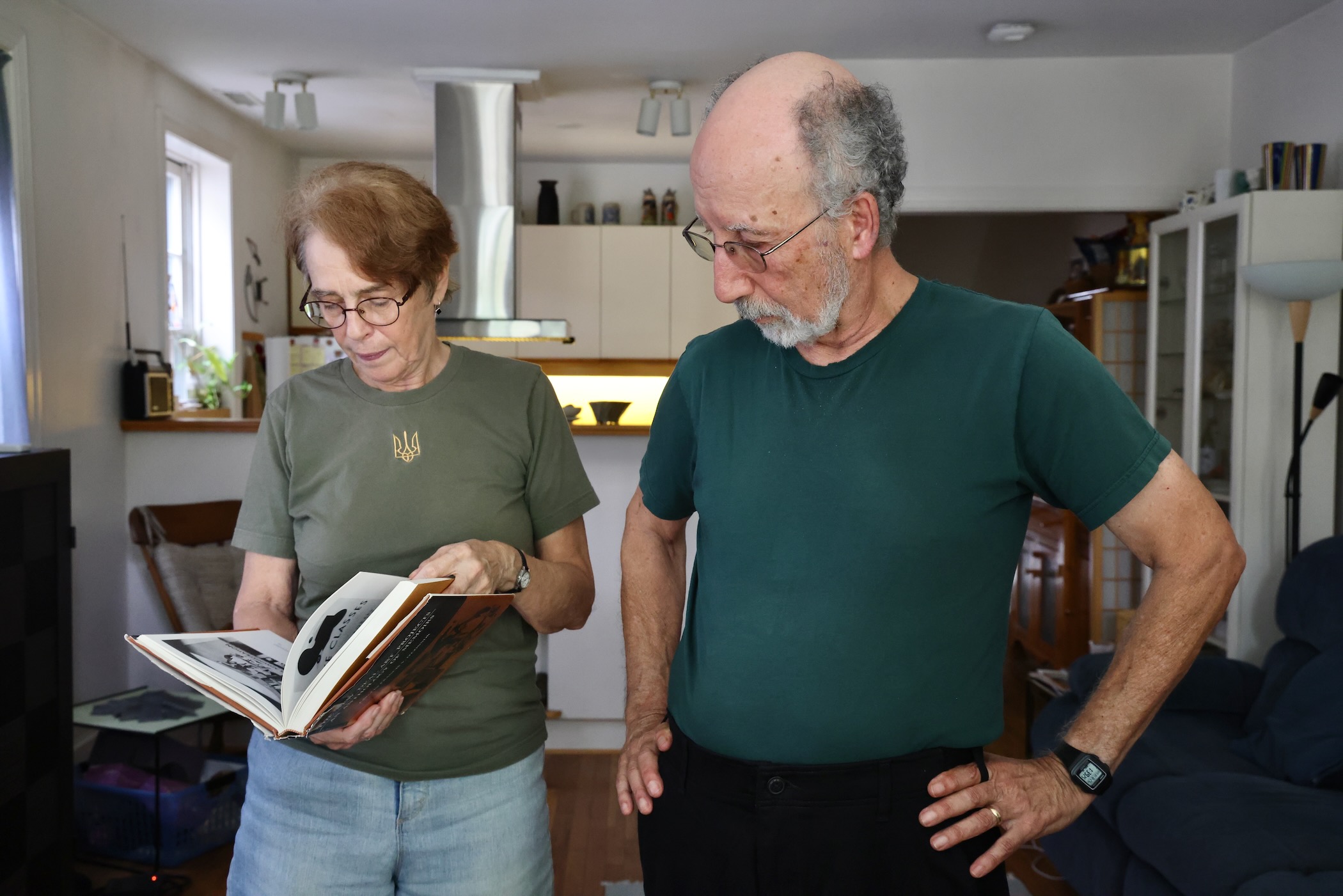
At the time, the University of Pennsylvania had a program called the Center for Philadelphia Studies, which used CETA funds to provide scholarly workers to organizations upon request. In 1979, a Ph.D student in the history department of Temple University, Charles Hardy III, was sent to “Fresh Air” to do interview research and conduct some interviews live on the air. His job title was humanist in residence.
“Danny and I used to joke that I’m the ‘Humanoid in Reverence,’” Hardy said.
After the CETA job ended, Hardy continued to contribute long-form radio stories to “Fresh Air” for several years. He ultimately became a history professor at West Chester University.
“The Center for Philadelphia Studies CETA grant did exactly what it was supposed to do,” Hardy said. “During my year as humanist in residence at ‘Fresh Air’ I learned skills that enabled me to pursue a career in public radio throughout the 1980s and that I still use today.”
Now retired, Hardy is currently directing and co-producing a 12-part podcast funded by the Library of Congress about Time Out of Joint, an online education platform wherein formerly incarcerated writers lead workshops that relate their experiences to stories out of Shakespeare.
Related Content
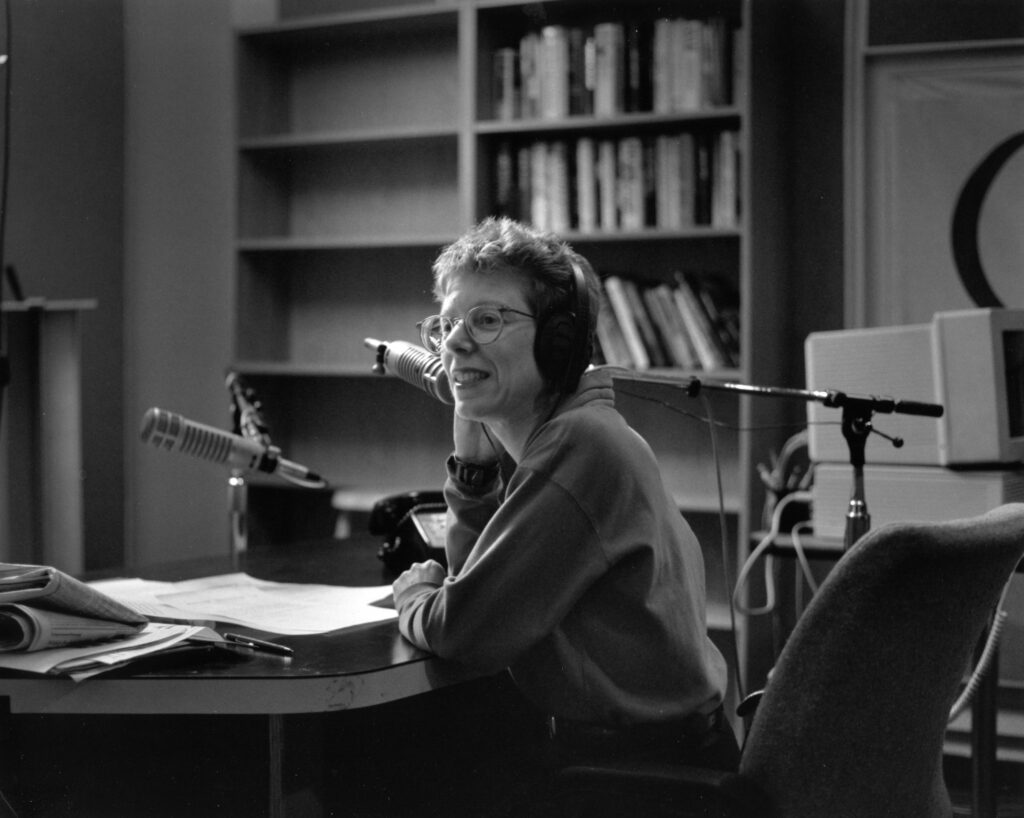
50 years and over 15,000 interviews: The history and legacy of WHYY’s ‘Fresh Air’
Terry Gross has helmed one of the longest-running interview programs in America, which has been embraced by generations of listeners.
1 year ago
Listen 5:59Could CETA come back?
CETA and its predecessor were created out of economic crises. The WPA faced criticism in its time as a form of socialism being forced on the American people by President Roosevelt.
To avoid similar blowback, CETA was designed as a decentralized program, so local government officials from both parties could claim credit.
“This had to be made palatable in a bipartisan way in 1973-74,” Tobia said. “In order to get buy-in from the Republicans, it was agreed it would be a decentralized program. It would be block grants to the states that would go down to communities, down to counties and other prime sponsors, as opposed to all of the New Deal projects which were totally centralized in Washington, D.C.”
The dispersed nature of the program may have caused it to be less recognizable to the public, but CETA is still remembered in some circles. New York City created a comprehensive cultural plan, CreateNYC, during the administration of Mayor Bill de Blasio that cited CETA as a case study.
In response to the COVID-19 pandemic shutdown that devastated New York’s performing arts economy, the Mellon Foundation created a $125 million Creatives Rebuild New York fund that was modeled on CETA.
“I remember during the early years of the Obama administration there was talk about bringing CETA back, and how do you connect art with workforce development issues,” Golden said. “With so many programs getting cut and arts getting pushed to the side, it’s sort of: How did it happen that the country was able to galvanize around these issues, and not just talk about it but actually fund it over a period of years? It’s remarkable.”
Creative Philadelphia, the city’s government office of arts and culture, is now engaged in drafting the city’s first comprehensive cultural plan. Tu Huynh, curator of exhibitions, said there is no tie between the timing of the exhibition and the forthcoming cultural plan.
The office will host a panel discussion about the exhibition with curators and subjects Sept. 18.
Disclosure: The William Penn Foundation and Pew Center for Arts and Heritage are among WHYY’s financial supporters. WHYY News produces independent, fact-based news content for audiences in Greater Philadelphia, Delaware and South Jersey.

Get daily updates from WHYY News!
WHYY is your source for fact-based, in-depth journalism and information. As a nonprofit organization, we rely on financial support from readers like you. Please give today.
If you could see what they see: Window views of Philly employees installed at City Hall
The photo exhibit aims to humanize public sector work, which is often seen as a faceless bureaucratic wall.
1 year ago
Listen 1:13
Philly leaders want to know: What do you want the city’s arts to look like?
A series of a dozen town hall-style planning sessions by Creative Philadelphia will inform the city’s first comprehensive cultural report.
2 years ago
Philly City Hall to display artwork by former UArts students and staff
The exhibition in November is part of City Council’s response to the sudden closure of the Center City art school.
2 years ago
Listen 1:03