

For Philly’s Eastwick neighborhood, flood buyouts could be an option as feds scale back levee proposal
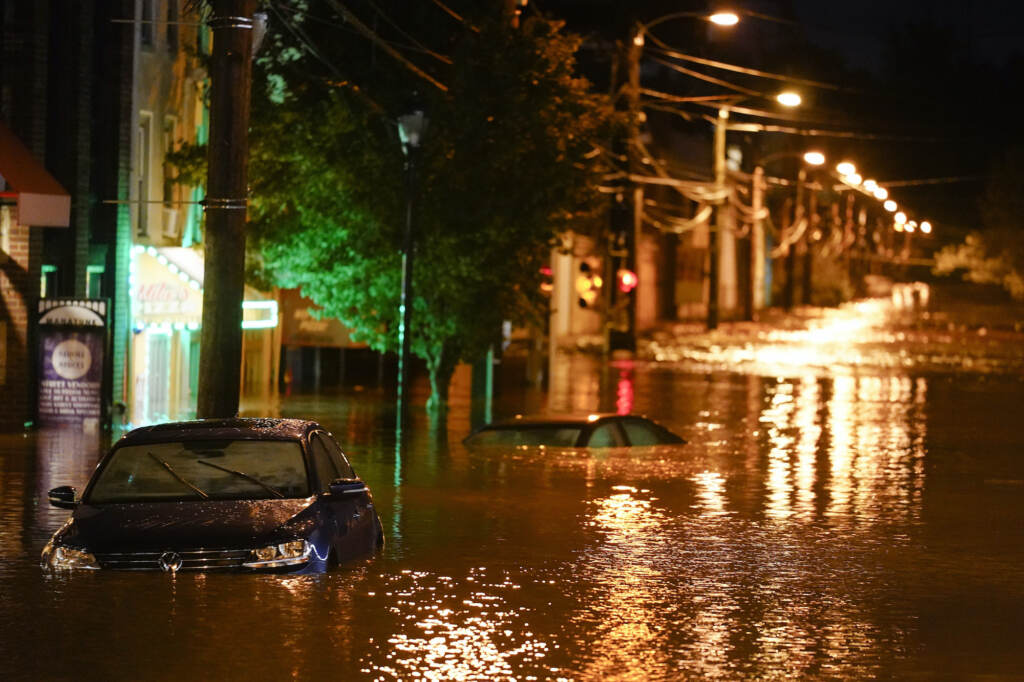
Flooding has repeatedly battered parts of the Southwest Philadelphia neighborhood, damaging homes, ruining cars and forcing evacuations.

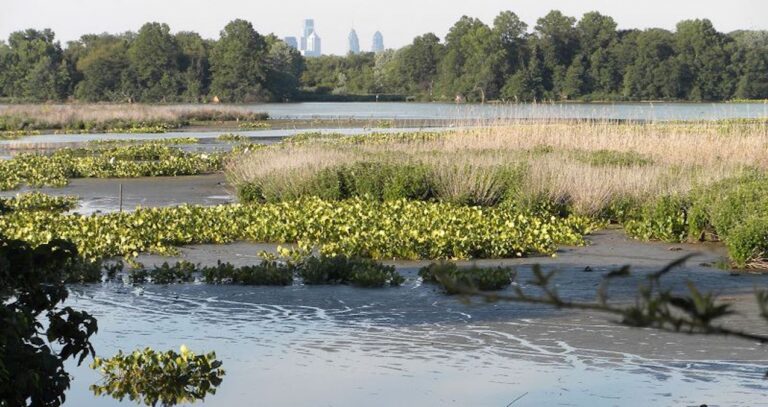
Philadelphia's skyline is visible above the Eastwick tree line. (Eastwick Friends & Neighbors Coalition)
This story is part of the WHYY News Climate Desk, bringing you news and solutions for our changing region.
From the Poconos to the Jersey Shore to the mouth of the Delaware Bay, what do you want to know about climate change? What would you like us to cover? Get in touch.
The U.S. Army Corps of Engineers has scrapped a plan to build a 15-foot earthen levee along the Cobbs Creek in Southwest Philadelphia. The Corps is now investigating an alternate design that would be roughly half as tall.
The levee proposal is part of a multipronged strategy to reduce flooding in the city’s low-lying Eastwick neighborhood that the city’s Office of Sustainability plans to publish in the coming weeks. The strategy will include other measures to keep residents safe, such as nature-based stormwater management projects to absorb floodwaters and possible home buyouts, said Korin Tangtrakul, senior manager of place-based initiatives with the office.
“That lower levee height means it’s playing less of an effective role in addressing the major source of flooding,” Tangtrakul said. “So it really makes the other measures in the flood-resilience strategy all that more important, because we’re going to need redundancy. We’re going to need backup solutions if there’s an event that comes through and the levee overtops.”
Floods have repeatedly devastated areas of Eastwick, damaging homes, destroying cars and requiring people to evacuate. Extreme rain and sea level rise driven by climate change promise to worsen flooding in the neighborhood, which is bounded by the Cobbs and Darby creeks to the west, the marshes of the John Heinz National Wildlife Refuge to the south and the tidal Schuylkill River to the east.
Residents, researchers, community groups and government agencies have been working for years to develop solutions. The city expects to release the Eastwick Flood Resilience Strategy in the coming weeks. The plan brings together seven potential solutions — including the Army Corps’ levee proposal and voluntary home buyouts — that have already undergone some community engagement and evaluation of their technical feasibility into a road map to lower flood risk in the community. The strategy resulted from a planning effort, funded by the Federal Emergency Management Agency, by the city, a council of Eastwick residents and the engineering firm Arcadis.
Related Content
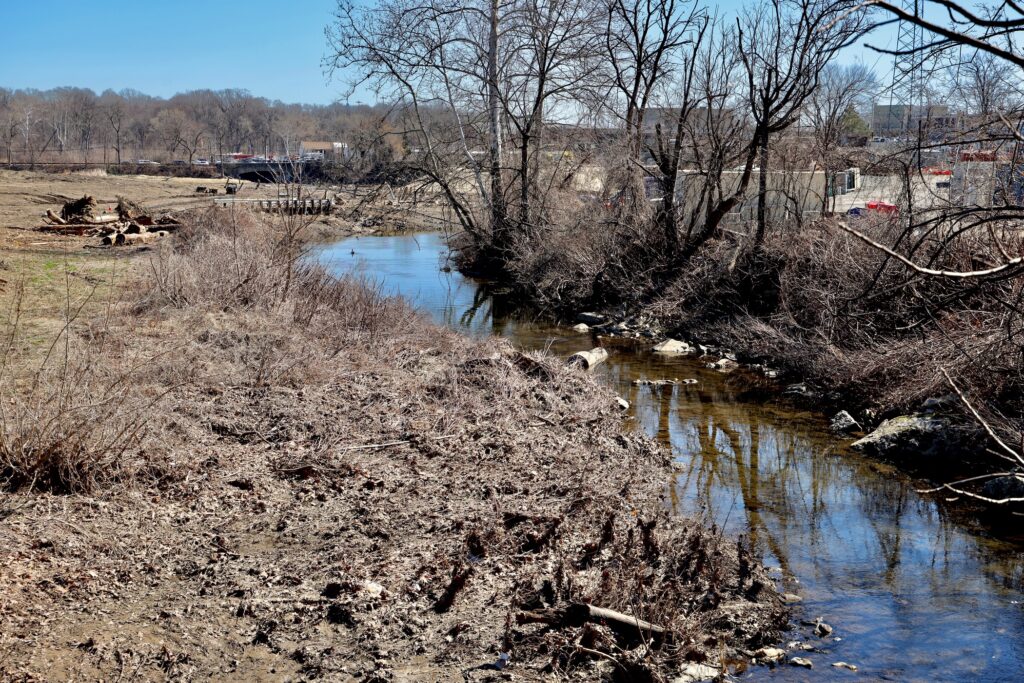
Philadelphia officials announce new funding for Cobbs Creek restoration project
The $9 million in additional funds will help mitigate flooding. Nearby residents have worried that restoring the Cobbs Creek Golf Course would exacerbate the problem.
7 months ago
Listen 0:51Federal government explores a lower levee design
In 2023, after years of study, the Army Corps unveiled an early-stage plan for a 1,400-foot long, 15-foot tall earthen berm-style levee behind a row of homes along Cobbs Creek.
Army Corps officials said while the 15-foot levee would not prevent all flooding in Eastwick, it would dramatically reduce the impact of a 100-year storm, avoiding on average more than $4 million in flood damage per year to homes and infrastructure in the coming decades. But there was one problem: Army Corps modeling found that the levee would push some water up and downstream, likely causing more flooding for up to 328 structures near the Cobbs and Darby creeks in neighboring Delaware County.
Since the draft plan was released, Army Corps officials have tried to find ways to eliminate this induced flooding, but they weren’t successful, said Scott Sanderson, who leads the planning division at the Army Corps’ Philadelphia District. So they began investigating a lower levee.
The new design would follow a similar path as the previous one, but rise just 8 feet above ground level, Sanderson said.
While the original levee design would have protected against a 100-year flood, similar to the floods in Eastwick caused by Hurricane Floyd in 1999 and Hurricane Irene in 2011, the new, lower design would be less protective.
Floods like Floyd and Irene would overtop the 8-foot design, but the lower levee would still protect against smaller and more common five-year floods, like the one caused by Tropical Storm Isaias in 2020, Sanderson said.
Even the lower design is likely to cause some additional flooding in nearby places, Sanderson said. The Army Corps is now trying to determine whether that’s the case, and if so, where and how significant this induced flooding would be.
Sanderson said the multiple waterways and close proximity of homes in Eastwick makes the levee challenging to engineer.
“We’re really taking our time and looking at this thoroughly, because we don’t want to put a solution in place that moves the problem somewhere else,” he said.
It’s still not clear whether the new levee design will be built.
More analysis is needed before the Army Corps can make a final recommendation on the design, then the project would need to compete against other plans for federal funding, Sanderson said. The city would also need to sign off on the plan and raise its portion of the funding, around 35% of the total cost.
The soonest the project could begin construction would be 2030, Sanderson said.
Related Content
Philadelphians will see 15% discount on flood insurance starting in April
FEMA approved the city to join its Community Rating System, a program that rewards municipalities that take steps to reduce flood risk.
9 months ago
Listen 0:47How buyouts in Eastwick could work
Eastwick residents have talked for years about buyouts, relocations or a “land swap” that would move residents to higher ground within the neighborhood.
The city’s Office of Sustainability sees voluntary buyouts as a way to give residents a choice, Tangtrakul said.
“We don’t want people to feel trapped in Eastwick,” she said. “If they want to leave, we want to give them the ability to leave and not feel like they’re passing that risk on to the next homeowner. … We also want people to stay if they want to stay.”
Tangtrakul and other officials plan to include voluntary buyouts as a key strategy in their seven-point plan. Among the measures outlined in the plan, buyouts could be accomplished on the sooner side, in as little as five years, Tangtrakul said.
But the city still needs to iron out crucial details about how these buyouts would work in Eastwick.
A central question is whether an individual household could take a buyout alone, or whether an entire block of rowhouses would need to agree to be bought out together. Federal funding generally requires that after flood-prone homes are bought out, they are demolished and turned into open space that can help absorb floodwaters, Tangtrakul said. Many homes in Eastwick are attached rowhouses, so the city would need to determine whether demolishing a single home in the middle of a block would structurally undermine the neighboring homes.
The city would also need to determine which households would be eligible for buyouts, and how much residents would be offered for their homes. For example, the city could choose to offer households a pre-flood market value for their homes or could include an added incentive to relocate and remain within the neighborhood or city, Tangtrakul said.
The city also plans to explore the idea of developing new housing for residents to relocate to on a publicly owned parcel in the neighborhood outside of the floodplain, Tangtrakul said.
“There’s still a lot of feasibility questions and a lot of legal and liability questions,” she said. “We’re just at an early stage of figuring out what that might look like.”
All of these plans rely on the city finding funding. Officials are exploring all avenues, Tangtrakul said, including federal, state, foundation or city capital dollars.

Get daily updates from WHYY News!
WHYY is your source for fact-based, in-depth journalism and information. As a nonprofit organization, we rely on financial support from readers like you. Please give today.
Part of the series
Part of the series
Watershed
Preserving Our Water: How we use our Delaware Watershed.
The project is funded by The William Penn Foundation.
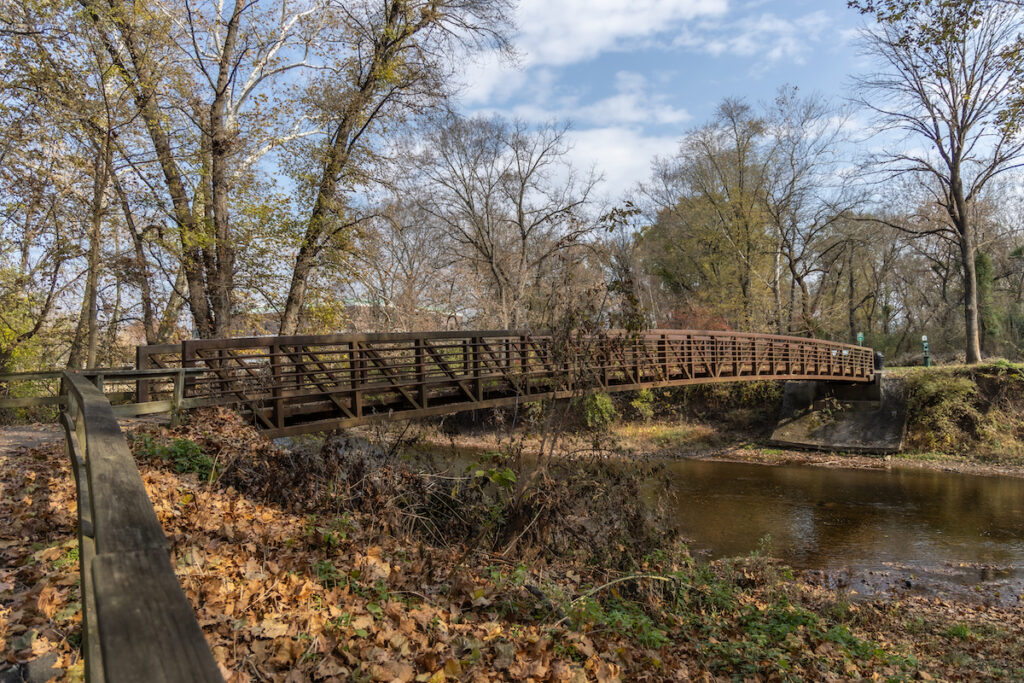
The investment would help improve pedestrian and cyclist safety in the Philadelphia area with more protected bike lanes and trail expansion.
3 months ago
Listen 1:09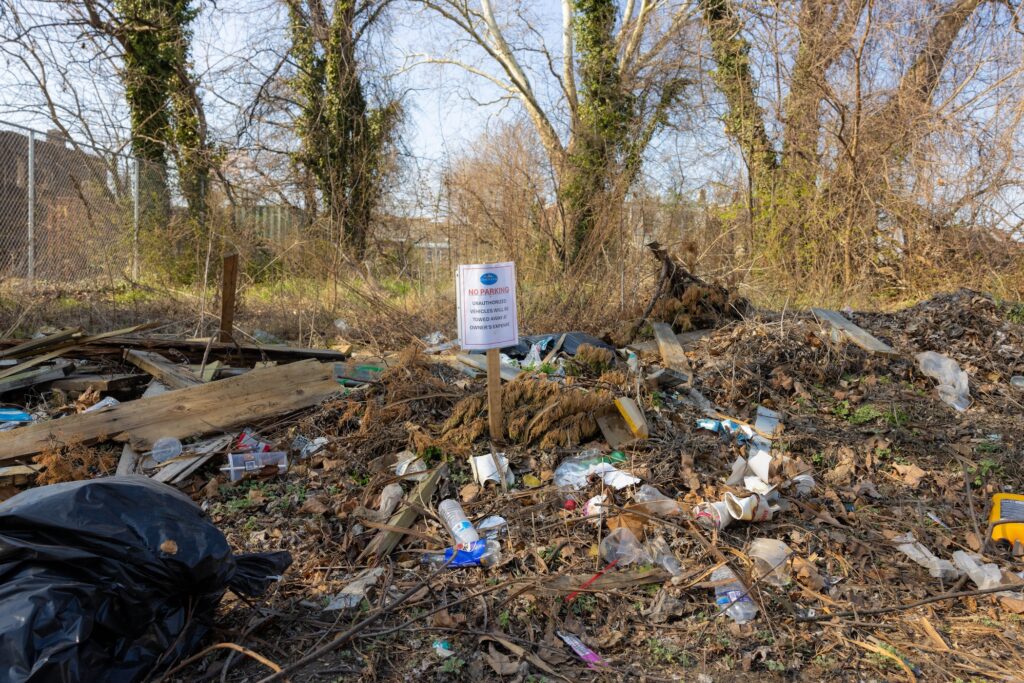
City of Chester fights illegal dumping with new greening initiative for vacant lots
Residents say they hope transforming vacant lots into green spaces will help reduce illegal dumping and crime, while improving people's health.
4 months ago
Listen 1:22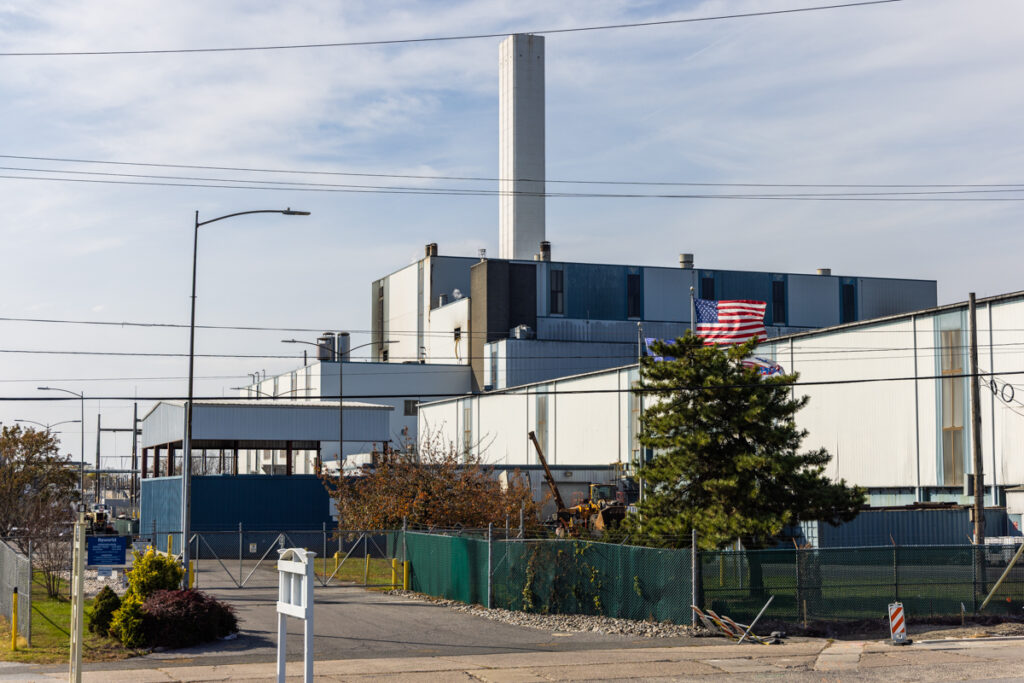
Philadelphia could extend its controversial trash incineration contract amid criticism
The city is still evaluating the environmental impacts of burning trash versus landfilling it, the Office of Clean and Green director said.
6 months ago
Listen 1:04