

A look inside the lab tracking Pennsylvania’s ticks
The director of Pennsylvania’s Tick Research Lab offers guidance on tick hotspots, emerging pathogens — and what to do if you’ve been bitten.
Listen 0:58

Staff members at work at the Pennsylvania Tick Research Lab, which provides state residents with free tick identification and testing for some of the most common tick-borne diseases. (Courtesy of the Pennsylvania Tick Research Lab)
From Philly and the Pa. suburbs to South Jersey and Delaware, what would you like WHYY News to cover? Let us know!
Nicole Chinnicci didn’t set out to build her career around ticks. As a graduate student at East Stroudsburg University, she started out studying a fuzzier form of wildlife — black bears.
She fell into tick research almost by accident, after getting a job at a university-affiliated lab dedicated to studying Lyme disease and other tick-borne illnesses.
More than a decade later, Chinnici runs what’s now known as the Pennsylvania Tick Research Lab. The facility is one of a handful in the country that provides an essential service: free tick testing for state residents
“This is unique — there are only a few labs out there that do tick testing,” said Chinnici, the lab’s director. “And we kind of started it. We got Pennsylvania on board, and Pennsylvania has been a leader for ticks and tick-borne illnesses.”
Chinnici and the lab have positioned themselves as leading experts in tick research — during one of the tickiest tick seasons on record, in one of the tickiest states in the country.
Related Content
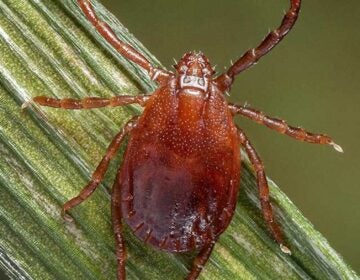
Pennsylvania researchers see tick population and related diseases ticking up
The state's Tick Research Lab, based at East Stroudsburg University, has recorded more than twice as many ticks this May compared to the same time last year.
1 year ago
Why (fast) testing matters
The lab is best known for its tick testing, which has been free to state residents since 2019, when a spike in Lyme disease prompted state legislators to fund the lab’s work.
Part of what’s made it such an important service is the nature of tick-borne illnesses — and the tests available to catch them.
“The pathogens that cause these diseases are really smart,” Chinnici said. “They don’t circulate in our blood system, so we can’t just do a test like we do on the tick from your blood.”
Instead, human tests have to rely on the body’s antibody response, which can take six to eight weeks to emerge. That presents a problem for treatment.
“With Lyme disease and some of these other tick-borne illnesses, we know from researchers that you need to get treated within the first 30 days to have a really good battle against it and reduce the long-term symptoms that you may experience from it,” Chinnici said.
In fact, the official advice concerning Lyme disease — especially high-risk bites, which include bites by blacklegged ticks that are attached for 36 hours or longer — is to begin a course of antibiotics within 72 hours of removing the tick.
But most people don’t know what kind of tick they’ve plucked off their bodies, or how long it was attached — which is where the Tick Research Lab comes in. Despite receiving hundreds, and sometimes upwards of a thousand, ticks in the mail every day, the lab manages to return results to most people within 36 hours.
“And that’s really important because when we’re talking about tick-borne illnesses, our goal is to get you results before you have symptoms,” Chinnici said. “So if you have a tick that’s attached to you and you’re very concerned, I would priority ship that to us to speed that up.”
In addition to testing for pathogens, the lab provides tick identification, revealing which diseases it’s most likely to harbor, as well as an estimate of how long the tick was feeding.
“So a tick that’s on you for 24 hours or more would mean a greater risk for a disease to have transmitted,” Chinnici said. “So we look at the engorgement of the tick and then we test it for five different tick-borne illnesses.”
Those are the five most common — and dangerous — tick-borne illnesses in Pennsylvania: Lyme disease, Powassan virus, two forms of anaplasmosis, babesiosis and hard tick relapsing fever, or HTRF.
The lab also offers two higher tiers of testing: the advanced panel ($50 for state residents) and the comprehensive diagnostic panel ($100 for state residents), which screen for dozens more tick-borne diseases that are rarer in Pennsylvania.
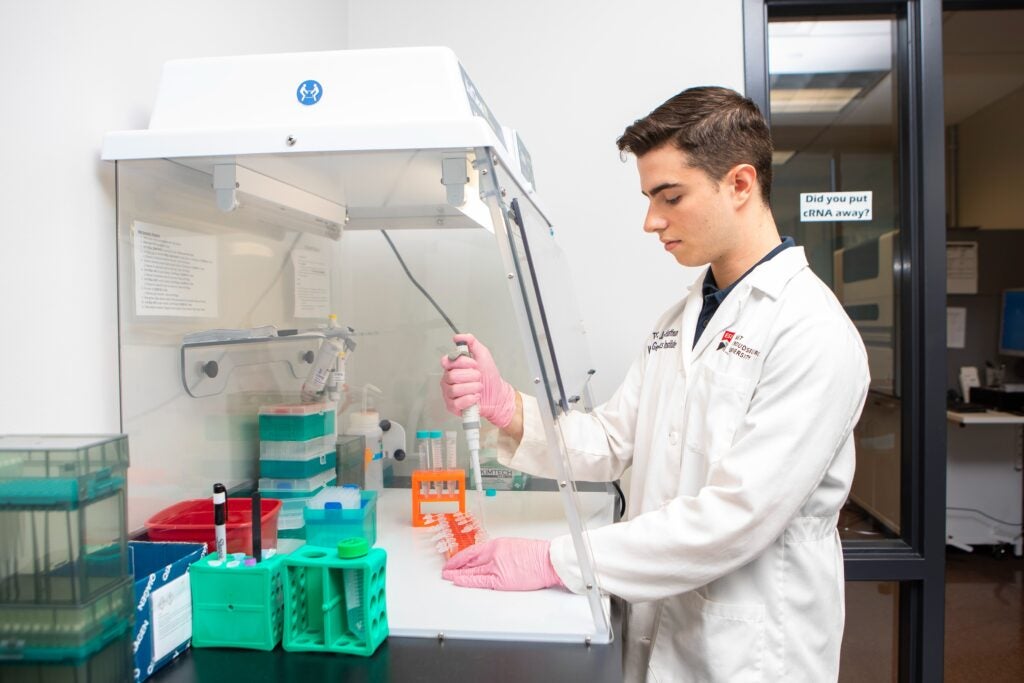
For anyone stuck on choosing a panel, Chinnici recommends starting with the basic, free option — and sending your tick off as soon as possible, since symptoms can take days or weeks to appear.
“If you can find that tick bite — and you’re lucky enough to have seen that, because not everyone will see a tick bite — you send that in for testing, and you can always start out with the basic panel tick testing and allow our researchers to give you an understanding of what that tick is, how engorged it was,” she said. “Because if we send it back and tell you you’ve been exposed to a blacklegged deer tick, but it was only on you for seven hours, even if that tick is carrying a tick-borne illness, most of the tick-borne illnesses take 24 hours to transmit.”
Related Content

An invasive tick is swarming southeastern Pa. Here’s what you need to know
Why researchers say the Asian longhorned tick is spreading so rapidly — and why it could pose a serious threat to human and animal health.
1 year ago
Listen 1:08Which tick-borne diseases to watch out for
One notable exception to the 24-hour rule is the Powassan virus, which can be transmitted by a tick in only 15 minutes.
“Powassan virus is scary,” Chinnici said. “Most individuals can be asymptomatic, but individuals that do end up with Powassan virus, it does turn into a neurological encephalitis, so like a meningitis-like infection, and those individuals tend to be hospitalized and undergo treatment.”
Powassan virus can be fatal in up to 10% of cases. Luckily, Pennsylvania usually only sees a handful of cases each year, but the lab has been keeping a lookout for potential hotspots.
“We find it in every county, but it’s sort of been sporadic,” Chinnici said. “So we’ve been actively trying to figure out what the reservoir host is for this virus to see if we can do something in terms of mitigation or better understand how these ticks are acquiring that one.”
Two other diseases that Chinnici says are of concern in Pennsylvania are Lyme disease, which can hide out in the body for years and cause long-term health effects, and babesiosis, a malaria-like infection caused by microscopic parasites that infect and destroy red blood cells.
Babesiosis is especially worrisome, Chinnici said, because — although it’s only been observed in roughly 5% of ticks — it’s on the rise in Pennsylvania. It’s also difficult to treat, and often co-occurs with Lyme disease.
“Because it’s a parasitic infection, it cannot be treated with antibiotics,” she said. “There’s some anemia-like responses, difficulties breathing, but it can, again, hide out from your immune system.
Ticks that harbor babesiosis almost always test positive for Lyme disease as well, which can compound symptoms because the two illnesses attack different systems and complicate treatment.
“And our state doesn’t report it, so we don’t truly know how many human cases there are of that one,” Chinnici said. “And then if we don’t report it, then our medical community and our physicians are not aware that it’s an issue as well. So they’re not thinking to look for it because they don’t understand that it is out there and it loves Lyme disease. So that one’s probably one of the bigger concerns.”
Related Content
Invasive Asian longhorn ticks found in Pennsylvania, New Jersey
Here's what to do if you find one.
8 years ago
Wider changes across Pennsylvania
Some of the biggest changes Chinnici has noted across Pennsylvania over the years involve new ticks and new diseases.
One of the newest ticks on the block is the Asian longhorned tick, which was first detected in the U.S. in 2017 and has since spread across the state.
“We are seeing those ticks be submitted more frequently, and more frequently on people,” Chinnici said. “While we don’t really find many pathogens associated with them to date, as this tick does emerge across the state, they do have capabilities of acquiring diseases that we have. So that’s one that will continuously monitor because it could put us at risk of some of these other diseases that we’re seeing in Asia and other countries.”
However, the Asian longhorned tick has been found to be a vector for bovine theileriosis, a blood-borne parasite that can sicken and even kill some cows.
“So at first it’s going to be an issue with our cattle populations causing infestations and anemia, but then as it continues to emerge, there’s going to be exposures in the human and animal population as well,” Chinnici said.
In terms of human illnesses, Chinnici said two conditions that have been on the rise are anaplasmosis, a bacterial infection that frequently affects dogs and humans, and babesiosis, which has mostly been found in the eastern part of the state.
Related Content

The PA Tick Research Lab, one of only three labs nationwide engaged in tick testing and research, is analyzing data from 30,000 tick exposures in Pennsylvania from 2019-2021.
3 years ago
Tick hot spots and prevention
So where else are ticks thriving? Chinnici said that, at present, the lab has been receiving the most tick submissions from the western and northwestern parts of Pennsylvania, especially Allegheny County, home to Pittsburgh.
“But because their population is so high, it’s sort of to be expected. Once it’s normalized, there’s no really pattern to that,” she said. “But ticks are really good in a suburban interface. Basically, if you have wildlife, it could be squirrels, it could be chipmunks, anything. If you have wildlife in your yard on your property, you’re going to see ticks.”
They especially tend to thrive in moist, humid, transitional climates — although, Chinnici noted, they’re an incredibly hardy bug.
“We’ve found them on dinosaurs,” she said. “I mean they’ve been around longer than we have, and very much evolved to surviving a lot of different conditions.”
Their second-biggest hot spot, Chinnici said, is the Philadelphia area — and not just in the suburbs.
“Green spaces in cities have become hotspots for ticks because this is where the wildlife likes the cluster,” she said. “Birds and wildlife will bring ticks into different areas. And because they’re so hardy, they can really survive in just little green spaces that can be just around the city areas.”
But one of the most common places people get bitten by ticks — regardless of geographical location — is their own backyards.
“Research does show that over 50% of tick exposures are happening in one’s backyard, typically when you’re doing yard work playing in the yard or gardening,” Chinnici said. “So you want to just make sure if you go outside, when you come back inside, do a tick check — check your pets, check yourself. That’s all it is. It takes 10 minutes, but just do a good tick check. Make sure you have nothing that’s hitchhiked along the way.”
How to get a tick tested
- Visit ticklab.org and select the “Test my tick” button at the top of the page.
- Once you’ve filled out the form, the site will enter your request into the lab’s queue and provide the address where you can send your tick.

Subscribe to The Pulse
WHYY is your source for fact-based, in-depth journalism and information. As a nonprofit organization, we rely on financial support from readers like you. Please give today.
Eradicated in the U.S. for 60 years, the fly returned in June with new cases in Texas. It can infect any warm-blooded mammal.
1 month ago
Listen 1:10
An invasive tick is swarming southeastern Pa. Here’s what you need to know
Why researchers say the Asian longhorned tick is spreading so rapidly — and why it could pose a serious threat to human and animal health.
1 year ago
Listen 1:08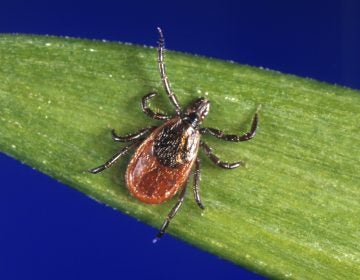
Bit by a tick in New Jersey? Rutgers scientists want you to mail it in
Rutgers researchers are on a mission to recruit “citizen scientists” as part of NJ Ticks 4 Science.
4 years ago