

Preserving the Easter Bunny’s Pennsylvania origins at Delaware’s Winterthur Museum
German immigrants brought the Easter Bunny tradition to Pennsylvania. Winterthur preserves one of the earliest U.S. depictions of the holiday hare.
Listen 1:32
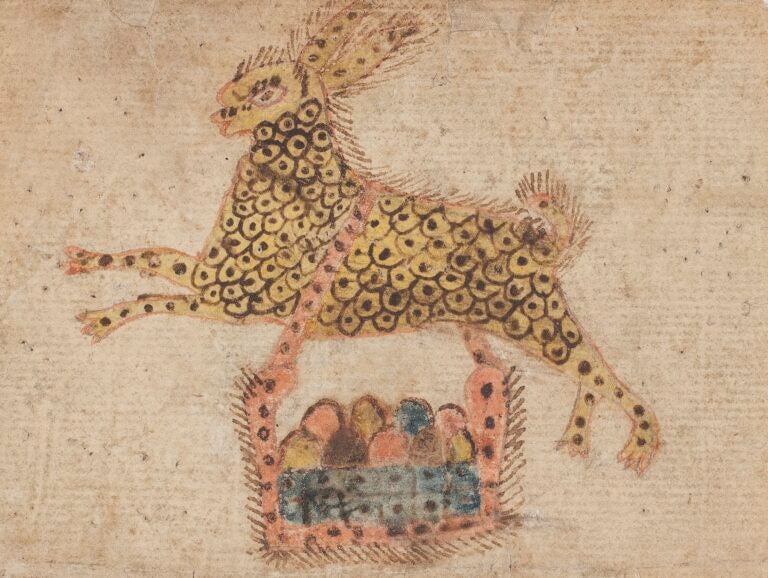
Johann Conrad Gilbert, Easter bunny with eggs, 1800–1810. Museum purchase with funds provided by the Henry Francis du Pont Collectors Circle 2011.0010. (Courtesy of Winterthur Museum, Garden & Library)
From Philly and the Pa. suburbs to South Jersey and Delaware, what would you like WHYY News to cover? Let us know!
The Easter Bunny may be known for hopping across the country each spring, but the origins of how the tale became a celebrated tradition in America can be traced back to Pennsylvania.
German immigrants introduced the tradition in the 1600s, bringing with them the legend of the Osterhase, or Easter hare—a folkloric figure said to lay colorful eggs for children.
One of the earliest known depictions of the Easter Bunny in the United States comes from an illustration by Johann Conrad Gilbert, a Pennsylvania German artist and schoolmaster. It’s on display at Delaware’s Winterthur Museum, Garden and Library.
“Winterthur is truly fortunate to have one of the earliest known American depictions of the Easter rabbit,” said Kedra Kearis, associate curator of art and visual culture. “It was brought into the collection just fifteen years ago. But [it] very much reflects our founder’s – Henry Francis du Pont – desire to show the lives and traditions of early Americans, and in this case, how they produced and shared images.”
Kearis described the watercolor, created between 1800 and 1810, as a small yet vivid image, only a few inches wide, of a spotted yellow rabbit mid-leap with a basket of pastel eggs.
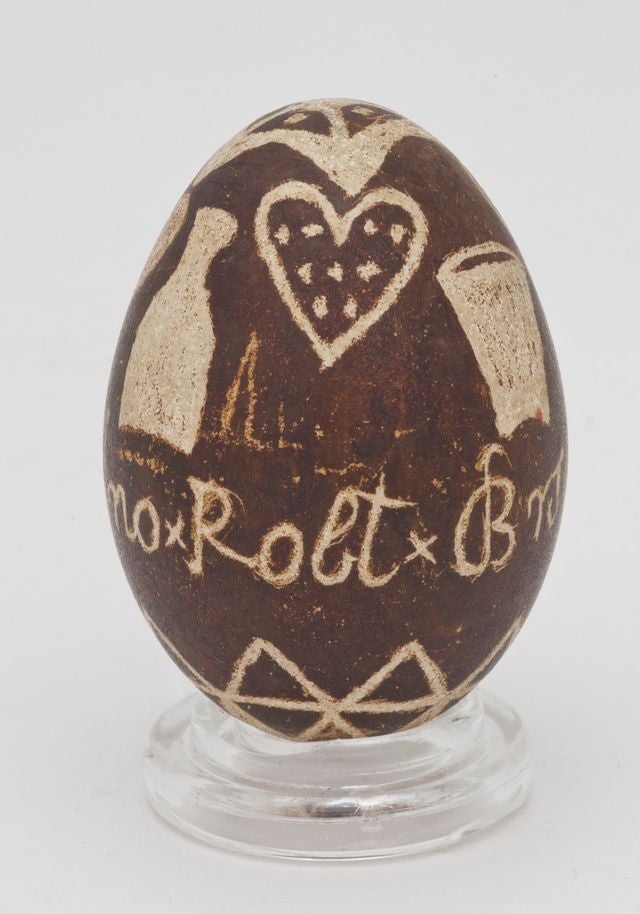
The museum also showcases one of the earliest known dyed Easter eggs in the United States, from 1850, which further shows how these customs were part of early American life.
Allie Alvis, curator of special collections at Winterthur’s library, said the tradition was rooted in German immigrants from the Palatinate region of Bavaria, where stories of an egg-laying hare were passed down and later adapted by Pennsylvania German families.
She said the Easter Bunny’s popularity grew in the 19th century as printed materials and illustrated postcards helped circulate the imagery more widely, turning a regional custom into a national symbol.
Winterthur continues to celebrate its history through seasonal events and activities, including its annual Easter egg hunt, a member event now in its third year. The event features about 1,200 hidden eggs filled with treats and typically attracts between 150 and 200 attendees, including around 100 children, according to the museum’s membership team.
Related Content
Philadelphia museums are pooling resources — and telling bigger stories together
“Bodies and Souls,” by PAFA and the Woodmere Museum, highlights a rare moment of partnership among Philly institutions.
2 weeks ago
Listen 1:56Kearis described the watercolor, created between 1800 and 1810, as a small yet vivid image, only a few inches wide, of a spotted yellow rabbit mid-leap with a basket of pastel eggs.
The museum also showcases one of the earliest known dyed Easter eggs in the United States, from 1850, which further shows how these customs were part of early American life.
Allie Alvis, curator of special collections at Winterthur’s library, said the tradition was rooted in German immigrants from the Palatinate region of Bavaria, where stories of an egg-laying hare were passed down and later adapted by Pennsylvania German families.
She said the Easter Bunny’s popularity grew in the 19th century as printed materials and illustrated postcards helped circulate the imagery more widely, turning a regional custom into a national symbol.
Winterthur continues to celebrate its history through seasonal events and activities, including its annual Easter egg hunt, a member event now in its third year. The event features about 1,200 hidden eggs filled with treats and typically attracts between 150 and 200 attendees, including around 100 children, according to the museum’s membership team.

Get daily updates from WHYY News!
WHYY is your source for fact-based, in-depth journalism and information. As a nonprofit organization, we rely on financial support from readers like you. Please give today.
How did Pa. become the ‘gateway’ to Easter egg decorating? A Glencairn Museum exhibit explains
The art form introduced by the Pennsylvania Dutch and shared by other German and Eastern European immigrants continues to be practiced by Pennsylvania artists today.
2 years ago
Philadelphians hop down South Street for 90th annual Easter Promenade
Sunday’s sunny skies and warm weather, paired with colorful attire, made for a perfect South Street Easter Promenade.
3 years ago
Listen 0:54
South Street takes an alternative spin on the Easter egg hunt
The South Street Headhouse District asked 25 local artists to paint eggs. Now, go find them.
5 years ago