
Tests showed Delaware State University president was intoxicated, but prosecutors still dropped DUI charge
Tony Allen’s attorney argued the state police traffic stop was illegal, as was the “confirmatory chemical test” of a blood alcohol level well above the legal limit.
Listen 1:32
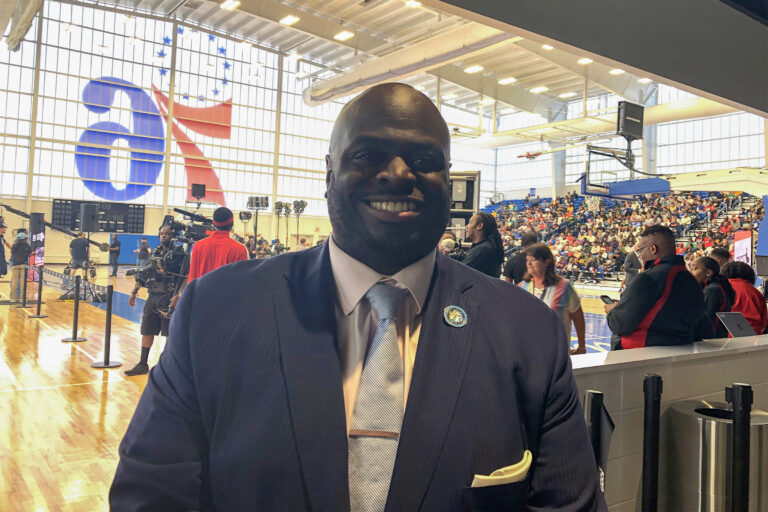
The state dropped a DUI charge against Tony Allen, president of Delaware State University. (Cris Barrish/WHYY)
What are journalists missing from the state of Delaware? What would you most like WHYY News to cover? Let us know.
When a state trooper pulled over Delaware State University President Tony Allen on the highway late one night in July, his report said Allen couldn’t keep his “swerving” SUV in one lane.
Beyond driving his electric Rivian R1S erratically on Delaware Route 1 near Smyrna, Allen had a blood alcohol level of 0.152% — almost twice the legal limit of 0.08% — on a portable breathalyzer at the scene, court records show.
So Sgt. Thomas Ford arrested Allen, a longtime ally of former President Joe Biden and a former Bank of America executive, for drunken driving.
Delaware State Police, however, didn’t announce the misdemeanor arrest of the high-profile educator, under the agency’s policy for low-level crimes. In recent years that practice has kept the public uninformed for days or weeks about misdemeanors committed by prominent government officials, including state Rep. Kevin Hensley’s drunken driving crash and then-state budget director Cerron Cade’s serial shoplifting case.
Nor did prosecutors announce the quiet resolution of Allen’s case in December. That’s when a deputy attorney general dropped the charges of drunken driving and failure to maintain a single lane, WHYY News learned last week.
Instead, the 55-year-old Allen pleaded guilty to misdemeanor reckless driving — an offense he was not charged with initially — in the Kent County Court of Common Pleas in Dover. A judge fined Allen $100 — the minimum amount he could levy and the amount prosecutors recommended. Allen paid a total of $259, including court costs.
If Allen had been convicted of drunken driving, he faced up to one year in prison, though time behind bars is not mandatory under state law. He also would have lost his driver’s license for one year and faced a fine of $500 to $1,500, plus court costs.
First-time DUI defendants in Delaware, however, opt instead for the longstanding first offender diversion program. They avoid a criminal conviction, but still lose their driver’s license for six months to a year, must take a 16-hour state-approved DUI education course, and pay several hundred dollars in fees.
But Allen avoided those outcomes.
Related Content
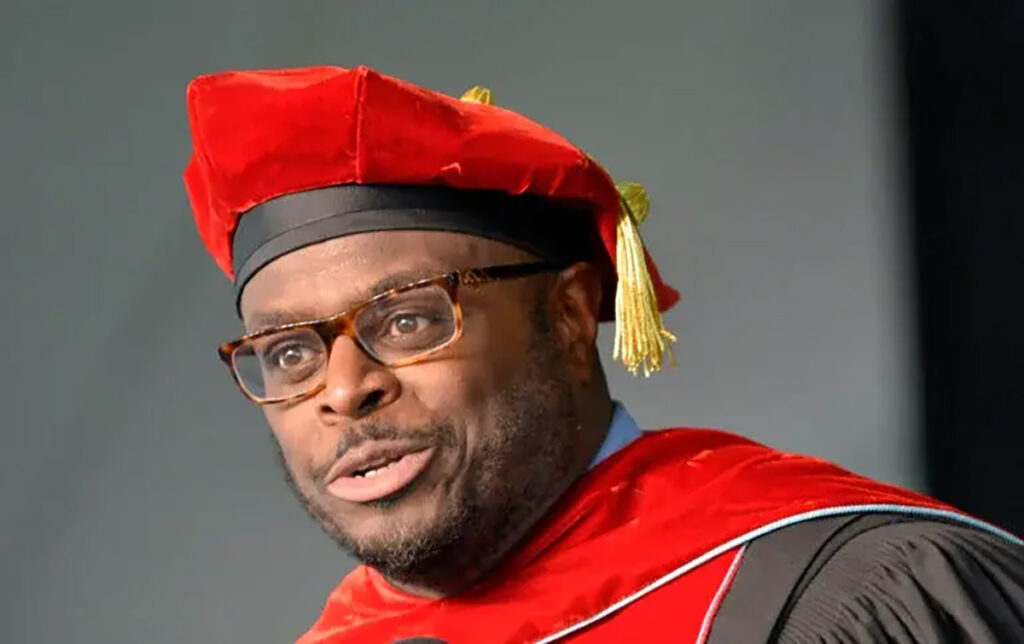
Delaware State University President Tony Allen charged with drunk driving
Tony Allen, who chaired a college advisory panel for former President Biden, was pulled over near Smyrna on July 21. He faces arraignment next month.
1 year ago
Listen 1:08DOJ cites ‘issues with traffic stop and subsequent testing’
So what happened to the DUI case against the man who since 2020 has headed Dover-based Delaware State, the state’s third-largest university with more than 6,600 students?
Attorney General Kathy Jennings and prosecutors in her office would not discuss the resolution with WHYY News.
Instead, Jennings’ spokesperson Caroline Harrison issued a statement that suggested Ford made a bad call by stopping Allen’s vehicle.
“This resolution was based in part on issues with the traffic stop and subsequent testing that could have led to a suppression of evidence and the possibility of no convictions,” Harrison wrote in a statement. She did not elaborate further.
Allen did not respond to a request for comment, and university spokesman Jonathan Starkey said his boss had nothing to say. Allen’s attorney, Michael Abram, also would not comment.
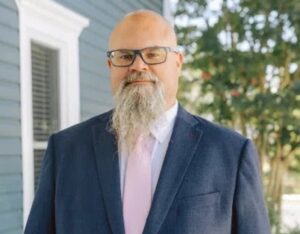
But an evidence suppression motion filed by Abram in late November — barely three weeks before Allen pleaded to the lesser offense — sheds light on what motivated Jennings’ office to dismiss the drunk driving charge and cut a deal to ensure a conviction.
The motion asked the court to throw out “all evidence obtained from the illegal arrest of [Allen] for want of reasonable suspicion and probable cause.”
The motion didn’t argue that Allen wasn’t intoxicated, noting that the trooper detected a “strong odor of alcohol” on Allen’s breath, his eyes were bloodshot and that he admitted having two drinks before getting behind the wheel.
The motion also revealed that Allen’s blood alcohol level at the scene was 0.152% after he blew into a portable breathalyzer. Allen’s level was later measured at 0.128%, after he was placed under arrest, at state police Troop 9 in Odessa.
Related Content
The Delaware Department of Justice employee hurt at least two people at the St. George’s Technical High School lot, police say. He has since been fired.
1 year ago
Listen 0:47Defense: ‘Fruits of this illegal arrest must be suppressed’
Abram argued, however, that Allen’s vehicle should not have been stopped at all.
His motion also maintained that Ford had no legal right to make the arrest on “the sole basis” of the portable breathalyzer result, notwithstanding the later “confirmatory chemical testing” at the troop.
Ford’s suspicion that the driver he was following shortly after midnight was impaired was based on the vehicle’s “swerving within his lane, deceleration, and the touching of his tires with the center line,” the defense attorney wrote.
Abram argued, however, that those facts were not enough to establish probable cause for a traffic stop, and that pulling Allen over violated his Fourth Amendment right against unreasonable search and seizure.
“Delaware courts have repeatedly found reasonable articulable suspicion lacking where a defendant’s deviation from his lane is minimal, is quickly corrected, and does not create an appreciable danger,” the motion said.
Ford also did not have the right to administer the breathalyzer test at the scene because Allen did well on verbal and field sobriety tests, Abram argued.
For example, while Allen “exhibited errors” on an alphabet test, he passed the counting and finger dexterity tests, the motion said.
During the walk and turn test, Allen “exhibited zero clues” that suggest impairment and “exhibited one clue” on the one-leg stand test, the motion said. It takes two clues to fail a test.
The trooper also conducted a test of Allen’s eye responses to check for involuntary jerking and other clues, such as the inability to track the movement smoothly.
That test requires six passes with a finger or other stimulus such as a pen with a light, but Ford only made five passes, “therefore its results are invalid and may not be used” to establish probable cause to test Allen’s blood alcohol level, Abram wrote.
Since Allen actually passed all the field sobriety tests, the blood alcohol results at the scene and Troop 9 that showed he was intoxicated can’t be used, Abram argued.
“Even considering the totality of the circumstances including [Allen’s] admission of consumption, glassy eyes, and odor of alcohol, the state has failed to demonstrate by a preponderance of the evidence that Sgt. Ford possessed probable cause” to make the arrest, the motion said.
“Absent such probable cause, the fruits of this illegal arrest, including the confirmatory chemical testing, must be suppressed.”
Motions to suppress are addressed to the court, and the judge makes the call on whether prosecutors can use the evidence or not.
But Jennings’ office didn’t even file a response to the suppression motion. Instead, prosecutors decided to drop the DUI charge and cut the deal that let Allen plead to reckless driving on Dec. 17.
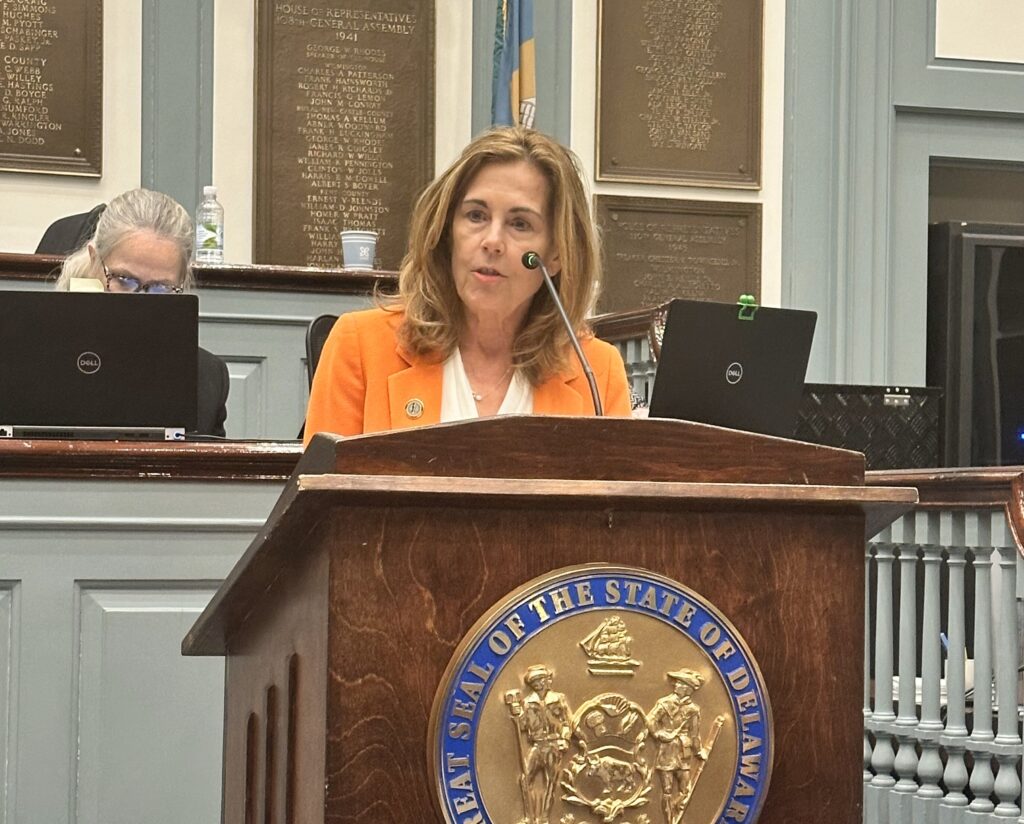
State police would not agree to an interview with WHYY News about the traffic stop, arrest and outcome but defended Ford’s actions in a statement.
“While DSP stands by our trooper’s investigation and arrest, we also acknowledge that plea bargains by the DOJ are part of the process,” wrote Cpl. Raushan Rich, a state police spokesman.
“Although this specific arrest did not result in a DUI-related conviction, troopers continuously work to improve the safety of Delaware roadways by removing impaired drivers.”

Get daily updates from WHYY News!
WHYY is your source for fact-based, in-depth journalism and information. As a nonprofit organization, we rely on financial support from readers like you. Please give today.
Part of the series
Sens. Coons, Blunt Rochester questioned the time the judge devoted to her late husband’s now-defunct ad firm and its political direction.
1 week ago
Listen 1:58
Justin Dynlacht thought his employer and health insurer didn’t provide adequate coverage for Crohn’s disease, but took his complaints way too far.
2 weeks ago
Listen 1:52
A man working for the contractor Greggo & Ferrara alleged he was called the N-word and “boy” by a white co-worker.
3 weeks ago
Listen 1:11