

‘The stuff of science fiction’: Nonhumans can continue voting in Delaware beach town after judge tosses ACLU’s challenge
State lawmakers let Fenwick Island change its charter in 2008 to permit voting by corporations, trusts and other “artificial" entities.
Listen 1:45
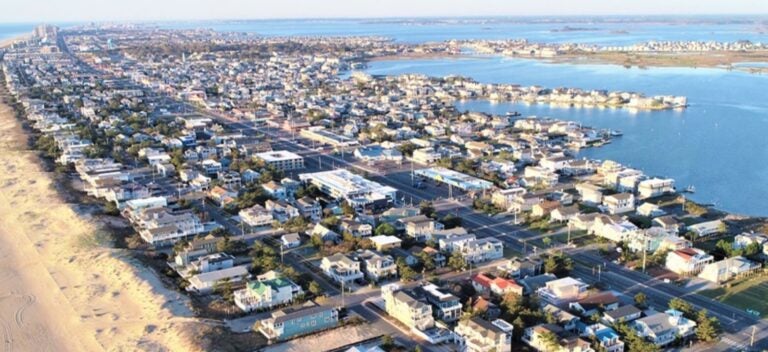
About one-fourth of the votes in Fenwick island's 2024 elections were from non-human "artificial" entities that own of the town's approximately 800 properties. (Town of Fenwick Island)
What are journalists missing from the state of Delaware? What would you most like WHYY News to cover? Let us know.
In 2024, when the Delaware beach town of Fenwick Island held its last election, about one-fourth of the votes came from an “artificial entity.”
In other words, human beings did not cast those ballots.
Instead, those 109 votes for three Town Council seats were placed on behalf of corporations, trusts, partnerships and limited liability companies, also known as LLCs.
And a Delaware judge has declined to stop it.
So what in the name of voting rights is going on in this tiny business-friendly state that has more than twice as many registered corporations — 2.1 million — as it does human residents?
Let’s go back to 2008. That’s when Fenwick Island changed its charter to permit any “artificial entity” registered in Delaware to vote in town elections if it owned any of the 800 residential and commercial properties. The Delaware General Assembly signed off on the new policy.
And with that, the town’s governing principle for elections transformed from the traditional American “one-person, one vote” rule to “one-person/entity, one vote.”
The revamped charter paved the way for legal entities that only exist on paper to become an electoral force in Fenwick Island, a town with 400 full-time residents on Delaware’s southeastern tip. As of October, a total of 214 artificial entities were registered to vote in Fenwick Island, constituting 12% of all registered voters, town records show.
But with the 2026 elections looming, the American Civil Liberties Union of Delaware has gone to Superior Court to stop corporations, partnerships, trusts and LLCs from voting. Their Superior Court lawsuit, filed in December, sought to have the practice declared unconstitutional.
“This regime unnecessarily risks the dilution of votes cast by natural persons,” the ACLU charged. “The bedrock principle of American elections is one person, one vote.”
Allowing nonhumans to vote, the lawsuit charged, violates the state constitution’s guarantee of “free and equal” elections.
But a judge tossed the case last month, granting the town’s motion to dismiss the lawsuit before the parties could even engage in discovery.
Superior Court Judge Craig Karsnitz adopted many of Fenwick’s arguments in essentially ruling that the ACLU’s case was flawed.
Karsnitz said the allegation that allowing nonhumans to vote was unconstitutional failed because the ACLU didn’t argue that it made elections “not free” and did not make a compelling case that it made town elections “not equal.”
Related Content
Delaware Gov. Meyer touts incorporation growth, but hasn’t released tax revenue data
Delaware Gov. Matt Meyer has touted a rise in business entities forming in the state, but he has not released key numbers on the growth.
6 months ago
Listen 1:07‘What is a person?’
The judge also ventured into the realm of philosophy, asking at the outset of his 19-page opinion, “What is a ‘person?’ When one cuts to the heart of this case, that is the question.”
He answered by noting that Delaware corporate law recognizes business entities as “persons,” putting them on equal footing with “natural persons” when it comes to Fenwick Island’s charter.
“Each natural person registered to vote in Fenwick gets one vote … no more or no less than any entity property owner which is registered to vote,” Karsnitz wrote.
Karsnitz also wrote that the lawsuit didn’t “allege discrimination based on race or political partisanship” or charge that the charter has “discriminatory intent to fence out natural persons.”
He also pointed out that while the ACLU’s lawsuit said the group has members and contributors in Fenwick, none were named in the lawsuit as being aggrieved by the policy.
Nor did the ACLU include other towns that allow some form of nonhuman voting, including Rehoboth Beach and Dewey Beach, in its lawsuit, the judge wrote.
Karsnitz even invoked the specter of the fictional HAL 9000 artificial intelligence computer portrayed in the 1968 movie “2001: A Space Odyssey” in his decision.
“I appreciate that plaintiff may disagree with Delaware’s policy of authorizing certain municipalities to allow voting on behalf of entity property owners,” Karsnitz wrote. “Visions of faceless large corporations or even HAL controlling a small town are frightening and the stuff of science fiction.”
Nevertheless, the ACLU “has not demonstrated that this policy violates the principle of one person/entity/one vote” as spelled out in Fenwick Island’s charter.
Fenwick Island Mayor Natalie Magdeburger, a corporate lawyer, would not agree to an interview but sent WHYY News a statement that applauded Karsnitz’s ruling in favor of the town.
“The vast majority of property owners that are legal entities are family/marital trusts that were established for estate purposes and hold title to residential properties,” Magdeburger’s statement said.
“We firmly believe our voting system is just, fair and gives everyone a voice. As a town, we believe that a property owner who pays taxes and is subject to our ordinances should have a say in who represents them on our Town Council.”
Andrew Bernstein, the ACLU lawyer in the case, said the civil rights group is weighing an appeal to the Delaware Supreme Court.
“We believe voting should be for the people, not corporations,” Bernstein told WHYY News.
“We strongly believe that allowing corporations to vote in local elections harms our democracy and dilutes the voices of voters. So over the coming days we will review the court’s decision and determine our next steps.”

Get daily updates from WHYY News!
WHYY is your source for fact-based, in-depth journalism and information. As a nonprofit organization, we rely on financial support from readers like you. Please give today.
Part of the series

Delaware was the first state to employ nonattorneys to represent tenants who earn under 200% of the federal poverty level.
13 hours ago

How Air Force enlistee in Delaware allegedly used Snapchat to recruit, rape 15-year-old girl
Authorities say the mobile app messages soon turned sexual, leading to an overnight drive to Dover and child rape charges.
4 days ago
Listen 2:17
Los tiroteos en la vía pública han disminuido, pero siguen siendo un problema persistente. El alcalde creó una oficina para coordinar los servicios.
2 weeks ago