
‘Our market’s not fully rolled out’: Delaware retail weed sales fall far short of estimates, trail New Jersey and Maryland
State officials contend the market will expand when new growers, manufacturers and retailers begin operating and prices become more competitive.
Listen 2:13

Delaware's retail marijuana sales have fallen far below original estimates as the recreational market continues to roll out. (Courtesy of The Farm)
What are journalists missing from the state of Delaware? What would you most like WHYY News to cover? Let us know.
Delaware’s new recreational marijuana market is off to a slower start than expected, with stores ringing up $29.3 million in sales in the seven months since the industry launched, state statistics provided to WHYY News show.
That’s generated about $4.4 million in tax revenue for the state, based on the state’s 15% tax on cannabis sales.
The figures fall far short of what the state’s former marijuana commissioner estimated in 2023 after lawmakers legalized cannabis for adults over 21 and created the framework for the regulated market.
Delaware’s fledgling industry also has a long way to go before it can approach the per-capita sales in neighboring New Jersey and Maryland, a WHYY News analysis found.
Sales in New Jersey started in April 2022, and in Maryland began in July 2023. So while Delaware struggled for two years to launch its retail industry, many residents became accustomed to driving across the state line to buy legal cannabis.
Delaware finally began selling recreational weed on Aug. 1 at 13 existing medical marijuana dispensaries that paid $100,000 apiece for so-called conversion licenses.
The state Office of the Marijuana Commissioner has also granted conditional licenses to 16 prospective recreational cannabis retailers, though none have yet opened. A total of 30 retail-only stores are allowed by law.
The bottom line for now is that tiny Delaware is averaging $4.2 million a month in retail sales over seven months. Projected over a full year, that would amount to a little more than $50 million in sales and $7.5 million in tax revenue.
Delaware’s first marijuana commissioner, Robert Coupe, had predicted in 2023, however, that the state would have $281 million in annual sales that would generate $42 million in taxes.
But Coupe stepped down last January as Gov. Matt Meyer was about to take office, and Josh Sanderlin replaced him.
Sanderlin told WHYY News this week that he’s satisfied with retail sales figures to date for flowers, gummies and other cannabis products.
“I’m happy with how the program’s rolling out. We are seeing steady increases across the board,” Sanderlin said.
“We are rolling out some new licensees. We’ve had cultivators and some manufacturers come online and [more] are coming online, which helps expand the product base, helping lower prices for consumers. And most importantly, right now, we are working towards trying to ensure that more retailers can come online.”

Zoë Patchell, president of the Delaware Cannabis Advocacy Network, has been critical of how long it took Delaware to open its recreational market and said she’s not surprised that sales totals are only a fraction of previous predictions.
“I think it’s obvious that when prices for the same product in neighboring competitive legal markets are considerably lower, it’s not difficult to see why consumers are less eager to patronize Delaware’s legal market,” Patchell said. “A simple Google search shows that the same product is offered for much less in neighboring competitive states as close as Maryland.”

Patchell specified prices for Betty’s Eddies, a brand of edible products licensed in several states.
A search by WHYY News found that one store in Delaware sells a five-pack of 10-milligram “Smashin’ Passion Chews” for $18 plus tax, which brings the total to $20.70.
A store in Baltimore, however, sells a 10-pack of 10-mg “Smashin’ Passion Chews” — twice as much — for $20, plus Maryland’s 12% tax, for a total of $22.40.
“So consumers aren’t stupid,” Patchell said, “and it’s easy to see what the going rate for cannabis is.”
Related Content
Delaware bill would decriminalize smoking marijuana in public
Smoking marijuana in public can lead to a criminal charge and up to five days in prison. The proposal would make it a civil violation subject to a fine.
7 months ago
Listen 1:57Delaware per-capita sales eclipsed by New Jersey, Maryland
An analysis by WHYY News shows that Delaware per-capita retail sales have a long way to go to match the numbers in much-larger New Jersey and Maryland.
Delaware has 1.06 million residents, according to the latest U.S. Census estimates. Maryland has 6.26 million residents — nearly six times more — but Maryland’s average monthly sales of $79.3 million over the six-month period ending in January was 19 times higher than Delaware’s average.
New Jersey, with 9.55 million residents, has nine times the population of Delaware, but the last available figures show its average monthly sales of $96.2 million for the six months ending in September was 23 times higher than Delaware’s average for its first month.
Sanderlin said it’s clear that bargain-seeking buyers aren’t hesitating to drive to New Jersey or Maryland. But he said prices won’t be lower in Delaware, where retailers must buy cannabis products grown, manufactured and tested in the state, until the supply increases.
To that end, he said, 47 conditional licenses have also been issued for marijuana-growing operations, and three have opened. The state has also granted another 20 conditional licenses for manufacturing cannabis products such as gummies, brownies and vape products, and one has opened.
Sanderlin said he’s optimistic that five of the 16 conditional retail-only licensees will open by the end of June, if not earlier.
“As long as we don’t have stores throughout the state, people will be looking to other states and going across borders, unfortunately,” Sanderlin said.
Related Content
Delaware retail marijuana sales tallied $625,000 over 3-day kickoff weekend
The state’s marijuana commissioner said the sales figures, which included a 15% tax, exceeded expectations. State revenue was $93,750.
1 year ago
Listen 0:56‘Our market’s not fully rolled out,’ commissioner says
Sanderlin also suggested that his predecessor’s sales projections — $23.4 million a month — were unrealistic, considering that’s more than five times greater than the current monthly average of $4.2 million.
“It’s really hard to say, looking prospectively, what a market will do,” Sanderlin said. “You’re really kind of shooting in the dark until you see it roll out. Again, our market’s not fully rolled out.”
Sanderlin said he expects that once the state has 30 retail-only stores along with the 13 shops that have conversion licenses, the combined retail and medical market will be strong.
During the seven-month period following the start of retail sales, medical users spent $43.1 million at dispensaries. That’s a projected $73.9 million a year for medical marijuana alone.
“We’re seeing a lot of folks go into the medical side as well, and we’re excited about that,” he said.
James Brobyn, who owns the Field Supply store on Kirkwood Highway near Wilmington and, until January, headed the Delaware Cannabis Industry Association, said he’s hopeful the market will continue to grow as supply increases and more retailers open their doors.
He said “sales have been good” at Field Supply, but the market has to grow “to ultimately make us more competitive against Jersey and Maryland” and have Delaware buyers shop at home.
“It really is supply dependent,” Brobyn said. “But you can’t magically increase supply to lower prices until there’s more suppliers. And that takes time. It just does.”

Brobyn noted that counties and municipalities have made it difficult for cannabis businesses to get off the ground. Many municipalities, including Middletown in New Castle County, the state’s fourth-largest town, and most beach towns in Sussex County have banned them. In addition, Sussex has created so many zoning restrictions for land outside municipal limits that cannabis advocates say it’s a total ban.
In southernmost Sussex County, retail bans have been enacted inland in towns such as Seaford, Dagsboro, Millsboro and Bridgeville, as well as the bustling beach-area towns of Rehoboth, Dewey, Lewes, Fenwick Island, Ocean View, Bethany, South Bethany and Milton.
Lawmakers passed a bill last year to loosen county restrictions, but Meyer vetoed it. The state Senate has voted to override the veto, but the House has not yet acted.
State Rep. Ed Osienski, a Newark-area Democrat who sponsored the legalization legislation that passed in 2023, said he’s hoping his chamber will also override the veto before the current General Assembly session ends June 30.
“I’m a little disappointed myself,” Osienski said of the sales totals thus far, citing the difficulty of businesses with conditional licensees to find places to grow marijuana, make products and sell the items.
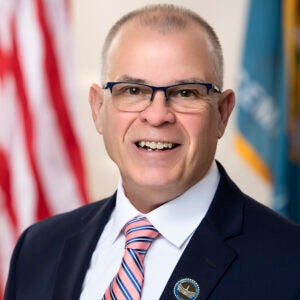
“They’re struggling, I guess, with several things, but one of the biggest obstacles is the ability to find retail and manufacturing locations in municipalities and certain counties,” Osienski said.
“It’s been a struggle for those that were lucky enough to win the lottery for a license.”

Get daily updates from WHYY News!
WHYY is your source for fact-based, in-depth journalism and information. As a nonprofit organization, we rely on financial support from readers like you. Please give today.
Part of the series
Delaware retail marijuana sales tallied $625,000 over 3-day kickoff weekend
The state’s marijuana commissioner said the sales figures, which included a 15% tax, exceeded expectations. State revenue was $93,750.
1 year ago
Listen 0:56
Recreational sales began at 12 medical weed dispensaries that paid $100,000 apiece for conversion licenses. Thirty retail-only stores are coming too.
1 year ago
Listen 1:34
The beverages that give users a buzz are also being sold in restaurants, bars, CBD stores, smoke shops and online. The budding cannabis industry wants in too.
1 year ago
Listen 2:01