
‘Severe appearance of impropriety’: Nonprofit run by Delaware senator gets millions of dollars a year from state grant, contracts
Jobs for Delaware Graduates hired Nicole Poore in 2014. Watchdog groups say lawmakers shouldn’t run agencies that get taxpayer money.
Listen 4:36
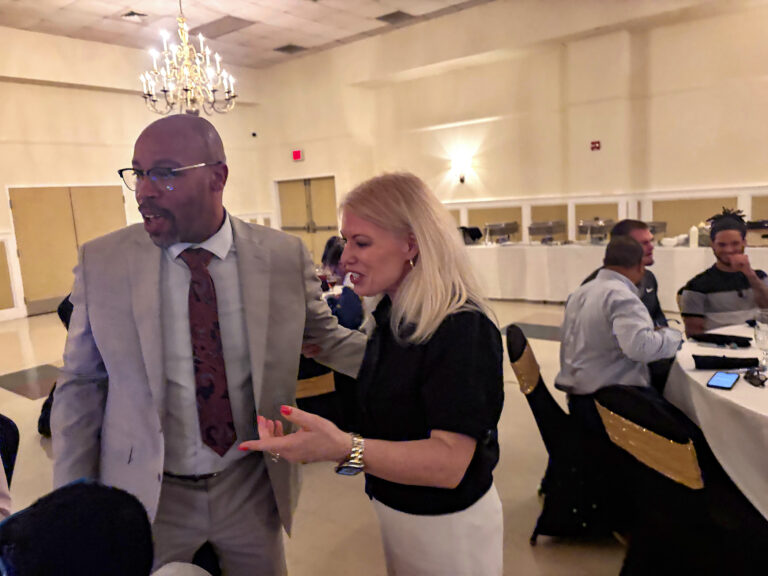
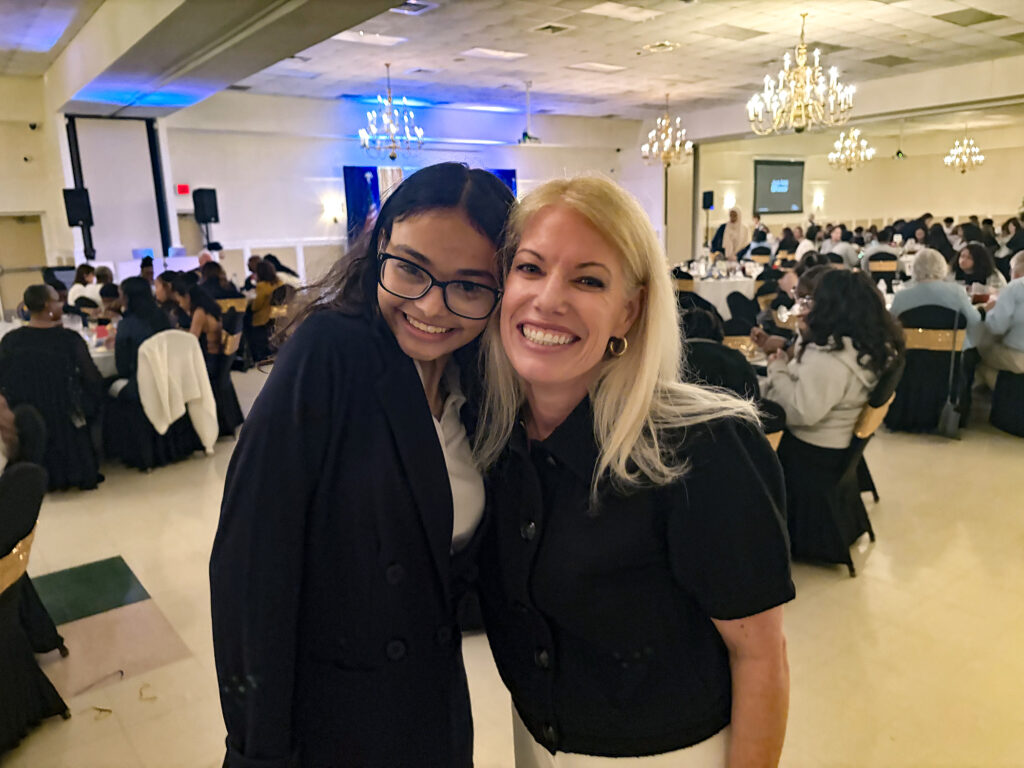
Delaware state Sen. Nicole Poore (right), with Jobs for Delaware Graduates teacher Quincy Allen, works the room at the agency's awards luncheon last week. (Cris Barrish/WHYY)
What are journalists missing from the state of Delaware? What would you most like WHYY News to cover? Let us know.
When Jobs for Delaware Graduates was seeking a new executive director in 2014, the agency wanted someone with a master’s degree who had worked in public education, had managed at a nonprofit and could build relationships with state legislators.
Having connections with lawmakers was critical for the nonprofit that relies almost solely on state funding to help students overcome barriers and pursue academic, career, personal and social success.
JDG, as the agency is known, didn’t hire a leader with an advanced degree or experience in K-12 schools, though.
The agency did, however, hire someone with the strongest of connections to the General Assembly.
JDG chose an actual legislator — first-term state Sen. Nicole Poore.
Poore had only a bachelor’s degree in criminal justice and had never worked in education. Instead, she’d held managerial jobs in the health care industry and corporate worlds, with six months at a nonprofit children’s health care facility.
But the Democrat checked perhaps the biggest qualification box for JDG — the ability to network with government officials who control the state’s purse strings.
Since joining JDG, Poore has been re-elected three times by voters in her Bear-area district. She’s been Senate majority whip and majority leader, and sat on the two so-called “money committees” that oversee how the state spends its $7 billion operating budget and billions of dollars in major construction projects.
As Poore’s clout and tenure in the Senate have grown, tens of millions of dollars have flowed from the state treasury to her agency.
Since July 2017, the state has paid $34.2 million to JDG — roughly $4 million annually — according to state financial records reviewed by WHYY News. The amount of state money to JDG grew from $3.2 million in fiscal year 2018 to $4.6 million in fiscal year 2025, the last full year for which financial records are available.
WHYY News, which reviewed state contracts, bid documents and payment data for more than a decade, found that in fiscal year 2025, JDG’s taxpayer dollars came from:
- An annual payment of exactly $1,395,197 from fellow lawmakers that’s among the top few stipends in the Grant-in-Aid bill to nonprofits and volunteer fire companies. In 2017 and 2018, Poore was on the Joint Finance Committee that allocated Grant-in-Aid money to her agency.
- Contracts worth about $2.7 million with schools and three state departments: Education, Health and Social Services, and Services for Children, Youth & Their Families. Some contracts haven’t required bidding against other vendors. Poore sits on the Senate Education and Health and Social Services committees.
- A contract that paid JDG nearly $500,000 with the Department of Labor and its affiliate, the Delaware Workforce Development Board that has Poore as a member.
The money JDG gets from the state is almost all its revenue, except for some corporate donations, according to state records and annual financial forms the tax-exempt agency files with the Internal Revenue Service.
In 2024, those taxpayer dollars allowed JDG to pay Poore $113,100 in salary and provide $15,600 in unspecified benefits, according to the IRS filing for that year. The 2025 filing is due later this year.
Poore was paid $65,500 last year as state senator, a post in which she routinely approves the state budget that includes millions of dollars for JDG.
While nothing in Delaware law prevents lawmakers from working at agencies that get state dollars or voting on bills that contain funding for their private enterprises, some government watchdogs and at least one legislator question the ethics of doing so.
They say Poore isn’t the first legislator to take such a job and secure millions in state dollars, and contend the practice illustrates the cozy, almost incestuous nature of politics and business in tiny Delaware and gives citizens reason to think the playing field isn’t level in the quest for state contracts and funding.
Poore told WHYY News she sees no conflict in her dual roles, and insisted she has never used her influence as a senator to benefit JDG or herself. She said JDG’s service to nearly 4,000 students and young adults annually and its relationships with some 250 employers speak for themselves in attracting public dollars.
“We are allowed by the legislative body” to take jobs at agencies that get state money and vote on budgets that include funding for the agency, Poore said. “Prior to me taking this job, I made sure to get an opinion from an attorney. It was not an issue then and it’s still not an issue.”
But John Flaherty, a board member of the Delaware Coalition for Open Government, condemns that practice by Poore and other lawmakers past and present as an insult to the taxpaying public.
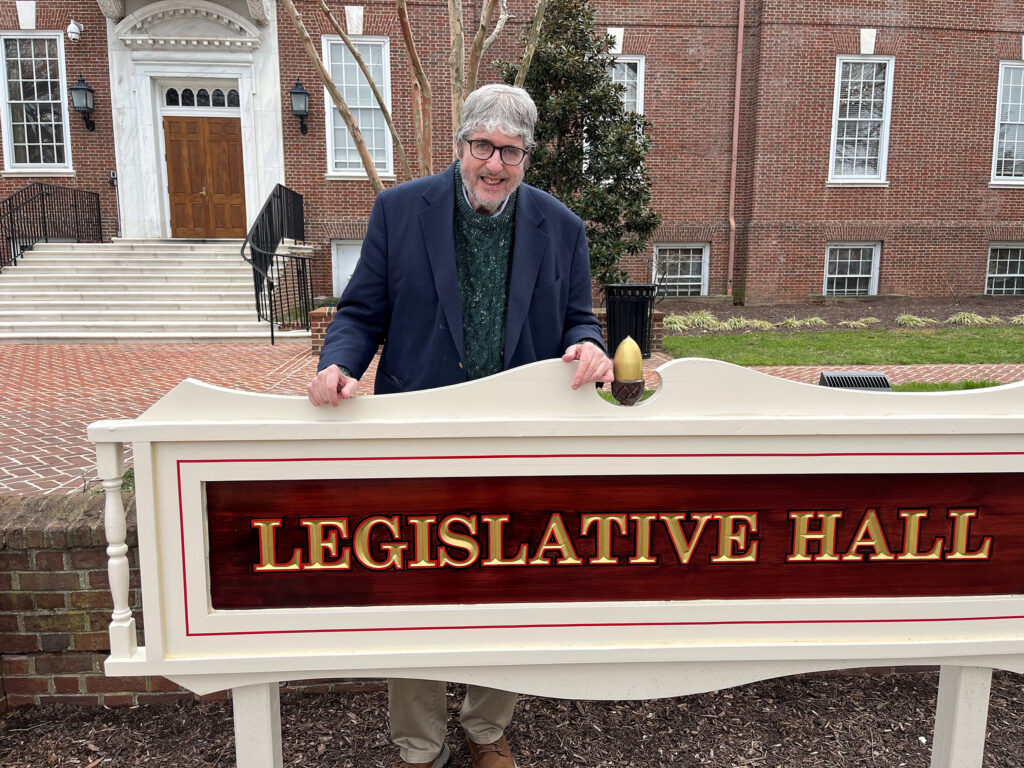
“There’s a severe appearance of impropriety,’’ Flaherty said. “Legislators get selected for these high-level positions and they become [informal] lobbyists for that organization. And then they are basically voting on the funding for that particular nonprofit. And she’s not the only one. This has been going on for some time.”
Flaherty noted that former House Speaker Valerie Longhurst, who voters ousted in the 2024 election, had long led the Police Athletic League of Delaware as it obtained millions of state dollars while she held office. Sen. Darius Brown runs the Wilmington HOPE Commission, and Rep. Krista Griffith headed the Children’s Advocacy Center of Delaware for 3 ½ years until January. All three agencies receive state money.
The nonprofit that Poore runs, however, gets far more state money every year than those other three agencies combined, WHYY News found.
Like Poore, Longhurst, Griffith and Brown are Democrats, the political party that dominates the General Assembly.

Flaherty says there should be “an absolute prohibition” against lawmakers taking jobs at agencies that get state funding, but no legislator has ever sponsored such a bill.
“If you’re not hired prior to your election, you should be prohibited from taking that position once you’re in office because then you have the advantages of being an insider to the disadvantage of others,” Flaherty said.
Flaherty said JDG is a “worthwhile organization trying to get jobs for high school graduates and I’m sure she’s doing a good job, but would she be considered for that position if she wasn’t a legislator?”
Heather Ferguson of Common Cause, a nonpartisan government watchdog group, said public trust is eroded when lawmakers have intersecting public and private roles, like Poore does.
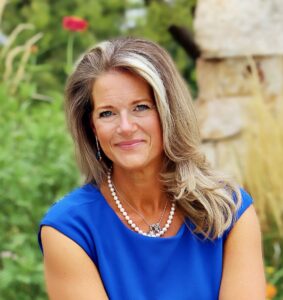
“This kind of paints a picture of a perfect example where there may be nothing nefarious going on, but there is a potential conflict of interest,” Ferguson said. “And that makes the public think, ‘Well then, if you are elected, whose interest are you up there representing exactly?’”
David Sheppard, an attorney who chairs JDG’s board, said he understands those sentiments. “It’s fine for open government folks to be concerned about the appropriate use of tax dollars in all areas of government,” Sheppard said.
But Sheppard said Poore has conducted herself properly.
“I can’t remember a single incidence where somebody asserted that she used her influence as a state legislator to facilitate funding for JDG,” Sheppard said.
Related Content

Mike Houghton was a former Delaware Economic and Financial Advisory Council chairman and longtime member before being fired Wednesday.
7 months ago
Sen. Poore: ‘Do I think there’s a conflict of interest? No, I don’t’
Though Poore didn’t meet many qualifications for the JDG job in 2014, she defended her hiring.
“I do have a master’s degree, No. 1,’’ Poore said in an interview.
Poore did earn a master’s in organizational leadership from Wilmington University, but not until 2023 — nine years after taking the JDG job.
As for not having experience in the education field, Poore said, “I’ve raised three children and we were in every type of education system that you can possibly imagine, so I think that’s one piece of it.”
Though she had worked only briefly in the nonprofit industry, the 53-year-old Poore said her work history included running a health-care staffing company with her brother and managing workforce solutions for the DuPont Co. at Agile One.
“A nonprofit, in the front end, is about saving everyone. On the back end, it’s about being a business,’’ Poore said. “What the organization was looking for was a person with the background to be able to run it like a business.”
Poore said she hasn’t leveraged her close connections with lawmakers and government officials, as JDG was seeking. Instead, Poore said she created a structure that allowed the agency to maintain contracts that have allowed JDG to put its teachers at nearly 40 schools.
“Do I think there’s a conflict of interest?” she said. “No, I don’t.”
Poore also noted that JDG’s annual Grant-in-Aid award money for the last several years — $1,395,197 — was the same in fiscal year 2015, when she was hired.
“The amount of money that Grant-in-Aid was distributing to JDG has not changed since I walked in the door, actually prior to me walking in the door,” Poore said. “We have never asked for any increases.”
In the six years before JDG hired Poore, its Grant-in-Aid award was between $223,000 and $1.06 million.
Sen. Trey Paradee, chair of the joint finance panel that decides Grant-in-Aid awards, said fellow Democrat Poore has never asked him for funding or mentioned JDG “and that’s the way it should be.”
Paradee said the program deserves the generous annual grant.
“It’s a highly regarded program and it’s been very popular and successful,” Paradee said.
State contracts paid Poore’s agency $2.7M in fiscal year 2025
Poore said all contracts with the state existed before she joined JDF, except for one with the Department of Education.
That deal, first forged in 2019 and currently worth about $500,000 a year, calls for JDG to work primarily with students to help them graduate and enter the work force.
The contract requires JDG to focus on kids with difficulties, such as disabilities, coming from low-income families, or with proficiency problems in English or math.
Poore’s agency first won the contract after the state sought proposals and since then, the deal has been modified, without any competition.
In 2023, the state budget even directed education officials to give the $500,500 contract to JDG.
In the last two budget cycles, no specific vendor was named but the department was “authorized to enter into a contract or agreement” for the services.
JDG was selected both years.
Rick Konysz, the education official who oversees JDG’s work, said there was no reason to seek out other vendors.
“They do great,’’ Konysz said. “They target youth that are vulnerable, for lack of a better word. Students feel that they can go and talk to their teacher about career and transition services.”
Konysz said Poore hasn’t tried to influence him to award the work to her agency, a sentiment voiced by officials at other departments where JDG has contracts.
At Health and Social Services, JDG currently has a $1.3 million annual contract to provide dropout prevention services to some 1,100 middle school students from families that receive federal cash assistance, child care and other similar benefits.
The contract has existed since July 2014 and was won during a bidding process that took place before JDG hired Poore, state records show. But in 2023, when the contract was due for new bids, the state issued a special waiver and let JDG continue because of its “effective system.”
Stephanie Staats, director of the Division of Social Services, said the waiver was granted because of a delay in seeking bids. In 2024, JDG won the bidding competition again and had its contract renewed for the last two years.
“They are meeting their performance metrics,’’ Staats said.
Since 2004, JDG has also had a contract with the Department of Services for Children, Youth and Their Families. The contract, which was worth $45,000 last year, doesn’t go out to bid because it’s under the state’s $150,000 threshold.
Steve Yeatman, who leads the department, said JDG works with young adults who have aged out of foster care and are living independently.
“I’m satisfied with them,’’ Yeatman said. “And there is never any pressure from Senator Poore. Zero.”
Common Cause’s Ferguson countered that subtle pressure will always exist unless bidders are anonymized.
“Whether or not there’s something untoward going on, the perception by the public would be that that legislator carries an outsized voice and influence over the selection process,” Ferguson said.
Related Content

Delaware lands $1.5M national grant to strengthen career pathways — from middle school to workforce
Rodel secures a $1.5M national grant to expand career pathways, grow dual enrollment and strengthen college and career advising statewide.
7 months ago
Listen 1:29Senator sits on board that has contract with her agency
Flaherty said another issue that smacks of impropriety is Poore’s seat on the Workforce Development Board that has a contract with JDG, worth $493,000 in fiscal year 2025.
Poore said she hasn’t voted on whether to select JDG or been part of bid review teams.
Board director John Quick said he has a good relationship with Poore and JDG, one of a handful of vendors that provide job training in schools.
“All of our providers are great,’’ Quick said. “I don’t think one is better than the other.”
Quick said Poore hasn’t tried to influence contract decisions and doesn’t see a problem with her status as a board member, state senator and leader of an agency with a board contract.
Regardless of how Poore conducts herself on the board, Flaherty said she shouldn’t serve on it while the agency has the contract.
“As long as there’s legislators on these boards and commissions, there’s going to be a lack of public trust and confidence that everything is on the up and up,” Flaherty said.
Student says JDG has ‘honestly just made me who I am’
As Poore shrugged off suggestions that her elected post and board membership constitute ethical questions, she also invited WHYY News to last month’s JDG awards luncheon.
Hip-hop music filled a ballroom at Dover’s Modern Maturity Center, where some 200 kids and 30 teachers accepted honors. Several kids greeted Poore with smiles, and one girl gave her a heartfelt embrace.
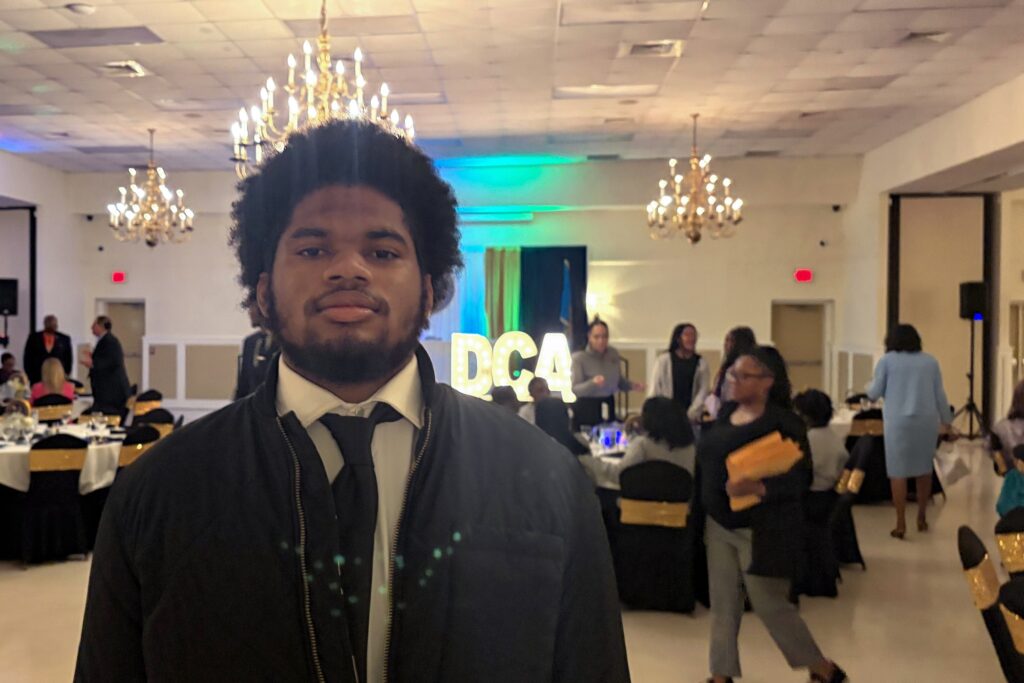
Smyrna High junior Wendell Smallwood called the program a godsend, saying he joined JDG because “I just don’t think my head was on straight.”
He’s made friendships with people he wouldn’t have known, learned communication skills, and volunteered to clean parks.
“We talk about jobs mostly, looking people in the eyes, shaking people’s hands, just everything you need to do,’’ Smallwood said.
A first-time All-State football player, Smallwood said he’s likely to play college football but it’s “not realistic” that he’ll make it to the NFL, so maybe he’ll be a physical trainer.
“I just want to still be around sports,” Smallwood said.
Elora Decker, a senior at Positive Outcomes Charter School, said JDG has “honestly just made me who I am.”
Before joining, “I wasn’t very confident and I didn’t really know what I wanted to do and now I’m so inspired,’’ Decker said.
Decker plans to attend college, but after graduation, she hopes to become a flight attendant. “Even if I don’t know exactly what I want to do, I have that sense of direction,’’ she said.
That’s the point, Poore said, to open kids’ eyes to potential careers such as banking, health care or mechanical trades.
“We want our students to know that they can forge their own pathway. We’re just going to help you along with it,” Poore said.
‘Having guardrails in place wouldn’t be a bad thing’
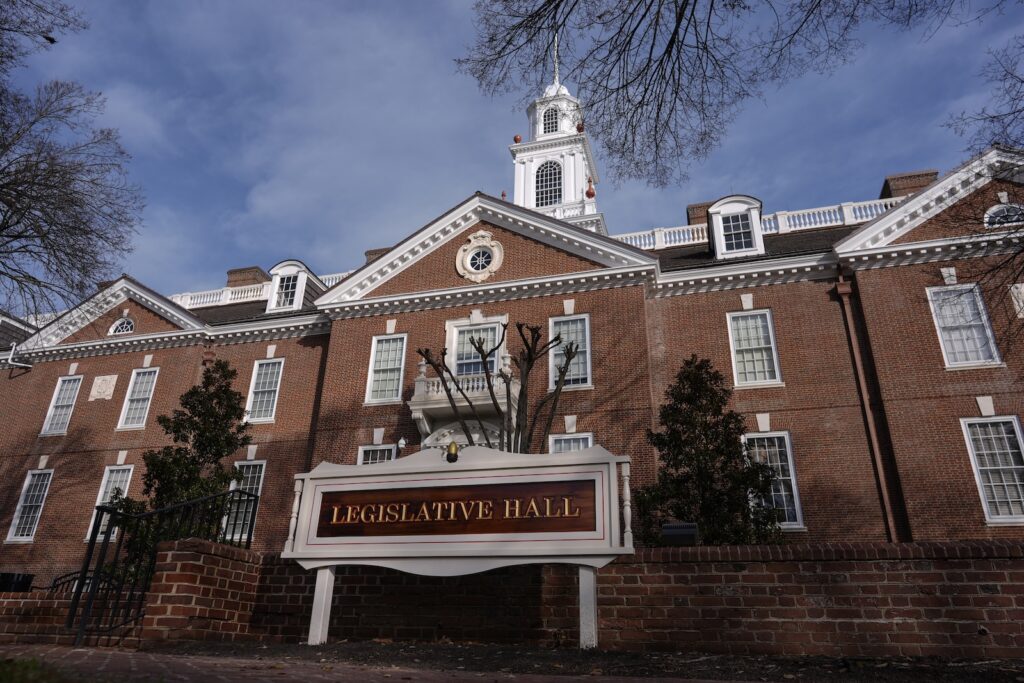
Poore’s dual employment and the fact that JDG is funded almost entirely by the state are not secrets in Legislative Hall.
But getting politicians to discuss it is another matter. Several lawmakers approached by WHYY News would not comment.
One was Rep. Kim Williams, vice-chair of the finance panel that provides JDG with its annual Grant-in-Aid award.
Another was Rep. Claire Snyder-Hall, who headed Common Cause Delaware before being elected in 2024. “I am going to pass,’’ she said by text message, without elaboration.
Williams and Snyder-Hall are Democrats.
A lawmaker who notified WHYY News that Poore was on the Workforce Development Board while her agency has a board contract also would not go on the record. The reason was fear of retaliation and ostracization, the lawmaker said.
Republican state Rep. Bryan Shupe of Milford was happy to talk, though.
“It’s a conflict of interest anytime that you are working for an organization where your job is to go after government money and then you’re also a lawmaker,” Shupe said.

Shupe had attempted in 2024 to prohibit Grant-in-Aid money to nonprofits that employ Joint Finance Committee members, but his bill didn’t even get a House hearing.
Shupe hasn’t given up hope of erecting some limits. “I think there’s a possibility to get those laws enacted as new members come in and they’re not entrenched in that sort of lifestyle,’’ Shupe said.
Paradee said banning lawmakers from taking jobs with nonprofits that receive state money is too extreme, but he would entertain restrictions.
“Every situation is truly unique,” Paradee said, “but having some guardrails in place wouldn’t be a bad thing.”
Editor’s note: WHYY receives grant-in-aid funding from the state of Delaware.
This story has been updated to clarify Sen. Poore’s experience working at a nonprofit children’s health care facility.

Get daily updates from WHYY News!
WHYY is your source for fact-based, in-depth journalism and information. As a nonprofit organization, we rely on financial support from readers like you. Please give today.
Part of the series

Delaware recently implemented 2 land-use laws. Here’s what they mean for affordable housing
House Bill 450 and Senate Bill 23 both require Delaware counties and local governments to make changes in the way they approve developments.
4 days ago
Listen 1:02
All of the bill sponsors said they worked with the governor’s office on the legislation and did not anticipate a veto.
1 week ago
Listen 0:53
A tax credit for film and other productions that spend $100,000 in Delaware is designed to draw Hollywood to the First State.
1 week ago
Listen 1:12