

‘There’s no compassion, there’s no empathy’: Delaware police’s human trafficking unit cracks down on massage parlors, aids victims
The women are brought to the U.S. with the promise of jobs but end up trapped in seedy salons, forced to perform sexual acts and are unable to leave.

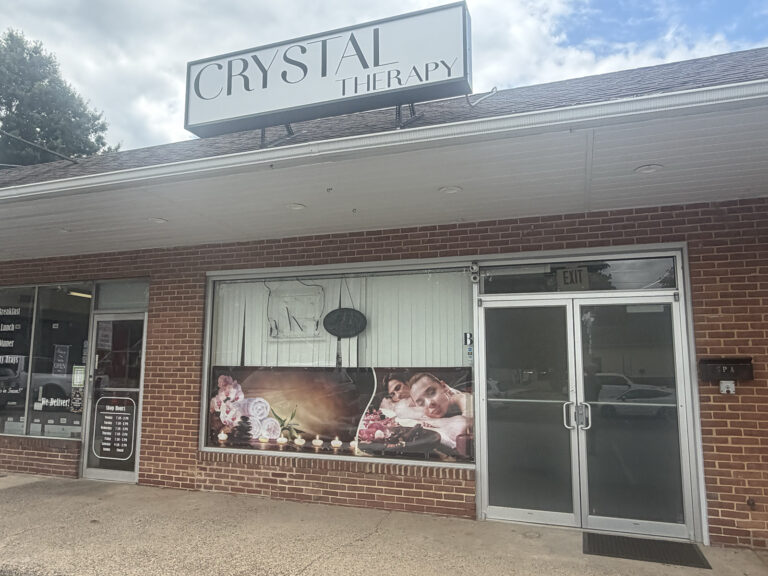
Members of the Human Trafficking Investigations Team said they found red condoms in a drop ceiling and a fake peanut butter jar at Crystal Therapy in Brandywine Hundred. (Cris Barrish/WHYY)
What are journalists missing from the state of Delaware? What would you most like WHYY News to cover? Let us know.
When police raided a massage “therapy” spa in suburban Wilmington in July, officers said they found more than 100 red condoms inside a drop ceiling and a fake jar of peanut butter.
Up in the ceiling, officers said they also discovered $16,000 in cash hidden in the lining of suitcases.
According to police, two male customers and four female employees, including the manager, were inside the Crystal Spa, located between a sub shop and smoke shop on Foulk Road, along an affluent stretch of Brandywine Hundred.
The men admitted they were there for sex, court records state. The three employees who serviced customers gave different accounts of their jobs, but according to court records, all told detectives they had been at Crystal Therapy for several weeks and had not left once, eating all their meals there and sleeping in makeshift beds.
But one employee allegedly admitted what undercover officers had already determined: along with massages the workers also offered sex acts for up to $200 extra.
The women, who police say didn’t have licenses as massage therapists, allegedly worked 12-hour shifts, seven days a week. According to court records, one employee said they lived under the strict orders of the manager, known as the mamasan, who “cooks, cleans and yells at them,” and tells them where to get and dispose of the red condoms.
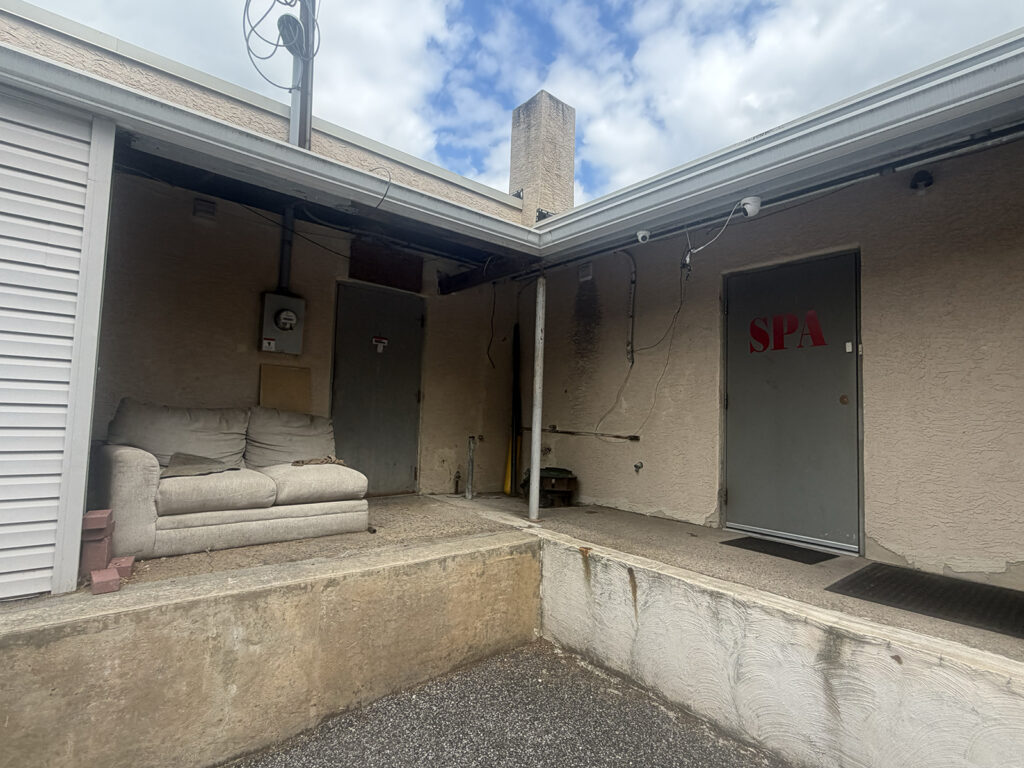
That sordid scene detailed in court records was one of several similar ones the New Castle County Police Department’s Human Trafficking Investigations Team has reported encountering in recent months. Created last year to target what law enforcement authorities and victim advocates agree is a persistent and growing problem, the unit has been focusing on what they call “illicit massage businesses.”
Related Content
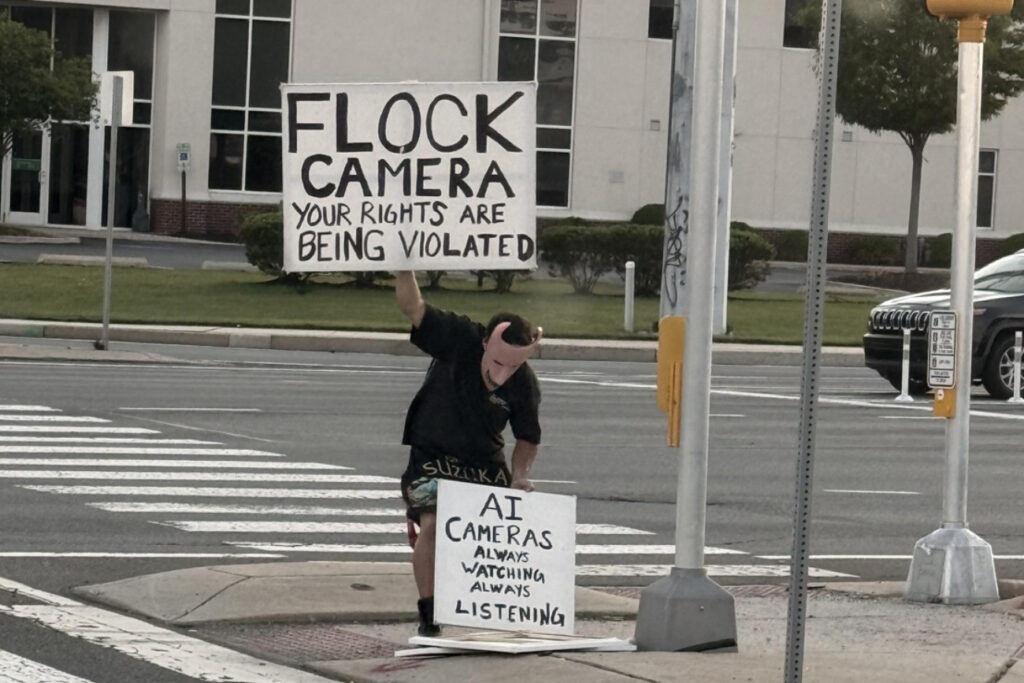
Foes decry them as warrantless mass surveillance but 20 police agencies statewide use them. The ACLU says “Get the Flock Out.”
3 months ago
Listen 3:12Since July 2025, officers have targeted eight parlors that allegedly operated as prostitution rings, arresting 13 people who run or own the businesses, as detailed in court records of the criminal prosecutions, which remain pending.
The owner of Crystal Spa, Meilan Quan, faces five counts of human trafficking, for alleged forced labor and sexual servitude. Officers found two gallon ziplock bags at her home that were filled with the same red condoms found at the business, court records state. Quan’s arrest marks the first case that led to the felony charge that’s punishable by up to 15 years in prison.
Nan Son Yim, a 71-year-old woman who police claim served as the mamasan, was arrested the week prior.
The other suspects, who were arrested at locations in Hockessin, Claymont, near Newark and elsewhere around the county, have been charged with offenses such as promoting prostitution, wage theft, conspiracy, criminal nuisance and even felony money laundering.
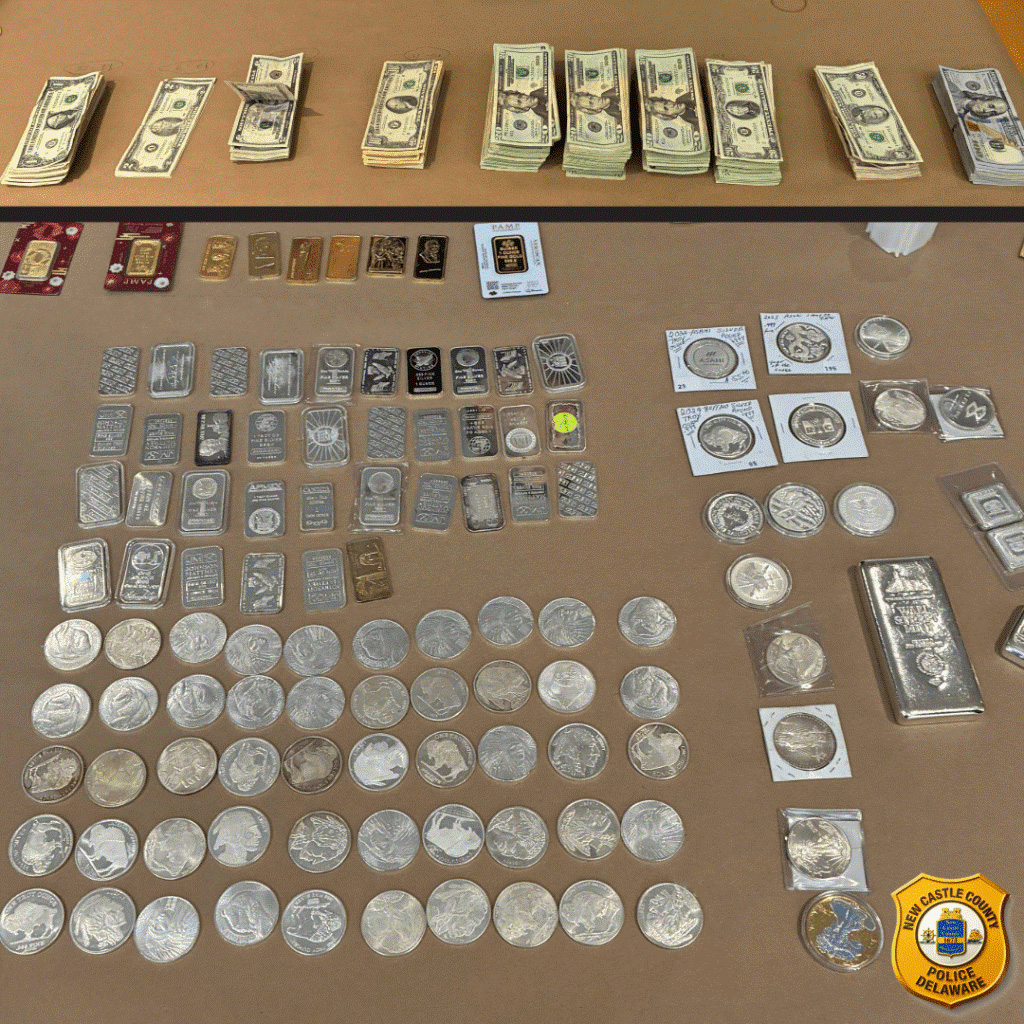
While searching the home of the owner of the Moon Spa Relax Center near Newark, officers found $25,000 in cash and $60,000 worth of gold and silver bars and coins, court records state. Police say they also seized jewelry and a handgun.
The operators of Wellness Tui-Na in Hockessin allegedly took the establishment’s revenues to the Delaware Park casino on a regular basis. They’d play cards in an attempt to convert the money from the prostitution business into gambling proceeds, police said.
Almost all of the operators arrested were Asian women, and at least one has been detained for potential deportation, court records show. Several men have been arrested and charged with patronizing a prostitute.
But beyond trying to hold the operators and customers accountable, the investigations unit’s goal is to rescue women who are essentially held against their will and forced to engage in prostitution.
The women identified as possible trafficking victims aren’t arrested. Instead, they’re offered services such as transportation and referrals to housing options or substance abuse treatment. While some haven’t accepted the offer of assistance or acknowledged they were involved in illegal activity, 12 women have been provided resources since the unit was formed, including the three workers at Crystal Spa, police said.
Master Cpl. Richard Chambers said human trafficking is nothing new, but detectives in drug and other investigations kept finding suspected victims, so the administration decided to commit resources to stemming the illicit practice in Delaware’s largest county, where 588,000 people live.
“We were seeing that there’s a bigger picture out there,” Chambers said. “We have started focusing on finding out where these victims are coming from, how they’re getting here and why they’re here. Obviously they’re coming from Asian countries. They’re forced to work very long hours and paid hardly anything, if anything. And it’s very disturbing.”
Related Content

The ACLU of Delaware is asking state leaders to establish statewide rules governing when police can assist ICE and share information.
3 months ago
Listen 1:25‘They have no outside communication with anybody’
Sara Poore, who heads the Delaware Anti-Trafficking Action Council, elaborated on that bleak picture.
Most women at the illicit massage businesses in Delaware and across the country are middle-aged and hail from rural villages in China, South Korea or other parts of Asia, Poore said. They either speak English poorly or not at all.
Recruiters for the criminal enterprises lure the women to America with the promise of work to support their families, Poore said.
She said some of the trafficked women think they’re going to work as housekeepers or at other labor-intensive jobs, or in the case of one woman rescued in Delaware recently, as a yoga instructor, her profession in China.
The women who are trafficked to the East Coast are flown overseas into Philadelphia or New York, and are taken to Flushing, New York, which Poore calls the “criminal hub” of the illicit massage business network. Then they’re assessed by members of the trafficking organization and transported, often by bus, to degrading houses of prostitution in Delaware and elsewhere, Poore said.
Poore, who is a state employee and often accompanies county police on the raids, described the conditions she saw at one place during a raid.
“The women were bathing out of a plastic storage container, like you would put Christmas decorations in. They had a hose running into it,” she said. “And this is the bathroom the men are using too.
“The massage tables are literally like one sheet of wood that have blankets and stuff piled on top of them,” she said. “The women have to sleep there. They’re typically not allowed to leave at all. So they have no outside communication with anybody except what’s going on in there and what their quota is.”
The women are moved around every few weeks, Poore said, in large part to keep them unmoored.
“Not only does it keep them completely confused about their surroundings and with no idea how they would even remotely escape, but it’s harder for law enforcement to track,” Poore said. “And a lot of times their documents are taken from them. They have no idea what our laws are. It’s all mind games and manipulation.”
Many of the brothels have video cameras — which can be viewed remotely by members of the crime ring from offices in Flushing — of the lobby, entrances or exits, Poore said. The purpose, she said, is to monitor who comes and goes.
Poore also said the owners are quick to close and reopen under different names, often in a matter of days.
Chambers lamented the trafficked women’s plight, saying they are not to blame.
“It’s a shame,” he said. “They’re here and they’re not making any money. They’re victims is what they are.”
Related Content

‘An absolute ton of cocaine’: Inside the largest drug trafficking case prosecuted in Delaware
Brahmanad Prasad cultivated the image of a wealthy businessman, gambler and day trader. A Delaware barroom boast led to his downfall.
4 months ago
Listen 2:27Typical customer is middle-aged white man with good salary
The average customer, according to Poore and arrest records, is a white married man in his 40s with an annual income between $80,000 and $100,000.
Poore said sometimes they are rough with the women and refer to them with callous disregard while sharing their experiences on online forums.
“One guy was like, ‘It never matters how busy I am. They always get me off in a reasonable amount of time. I come here twice a month,’” Poore said. “They review it like they’re eating a cheeseburger. There’s no compassion, there’s no empathy.”
Chambers, with a pointed message for the men who patronize the illicit parlors, said don’t be surprised if detectives burst into the room and arrest you.
“You’re committing a crime is what you’re doing,” he said. “We have victims here that are trafficked from across seas, from other countries and you’re not helping the situation.”
To those who are running the illicit shops, Chambers said they should expect to face a battery of charges, up to human trafficking.
“If people are not stopping,” he said, “you’ll be hearing from our detectives.”
State Rep. Kim Williams, a Newark-area Democrat who has helped lead the effort to strengthen laws around human trafficking, applauded the new unit and its mission.
“When people are forced to sell their bodies for someone else to make a profit and they use money or food or drugs [to detain them]. it is horrific and people should go to jail for a long time when they do this,” she said.
The county police have a human trafficking hotline that anyone can call for help or to report information 24 hours a day. The number is 302-295-2727.

Never miss a moment with the WHYY Listen App!


WHYY is your source for fact-based, in-depth journalism and information. As a nonprofit organization, we rely on financial support from readers like you. Please give today.
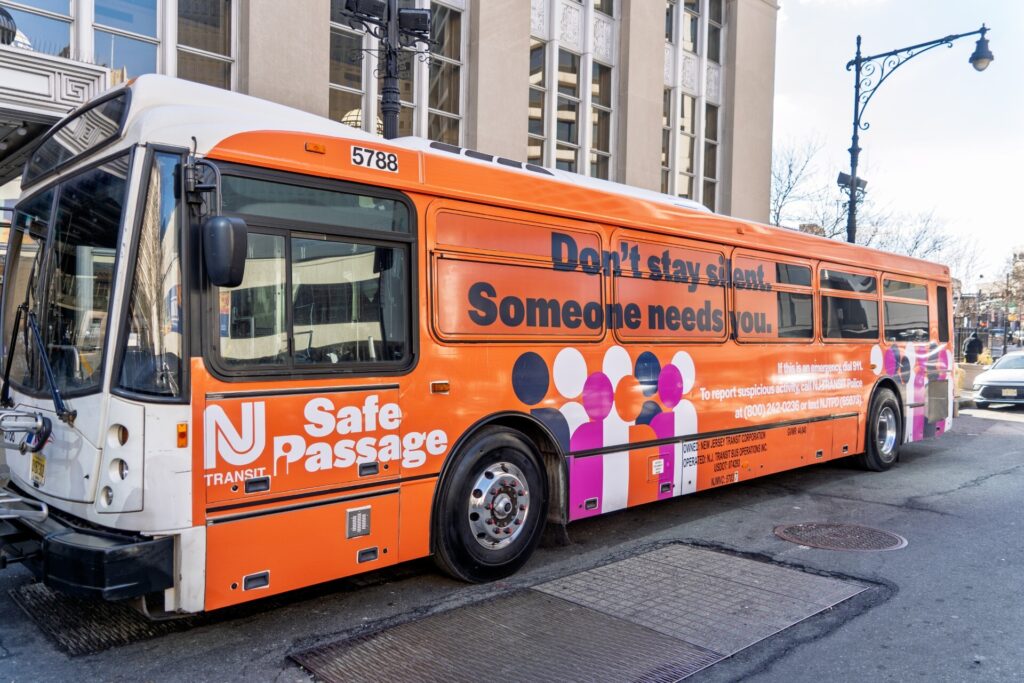
NJ Transit launches a campaign raising awareness about human trafficking ahead of the World Cup
The campaign features messaging and ads on billboards, transit shelters and at stations emphasizing vigilance and help options for victims.
9 months ago
Listen 1:17
The eviction order was for a previous tenant, but a state court said the landlord “weaponized” the process to remove the Murphy family.
12 months ago
Listen 2:26
Uncertainty looms over New Castle County property tax bills, pending outcome of lawsuit over rates
New Castle County landlords claim a new law allowing school districts to raise tax rates on commercial properties will cause them irreparable harm.
1 year ago
Listen 1:00