‘An absolute ton of cocaine’: Inside the largest drug trafficking case prosecuted in Delaware
Brahmanad Prasad cultivated the image of a wealthy businessman, gambler and day trader. A Delaware barroom boast led to his downfall.
Listen 2:27
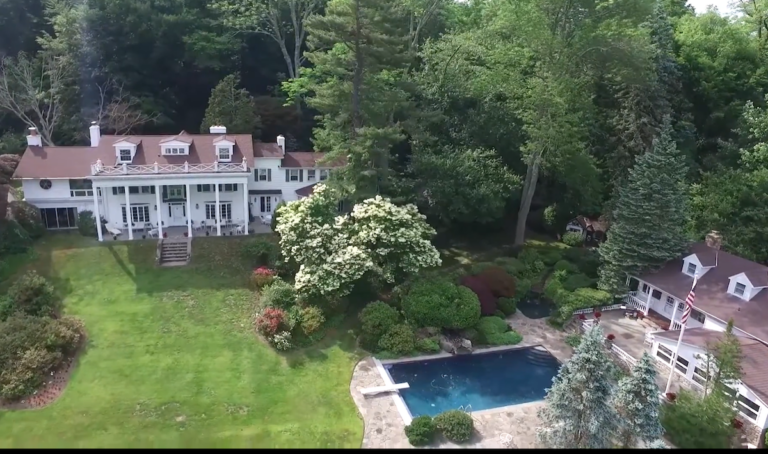
Brahmananda Prasad owned this sprawling Long Island estate. (Youtube)
What are journalists missing from the state of Delaware? What would you most like WHYY News to cover? Let us know.
Brahmananda Prasad drove a $242,000 Ferrari, the jewel of his fleet of luxury vehicles. He owned a $2.5 million estate tucked into Long Island’s woodlands. He took his family on lavish vacations to St. Maarten, Istanbul, the Mexican Riviera and other exotic destinations.
Prasad, now 65, told everybody he paid for his extravagant lifestyle by being a savvy entrepreneur and wheeler and dealer who over the years owned a jewelry store, truck stop, Manhattan hip-hop club, shipping service and other ventures.
In recent years, Prasad claimed that he even made a killing by trading stocks online and competing in poker and blackjack tournaments.
In reality, though, Prasad’s life as a legitimate, successful businessman ended long ago and he actually lost big bucks at the casinos and while day trading, court records show. Instead, he used his company, Rishi’s Pack and Ship, for one reason alone: running an ultra-lucrative, coast-to-coast drug trafficking operation.
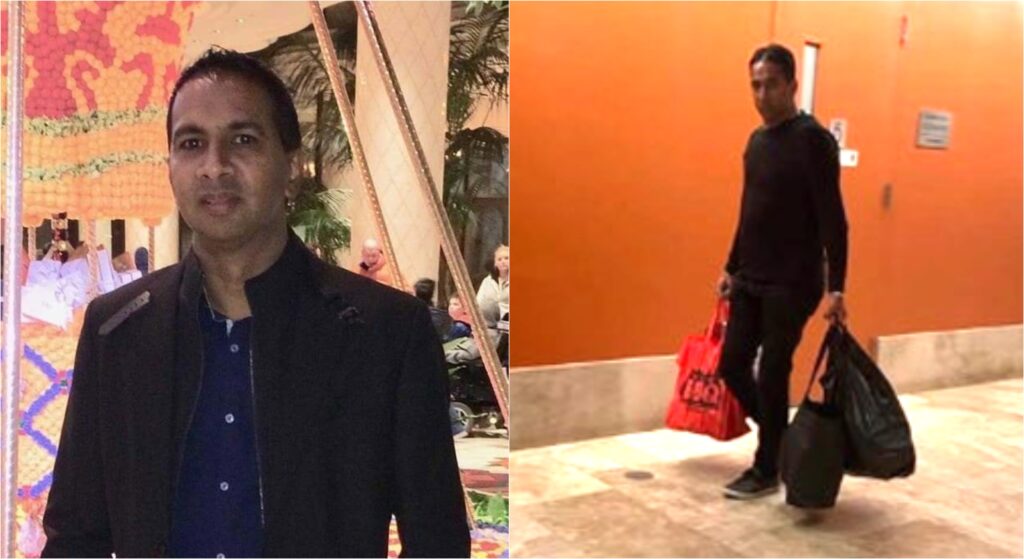
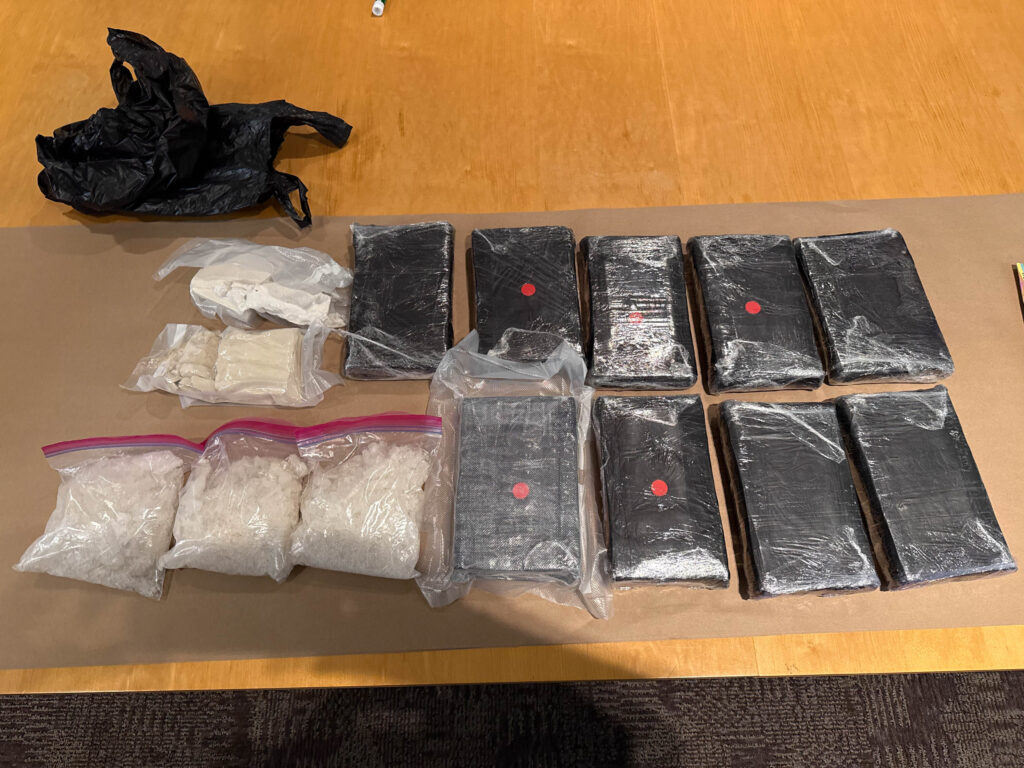
Prasad has admitted in U.S. District Court in Delaware to shipping 117 kilograms, or 257.4 pounds, of cocaine bricks from Los Angeles to New York over eight months ending in February 2024.
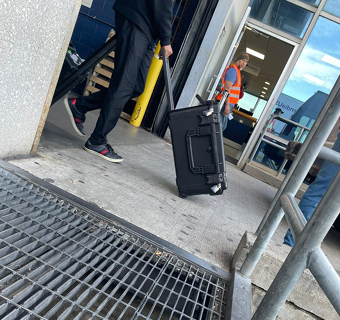
Prasad packed the drugs into hard-shell Pelican cases commonly used to protect photography equipment, and had them flown to John F. Kennedy International Airport. Then he sold multiple kilograms to dealers whose networks covered New York, New Jersey, Delaware, Maryland and elsewhere on the East Coast, court records show.
Federal prosecutors in Delaware, however, say Prasad’s cocaine empire was much larger, and that over three years he actually trafficked at least 956 kilograms — more than a ton of cocaine.
U.S. District Judge Maryellen Norieka affirmed the 956-kilogram quantity when she sentenced Prasad in late May to 23 years behind bars and five years of supervised release, and issued a preliminary forfeiture order against him for $2.5 million. Last week, Prasad filed notice in the 3rd U.S. Circuit Court of Appeals that he’s contesting the sentence.
WHYY News combed through thousands of pages of U.S. District Court documents to piece together how the largest cocaine trafficking case ever prosecuted in Delaware worked, how Prasad was able to shield it from authorities for so long and how investigators — alerted by a bar room boast — unraveled his operation and brought him down.
Even though he pleaded guilty, Prasad insisted in court that he wasn’t a kingpin and only shipped the drugs because he “felt threatened” by two New York dealers who pressured him to be their cocaine supplier in 2022.
Prasad’s attorney, Matthew Myers of New York City, did not respond to a request for comment on the case.
Prosecutors Jennifer Welsh and Carly Hudson told WHYY News that the 956-kilogram figure attributed to Prasad is actually a lowball estimate of his total shipments.
That amount was calculated from Rishi’s shipping records and weights of the packages, and 53 roundtrip flights he made between New York and California. Most were same-day trips completed between February 2021 and his February 2024 arrest. They pointed out, however, that when Prasad was arrested, he told agents he began trafficking cocaine in 2020.
“The number is likely much higher. That was a conservative estimate of how much cocaine he’s moved,” Welsh said of the 956-kilogram calculation.
Despite admitting to personally buying, shipping and then selling at least 117 kilograms, a massive amount in itself, “somehow Mr. Prasad refuses to admit that he was a drug dealer,” Welsh said. “He likes for other terms to be used, like he ‘facilitated the transfer of cocaine,’ as opposed to the truth.
“You can call it what you want, but if you get on a plane with suitcases full of money and fly over to California and trade that money for drugs and fly back and then sell the cocaine to customers, you’re a drug dealer. It’s an absolute ton of cocaine.”
‘Big-time’ dealer overheard bragging in Delaware bar
The investigation that led to Prasad’s downfall began in October 2022 at a Delaware watering hole.
“This whole case actually started with somebody bragging at a bar that they were a big-time cocaine trafficker,” said Hudson, criminal chief at the Delaware U.S. Attorney’s Office. “And a concerned citizen sitting a few barstools down overheard this and reported it to law enforcement.”
Hudson wouldn’t name the bar, only saying that it was in New Castle County. She said state police shared the tip with the Department of Homeland Security.
Investigators soon identified “a cluster of men distributing cocaine in the Maryland and Delaware area,” Hudson said. Electronic surveillance of one Maryland man found he was “routinely driving to the same seemingly random parking lot in East Windsor, New Jersey, where he would stay for just a few minutes and then drive back down.”
So in June 2023, agents followed the man and a partner, who were driving separate cars. Once again, the destination was the same shopping center parking lot, where the suspected Maryland dealer approached a parked Jeep with a man inside, Hudson said.
“That man was Brahmananda Prasad,” Hudson said. “They exchanged the bags, drove their separate ways, with Prasad heading north toward New York and the two Maryland men heading back south.”
Delaware state police stopped the car with the drugs on I-95 in Delaware and seized 8 kilograms.
“And that was how we learned that Mr. Prasad was a major supplier for this cohort we had identified,” Hudson said.
Related Content
‘They are dealing poison’: Delaware authorities intensify crackdown on fentanyl dealers
The Trump administration declared the ultra-potent opioid a “weapon of mass destruction” in December. Delaware is prosecuting plenty of cases.
6 months ago
Listen 1:26Authorities monitor nearly a dozen coast-to-coast shipments
Federal agents learned that Prasad had several properties, including the 5-acre estate in Long Island’s Oyster Bay area that has a pool, ice cream parlor, wine cellar and library.
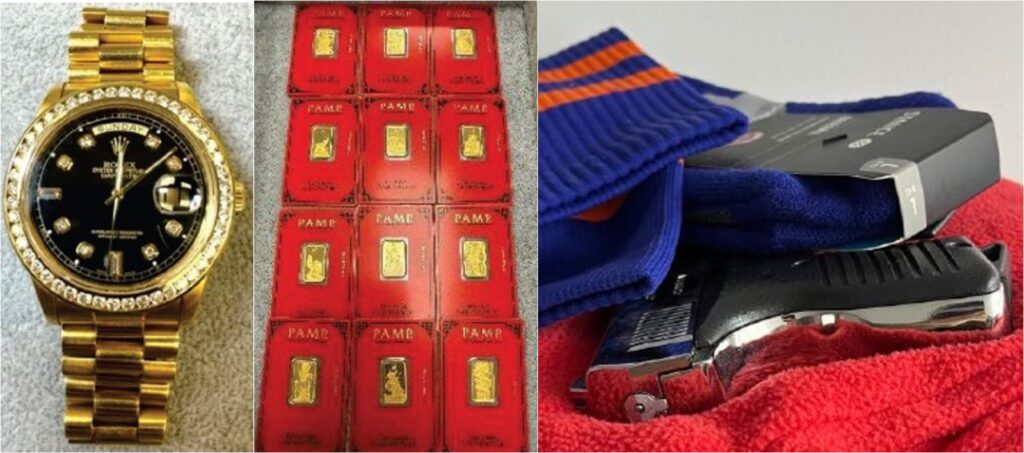
However, Prasad lived in a luxury high-rise apartment in New York City, where he stored the cocaine and often stashed more than $250,000 in cash. He also kept more than a dozen Rolexes there, along with other pricey watches, gold bars and a loaded handgun.
Authorities began electronic surveillance of Prasad and put a wiretap on his phones. Prosecutors said he frequently flew on American Airlines to Los Angeles International Airport with two black Pelican cases that are about the size of an overhead luggage bag. Hudson said authorities believed the cases were packed with cash.
Prasad would drive to the San Diego area to meet one of a handful of his cocaine connections in a hotel room or a warehouse, prosecutors said. He’d usually pay about $12,000 per kilogram and pack the bricks into the Pelican cases.
He’d return to the airport later that day, and leave the black cases loaded with up to 24 kilograms, or 52.8 pounds, at Delta Cargo, run by Delta Airlines, then fly back to JFK.
Prasad had two people — a relative, and a personal driver who also sold cocaine — deal with Delta Cargo, posing as employees of Rishi’s Pack and Ship. He even had help from a worker at Delta Cargo’s complex in JFK who monitored the packages.
Back in New York, Prasad then sold the cocaine for roughly $15,500 a kilogram to a select group of bulk customers, including the Maryland man who was not charged in this investigation. Others connected to Prasad, including one supplier in California, are now serving prison sentences.
After one transaction with a customer, surveillance cameras captured Prasad carrying three shopping bags, which authorities say held cash, through his apartment building.
Authorities watched Prasad operate for several months, encompassing nearly a dozen trips to and from California, before arresting him in New York and seizing the 24 kilograms in his cases.
While in custody and in handcuffs, Prasad admitted that he’d been trafficking cocaine coast to coast since 2020 and had previously moved marijuana in bulk, investigators later said in testimony in U.S. District Court.
A federal grand jury indicted Prasad in March 2024 on a charge of conspiring to distribute at least 5 kilograms of cocaine, a felony punishable by a minimum of 10 years in prison.
The indictment also sought forfeiture of the Oyster Bay home and two other properties, plus the cash and jewelry that agents seized, and several vehicles.
One was a gray 2014 Ferrari 458 Italia Spider supercar that has a top speed of nearly 200 mph. Another was a $112,000 orange Dodge Challenger SRT Super Stock limited edition muscle car.

‘I never conspired’
Prasad initially fought the charges, but faced with overwhelming evidence, he pleaded guilty in September 2025.
Although he admitted in court to being a large-scale dealer, Prasad later contended in court papers and during a January evidentiary hearing that he only made $500 per kilogram and that he had significant income from gambling and day trading over the last few years.
Authorities countered with evidence that his profit was usually $3,500 per kilogram. Prosecutor Michelle Thurstlic-O’Neill also produced financial records from casinos and his brokerage firm, which showed more losses than wins.
Prosecutors also showed that his shipping business had no internet presence and showed no signs of doing anything but moving drugs.
More confounding to prosecutors, though, was Prasad’s continued insistence, despite ample evidence to the contrary, that he was pressured into shipping drugs for others starting in 2023, about the same time agents began investigating him.
“I felt threatened because they said, ‘You know, we really could use your service. We’re having problems. You do the shipment,’” Prasad testified. “And they way they said it, it was like threatening to my kids and my grandkids.”
That claim is nonsense, prosecutors countered, citing the shipment records and Prasad’s previous admission that he transitioned from marijuana to cocaine in 2020.
“He was insistent that he would only plead guilty to the timeframe where we captured his own voice on the wire,” Hudson said. “He could not escape the sound of his own voice.”
Prasad even disputed his own guilty plea to conspiracy to distribute at least 5 kilograms of cocaine.
“I never conspired. I never sat down with anybody and said, ‘Hey, let’s go into dealing cocaine’ or doing anything like that,” he testified.
At one point during the January hearing, Judge Noreika was clearly exasperated by the defendant’s insistence that he hadn’t previously admitted to the conspiracy.
“What’s the dispute? He’s just talking. He doesn’t like that he pleaded guilty to this,” Norieka said, addressing the lawyers. “Can someone help me, because this is just ridiculous?”
While Welsh and Hudson sought a life sentence for Prasad, he begged for mercy in a lengthy, impassioned letter.
Prasad took responsibility for running cocaine and cited his own downward spiral into drug use that began in 2010 when his 26-year-old son was stabbed to death outside a Manhattan nightclub.
“I am not a bad person. I just made some bad choices,” Prasad wrote. “My bad choices has cast a negative shadow on the good and productive life I had lived. I let the tragedies that happened in my life change the person I was. I was not strong enough. … I chose to deal with my grief by myself and made some really bad decisions. Decisions that ruined my life.”
Hudson said Prasad never showed any remorse for the lives and families he helped destroy by selling more than a ton of cocaine so he could live the good life.
“That lifestyle contrasts starkly with the reality of what his drug trafficking did in communities in Delaware and elsewhere. Cocaine absolutely ravages addicts and their families,” Hudson said.
“Mr. Prasad is a man who lived in a high-rise in New York, and his suppliers are men who lived in California. Those people, to my knowledge, never set foot in Delaware before they were brought here to face these charges, and it would be all too easy for them to sit in their nice homes in major cities, living lavish lifestyles, never thinking about the impact of their behavior.”
Welsh said Prasad took what he thought was the easiest route to riches.
“It’s difficult to build a legitimate business and a legitimate life for yourself that creates a legacy for your family,” Welsh said.
“But if you take a shortcut and do it the wrong way, then all of the spoils that you’ve earned, the cars and the lifestyle and the beautiful home can be taken away from you because you’ve built it on a criminal foundation.”

Get daily updates from WHYY News!
WHYY is your source for fact-based, in-depth journalism and information. As a nonprofit organization, we rely on financial support from readers like you. Please give today.
Part of the series
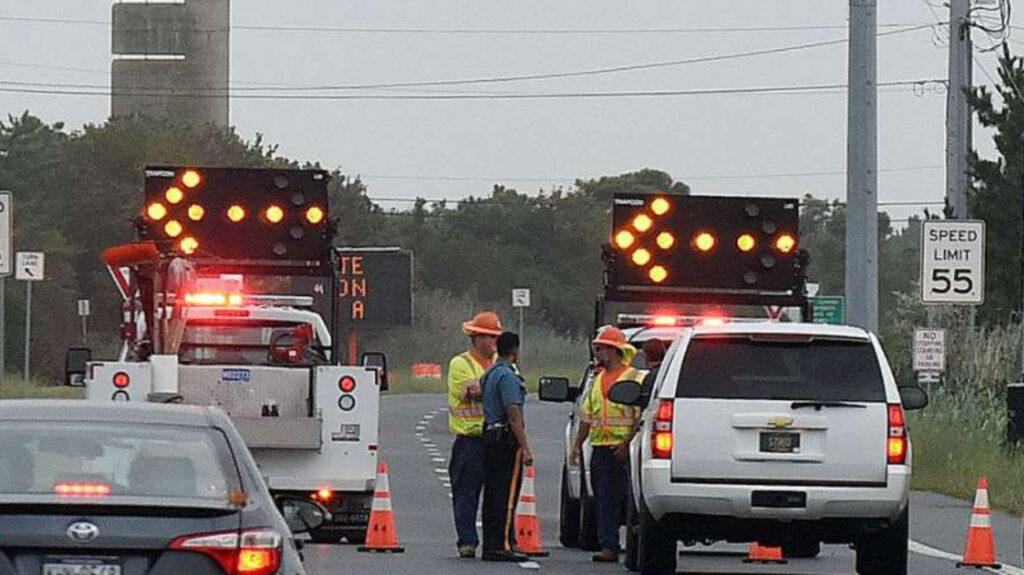
A man working for the contractor Greggo & Ferrara alleged he was called the N-word and “boy” by a white co-worker.
1 day ago
Listen 1:11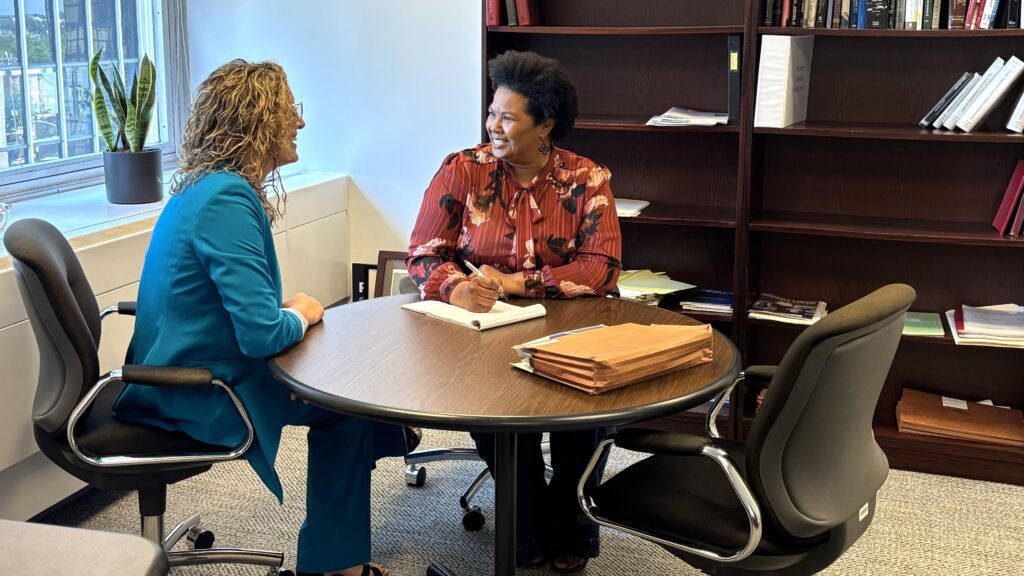
Delaware was the first state to employ nonattorneys to represent tenants who earn under 200% of the federal poverty level.
1 week ago
Listen 0:48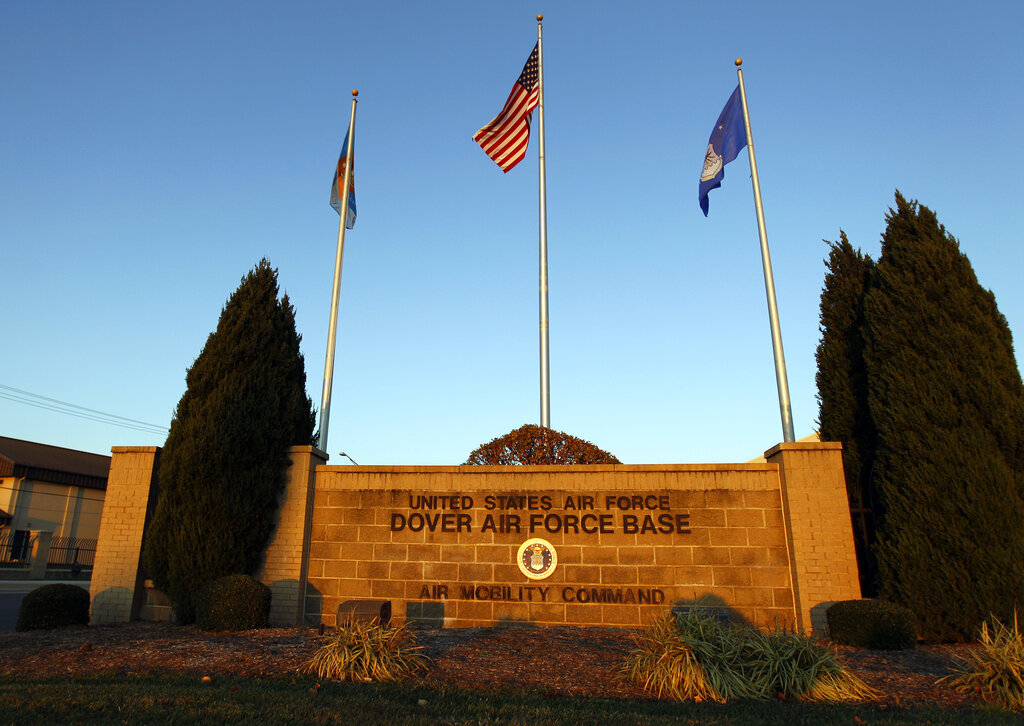
How Air Force enlistee in Delaware allegedly used Snapchat to recruit, rape 15-year-old girl
Authorities say the mobile app messages soon turned sexual, leading to an overnight drive to Dover and child rape charges.
2 weeks ago
Listen 2:17