‘They are dealing poison’: Delaware authorities intensify crackdown on fentanyl dealers
The Trump administration declared the ultra-potent opioid a “weapon of mass destruction” in December. Delaware is prosecuting plenty of cases.
Listen 1:26
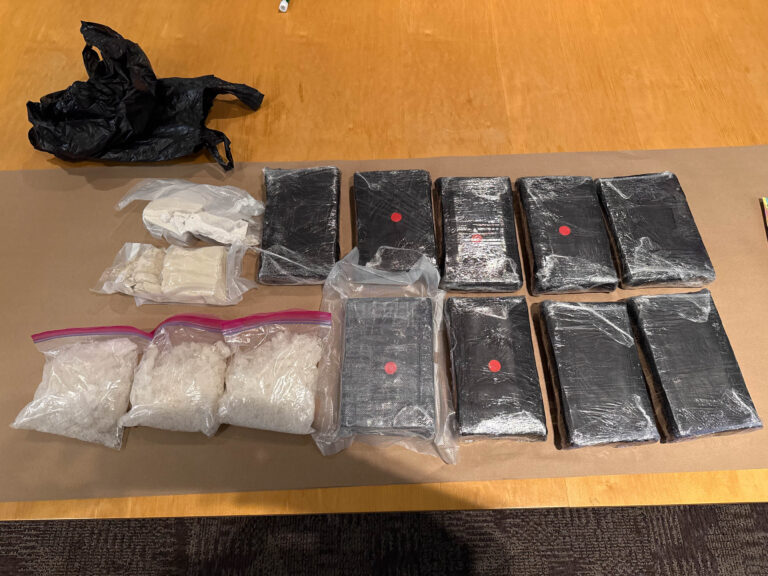
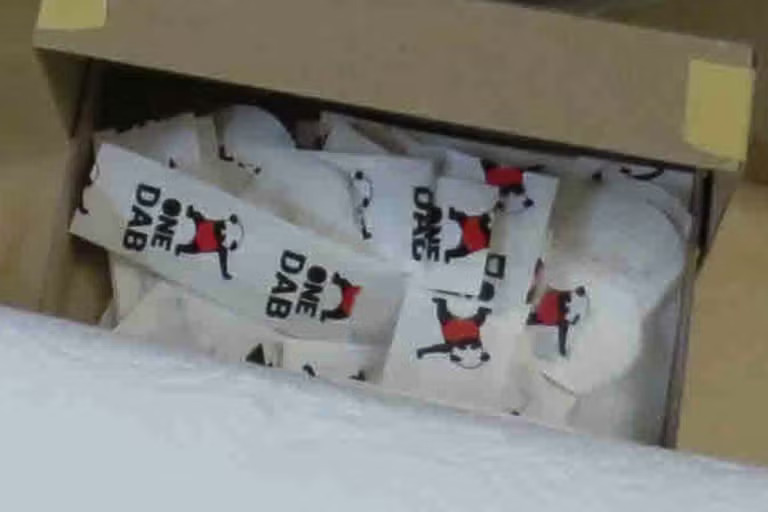
At top left, two packets of pills containing heroin and fentanyl were among more than 5 kilograms of drugs seized from Brooklyn man Daniel Fernandez during a stop by New Castle County police. (Courtesy of Delaware U.S. Attorney's Office)
What are journalists missing from the state of Delaware? What would you most like WHYY News to cover? Let us know.
Ben Wallace keeps a pouch of naloxone, the medication that reverses opioid overdoses, in his car’s glove box.
“Just in case, God forbid, I ever encounter somebody who’s experiencing an overdose,” Wallace told WHYY News.
Wallace has never needed to administer the antidote but said he keeps it handy because of his empathy for people in active addiction.
Wallace also keeps people with addiction, especially those hooked on ultra-potent opioid fentanyl, at the forefront of his mind when he’s doing his job — U.S. attorney for Delaware.
As the state’s chief federal law enforcement officer, Wallace relishes the challenge of locking up dealers of fentanyl, which is at least 50 times more potent than heroin. Fentanyl often appears in illegal street drugs, mixed with heroin, cocaine, counterfeit painkillers and even marijuana, so many users don’t know they are injecting, snorting or smoking the lethal drug, Wallace said.
“It’s a huge focus for us, because the drug itself is just so dangerous,” Wallace said, noting that his office’s fight against fentanyl is part of a nationwide agenda for U.S. attorneys.
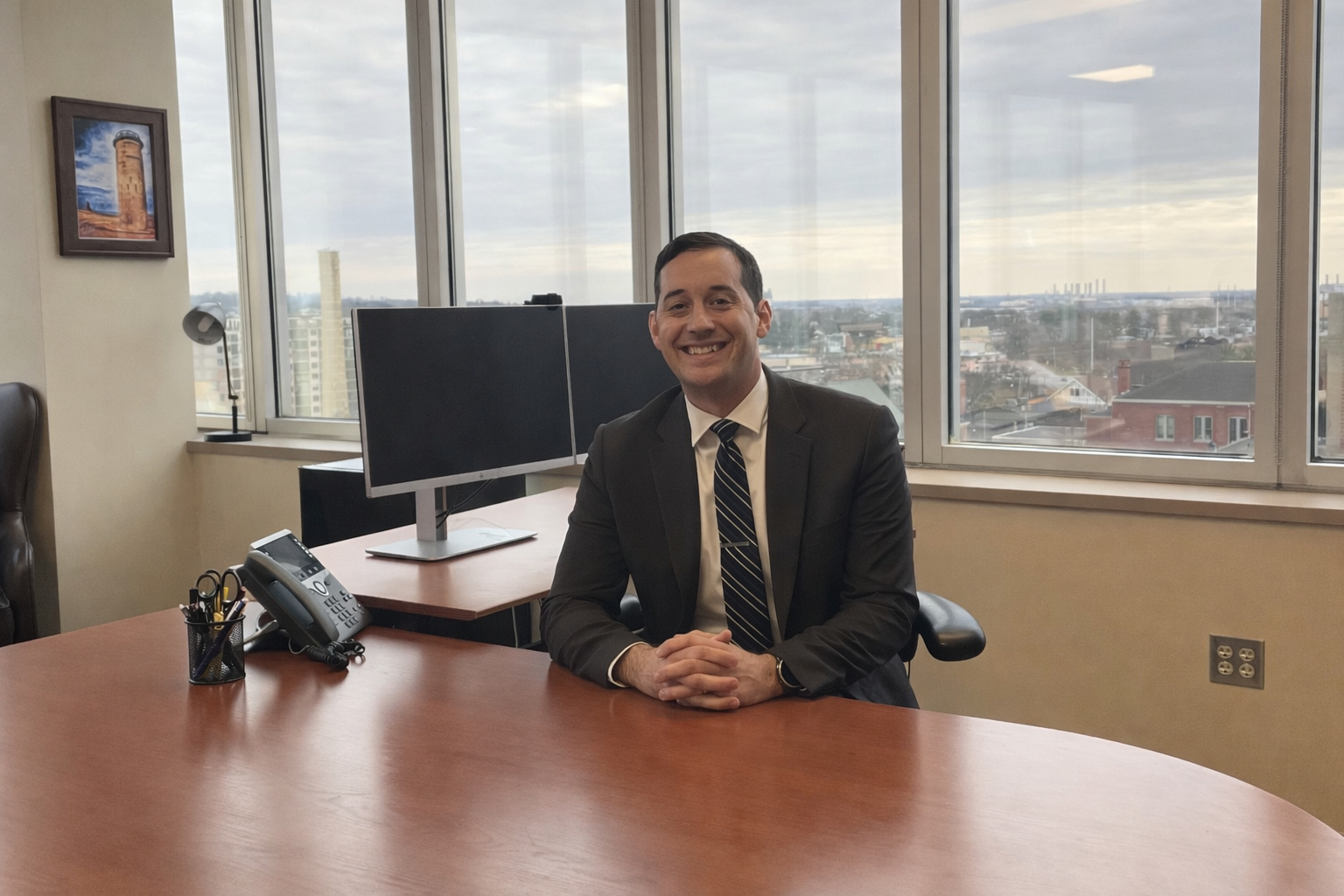
President Donald Trump has often railed about the ravages of fentanyl, and in December his administration classified fentanyl as a “weapon of mass destruction.” That declaration occurred just days before Delaware’s federal judges appointed Wallace to lead the office where he’s worked since 2023.
Even before then, his office had intensified its collaboration with the Delaware Attorney General’s Office on a host of cases investigated by the U.S. Drug Enforcement Administration and local police agencies.
“I’m sure you’ve seen [press releases about] a guy found with a small quantity of fentanyl, maybe a gun,” Wallace said. ”Sometimes that could be a state case, but we really, really are dedicated to trying to combat this. And so we’re taking cases that we haven’t had the bandwidth to take in the past and it’s part of a renewed focus for us in this area.”
Fentanyl’s impact has been devastating in Delaware, where the drug is often found in the bloodstreams of overdose victims.
Delaware had the nation’s second-highest rate of accidental drug overdoses in 2023, according to the latest available federal statistics. That year, 527 people died from overdoses, state statistics show. The number fell to 338 in 2024 — a 36% drop. Preliminary figures for 2025, which state officials are now finalizing, show a further reduction to 316 overdose deaths.
Wilmington City Councilwoman Zanthia Oliver said that, despite the recent dip in fatalities, fentanyl continues to ravage the East Side area she represents.
“You see the ambulance pulling up” after overdoses, Oliver said. “One young lady did overdose about two or three weeks ago with her baby in her hands. It’s just a real serious problem.”
Related Content
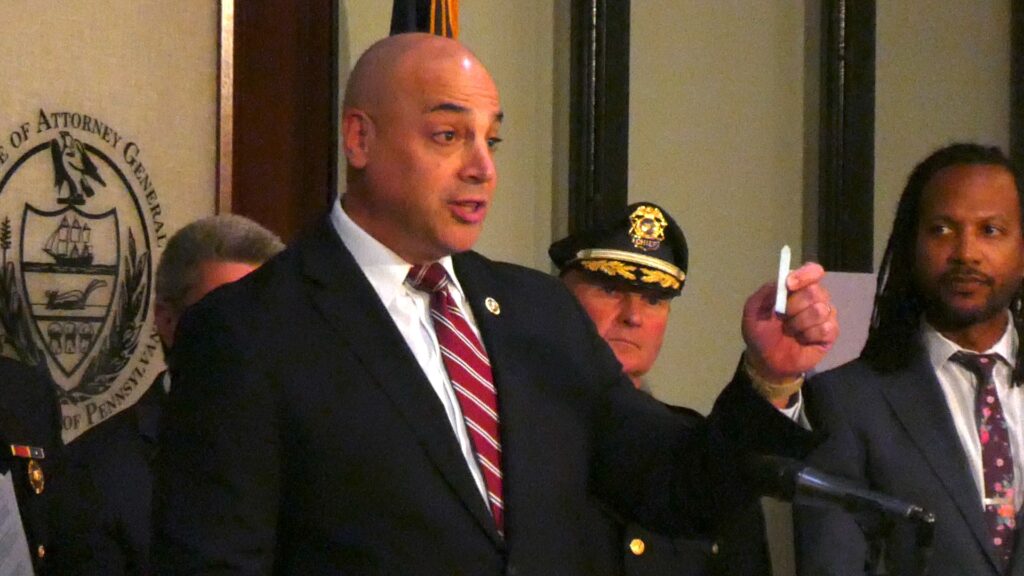
Fentanyl has far surpassed heroin as the most common opioid found in the commonwealth, said state Attorney General Dave Sunday.
12 months ago
Listen 0:47Federal cases target local dealers, distributors
Potential solutions are multipronged. And the state is spending millions of dollars from its share of opioid lawsuit settlements to help users get treatment and educate the public about the perils of fentanyl. But taking aim at dealers is paramount, Wallace said.
Just this month alone, Wallace’s office obtained:
- A guilty plea in U.S. District Court from Daniel Fernandez of Brooklyn, New York, for dealing more than 5 kilograms, or 11 pounds, of drugs. New Castle County police had found more than 300 grams of fentanyl among other drugs found during a traffic stop.
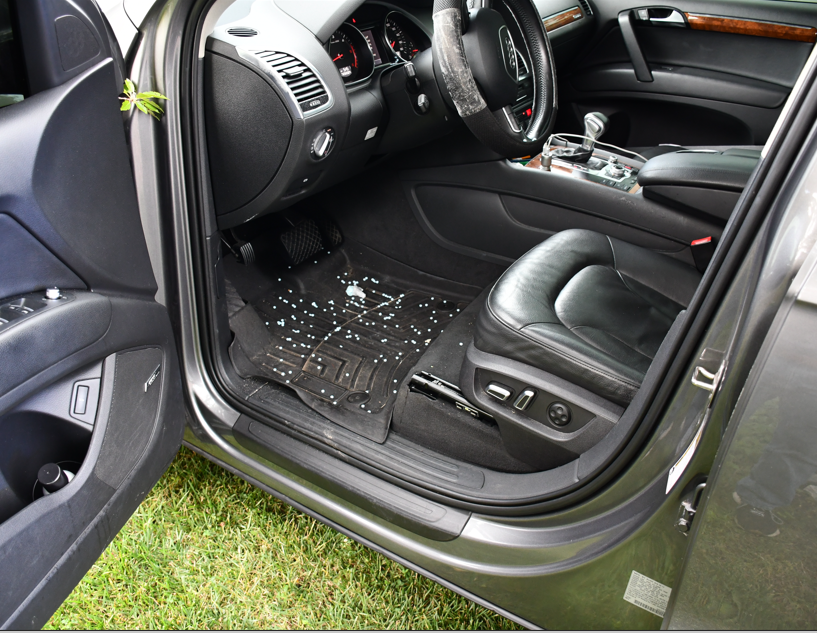
- A guilty plea from Brandon Barnes, of Lewes, for possession with intent to distribute fentanyl. Police had arrested Barnes after he crashed his car and fled on foot. Officers found more than 500 blue pills marked “M30” in the car and along the path that led to where he was caught. The pills had a drug mixture that contained fentanyl.
- A grand jury indictment against Marcus Warren, of the Wilmington area, for possession with intent to distribute fentanyl. A county, state and federal probe led to searches that found more than 400 pills containing fentanyl and more than a kilogram of suspected fentanyl, Wallace’s office said. Warren also was charged with possession of a firearm by a prohibited person after three guns were found at his home.
In September, a federal judge also sentenced major fentanyl dealer Dwayne Fountain to 25 years behind bars.
A raid of Fountain’s home near Middletown and a nearby stash found more than 11.5 kilograms, or roughly 25 pounds, of fentanyl, and several kilograms of heroin, cocaine and methamphetamine, court records show. Fountain was known for mixing fentanyl with other drugs to create potent brands such as “ONE DAB,” which were stamped with an image of a panda wearing red shorts, records showed.
On the state side, Chief Deputy Attorney General Dan Logan, a former federal prosecutor, said working with the feds is critical to putting a dent in what he calls a gigantic public safety problem.
“We coordinate very closely with our federal partners and will help determine which jurisdiction, which venue is better” for that prosecution, Logan said. “And importantly now, we are taking a much more aggressive stance on some of the local drug dealing that maybe doesn’t rise to the federal level, so we’re able to handle those a little bit better on our end.”
That diligence has enabled Logan’s office to bring several cases in recent months against fentanyl dealers, including convicting a man of manslaughter after prosecutors said a woman he sold drugs to died of an overdose.
- In that case, James Watson, of Bear, was sentenced in Delaware Superior Court to 15 years in prison in June for manslaughter and dealing fentanyl. The prosecution of Watson, who had four previous felony drug dealing convictions, resulted in Delaware’s first successful homicide conviction against a fentanyl dealer for causing a fatal overdose, authorities said.
- Last summer, Naquan Watson, of Newark, was sentenced to four years in prison for two drug dealing cases, including one in which a woman he had been selling fentanyl and heroin to was found dead by her mother after an overdose.
- Susan Carter, of Dover, was indicted for manslaughter and drug dealing in December for allegedly selling fentanyl to a 33-year-old man who died in 2024 after taking the drug.
Logan said the cases involving a fatality are time-consuming and gut-wrenching for prosecutors and families alike. Taking months to piece together evidence that ties a dealer to a customer and their death is a painstaking but worthwhile quest, he said.
“These are tough mentally, physically, emotionally,” Logan said. “Most of the time when an overdose occurs, it’s a family member or a close relative that’s finding them and making that call” to 911.
Logan said he favors a holistic approach to the fentanyl crisis, but stressed that any effective strategy must include a tenacious law enforcement component.
“I’m not here to tell you that we’re going to be able to prosecute our way out of this,” Logan said. “But when we have someone who is benefiting, certainly financially, at the expense of this poisoning, it’s our duty to make sure that we are holding them accountable. And we’re trying to do that.”
Related Content
The overarching mission is to remove people in peril from the revolving door of the criminal justice system and possible incarceration.
1 year ago
Listen 4:11‘Truly staggering how widespread this has become’
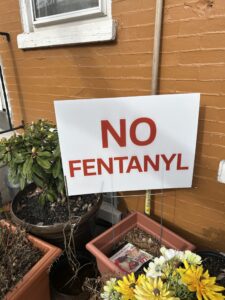
Oliver, who keeps a white-and-red “NO FENTANYL” poster among the flower pots outside her home, said she’s noticed an uptick in prosecutions in recent months.
She says that, in conjunction with expanding awareness campaigns and treatment options, cracking down on dealers is critical to saving lives.
“They’ve busted a lot of people and you have to give credit where credit is due,” Oliver said.
Wallace said fentanyl dealers should be aware they are being targeted by cops, drug agents and prosecutors all over Delaware.
“They are dealing poison that people get hooked to, and it ruins their lives and too many times it leads to their death,” Wallace said. “So you know, we’re coming for the drug dealers of Delaware.”
He also warns drug users that their next dose of whatever illicit substance they think they are taking could be mixed with fentanyl and kill them.
“I would just encourage those folks to be extremely, extremely cautious because you never know,” Wallace said. “It’s truly staggering how widespread this has become. It’s tremendously dangerous, even in small doses.”

Get daily updates from WHYY News!
WHYY is your source for fact-based, in-depth journalism and information. As a nonprofit organization, we rely on financial support from readers like you. Please give today.
Part of the series
Sens. Coons, Blunt Rochester questioned the time the judge devoted to her late husband’s now-defunct ad firm and its political direction.
2 days ago
Listen 1:58
Justin Dynlacht thought his employer and health insurer didn’t provide adequate coverage for Crohn’s disease, but took his complaints way too far.
6 days ago
Listen 1:52
A man working for the contractor Greggo & Ferrara alleged he was called the N-word and “boy” by a white co-worker.
2 weeks ago
Listen 1:11