
‘Blank check’: Delaware bill would cap the state’s inflated hospital prices
Some Delaware hospitals charge employee private plans more than 300% of Medicare for certain medical services.
Listen 0:51
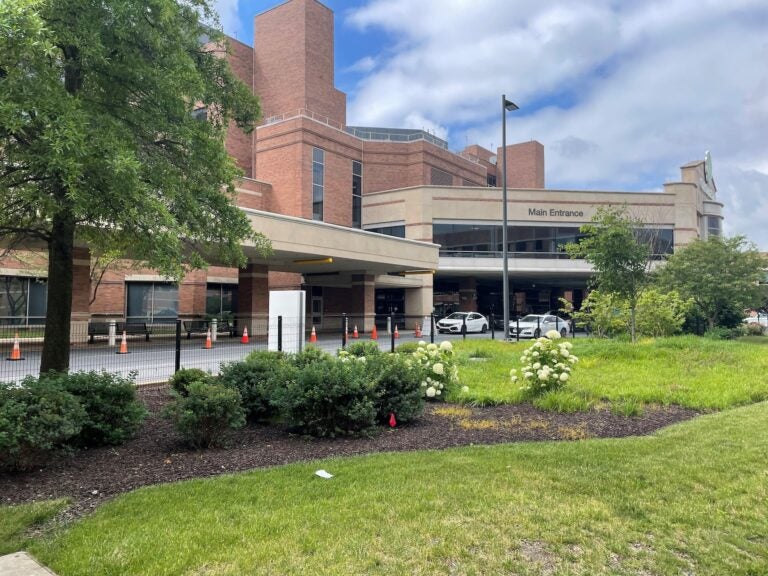
Christiana Hospital near Newark is Delaware's largest hospital and the flagship facility of ChristianaCare. (Cris Barrish/WHYY)
What are journalists missing from the state of Delaware? What would you most like WHYY News to cover? Let us know.
Delawareans with private insurance pay some of the highest prices in the nation for hospital services. Research also shows the state’s hospitals generally have higher profits than the national average.
New legislation sponsored by Senate Majority leader Bryan Townsend, D-Newark, aims to invest more in primary care and reduce hospital spending. But the powerful health care lobby fiercely opposes the bill.
Both sides agree that if the measure became law, it could save more than $400 million annually. But while supporters say that will save Delawareans money on their insurance premiums, hospitals say it would cripple their ability to care for patients. The last time lawmakers passed budget controls to reduce hospital spending, the state’s largest health care system, Christianacare Care sued to stop its implementation.
“We’ve got to do a better job of keeping health care costs down,” Townsend said. “We can’t just keep giving the hospitals a blank check.”
What does the legislation do?
Senate BIll 1 aims to bolster the number of primary care doctors in the state while also capping the percentage hospital charge relative to the Medicare reimbursement rate. The state’s current primary care framework sunsets at the beginning of next year.
Insurance carriers would be required to spend at least 11.5% of their total medical costs on primary care, starting this year. It would mandate that carriers allow providers to participate in value-based care payment models. The traditional fee for service model pays medical staff by the volume of tests, procedures or visits. Value-based structures are based on patient outcomes, quality of care and spending efficiencies.
Under the measure, prices for hospital services may not exceed 250% of Medicare reimbursement rates unless the hospital or health care system is in a state global budget, which means they have a predetermined, fixed annual budget to care for their patient population.
“The bill tries to put very important checks and balances on hospitals that right now have tremendously high prices relative to most of the rest of the country, and no real pushback on those,” Townsend said.
He said the bill covers the open insurance market, state employee plans and Medicaid. It would not cover self-insured plans or Medicare.
High Delaware hospital prices shields a nuanced picture
RAND, a nonprofit research and analysis organization, looked at 2020-2022 medical claim data and found that Delaware was one of just seven states where commercial prices, which is made up of employer and private insurance plans, for hospital services were above 300% of Medicare prices.
But Brian Briscombe, a principal investigator at RAND, said that doesn’t tell the whole tale.
“It’s not fair to say all hospitals are expensive, even if on average they are,” he said. “If you generalize about a single hospital, you could be missing the story.”
Related Content
‘Stretched thin’: Medicaid cuts threaten Delawareans’ access to health care in rural areas
Delaware has a plan to transform health care in the state’s rural areas, but is dealing with billions in federal funding cuts.
4 months ago
Listen 1:00Digging into RAND’s research, which was published in December 2024, reveals that Delaware hospitals charge varying percentages of Medicare prices for different services, with outpatient services being more expensive.
ChristianaCare, Kent County’s campus’ Bayhealth Medical Center and Bebe Medical Center charged more than 300% of Medicare prices for outpatient services. Tidalhealth Nanticoke charged over 200% and St. Francis Hospital charged 178% of Medicare for outpatient care.
For inpatient services, Bayhealth charged more than 300% of Medicare for inpatient services, with Beebe Medical Center following closely behind at 291%. The other hospitals’ inpatient prices ranged from 270% to 143%.
Nationally in 2022, U.S. employers and private insurers paid an average 254% of Medicare prices for inpatient hospital services and outpatient services averaged 279%.
A spokesperson for ChristianaCare said in a statement that they oppose the legislation and dispute RAND’s data on what they charge patients with employee or private plans.
“Using Medicare alone as a benchmark ignores the realities of workforce shortages, inflationary pressures and the investments needed to maintain high-quality care, safety and access for all patients,” said Meredith Stewart Tweedie, ChristianaCare vice president of government affairs, policy & regulatory strategy.
St. Francis also said it opposes the legislation. Tidalhealth declined to comment and the other two hospitals did not respond to a request for comment.
Briscombe said the huge range of prices shows market dysfunction.
“Your average patient isn’t even really aware of the price levels that they’re getting, because there are so many middlemen,” he said. “Once you have these layers — me the consumer, then the company I work for, then the insurance company — you kind of lose sight of who’s keeping track of prices and value.”
Related Content
Delaware health care systems struggling to keep pace with a rapidly growing older population
With seniors expected to make up a third of Delaware’s population by 2040, hospitals and clinics are expanding but still struggle with provider shortages and care delays.
8 months ago
Listen 5:04Conflicting previews of possible SB 1 impact
Brian Frazee, president of the Delaware Healthcare Association, predicts devastation for state hospitals, including cuts to care and jobs.
“We need more health care here, not less,” he said. “We’re the fifth-oldest state in the country. We’re the sixth-fastest growing state. We have a generally unhealthier population than other states, especially as it relates to cancer, diabetes and obesity.”
Frazee also argued that current state hospital pricing is reasonable because Medicare reimbursement rates are substantially lower than the actual cost of care.
But researchers dispute that. RAND’s pricing transparency report tested the theory that hospitals need to charge commercial payers higher prices to offset underpayments by public payers and losses because of uncompensated care, but did not find a strong correlation between the two.
“If hospitals needed higher prices from commercial payers to compensate for low payments from Medicare, Medicaid and other low paying patients, then we would expect to see hospitals that have a really high share of Medicare, Medicaid and no-pay patients to have the highest commercial prices,” said Roz Murray, an assistant professor of health services, policy and practice at the Brown University School of Public Health. “And that relationship is just not true.”
Murray said hospital market consolidation since the 1990s has also led to higher prices.
Supporters of the legislation argue that the hundreds of millions of anticipated savings by capping prices to 250% of Medicare or through a global budget arrangement would lower insurance premiums and out-of-pocket costs for employees. They point to Oregon, which capped prices at 200% of Medicare for state employees and teachers, as a success story.
Still, even if the bill, which will be heard in committee for the first time on March 18, sails through the General Assembly, it would still face a possible legal challenge. A request for comment about the legislation to Gov. Matt Meyer’s office received no response.
ChristianaCare filed a lawsuit in 2024, with the association’s support, shortly after the General Assembly created the Diamond State Hospital Review Board, with authority to veto spending. A subsequent settlement between Meyer’s office and the health system largely defanged the board, removing that veto power.
Frazee said they are keeping all options regarding this new bill, including filing another lawsuit, on the table.

Never miss a moment with the WHYY Listen App!


WHYY is your source for fact-based, in-depth journalism and information. As a nonprofit organization, we rely on financial support from readers like you. Please give today.
Part of the series


The effort includes multilingual resources outlining what to do if approached by federal agents, including the right to remain silent, refuse searches and ask for a lawyer.
4 days ago
Listen 0:59
Mike Houghton was a former Delaware Economic and Financial Advisory Council chairman and longtime member before being fired Wednesday.
2 weeks ago

Delaware House advances bill to allow fines and fees waived for indigent criminal defendants
The legislation was voted out of committee last May. It would give judges more discretion to waive fines and fees for poor defendants.
2 weeks ago
Listen 0:48