

Data center growth could mean blackouts in coming years, Pa. utility regulators say
A report predicts electricity demand on the regional grid will nearly double by 2040, due almost entirely to data centers.
Listen 1:08
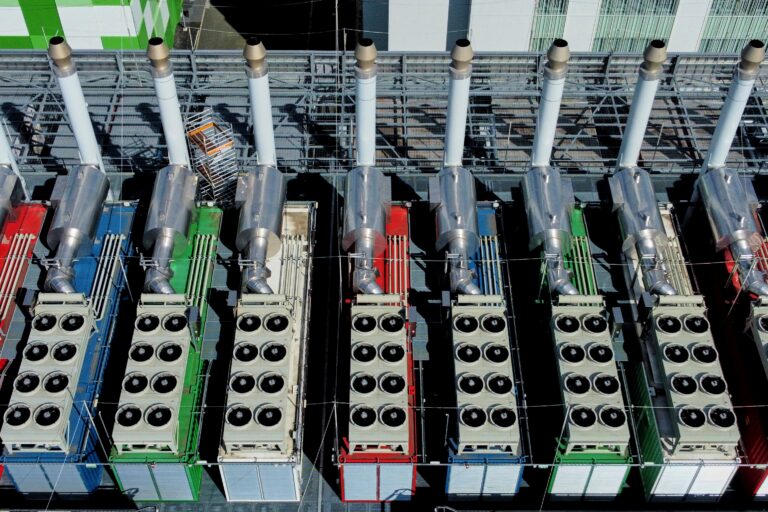
File - The roof of a data center is pictured in Frankfurt, Germany, Friday, Aug. 22, 2025. (AP Photo/Michael Probst)
This story is part of the WHYY News Climate Desk, bringing you news and solutions for our changing region.
From the Poconos to the Jersey Shore to the mouth of the Delaware Bay, what do you want to know about climate change? What would you like us to cover? Get in touch.
Data center growth will likely increase the risk of electricity outages in the Philadelphia region in the next four years, according to a report released by the Pennsylvania Public Utility Commission on Monday.
The report, prepared by Synapse Energy Economics, found that by 2030, electricity supply could fail to meet demand on the regional grid on average six times every 10 years. In a worst-case scenario of high electricity demand and low supply, the regional grid could experience blackouts 13 days per year.
“If we keep hooking up data centers, but we don’t get back in the business of building new supply, we could … be having some sort of blackout once a month on average, which is obviously completely unsustainable and would do serious harm to our lives,” said Abe Silverman, an energy consultant and research scholar at Johns Hopkins University.
In a written statement, Public Utility Commission Chairman Steve DeFrank said PJM Interconnection, the regional grid operator, must take “urgent action” to make sure electricity supply keeps up with demand.
“Data center development brings significant opportunities, but that growth cannot come at the expense of the families and businesses that already depend on reliable and affordable electric service,” DeFrank said. “This analysis sends a clear warning: Electricity demand and supply are moving out of balance, and the status quo is not sustainable.”
Data centers and the electrification of cars and equipment once powered by fossil fuels have been driving up electricity demand in the PJM region, which covers part or all of 13 states, including Pennsylvania, New Jersey, Delaware and Washington, D.C., while electricity supply has been slow to grow.
In two recent capacity auctions, PJM has failed to obtain enough commitments from power generators to meet its own reliability standard.
Related Content
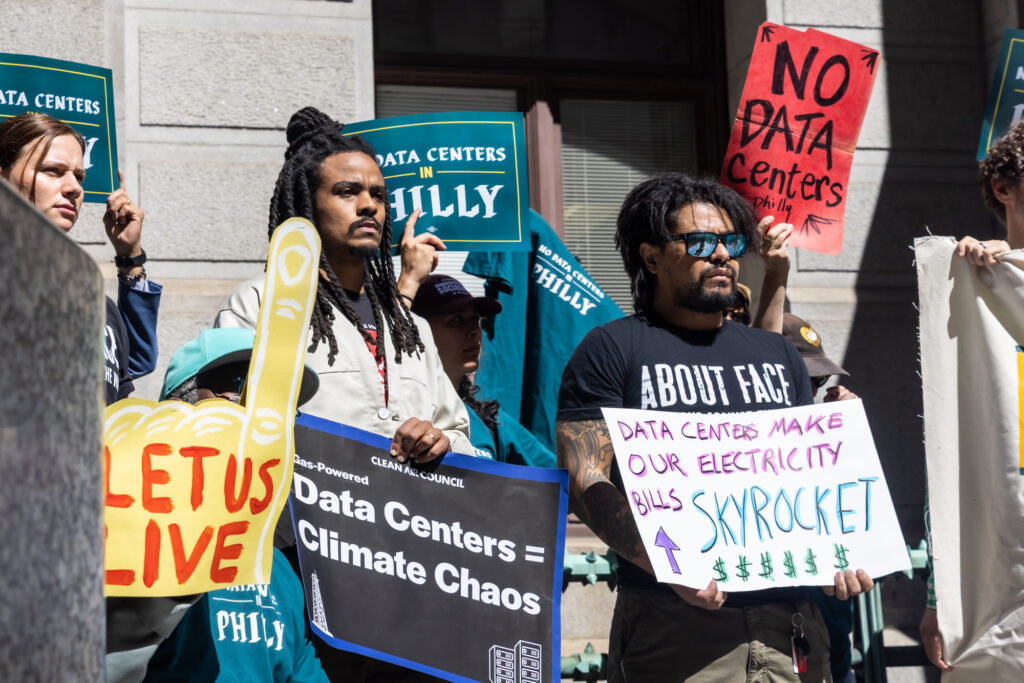
Philadelphia protesters demand city leaders prevent data center development
City officials say two sites in Philadelphia have potential for AI data centers, but there are no proposals for development.
4 weeks ago
Listen 1:24Grid planners aim for a buffer of electricity supply that limits the risk of outages to once every 10 years. As modeled in the PUC report, the grid’s reliability in 2030 would be six times worse than this standard. Under the worst-case scenario, it would be 100 times worse.
Under the likely scenario, electricity demand will nearly double between 2025 and 2040, almost entirely due to data centers, according to the PUC’s report. Under the worst-case scenario, new data centers added across the PJM region between 2029 and 2030 alone could use more electricity than the entire state of Pennsylvania uses today.
In a written statement, PJM spokesperson Jeff Shields said the grid operator agrees with the PUC’s assessment that electricity demand driven primarily by data centers and other large users is growing faster than new generation, “potentially compromising reliability of the system over the next five years while also contributing to increased electricity costs.”
Suzanne Glatz, an energy consultant and former infrastructure planner at PJM, said that while these risk projections are inexact and don’t necessarily mean outages will occur, the worst-case scenario is “a little scary.”
“It’s pretty dire if we don’t do something,” she said. “So I think we are going to take action.”
Glatz said PJM is already working on solutions. She pointed to a petition from PJM to federal regulators that could result in power being directed away from new data centers before power would be shut off for households when supplies reach dangerously low levels.
PJM said the solution requires action from industry, states and the federal government.
“PJM has taken a number of actions to both increase electricity supply and manage new demand in line with the Ratepayer Protection Pledge taken by data center developers to shield residential customers and other ratepayers from bearing reliability risks or cost increases associated with data center development,” Shields wrote.
Silverman said solutions include rules that require data centers to bring their own power generation before they can turn on. Gov. Josh Shapiro recently signed an executive order that requires data center developers in Pennsylvania to bring or buy their own new power in order to qualify for an easier permit-approval track.
Related Content

Pennsylvania Gov. Shapiro signs wide-ranging executive order reining in data center development
While stopping short of issuing a moratorium on new data centers, Shapiro’s executive order accuses developers of “predatory” behavior against local communities.
2 months ago
Listen 1:20Silverman sees the worst-case scenario in the report as a warning.
“It’s a case where we don’t fix our siting and permitting problems, we don’t fix our supply chain problems, and we just keep blindly signing up new data centers without requiring them to bring their own new capacity as part of the deal,” he said.
He said the report underscores a public policy choice that “we’re all going to have to make” about how fast data centers are allowed to develop.
“Under a low data center growth rate, prices go down and there are no reliability problems,” he said.

Never miss a moment with the WHYY Listen App!


WHYY is your source for fact-based, in-depth journalism and information. As a nonprofit organization, we rely on financial support from readers like you. Please give today.
Part of the series
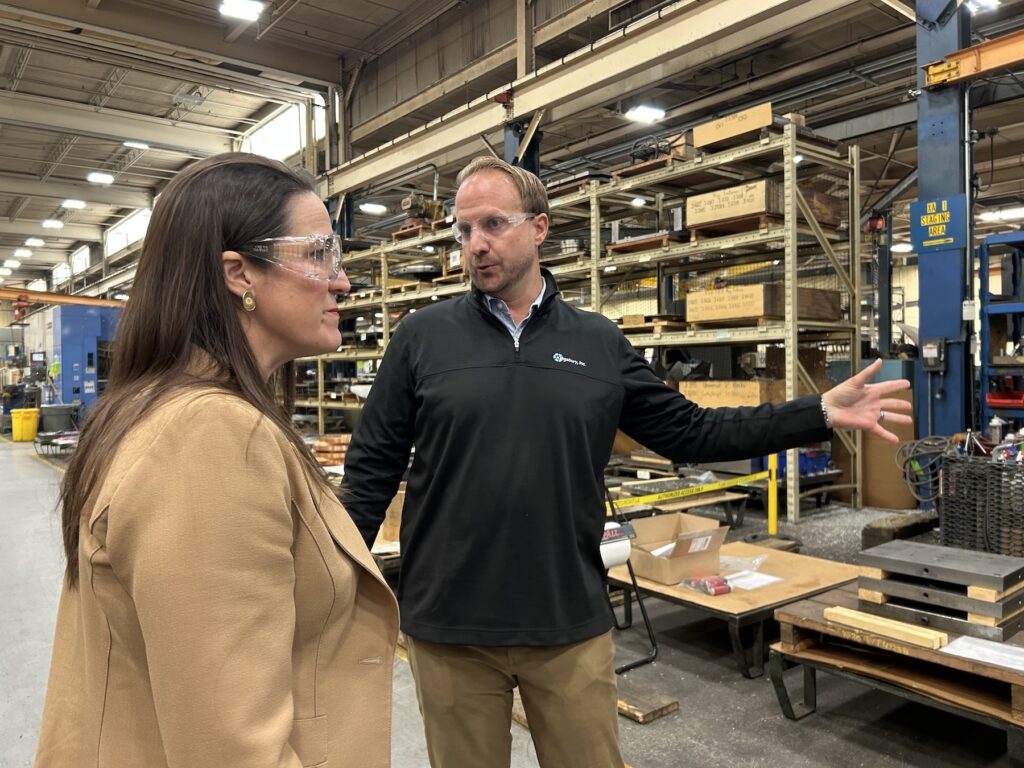
Hydropower parts manufacturer in Northeast Philadelphia lands federal research partnership
Kingsbury plans to test new materials for hydroelectric power equipment that can support the needs of modern-day grids.
5 days ago
Listen 1:09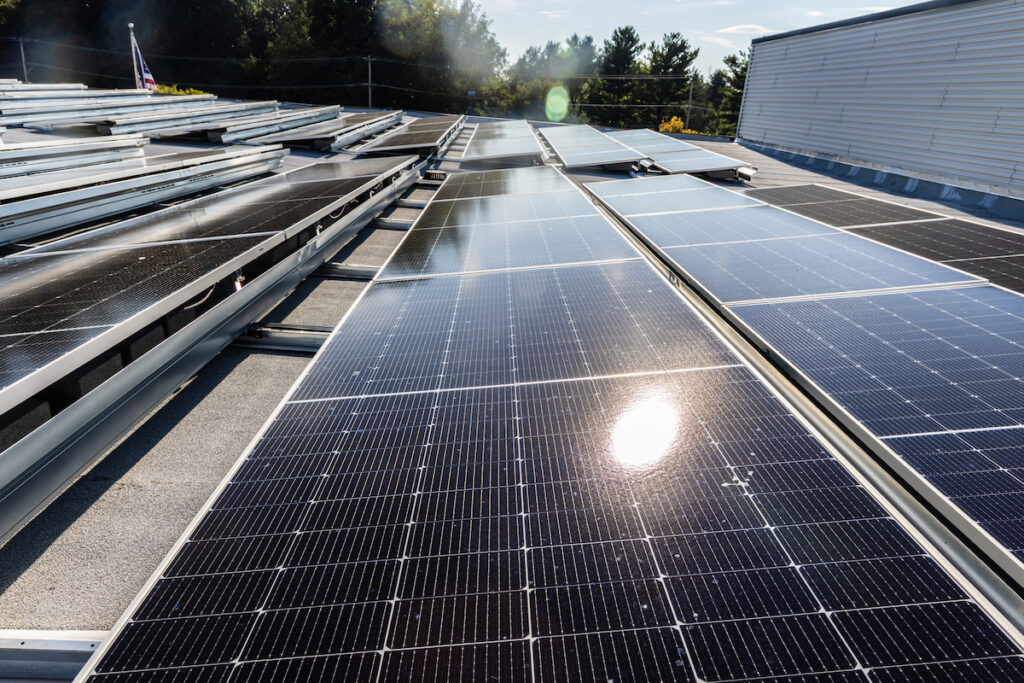
Philadelphia-area schools are tapping the sun’s energy and saving money on utilities
Unionville High School in Kennett Square and Universal Audenried Charter School in Philadelphia are building solar arrays that will slash their energy bills.
2 weeks ago
Listen 1:04
What we know about Delaware County’s potential data center plan, ‘Project Trainer’
Link Logistics is testing the waters for a data center that would sit around 100 feet from homes in Trainer, Pennsylvania.
3 weeks ago