

Philadelphia protesters demand city leaders prevent data center development
City officials say two sites in Philadelphia have potential for AI data centers, but there are no proposals for development.
Listen 1:24
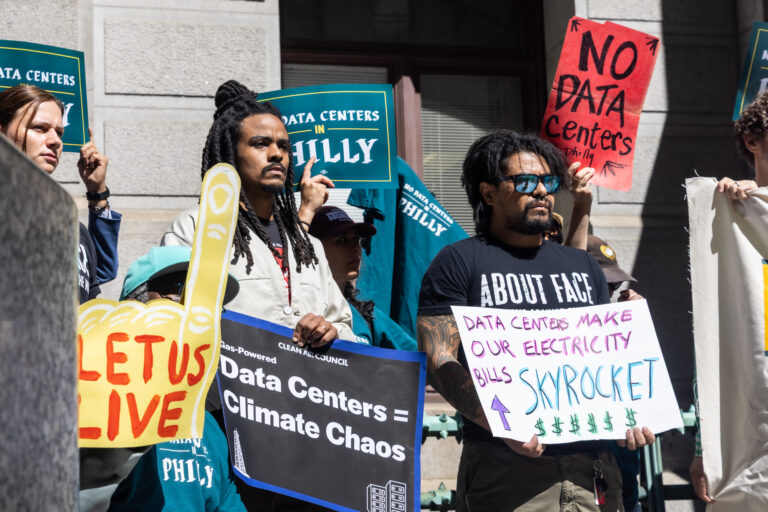
The No Data Centers in Philly coalition rallied outside City Hall in Philadelphia calling on lawmakers to pass a moratorium on data center construction for three years on Sept. 14, 2026. (Kimberly Paynter/WHYY)
This story is part of the WHYY News Climate Desk, bringing you news and solutions for our changing region.
From the Poconos to the Jersey Shore to the mouth of the Delaware Bay, what do you want to know about climate change? What would you like us to cover? Get in touch.
About 100 protesters gathered outside Philadelphia City Hall on Monday to demand a moratorium on data centers, which are needed to power the rapid growth of artificial intelligence.
The residents and environmentalists called on Mayor Cherelle Parker and City Council members to prevent the development of AI data centers until strict city regulations are implemented.
Pennsylvania Gov. Josh Shapiro last month signed an executive order that aims to mitigate the impacts of data centers. However, there are no local zoning laws or regulations in Philadelphia that govern data center development.
“There’s way too much at stake to let data centers expand without guardrails. City officials have the power to protect us before it’s too late,” said Sonya Sanders, who spoke at the protest as a Grays Ferry resident and board president of the community group Philly Thrive. “We’re calling on city officials to press pause, write rules that protect us and establish a process that makes sure Philadelphians decide what is built in our neighborhoods.”
-
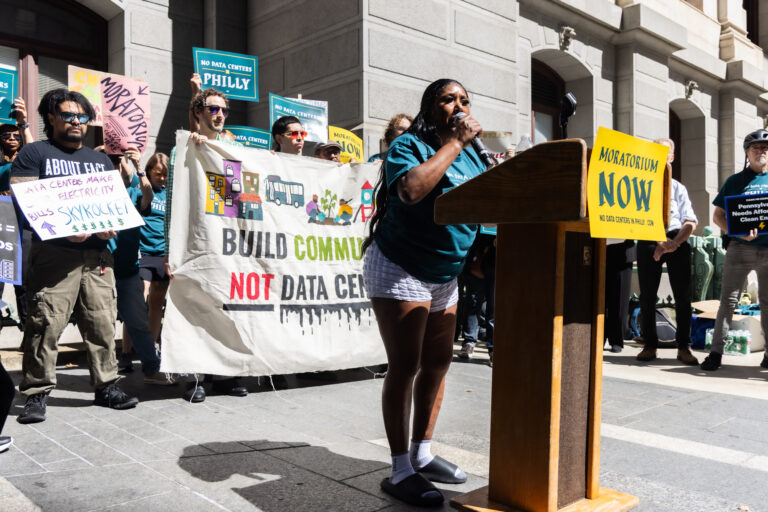
Sonya Sanders, board president of Philly Thrive and a Southwest Philadelphia resident who lives nearby where a data center could be built, spoke against the project at a rally outside City Hall in Philadelphia on Sept. 14, 2026. (Kimberly Paynter/WHYY) -
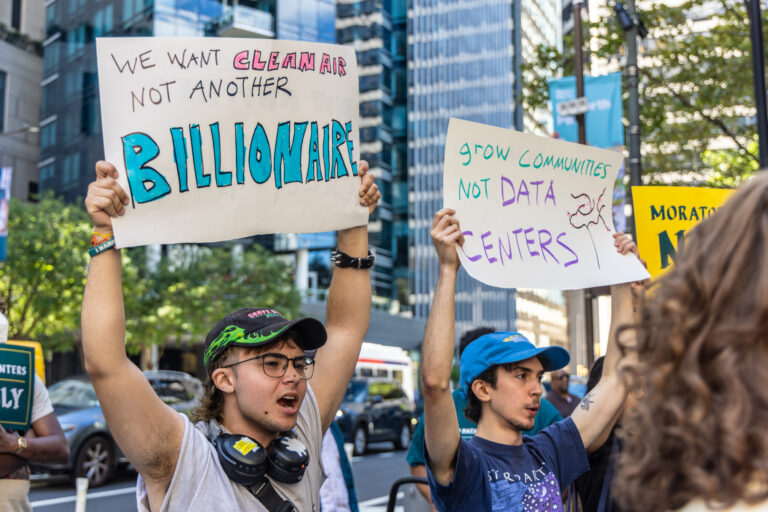
The No Data Centers in Philly coalition rallied outside City Hall in Philadelphia calling on lawmakers to pass a moratorium on data center construction for three years on Sept. 14, 2026. (Kimberly Paynter/WHYY) -
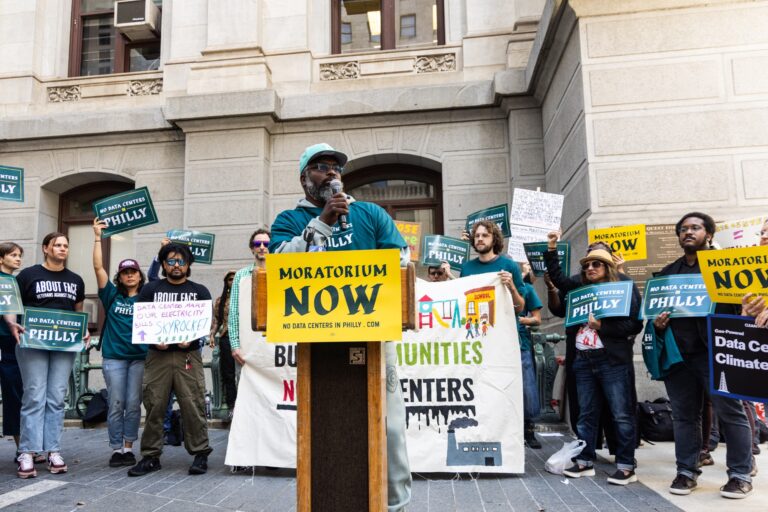
Shawmar Pitts, managing co-director of Philly Thrive and a Southwest Philadelphia resident who lives nearby where a data center could be built, spoke against the project at a rally outside City Hall in Philadelphia on Sept. 14, 2026. (Kimberly Paynter/WHYY) -
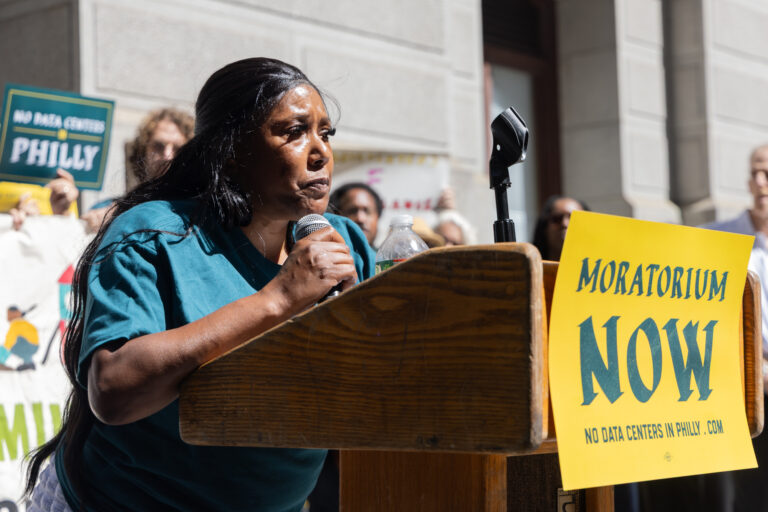
Sonya Sanders, board president of Philly Thrive and a Southwest Philadelphia resident who lives nearby where a data center could be built, spoke against the project at a rally outside City Hall in Philadelphia on Sept. 14, 2026. (Kimberly Paynter/WHYY)
City Council President Kenyatta Johnson has not committed to a moratorium, but his spokesperson said in a statement that City Council members “continue discussions on the future of data centers in the city.”
The protest comes just days after top tech leaders called for the deceleration of artificial development because of safety concerns, shaking up global financial markets. President Donald Trump has called for the speeding up of AI development and has pushed back against calls for increased regulations.
Data centers are operated by large tech companies and house big computer servers necessary to power the growth of online processing, storage and artificial intelligence.
The facilities have generated millions of dollars in local tax revenue across the U.S. But there’s growing concern about their strain on the electric grid, which has contributed to rising energy bills. PJM Interconnection, which manages the region’s electric grid, has pointed to the increase in data centers as a cause of rising electricity bills.
Related Content
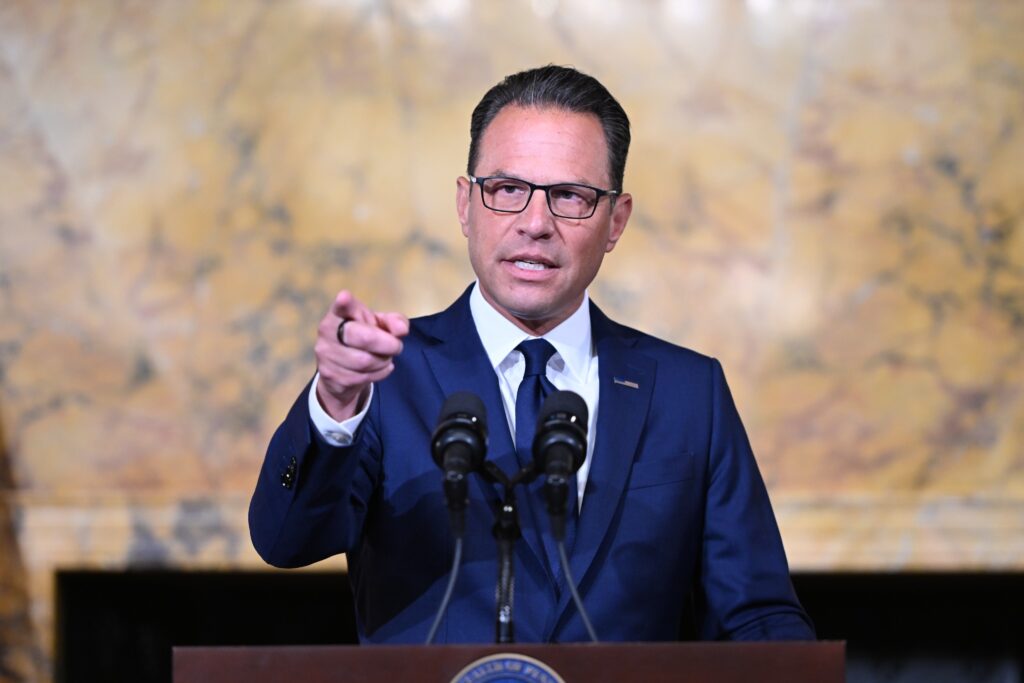
Pennsylvania Gov. Shapiro signs wide-ranging executive order reining in data center development
While stopping short of issuing a moratorium on new data centers, Shapiro’s executive order accuses developers of “predatory” behavior against local communities.
2 months ago
Listen 1:20Monday’s protest comes as the Pennsylvania Public Utility Commission released an independent report warning that growing electricity demand from large data centers could result in brownouts or blackouts.
Residents who live near data centers have also complained about air pollution from generators, strained water supplies and increased noise.
“There is nothing that humanity has built to this day that is similar to an AI data center,” said Alex Bomstein, executive director of the Clean Air Council, which helped organize the protest in Philadelphia. “We just don’t have the rules in place to protect us from air quality issues, from water usage issues, for noise issues, and many other types of issues that are endangering Philadelphians.”
A recent survey by the University of Pennsylvania found opposition to data centers has increased dramatically among registered Democrats and Republicans.
-
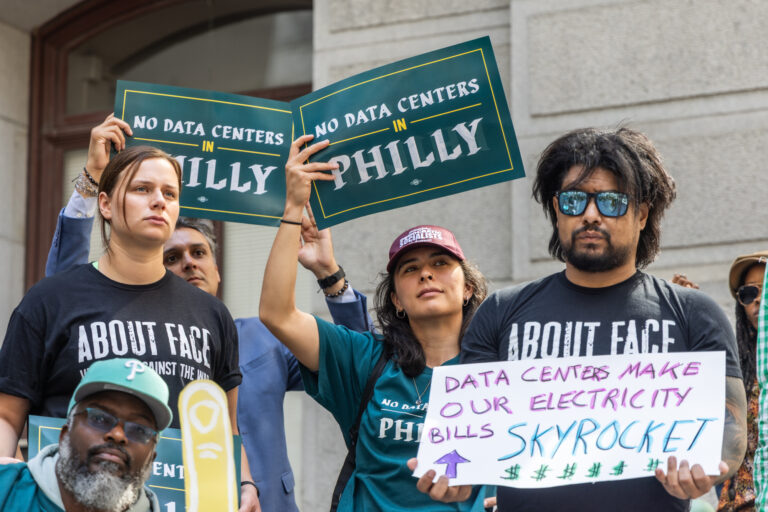
The No Data Centers in Philly coalition rallied outside City Hall in Philadelphia calling on lawmakers to pass a moratorium on data center construction for three years on Sept. 14, 2026. (Kimberly Paynter/WHYY) -
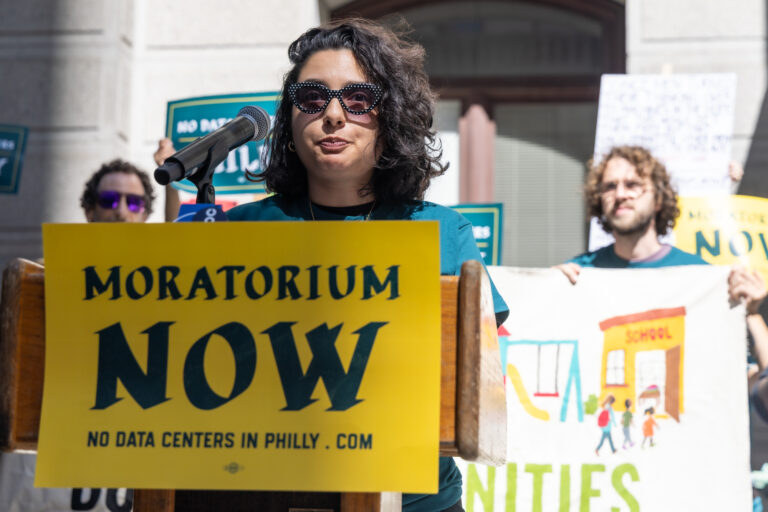
Senia Lopez, a Northeast Philadelphia resident who lives near where a data center could be built, spoke against the project at a rally outside City Hall in Philadelphia on Sept. 14, 2026. (Kimberly Paynter/WHYY) -
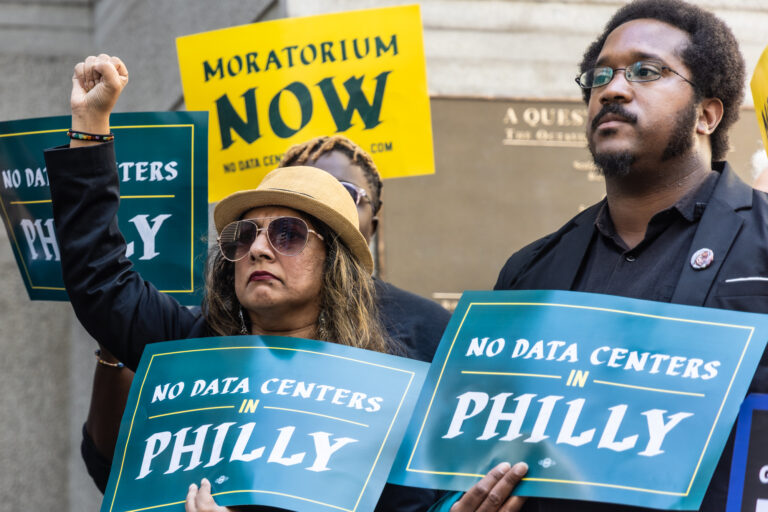
The No Data Centers in Philly coalition rallied outside City Hall in Philadelphia calling on lawmakers to pass a moratorium on data center construction for three years on Sept. 14, 2026. (Kimberly Paynter/WHYY) -
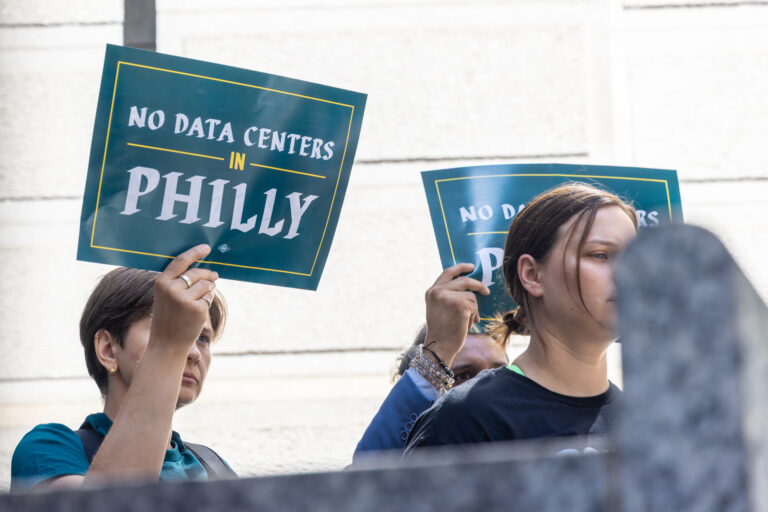
The No Data Centers in Philly coalition rallied outside City Hall in Philadelphia calling on lawmakers to pass a moratorium on data center construction for three years on Sept. 14, 2026. (Kimberly Paynter/WHYY)
Pushback against data centers nationwide has led to freezes on development in hundreds of communities across the U.S. In Philadelphia, a petition to implement a moratorium has garnered more than 2,400 signatures. A number of lawmakers and political candidates in the state have called for freezes on data center development, including Shapiro’s 2026 gubernatorial opponent, Republican Stacy Garrity.
So far, no AI data centers have been proposed for Philadelphia. But the city’s planning commission said last month that two sites could potentially support AI data centers; a city-owned site near the Northeast Philadelphia Airport, and at the site of the former PES refinery, known as the Bellwether District.
City officials said there are no current proposals to build on the sites.
Related Content
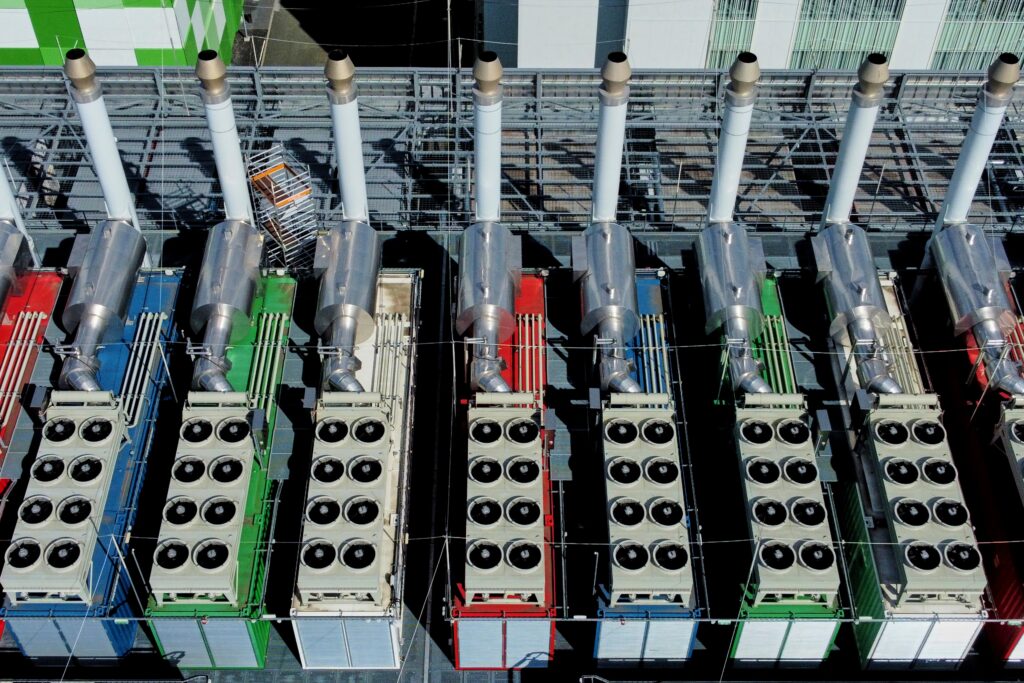
Politicians, energy providers, Big Tech and climate activists are talking about data centers. Here’s what to know.
8 months ago
Still, protesters said they’re concerned about the potential for development. Residents in Grays Ferry, where a large number of residents are Black and low-income, have already been impacted by health concerns linked to pollution from the former oil refinery.
“A moratorium would just at least give us a chance to understand what exactly would be the impact of a data center and give us the chance to get to the table, give us a chance to share the research and share the data,” said Campbell Simmons, a South Philadelphia resident. “This is just trying to give us a chance to have any kind of say as a community.”
A spokesperson for Mayor Cherelle Parker said she supports establishing standards for data centers.
“Protecting the health, safety, and natural resources of Philadelphians is non-negotiable,” the mayor wrote in a statement. “This summer, I mobilized a dedicated Task Force across Planning and Development, Sustainability, Public Health, the Water Department, Licenses and Inspections, and our Clean and Green leadership. Their mission is clear: establish enforceable standards for data centers that protect our infrastructure, water supply, and local neighborhoods.”
This week, Parker said she will sign an executive order to formalize the task force.
“By putting rigorous guardrails in place, we will ensure that any incoming tech infrastructure directly serves our vision of a safer, cleaner, and greener Philadelphia,” she said.
Editor’s note: This story has been updated with a statement from City Council President Kenyatta Johnson.

Get daily updates from WHYY News!
WHYY is your source for fact-based, in-depth journalism and information. As a nonprofit organization, we rely on financial support from readers like you. Please give today.
Part of the series
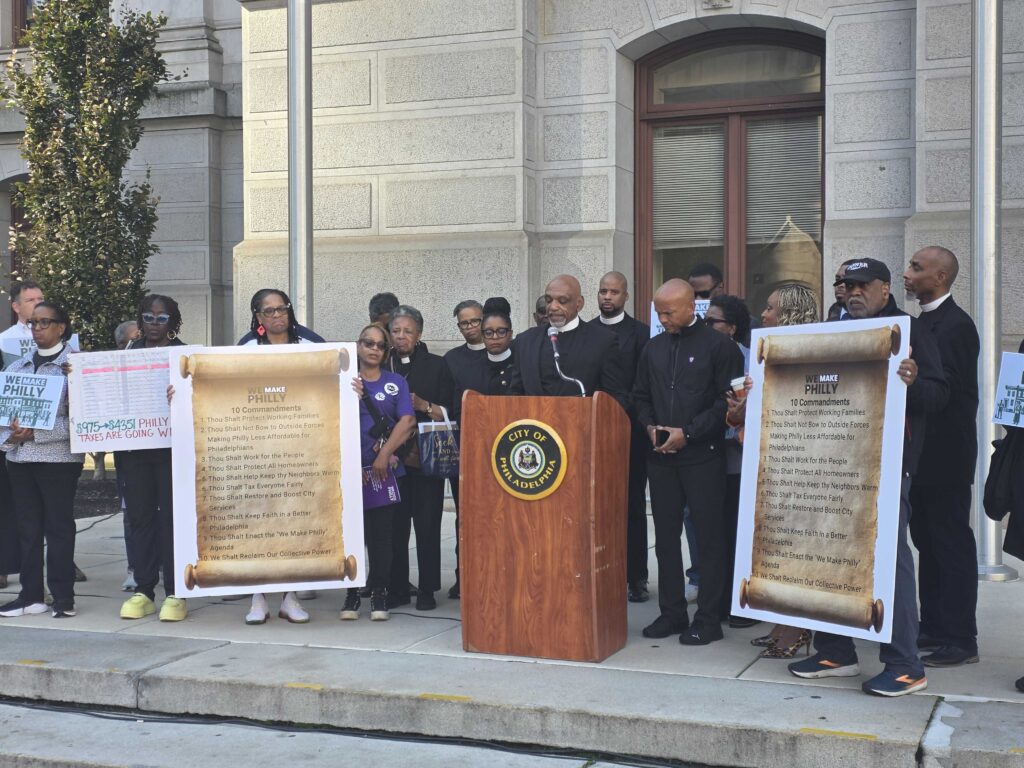
Clergy gather at Philadelphia City Hall to set agenda for election-year assistance for the needy
A new set of 10 commandments urges city leaders to help those in need at a time where elected officials need their votes.
5 days ago

PGW spends millions in ads with the MLB team. The utility’s CEO is in apparent violation of state ethics law for not disclosing the value of the accepted gifts.
2 weeks ago
Listen 5:18
PGW upgrading infrastructure to cut a small fraction of its climate pollution
The project will reduce methane releases and cut the utility's overall greenhouse gas emissions by a fraction of a percent.
2 weeks ago
Listen 1:04