

CHOP to expand early autism intervention care with new partnership and locations in Southeastern Pennsylvania
Children’s Hospital of Philadelphia has partnered with Soar Autism Center to open new early-intervention sites for kids 6 and younger.
Listen 0:59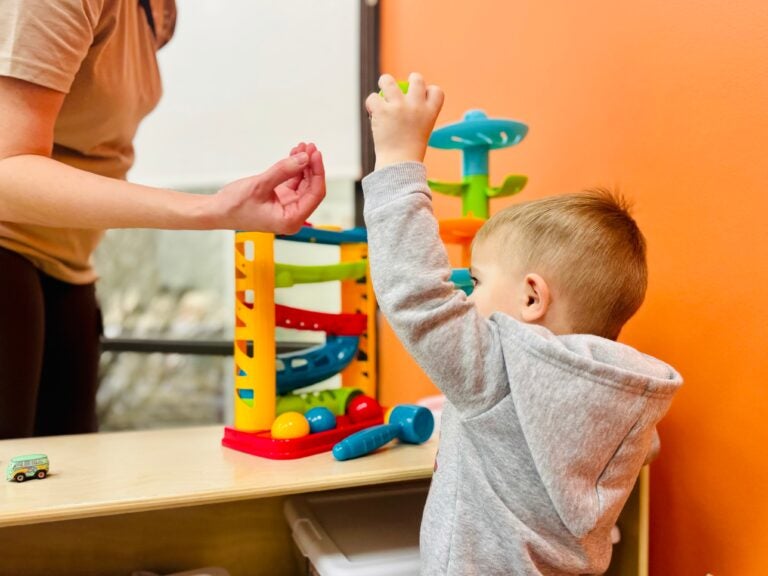
Children 6 and younger with autism spectrum disorder engage in play-based behavioral and development therapy at the new CHOP-Soar Autism Center in Newtown, Pa. The site is part of an initiative to expand specialty care in the Greater Philadelphia area. (Nicole Leonard/WHYY)
From Philly and the Pa. suburbs to South Jersey and Delaware, what would you like WHYY News to cover? Let us know!
A new partnership between Children’s Hospital of Philadelphia and a multistate autism services organization that specializes in therapy for young children aims to expand care in Greater Philadelphia.
The collaboration between CHOP and Soar Autism Center involves opening five new locations across Southeastern Pennsylvania that will offer developmental and behavioral programs and interventions for kids 6 and younger.
Pediatricians and specialists say they hope the move will help families access services more quickly and closer to where they live by addressing barriers like long waiting lists for appointments with specialists.
“So, this partnership is also really exciting because it does give us an opportunity to be able to direct a child to intervention in their community knowing that they won’t have that 6-, 9-, sometimes even 12-month wait,” said Dr. Amanda Bennett, director of autism services at CHOP.
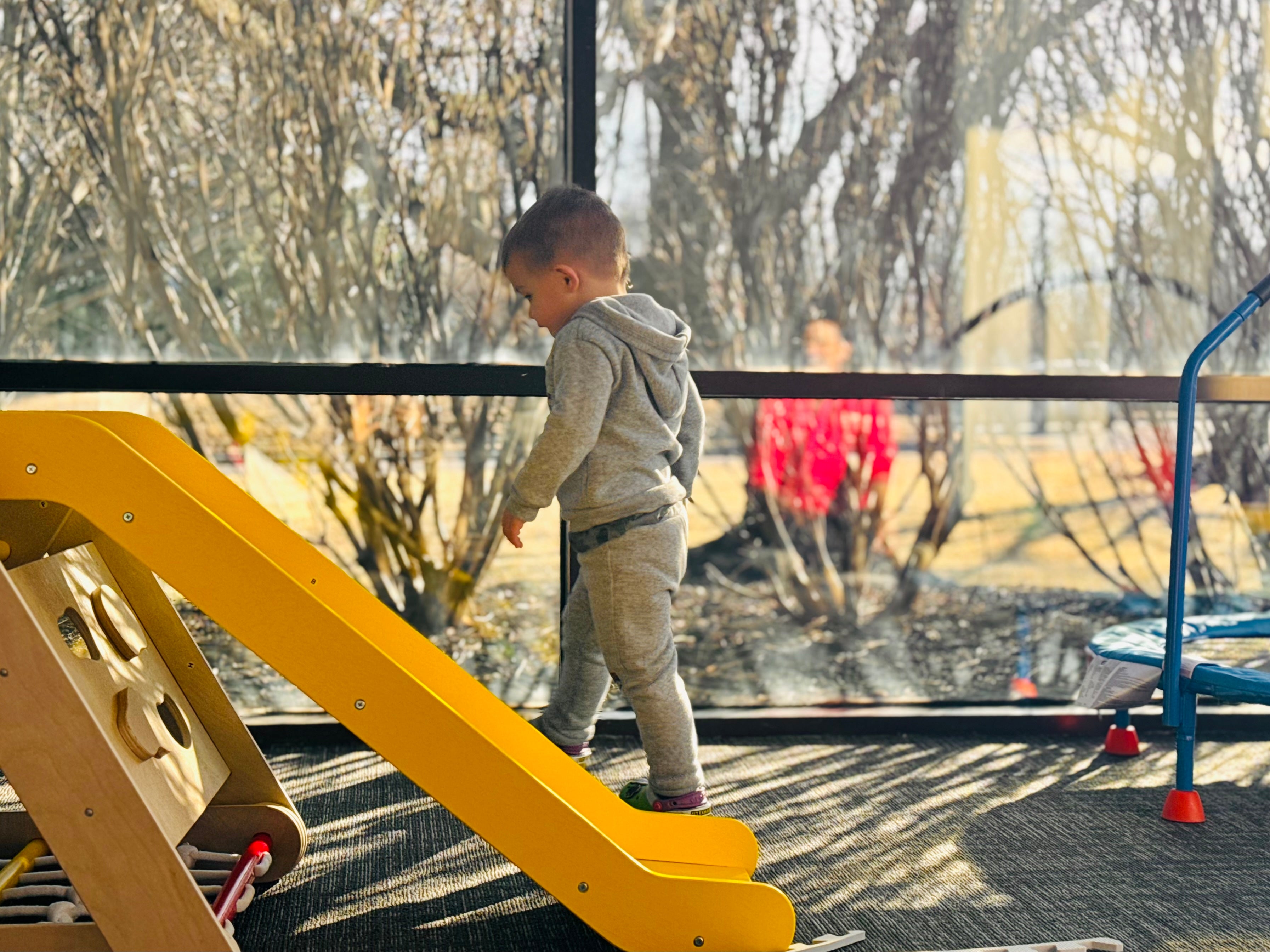
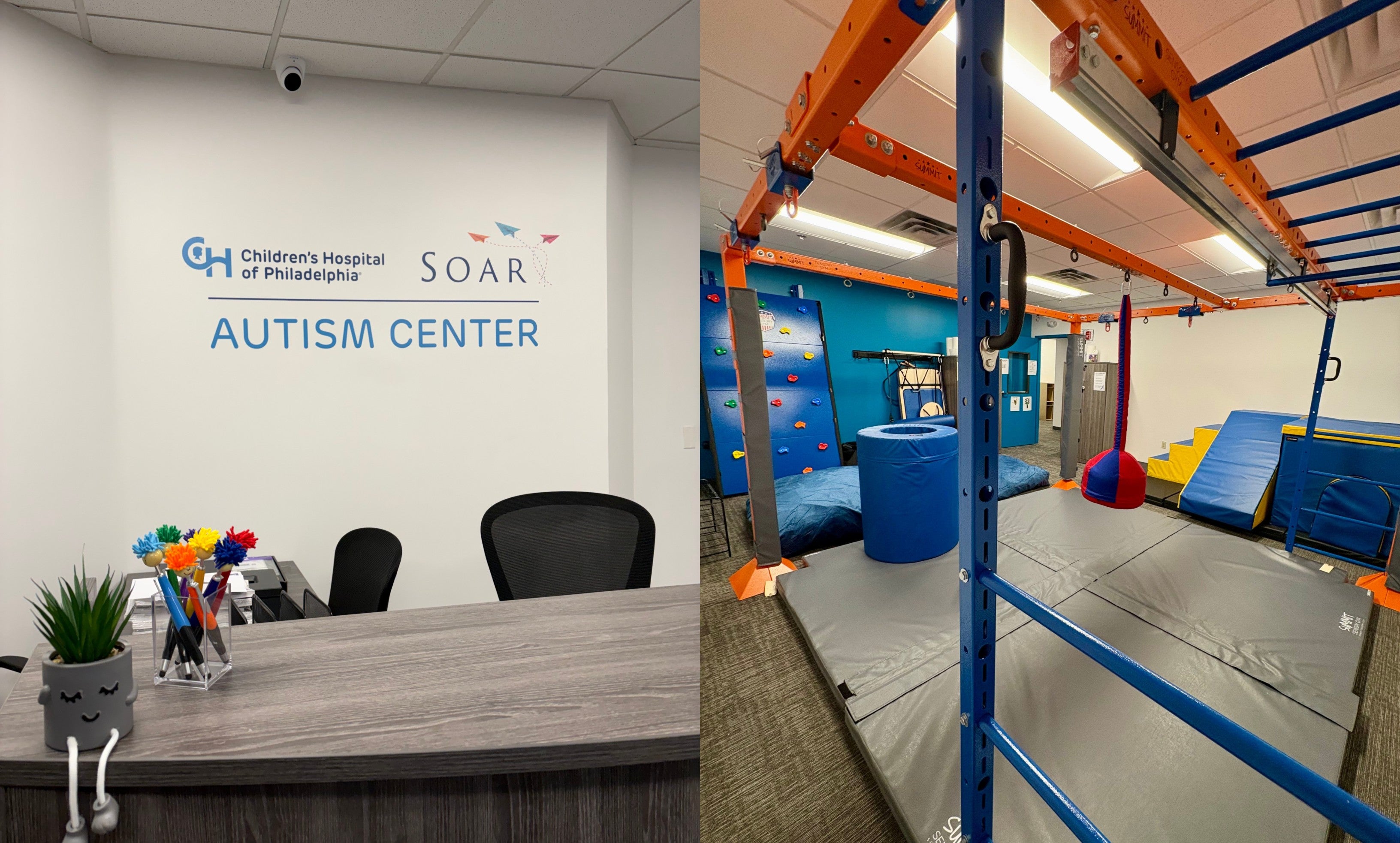
The first CHOP-Soar Autism Center opened earlier this month in Newtown, which could serve about 40 to 50 kids when at full capacity. A second site is slated to open in King of Prussia in April.
Related Content

A Philly father sets out to create a support network for other fathers raising children with autism
The 2nd annual Children’s Hospital of Philadelphia Autism Fathers Conference will be held April 5 at the Vanguard School in Malvern.
12 months ago
Listen 1:49Expanding access to play-based therapy and intervention
Specialists at these centers use the Early Start Denver Model, which combines applied behavior analysis therapy, or ABA, and child development strategies in a play-based format to help kids with social interaction, communication, motor skills and coping mechanisms.
“Basically, we engage with the child in a fun, play-based routine the same way that a mom or a dad or a caregiver would play with their child,” said Dr. Ian Goldstein, co-founder and CEO at Soar. “And then we teach the child skills like speech, language — whatever the skill may be — using ABA-based principles.”
A young child with autism may get, on average, between 15 and 30 hours of therapy per week for one or two years before graduating from the center and moving on to the school system, where they can ideally access other long-term support, Goldstein said.
“This is meant to be an acceleration program to help children build skills at that time of life when their brain has its greatest neuroplasticity and capacity for change,” he said.
The CHOP-Soar centers will also coordinate children’s care with other specialists in the area who can treat them for additional medical and psychological needs. This can be especially helpful for families who struggle to navigate these complexities on their own, Goldstein said.
“Getting the services in the first place is a hurdle, then trying to coordinate them for one child is very, very hard to do,” he said. “So, having this partnership should allow us to really be able to collaborate for those kids who have higher-needs cases of autism.”
Related Content

Some families say they remain frustrated at the overwhelming attention on causes of autism rather than on systems and supports to help kids today.
6 months ago
Listen 1:33Building on autism care and research in Greater Philly
Over the years, Bennett said, CHOP has significantly scaled up autism education, research and clinical care, including expanding diagnostic services and evaluating children at younger ages so they can get intervention at critical stages.
However, ensuring access to consistent outpatient care and community-based therapy remains a challenge, she said.
With new therapy locations opening up in local communities, Bennett said she hopes it will be easier for pediatricians and primary care providers to directly refer families to these sites where they can get several different therapeutic services under one roof.
“At the end of the day, if they’re helping families get what they need for their loved one with autism, then that’s a win,” she said. “I think that as we are seeing these expansions and this growth and awareness, it gives us more work to do, but also good work that is hopefully going to be helping our patients.”

Get daily updates from WHYY News!
WHYY is your source for fact-based, in-depth journalism and information. As a nonprofit organization, we rely on financial support from readers like you. Please give today.

Trump promotes unproven ties between Tylenol, vaccines and autism
Some studies have raised the possibility that taking acetaminophen while pregnant might up autism risk, but many others haven’t found that concern, says a Penn autism expert.
6 months ago
A Philly father sets out to create a support network for other fathers raising children with autism
The 2nd annual Children’s Hospital of Philadelphia Autism Fathers Conference will be held April 5 at the Vanguard School in Malvern.
12 months ago
Listen 1:49
Autism, neurodivergence and our diagnosis culture
The term "neurodivergent" has emerged as a popular buzzword often featured in social media bios. But what does it really mean? How does it relate to formal diagnoses?
Air Date: January 29, 2025 12:00 pm
Listen 51:12