

16,000 babies later: After nearly 48 years, Bryn Mawr says goodbye to a beloved birth center
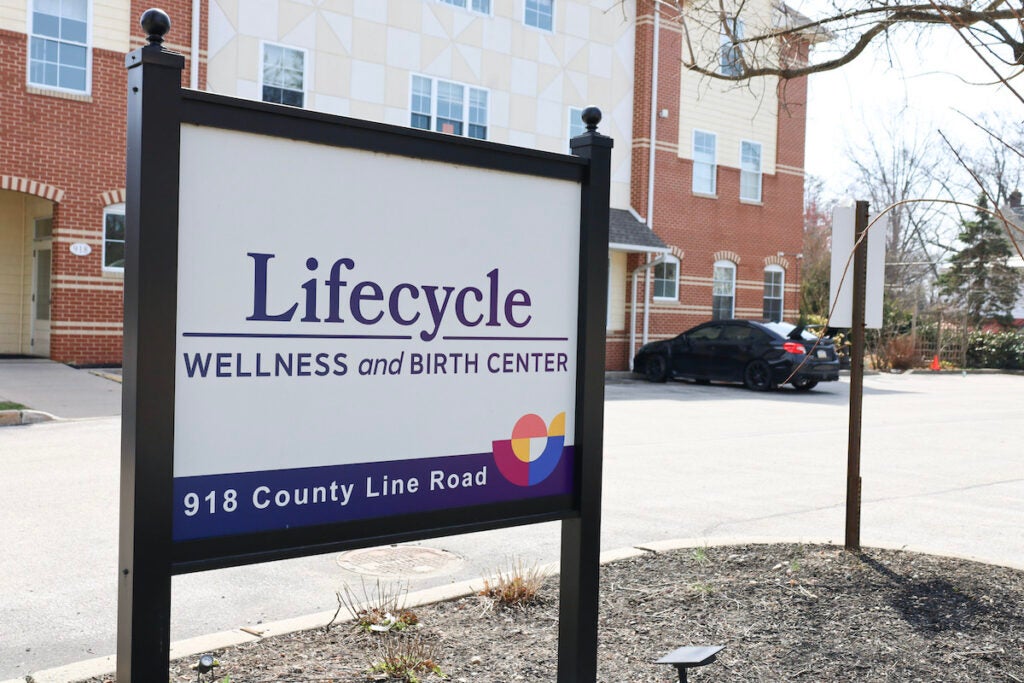
The Lifecycle Wellness and Birth Center, which opened in 1978 as one of the country’s earliest independent centers, closed in March.
Listen 5:48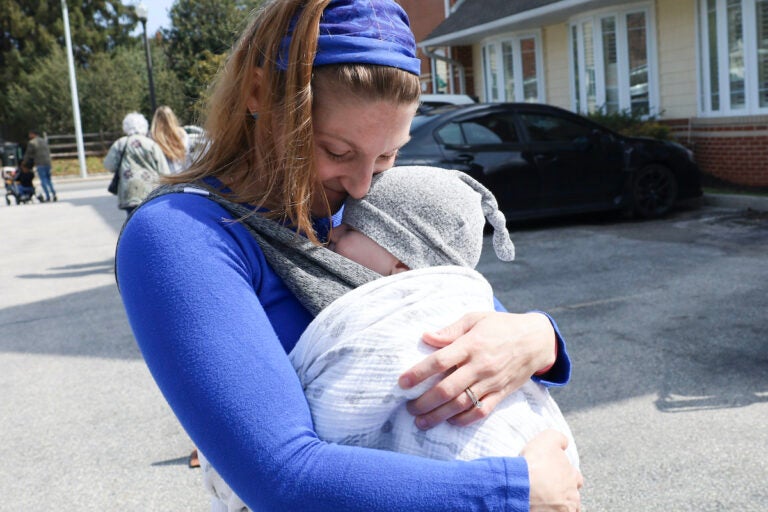
Former Lifecycle Wellness and Birth Center patient Bianca Charbonneau holds her son, Cassian, who was delivered last October at Bryn Mawr Hospital across the street by Lifecycle midwife, Taylor Jaaska. (Nicole Leonard/WHY)
From Philly and the Pa. suburbs to South Jersey and Delaware, what would you like WHYY News to cover? Let us know!
Birth, and the time leading up to it, is a vivid memory for many families. Walking through the first floor of Lifecycle Wellness and Birth Center in Bryn Mawr for one last visit, Roni Lagin recalled all the details.
“So, when your mom was in labor, we were in this room, hanging out,” he told his son and daughter, who he brought to see the birth center.
“There used to be a couch in there,” Lagin said, pointing to a space right off a small kitchen that was once a waiting area. Now, medical supplies, furniture, artwork and other items are strewn about, all for sale.
The trio moved down a narrow hallway.
“This is the yellow room. Go inside, you can walk in,” Lagin said, encouraging his kids to enter the room where they were born, just a couple years apart.
“Oh my god,” said his son, who craned his neck to peek into an ensuite bathroom with a high-lipped hydrotherapy tub. A full-sized bed situated next to large windows took up most of the adjoining room, which made for a home-like environment.
“Both of you were born around 5:30 at night and then we went home the next morning,” Lagin told them. “I remember lying next to her at night, just looking at you and eventually we put you in the little cribs for a little bit.”
It was a place where thousands of babies were born over the course of nearly 48 years. Lifecycle Wellness and Birth Center, one of the oldest independent birth centers in the country, became a destination for women with low-risk pregnancies who wanted a different kind of delivery, one led by midwives outside the walls of a hospital.
But the independent birth center, facing mounting financial and regulatory challenges, closed its doors for good this month, becoming a casualty in a growing maternity care crisis that has left women with fewer options of where they can have babies and get gynecological care.
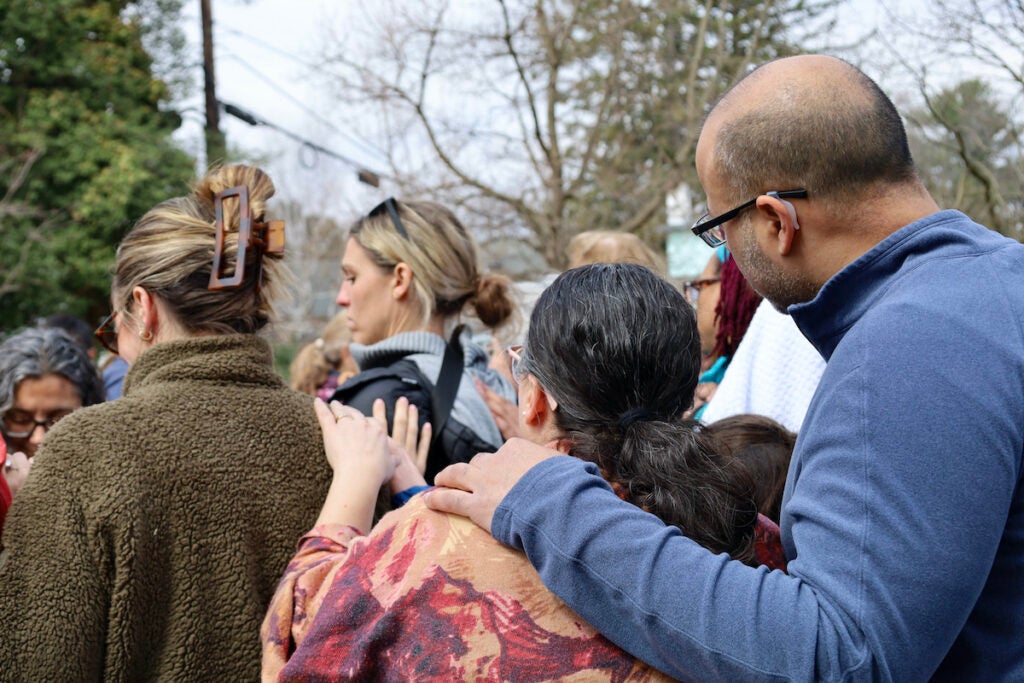
Midwives, doulas, parents, friends and neighbors recently gathered for a community ceremony to grieve the closure, celebrate its legacy and say one final goodbye.
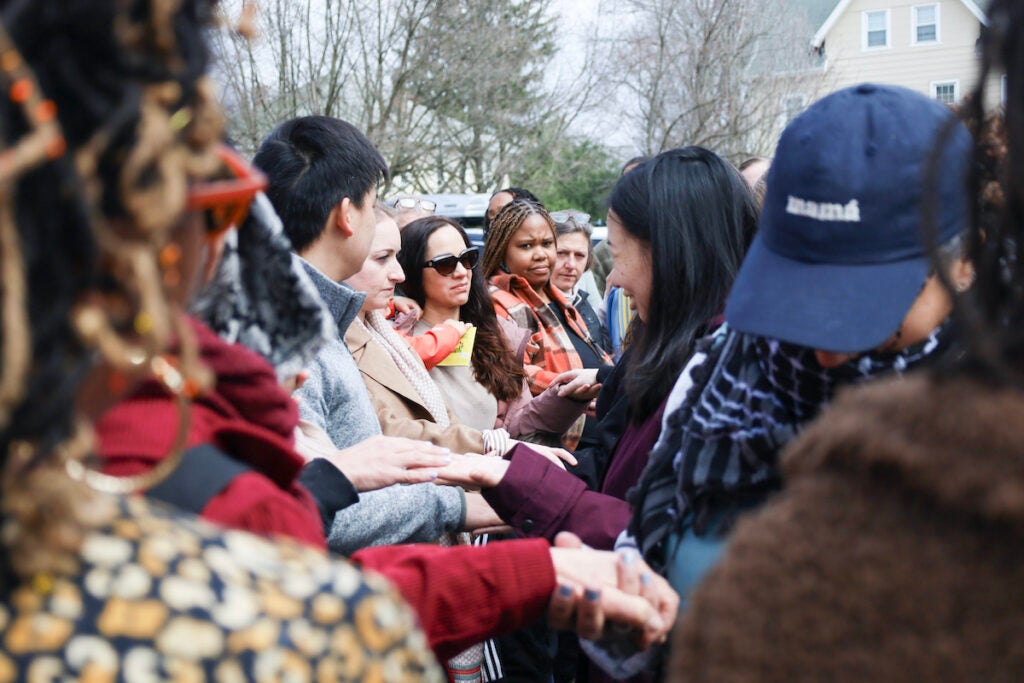
“Nothing that’s good truly ever ends,” midwife Sarah Appleby-Wineberg said as tears ran down her face. She “caught” hundreds of babies at the birth center and would have marked 11 years there this month.
Compassionate and empowering care
Lagin wasn’t the only parent who took this final chance to show their kids where they were born on this Sunday morning in late March.
Outside in the parking lot, Susana Centola, of Media, wrapped her arms around her two young sons, who were born at Lifecycle.
“The impact that they had not just on me as a mother having the experience of giving birth here in a way that felt safe, that felt compassionate, that felt empowering,” Centola said, “the way I’ve been able, through that experience, to share with them what it means to come into this world in that environment, that they were so lucky.”
Dozens of people on a recent Sunday gathered outside the two-story building and formed a big circle. Some sat with small children in their laps, others rocked infants in strollers and a few chased after some older restless kids running around.
One by one, people stepped into the circle to share stories of their time there, either as staff, educators or patients. As they wiped away tears, there were also moments of laughter and funny memories.
Bianca Charbonneau, a mother of three from Havertown, read a haiku that she dedicated to Taylor Jaaska, a Lifecycle midwife who delivered her youngest last fall. Her son was born across the street at Bryn Mawr Hospital after her pregnancy became higher risk when a scan revealed her baby was measuring small.
“With hands gifted, kind and strong, a midwife caught you and warmth filled the room,” Charbonneau read aloud to sniffles and applause.
The closing has been a hard thing to process and accept, she said.
“I don’t get it,” Charbonneau said, her voice catching. “I often wonder if the community had known they were in that much trouble, if there wasn’t more we could have done.”
Related Content

Why Pennsylvania’s women are struggling to find estrogen patches for menopause hormone therapy
The nationwide shortage is being driven by a steady rise in demand for menopausal hormone therapy that is outpacing current patch supply.
5 months ago
A growing maternity care crisis and birth center closures
Lifecycle owners said in November that they decided to close after facing mounting financial challenges and regulatory changes.
Since opening in 1978, the birth center’s population steadily grew and included patients from all over the region who came for routine gynecologic services, pregnancy and menopause care.
By 2026, the center and its midwives, working alongside doulas, lactation consultants and other specialists, had delivered over 16,300 babies.
But the high cost of maintaining services, low reimbursement rates from insurers and surging malpractice insurance premiums often applied to obstetrical health providers became too great to sustain, leaders said.
“It kind of really represents how broken our health care system is,” said Sandra Donover, a former Lifecycle midwife who now works at a hospital in Philadelphia. “How completely bizarre health care is not about health care, it’s about lawyers and insurance and stuff like that, which is incredibly sad.”
Less than 1% of all births in the United States take place at independent, or freestanding, birth centers. But demand has been growing, especially since the height of the COVID-19 pandemic, when people sought alternatives to hospitals.
There were a record 400 birth centers nationwide in 2022, many of them led by midwives, according to the Association of American Birth Centers. However, some have since been forced to shutter like Lifecycle as they faced pressures of the current health care industry.
Fewer birthing places across the board, insurance restrictions and other barriers like transportation issues takes choice away from women and families, said Kate Bauer, the association’s executive director.
But organizations like hers are trying to change that by pushing state and federal lawmakers to expand access to midwifery care by recognizing different levels of trained and credentialed midwives, as well as raising reimbursement rates from insurance programs like Medicaid to help birth centers and other facilities stay open.
“We just have to keep thinking about our future generations, our children,” Bauer said. “Sometimes, it’s at a glacial pace it feels like, but we are making change. We have made a difference. And we will continue to make a difference.”
Related Content

Philadelphia Planned Parenthood centers say services are at risk following Medicaid cuts
The federal “One Big Beautiful Bill Act,” signed into law last July, blocks Medicaid funding to facilities that perform abortions.
6 months ago
Grieving a closure, but remaining hopeful
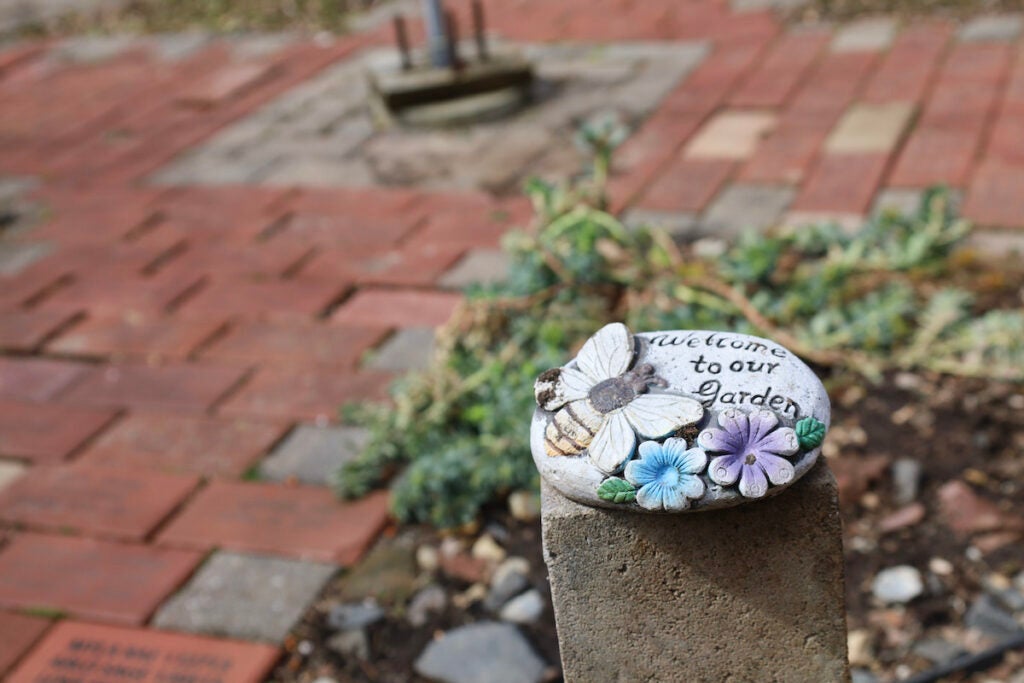
At the back of the birth center in Bryn Mawr, Andrea and David Judge stood at the edge of Sherley’s Garden, dedicated to Lifecycle’s founder, Sherley Young. Inlaid bricks in the small outdoor space are engraved with the names of children, women and families.
The Judges reminisced over their son’s birth here in 2006, shortly after the center moved from its original location in the brick building next door to its current two-story property.
“There’s Andrea just being checked out by the midwife in the garden,” David said as he pointed to a photo on his phone of a very pregnant Andrea. “It was lovely.”
The Judges also have two daughters. Andrea, who’s a lactation consultant, had hoped to bring them both here for their health care. She called the loss of birthing options across the country “infuriating.”
“I’m seeing way more inductions, way more people really traumatized, which I felt like was getting better for a little bit,” she lamented.
Melissa Patti delivered her two babies in a hospital, but got her gynecological care at Lifecycle for years. She does a lot of advocacy work in her role as director of the Maternal and Infant Health Initiative at Greater Philadelphia and South Jersey March of Dimes.
Lifecycle might be gone, but she said the fight to expand midwifery services, raise reimbursement rates for community-centered care and better support birth centers is far from over.
“We want folks to be healthy throughout pregnancy and beyond and we want babies to be healthy and that’s really the core of community health,” she said. “It really starts with birth. Without safe birth practices, we don’t have community health.”
Lifecycle staff and educators were the last to leave after the ceremony. They hugged, promised to see each other soon and locked up.
Out front, a large red ‘For Sale’ sign faces County Line Road. And Lifecycle, which helped deliver over 16,000 babies across five decades, sits dark and quiet, as it waits to become something else.

Get daily updates from WHYY News!
WHYY is your source for fact-based, in-depth journalism and information. As a nonprofit organization, we rely on financial support from readers like you. Please give today.
As Pa. measles cases persist, back-to-school vaccine efforts ramp up
As measles infections statewide reach nearly 300 cases, public health leaders are looking toward preventing disease in schools this fall.
5 days ago
Listen 1:56
Pennsylvania measles outbreak tops 70 cases as health leaders pledge to get spread ‘under control’
The most recent measles outbreak started in the area of Lebanon and Lancaster counties in late April. Cases now span six counties.
2 months ago
Listen 1:14
Black women were 20% more likely than white women to get an unscheduled, unplanned C-section delivery when there were no high medical risks.
2 years ago
Listen 1:17