Philadelphia Planned Parenthood centers say services are at risk following Medicaid cuts
The federal “One Big Beautiful Bill Act,” signed into law last July, blocks Medicaid funding to facilities that perform abortions.
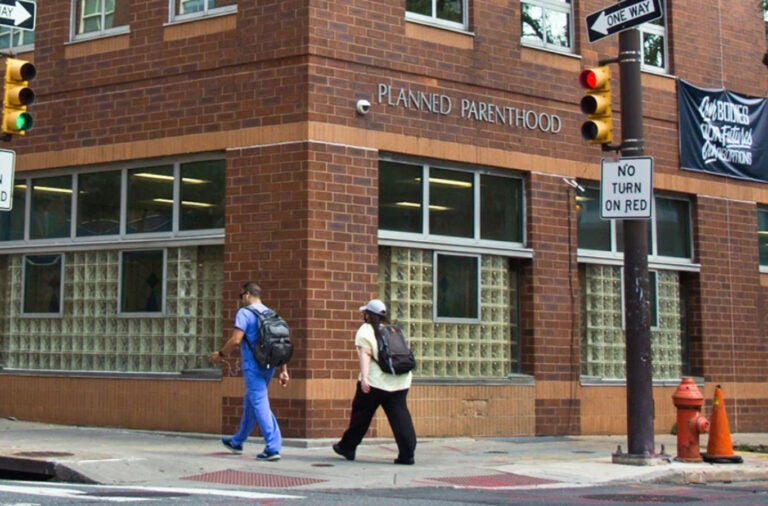
Planned Parenthood at 12th and Locust streets in Center City, Philadelphia. (Kimberly Paynter/WHYY)
From Philly and the Pa. suburbs to South Jersey and Delaware, what would you like WHYY News to cover? Let us know!
Health care advocates and providers in Philadelphia say low-cost options for routine reproductive and sexual health services are at risk following federal Medicaid cuts aimed at abortion providers.
Leaders of local Planned Parenthood affiliates say their financial situations have become dire less than a year after Congress passed the “One Big Beautiful Bill Act,” which blocks Medicaid payments for routine exams, cancer screenings and other care at facilities that also perform abortions.
“A Philadelphia without Planned Parenthood is no longer a hypothetical, it is a very real possibility,” Signe Espinoza, vice president of public policy and advocacy at Planned Parenthood of Southeastern Pennsylvania, told City Council members at a public hearing Monday.
The local affiliate serves about 20,000 patients in Greater Philadelphia, many of whom have Medicaid, a health insurance program for people with low incomes.
Since the federal cuts took effect, Espinoza said centers have been absorbing much of the costs for the services they provide. It’s an unsustainable solution, she said, “and the stakes are incredibly high.”
Organization leaders and advocates are calling on the city to provide some money to fill the funding gap and preserve services. Espinoza warned that a significant reduction of services or closures would displace too many patients, many of whom come in for routine gynecological care, cancer screenings and sexually transmitted infection testing.
“There is no health care provider in Philadelphia that can absorb 20,000 patients,” she said. “The infrastructure does not exist.”
Related Content
Philadelphia City Council approves resolution recognizing abortion rights as human rights
Abortion advocates remain unhappy with Philadelphia’s decision to pull funding from abortion providers amid federal challenges.
9 months ago
Other major cities like Atlanta, Baltimore and St. Louis have directed funds to help support Planned Parenthood centers and other organizations that provide reproductive health care and abortions in the wake of the federal cuts.
Advocates in Philadelphia pushed the city to allocate money last year, but City Council ultimately passed a budget that did not include funding for these health centers.
Affiliates in other parts of Pennsylvania have been forced to take other actions in their efforts to alleviate financial stress.
Recently, Planned Parenthood Keystone announced that as of Feb. 16, the affiliate can no longer provide family planning services to patients with Medicaid health insurance at its locations in Lehigh, Bucks, Dauphin, Berks, York and Luzerne counties.
Patients can still access care without their insurance and pay out-of-pocket on a sliding scale, according to Keystone’s website, but those costs may be more than what they’ve paid in the past.

Get daily updates from WHYY News!
WHYY is your source for fact-based, in-depth journalism and information. As a nonprofit organization, we rely on financial support from readers like you. Please give today.
Pa. Medicaid now covers abortion, but for how long? AG, pro-life groups wage an appeals fight
Medicaid coverage for abortion services begins as Pennsylvania’s attorney general seeks to reinstate the state's ban on using public funds for abortion.
2 weeks ago
Listen 1:03
Changes to Medicaid under H.R. 1 include new work requirements and restrictions on who is eligible for the safety net insurance program.
1 month ago
Listen 1:14
Health leaders say between 73,000 and 90,000 people could lose Medicaid next year due to new federal work requirements and eligibility paperwork.
3 months ago
Listen 1:11